If you've decided to try CLA, the practical questions are: which form (softgel vs liquid vs powder), what daily dose, which isomer ratio, when in the day to take it, what to stack it with, and how long before you'd expect to see anything. This Hub walks through each decision so you can buy a CLA product that matches what the research actually studied — not the marketing copy.
For the underlying biology (what CLA is, how it works in fat metabolism, where it comes from in the diet), see What Is CLA?. For a research review (what RCTs and meta-analyses actually found), see Does CLA Work?. This page is the buyer-decision middle: how to choose and use a product if you've decided to try one.
Key Takeaways
- The studied daily dose for body-composition outcomes is roughly 3–3.4g of mixed-isomer CLA, taken with meals across the day.
- Most clinical research used a 50:50 blend of the two active isomers (c9,t11 and t10,c12). Products with extreme ratios diverge from what was studied.
- Softgels are the dominant form because CLA is an oil; liquid and powder forms exist but offer no documented absorption advantage and oxidize faster.
- CLA is a slow-acting compound. Studies measure outcomes over 8–12 weeks of consistent daily use — not days or weeks.
- The most useful stack pairings for body-composition goals are L-Carnitine, green tea extract, and a structured resistance-training program. CLA is not a standalone solution.
Start here: CLA Dosage, CLA vs Omega-3, Side Effects, What Is CLA? (biology).
Who CLA Is (and Isn’t) For
CLA is a slow, supportive compound — not a stimulant, not a hunger blocker, not a fat burner in the popular sense. The realistic question is whether your situation lines up with what CLA was studied to support.
Where CLA tends to fit
- Adults already eating in a structured way (controlled calories, regular meals) who want a marginal nudge in body-composition direction over months, not weeks.
- People doing consistent resistance training who want a low-stimulant addition to their regimen.
- Adults whose dairy and beef intake is low (the natural dietary sources of CLA), and who want to bring intake closer to what was historically common.
- Anyone looking for a non-caffeine option to pair with diet and training, where they accept that effects are modest and slow.
Where CLA is the wrong tool
- You want to feel something this week. CLA does not produce acute effects.
- You haven’t addressed diet structure or training. CLA is an adjunct, not a substitute.
- You expect dramatic body-composition change. The studied effect sizes are real but modest.
- You are pregnant, breastfeeding, or managing a metabolic condition without physician oversight.
For specific demographic context, see CLA benefits for men and CLA for women over 40.
What CLA Has Been Studied For
CLA’s evidence base is narrower than creatine’s or collagen’s. Here is what the research has examined, framed at appropriate confidence levels.
Body composition (most studied)
The largest body of CLA research looks at body-fat percentage and lean-mass changes over 8–24 weeks of supplementation. Meta-analyses (Whigham et al. 2007, AJCN) consistently report a small but statistically detectable reduction in body fat versus placebo — on the order of fractions of a kilogram over months of use. The effect is real but modest, and depends on consistent diet and activity levels alongside supplementation. CLA is best understood as a small additive lever, not a primary driver. For a closer look at what research shows on CLA and abdominal fat specifically, the visceral-vs-subcutaneous distinction matters more than total body weight in interpreting results.
Lean-mass preservation during caloric deficit
Several RCTs have examined whether CLA supports lean-tissue preservation when calories are restricted. The pattern in the literature: a modest sparing effect on lean mass during cutting phases, particularly when paired with resistance training. This is the use case where CLA tends to look most consistently useful in research.
Endurance and exercise output
A subset of studies has looked at CLA in the context of training adaptation and recovery. Findings are mixed and the effect sizes are smaller than for body composition. We frame this as “possibly supportive, far from settled.”
Cardiometabolic markers
Findings on lipid profiles, insulin sensitivity, and other cardiometabolic markers are inconsistent across studies. Some report improvement, some report no change, a few report worsening on specific markers. This is an active research area, not a settled benefit. We do not recommend CLA primarily for cardiometabolic goals.
For the full literature walkthrough — including study quality, effect sizes, and where claims overshoot what the data show — see our research review: Does CLA Work?
Forms of CLA Compared
CLA is a fatty acid — a slightly modified version of linoleic acid — which means it’s an oil at room temperature. That single fact drives most of the form decisions.
Softgels (most common)
The default. CLA oil is encapsulated in a gelatin or vegetable softgel, typically 1,000–1,250 mg per softgel. Easy to dose (3 softgels = roughly the studied daily total), good shelf stability when stored cool and dark, and no taste. Almost every CLA RCT used softgels.
Liquid CLA
Sold as a flavored or unflavored oil to be measured by spoon or dropper. The case for liquid is faster perceived absorption; the case against is a strong bitter/oily taste, faster oxidation once opened, and dosing precision that depends on the user. There is no documented absorption advantage over softgels in the published literature. Liquid is a personal-preference choice, not a performance choice.
Powder / drink-mix CLA
A microencapsulated powder form designed to mix into water or a shake. Convenient if you already mix a daily shake; more expensive per gram of CLA than softgels, and still subject to the same oxidation concerns once exposed to air and moisture.
The cross-form summary
For most people, softgels are the right default: that’s the form the research used, dosing is straightforward, and shelf life is the longest. Liquid and powder forms are functional alternatives if you have a specific reason to prefer them, but they don’t outperform softgels on any measurable dimension. Compare to omega-3 form decisions in CLA vs Omega-3.
Isomer Ratios: What to Look For
CLA isn’t one molecule — it’s a family. The two isomers that matter for supplementation are c9,t11 CLA (the form most abundant in dairy and beef) and t10,c12 CLA (the form most associated with body-composition outcomes in RCTs). Most clinical research used a roughly 50:50 blend of the two.
Why this matters when you’re reading a label:
- If a product lists only “CLA” without isomer breakdown, assume it’s the standard 50:50 blend (most are).
- Products marketed as “t10,c12 enriched” lean toward what was studied for body composition, but extreme ratios diverge from the 50:50 used in most RCTs.
- Products listing very high c9,t11 percentages (sometimes labeled “dairy CLA”) target the natural-foods position rather than the body-composition outcomes most CLA buyers are after.
- Look for an explicit milligram statement of total CLA per serving, not a “safflower oil blend” total. Safflower oil is the source material; the active fraction is the CLA isomers within it.
Practical rule: look for products that state at least 78–80% total CLA isomer content per softgel. Lower percentages mean you’re paying for source-oil filler, not active compound.
How to Take CLA: Dose & Timing
CLA dosing is more straightforward than its marketing suggests. The two real decisions are total daily milligrams and how to split them across meals.
CLA Standard Protocol
Daily dose: 3,000–3,400 mg of total CLA isomers per day. This matches the dose used in most body-composition RCTs.
How to split: Divide across meals — typically 1 softgel with breakfast, 1 with lunch, 1 with dinner. CLA absorbs better when taken with food containing fat.
Take with meals containing fat: CLA is fat-soluble. A meal with some olive oil, nuts, eggs, or fish will improve absorption versus a fat-free meal.
Daily, not cyclical: CLA is taken continuously across the studied window (8–12 weeks minimum). Cycling on and off has no documented benefit.
Stop and reassess at the studied window: If after 12 weeks of consistent diet, training, and CLA supplementation you see no movement on body-composition markers you care about, CLA is not adding meaningful value for you. Save the money.
Hydration and routine: No special hydration requirement, but the rest of your routine matters more than the dose. Consistent diet and training are what CLA layers on top of.
For the deeper dive on dose tradeoffs and what happens at higher doses, see CLA Dosage.
What to Stack CLA With
CLA does not work in isolation. Its modest effect size means stacking with complementary tools is what makes the total approach worth running. The pairings with the most rationale:
L-Carnitine
L-Carnitine handles long-chain fatty acid transport into the mitochondria for oxidation. CLA influences how those fats are partitioned between storage and use. The two operate at different points in the same pathway and pair logically. See L-Carnitine biology for the underlying mechanism.
Green tea extract (EGCG)
Green tea’s catechins have been studied for thermogenic and fat-oxidation effects. Pairing it with CLA layers a different mechanism on top of the same body-composition goal. See green tea extract and metabolism.
Resistance training (the most important pairing)
If we had to pick a single “stack partner” for CLA, it would not be a supplement — it would be a structured resistance-training program. The lean-mass-preservation findings in the CLA literature are strongest when training is in place. Without training, CLA has very little to work with.
What not to stack
Avoid stacking CLA with multiple stimulant-based fat burners. The combined load on heart rate, sleep, and recovery is the limiting factor before any single ingredient’s effect. Keep the stack lean and slow rather than wide and harsh.
Timeline: What to Expect
CLA is one of the slowest-acting supplements in common use. Setting expectations honestly is the difference between a useful 12-week trial and a frustrated 3-week abandonment.
- Days 1–14: Nothing perceptible. CLA is not a stimulant; you should not feel anything kick in. Mild GI adjustment (loose stool, gas) is possible in the first week as the body adjusts to the added fatty-acid load — usually resolves on its own.
- Weeks 3–6: Still nothing felt subjectively. Tissue concentrations build during this window. Useful framing: CLA changes the slope of the curve over months, not the day-to-day feel.
- Weeks 8–12: The window where most RCT outcomes are measured. Body-composition shifts — if they occur for you — tend to become measurable in this range. Expect modest changes, not dramatic ones.
- Months 4–6+: Cumulative effect over a sustained training and diet structure. This is the realistic horizon if you want to see whether CLA is contributing meaningfully to your results.
The honest version: you will not “feel CLA working.” You will see (or not see) what shows up on a scale, in a body-fat measurement, or in how your training clothes fit, after months of consistency.
Safety & Common Concerns
CLA has a reasonably well-characterized safety profile in healthy adults at studied doses (3–6g/day for up to 24 weeks). It is not a high-risk supplement, but it’s also not a zero-question supplement. Here’s where concerns sit:
GI side effects
The most common reported side effects are mild and digestive: loose stool, gas, soft stools, occasional nausea. These tend to appear in the first week or two and resolve. Taking CLA with meals (rather than empty-stomach) reduces incidence. See CLA Side Effects for the full breakdown.
Insulin sensitivity in some populations
A subset of studies has reported small reductions in insulin sensitivity with the t10,c12 isomer at higher doses, particularly in people with metabolic syndrome or pre-diabetes. The clinical significance is debated and the effect is not consistent across studies. Adults with diabetes or insulin resistance should discuss CLA with their physician before starting.
Lipid panel shifts
Some studies report small shifts in HDL or LDL with sustained CLA use; findings are inconsistent. If you have a lipid concern, retest at 12 weeks and compare.
Pregnancy and breastfeeding
Not enough safety data exists in pregnant or breastfeeding women. Standard guidance: avoid during pregnancy and breastfeeding unless cleared by a physician.
Drug interactions
Limited known interactions, but anyone on blood thinners, insulin, or lipid-lowering medications should run CLA past a physician before starting, since fatty-acid-class supplements occasionally affect these systems.
Choosing a CLA Supplement
CLA is a commodity ingredient: the active molecules are the same regardless of brand. What varies is source-oil purity, isomer content per softgel, processing quality, and whether the product is tested for contaminants. A good CLA product meets five criteria:
- Total CLA isomer content stated explicitly — at least 78–80% of the safflower oil base. Avoid products that hide behind “safflower oil blend” without an isomer milligram count.
- Standard 50:50 isomer blend (or close to it) unless you have a specific reason to favor a different ratio. This matches what most RCTs used.
- 1,000–1,250 mg total CLA per softgel, so the studied daily total of ~3,000–3,400 mg lands in 3 softgels. Three-a-day is the workable adherence sweet spot.
- Third-party tested for purity and oxidation. Fatty-acid supplements can oxidize during shelf life. Look for products with batch testing and a clear “best by” date.
- Cool, dark storage at home. Don’t leave a CLA bottle in a sunny window or a hot car — oxidized fatty acids do not behave the same way as fresh ones.
Price is a secondary filter once these are met. Expect to pay roughly $0.30–$0.60 per serving for a quality 3-softgel daily dose. Significantly higher prices typically reflect branding, not better CLA.
Frequently Asked Questions
How long do I need to take CLA before I’d expect to see anything?
Plan on at least 8–12 weeks of consistent daily use alongside consistent diet and training. That’s the window most body-composition RCTs actually measure in. If you stop at 3 or 4 weeks because “nothing is happening,” you’ve stopped before the research window opens. If you’ve done the full 12 weeks honestly and see nothing measurable, CLA likely isn’t adding value for your situation.
Should I cycle on and off CLA, or take it daily year-round?
There is no documented benefit to cycling CLA. The research that shows effect uses continuous daily dosing across the study window. If you want to stop using it after a defined trial period, that’s fine — but cycling 4 weeks on and 4 weeks off does not improve outcomes and may undercut them by keeping tissue concentrations low.
Do I have to take CLA with food, or can I take it on an empty stomach?
Take it with meals. CLA is a fat-soluble compound and absorbs better alongside dietary fat. Empty-stomach dosing is more likely to produce the mild GI symptoms some users report in the first week, and absorption is measurably lower without a fat-containing meal.
Is liquid CLA better absorbed than softgels?
No — there is no documented absorption advantage in the published literature. Softgels are the form most CLA research used and are the default for a reason: good dosing accuracy, long shelf life, no taste. Liquid CLA is a personal-preference choice (faster to dose if you’re taking several grams in one go), not a performance choice.
Will CLA interfere with creatine or protein?
No documented interference. CLA, creatine, and protein operate on different pathways and are commonly stacked together. The only caution is overall GI tolerance: if you’re already taking several supplements at meals, add CLA gradually (start with one softgel a day for a week, then increase) to let your system adjust.
Is CLA vegetarian-friendly?
The CLA itself is typically derived from safflower oil, which is plant-based. However, most softgel capsules are made from bovine gelatin, not vegetable cellulose. Vegetarians and vegans should specifically look for “vegetable softgel” or “plant-based capsule” on the label.
Can I just eat more dairy and beef instead of supplementing?
In theory yes — CLA is naturally present in grass-fed dairy and beef. In practice, the milligram totals are low. To hit the 3,000–3,400 mg daily range used in RCTs, you’d need to consume an impractical volume of dairy and beef. Supplementation is how most people reach the dose the research actually measured.
What’s the difference between CLA and omega-3?
Different fatty acids with different mechanisms and different evidence bases. Omega-3s (EPA, DHA) are primarily studied for cardiovascular, cognitive, and anti-inflammatory support. CLA is studied for body composition and lean-mass preservation. They can be taken together without conflict and target different outcomes. See CLA vs Omega-3 for the side-by-side breakdown.
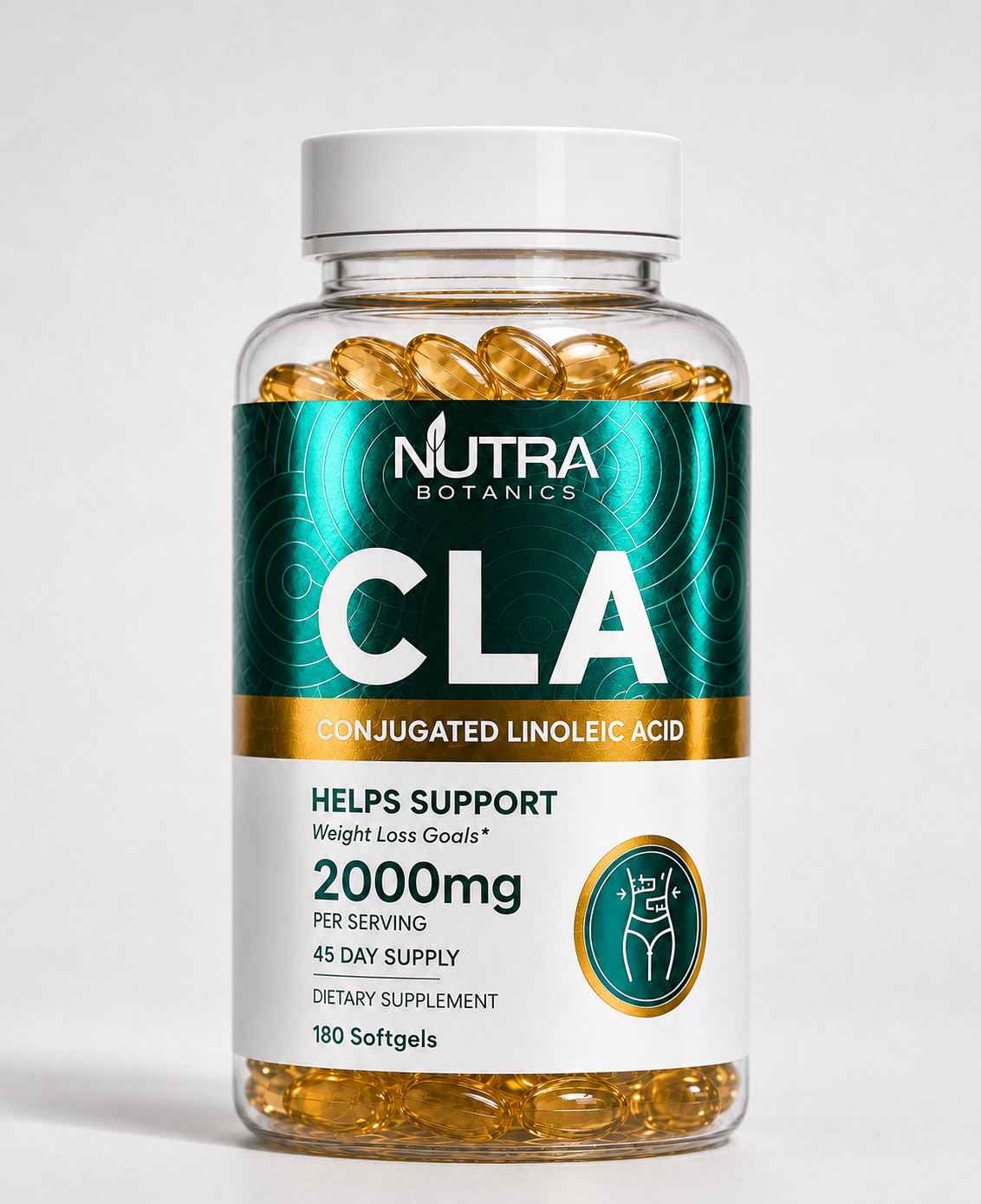
CLA 1000
Softgels · 90 count
- 1,000 mg total CLA isomers per softgel
- Standard 50:50 isomer blend · matches studied ratio
- GMP & NSF certified · PhD-supervised testing
- No artificial colors, fillers, or added stimulants
$24.95Free shipping over $75
Shop CLA 1000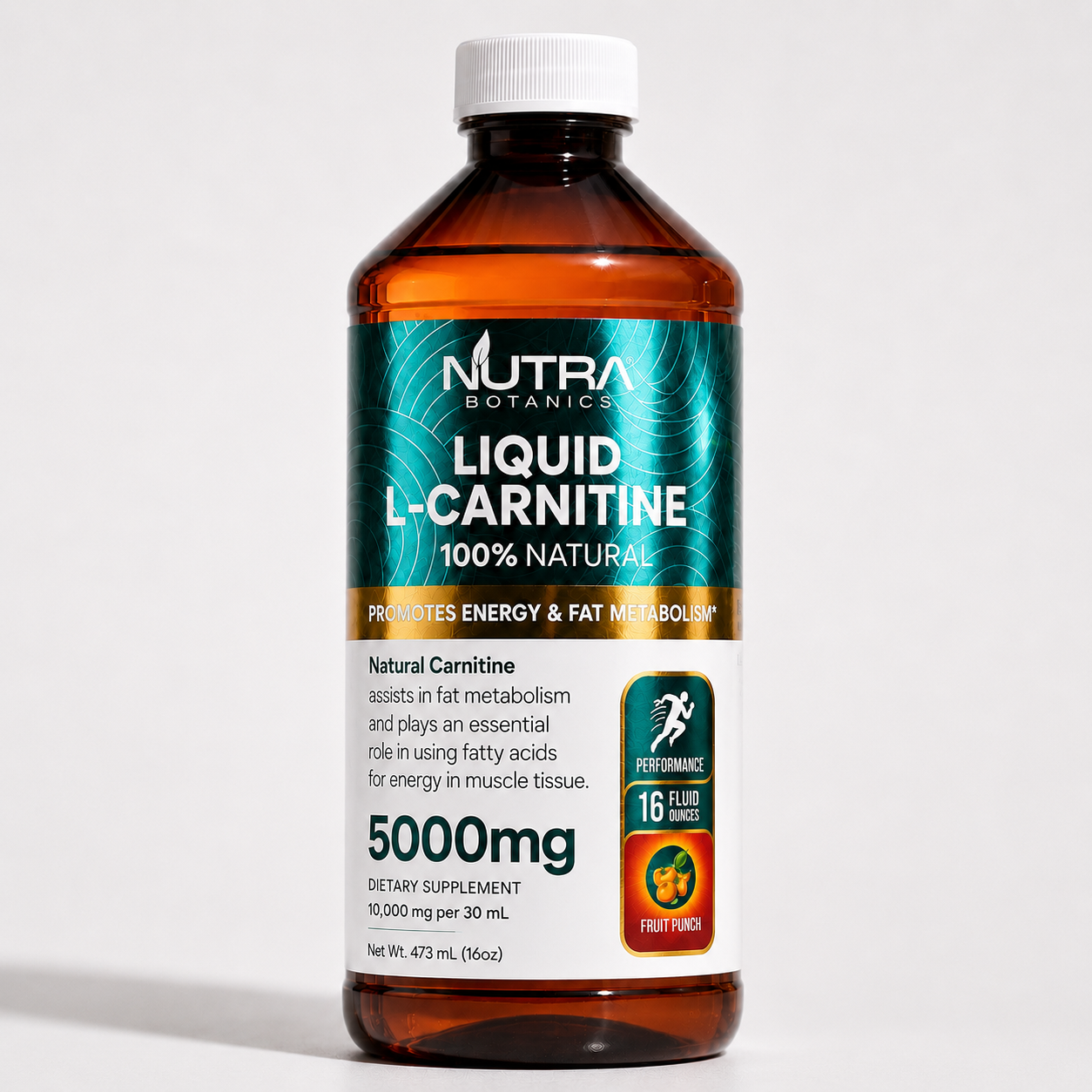
L-Carnitine
Liquid · 30 servings
- Supports fatty-acid transport into the mitochondria
- Pairs with CLA at different points in the fat-oxidation pathway
- Stimulant-free · no caffeine, no jitter
- PhD-supervised testing · light citrus flavor
$29.95Subscribe & save 20%
Shop L-CarnitineCLA works best as part of a stack. See our complete fat loss stack for how CLA fits with thermogenics, glucomannan, and L-carnitine.