Green tea extract can affect short-term energy use, but a faster reading in a study does not guarantee weight loss. The useful buying question is what your bottle contains: leaf or extract, the amount of EGCG, and its caffeine content. Those details help you compare formulas without relying on a fixed calorie-burning promise.
At a glance
- Check the form. Green tea leaf, concentrated extract and EGCG are different label entries.
- Keep the result in context. A short-term metabolism measurement is different from a lasting change in body weight.
- Read beyond the front. Look at serving size, caffeine, directions and warnings before choosing.
Tea, leaf or extract: check which one
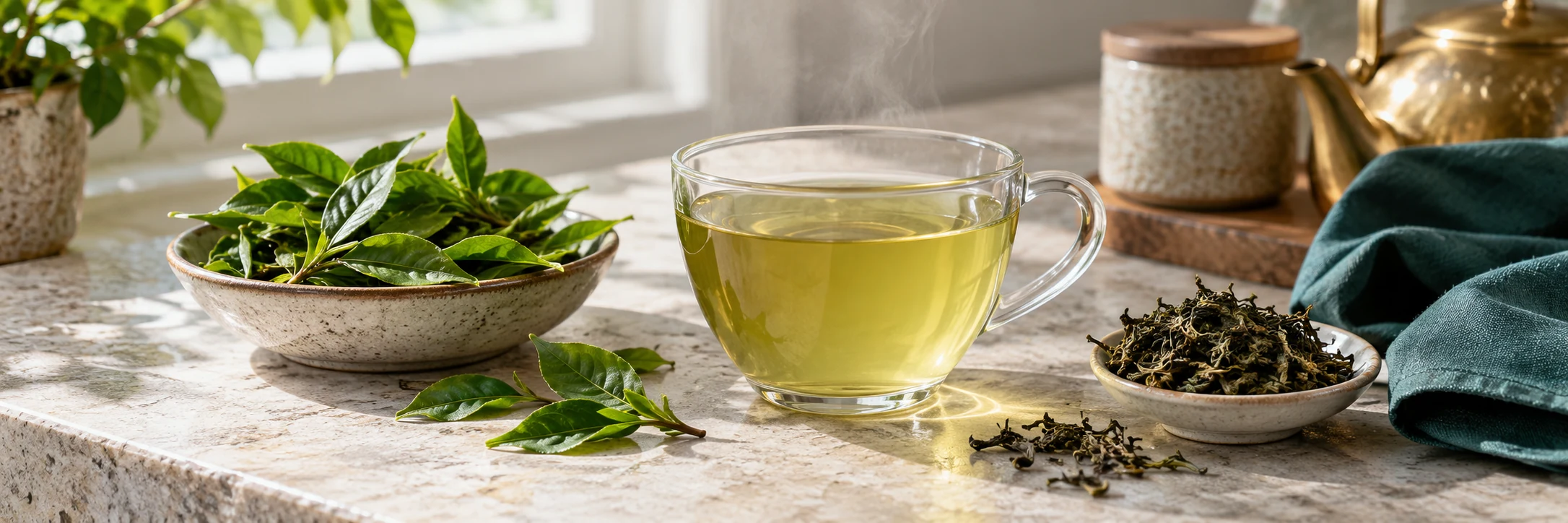
Green tea comes from Camellia sinensis. It contains plant compounds called catechins, including EGCG. Extracts concentrate some of those compounds, but their composition varies. An amount of leaf or total extract is not the same amount of EGCG. NIH explains the differences between green tea preparations.
Use the label checks below to compare like with like. A clear ingredient amount tells you what is supplied. It does not tell you how much weight you will lose.
| Label term | What it means | What to check |
|---|---|---|
| Green tea leaf | The plant ingredient itself. | Leaf amount and serving size. Do not read the leaf weight as EGCG. |
| Green tea extract | A concentrated preparation with a composition that varies by product. | Extract amount and any stated catechin or EGCG content. |
| EGCG | One catechin found in green tea. | The actual amount supplied, if disclosed. An extract total alone does not establish it. |
| Caffeine | A stimulant that also occurs naturally in tea. | The product's stated caffeine amount and your other daily sources. |
| Blend total | The combined weight of several ingredients. | Which individual amounts are listed. Keep the blend total separate from EGCG or caffeine. |
What “thermogenic” really measures
Thermogenesis means using energy to produce heat. Researchers may measure energy use over a day, or how the body uses fat as fuel. These are different outcomes from losing body fat over several months.
In a 1999 chamber study of 10 healthy men, a specific green tea extract containing catechins and caffeine increased 24-hour energy expenditure by 4% compared with placebo. That is a finding for that preparation and setting, not a calorie target for every shopper. Read the original short-term trial.
For the longer-term question, a Cochrane review of weight-management trials found a very small, statistically nonsignificant weight effect overall in adults with overweight or obesity. The review also found no meaningful weight-maintenance benefit. This is why a daily energy-use figure should not be converted into an expected amount of fat loss.
EGCG amounts: read the complete label
There is no single EGCG amount that guarantees a metabolism or weight-loss result. Studies use different preparations, participants and amounts. Compare the disclosed ingredients first, then review the product's own directions. NIH's ingredient review puts these varied results in context.
Two current labels, different information
Appetrol: its Supplement Facts list 300 mg green tea leaf per three-capsule serving. That is leaf weight, not a stated EGCG amount. Explore Appetrol and open Full formula.
ThermoSlim: green tea extract appears in a 950 mg Metabolic Mix with three other ingredients. That total is not the amount of green tea or EGCG. The label separately states 200 mg caffeine per three-capsule serving. Explore ThermoSlim and open Full formula.
Serving size and daily directions answer different questions. Read both on your current bottle, especially when directions introduce the formula gradually or divide intake across meals.
Taking extracts with food
Concentrated extracts need their own safety check. A United States Pharmacopeia review found that taking extracts while fasting can increase exposure to EGCG and supports taking them with food. Food is a precaution, not a guarantee against liver injury.
In its green tea catechin safety assessment, EFSA found liver-enzyme increases in supplement trials at 800 mg EGCG a day or more. It could not establish an extract dose that is safe for everyone. That number is not a target or a safe limit for amounts below it.
Build a routine you can keep
Start with meals and activity that fit your life. Choose an eating pattern you can continue, make movement regular and track progress over time. NIDDK offers practical guidance for sustainable weight management.
If a supplement fits that routine, compare the complete formula and how you would use it. Adding another extract or stimulant is not an automatic upgrade. For a broader comparison, see ingredient roles and label checks for metabolism supplements.
Caffeine, medicines and individual fit
Caffeine tolerance varies. Include drinks and other supplements when reviewing your intake. If stimulants disrupt your sleep or cause jitters, that matters more than a promise on the front of a bottle. FDA explains individual caffeine sensitivity.
Green tea extracts can interact with medicines and have been linked to uncommon liver injury. Discuss use with a health professional if you take medication, have liver concerns, are pregnant or are nursing. NCCIH covers extract precautions and interactions.
Before choosing a formula
Make your next step specific. Check the form, disclosed amounts, caffeine and full directions. Choose for the formula's actual ingredients and your preferences. Study results for one preparation do not establish the same outcome for a different finished product.
Related reading: How to Boost Your Metabolism, Metabolism After 40, Metabolism Supplements: Studied vs Hype, Signs of a Slow Metabolism.
Frequently Asked Questions
Does green tea extract actually speed up metabolism?
How much EGCG should I take for metabolism?
Is green tea extract safe to take daily?
How long does green tea extract take to work?
Is green tea extract better than fat burners?
Does green tea extract work without caffeine?