"Appetite suppressant" is a claim that sits across half the weight-loss supplement category, and the honest research picture is narrower and more mechanism-specific than the marketing implies. Some ingredients have clear, replicated effects on hunger and food intake. Others ride on ad copy and small, underpowered trials. And the biggest determinant of whether any of it translates to body-composition change is something the bottle cannot do for you: what happens when the hunger signal comes back.
This review summarizes what peer-reviewed trials and meta-analyses actually show about glucomannan, psyllium, dietary protein, green tea catechins, capsaicin, 5-HTP, garcinia cambogia, and chromium as appetite-regulating ingredients. Where the evidence is solid, we say so. Where marketing outpaces the data, we say that too.
Key Takeaways
- Viscous soluble fibers (glucomannan, psyllium) have the strongest replicated evidence for reducing subjective hunger and next-meal intake — typically 10 to 15 percent lower ad-libitum intake at studied doses.
- Dietary protein raised to 25 to 30 percent of total calories is the single largest appetite-regulating lever in the literature, through PYY, GLP-1, and cholecystokinin signaling.
- Green tea catechins and capsaicin have smaller but replicated appetite effects, typically pairing with thermogenic action.
- 5-HTP has modest short-trial evidence; garcinia cambogia, chromium, and Caralluma have weaker or inconsistent results. Stimulant-heavy blends carry safety caveats without clearly superior efficacy.
- Appetite suppressants work by making a caloric approach easier to adhere to — they do not override energy balance. Trials pairing suppressants with structured dietary change see the largest outcomes.
Related reading: Natural Appetite Suppressants, Glucomannan for Appetite Control, Appetite Control & Weight Loss, Do Metabolism Boosters Work?.
What Appetite Suppressants Actually Do
Hunger is not a single signal. It is a composite of gastric distension (physical fullness), hormonal satiety cues (GLP-1, PYY, cholecystokinin, leptin), blood-glucose kinetics, and reward-system inputs that are learned and contextual. Any ingredient sold as "appetite suppressant" works on only a slice of that system, and the effect size depends on which slice and what else is happening around the meal.
The three mechanistic levers with the clearest peer-reviewed trial evidence are: delaying gastric emptying (viscous fibers like glucomannan and psyllium), amplifying satiety hormones (dietary protein and its specific amino-acid profile), and modestly suppressing sympathetic hunger signaling (green tea catechins, capsaicin). A fourth, serotonergic modulation (5-HTP), has a smaller evidence base that applies to specific populations.
Crucially, the published literature almost never shows large standalone effects. What it shows is that combining one or two of these levers with a structured dietary approach reduces perceived hunger enough that people adhere to the dietary approach for longer. That is a real effect — adherence is the bottleneck in most dietary trials — but it is not the "the pill made me not hungry" story the marketing implies.
The Research on Glucomannan and Viscous Fiber
Glucomannan, the soluble viscous fiber from konjac root, has the most replicated trial base in the appetite-suppressant category. It absorbs water in the stomach, expands to 50 to 100 times its dry volume, and delays gastric emptying — producing real, measurable fullness at realistic supplemental doses.
Walsh et al. (1984) was the foundational trial, reporting roughly 5.5 lb of additional weight loss over 8 weeks with 3 g/day of glucomannan versus placebo, in a caloric-approach context. Subsequent trials (Vasques 2008; Keithley 2005) have replicated hunger-reduction and next-meal-intake findings, though body-weight effects are smaller and less consistent when the trial does not also structure diet. The European Food Safety Authority (EFSA) in 2010 granted glucomannan a health claim for weight loss at 3 g/day with adequate water in the context of an energy-restricted diet — a rare evidentiary bar in the supplement space.
Psyllium and other viscous fibers produce similar but smaller effects. The mechanism is identical; glucomannan has simply been the most trialed at supplemental doses. Effect ceilings are reached around 3 to 4 g/day split across meals, with adequate water (a non-negotiable safety point — dry-dosed glucomannan carries obstruction risk). Higher doses do not linearly increase effects.
Protein, Satiety Hormones, and Real-World Intake
If there is a single "appetite suppressant" with overwhelming evidence, it is dietary protein raised into the 25 to 30 percent of total calories range. Weigle et al. (2005) raised protein to 30 percent of calories in free-living subjects and reported a spontaneous 441 kcal/day reduction in energy intake over 12 weeks, with weight loss following. Paddon-Jones et al. and Westerterp-Plantenga across multiple trials have replicated the pattern: higher-protein diets produce greater satiety hormone response (PYY, GLP-1), slower gastric emptying, and lower subsequent intake.
Mechanistically, protein is the most satiating macronutrient per calorie, the thermic effect of food is highest for protein (20 to 30 percent of energy), and amino-acid-specific signaling (particularly leucine) acts on hypothalamic hunger circuits. The effect is present from both animal and plant-based protein sources at matched amino acid profiles.
The implication for supplementation: protein powder, bone broth, and high-protein meal-replacement formats have better evidence for appetite control than most ingredients sold specifically under the "suppressant" label. Adding 20 to 30 g of protein to a meal that previously had 10 g is often a larger lever than adding any supplement on top of an unchanged meal.
Green Tea, Capsaicin, 5-HTP, and Adjacent Ingredients
Beyond fiber and protein, four ingredients have narrower but real evidence bases:
- Green tea catechins (EGCG). Beyond thermogenic effects, EGCG modestly reduces self-reported hunger and food intake in controlled trials, likely through catecholamine and sympathetic-nervous-system modulation. Effect sizes are smaller than fiber or protein interventions but replicated across trials.
- Capsaicin / capsinoids. Whiting et al. (2014) pooled capsaicin trials and found a significant reduction in ad-libitum food intake (roughly 70 to 80 kcal per meal) alongside the thermogenic effect. Mechanism is TRPV1-mediated sympathetic activation.
- 5-HTP. Cangiano et al. (1992), (1998) reported reductions in carbohydrate intake and early satiety in small trials of overweight women, attributed to serotonin-precursor modulation of hunger. Evidence is narrower than fiber or protein but directionally positive. Caution: 5-HTP interacts with SSRIs, MAOIs, and other serotonergic drugs and should not be combined without medical guidance.
- Saffron and Caralluma fimbriata. Both have small but replicated trials showing modest hunger-reduction effects. Neither has the scale of trial base that fiber or protein has, and effects are small, but neither is marketing-only either.
These ingredients work best as additive levers on top of the foundational ones (protein and fiber), not as standalone hunger-elimination tools. The combined-formula products that pair multiple modest-evidence ingredients with a fiber or adequate-protein foundation have a sounder research basis than single-ingredient "fat-burner" pills.
Where the Evidence Is Mixed or Weak
Four appetite-suppressant claims deserve honest skepticism:
- Garcinia cambogia (hydroxycitric acid). Onakpoya et al. (2011) pooled garcinia trials and found a small, of-uncertain-clinical-relevance effect on body weight, with substantial heterogeneity. Larger, well-designed trials have produced null results. The category leans heavily on marketing rather than replicated data.
- Chromium picolinate. Marketed for carbohydrate-craving reduction, chromium's evidence base is inconsistent. A 2013 meta-analysis (Onakpoya et al. 2013) found small effects on body weight that did not consistently replicate. Clearer role in insulin sensitivity than in appetite.
- Raspberry ketones. Marketing outpaces a trial base that is essentially limited to a handful of small, short-duration human studies. Mechanism is extrapolated from rodent models at doses that do not translate to human supplement-range intake.
- Stimulant-heavy "appetite-suppressant" blends. High-dose caffeine, synephrine, and yohimbine produce acute hunger suppression via sympathetic activation, but carry cardiovascular cautions and tolerance-development. Chronic outcomes are rarely studied on stacked stimulant products, and the risk-benefit ratio is less favorable than foundational fiber-and-protein approaches.
Who Sees the Best Results in the Research
Pooled across the satiety literature, the populations most likely to see measurable results are:
- Adults in a structured caloric approach where hunger is the adherence bottleneck — the ingredients make the approach easier to sustain, not easier to skip.
- People whose baseline diet is low in protein (under 15 percent of calories), where raising protein produces the largest appetite-regulation lever.
- People whose baseline diet is low in fiber, where adding glucomannan or psyllium produces a measurable gastric-distension effect that habitual high-fiber eaters already experience.
- Overweight and obese adults in appetite-hormone-dysregulated states, where satiety-hormone amplification (via protein or fiber) produces larger magnitude effects than in lean, already-satiety-regulated individuals.
Well-fed adults already eating adequate protein and fiber see smaller incremental returns. The marginal gain from adding a supplement on top of a diet that already meets those foundations is modest.
The Bottom Line
Do appetite suppressants work? Some of them, for specific endpoints, in people who need them. Viscous fibers (especially glucomannan) and dietary protein are the two research-backed foundations, and green tea, capsaicin, and 5-HTP add narrower but real effects on top. Garcinia, chromium, raspberry ketones, and stimulant-heavy blends lean on marketing where the data does not support it.
What none of them are: drug-like hunger-eliminators, replacements for structured dietary change, or explanations for weight-loss plateaus that are actually rooted in sleep, activity, or behavioral adherence. Use appetite suppressants as a compounding adherence lever on top of a dietary approach, pick ingredients with replicated trial evidence, dose in the studied range, and pair with protein and fiber at meals rather than relying on the supplement alone.
These statements have not been evaluated by the Food and Drug Administration. This product is not intended to diagnose, treat, cure, or prevent any disease.
Frequently Asked Questions
Do natural appetite suppressants actually reduce hunger?
How much of an effect on hunger and calorie intake can I expect?
How fast do appetite suppressants work?
Which appetite-suppressant ingredients have the strongest evidence?
Are natural appetite suppressants safe?
Can appetite suppressants replace calorie awareness?
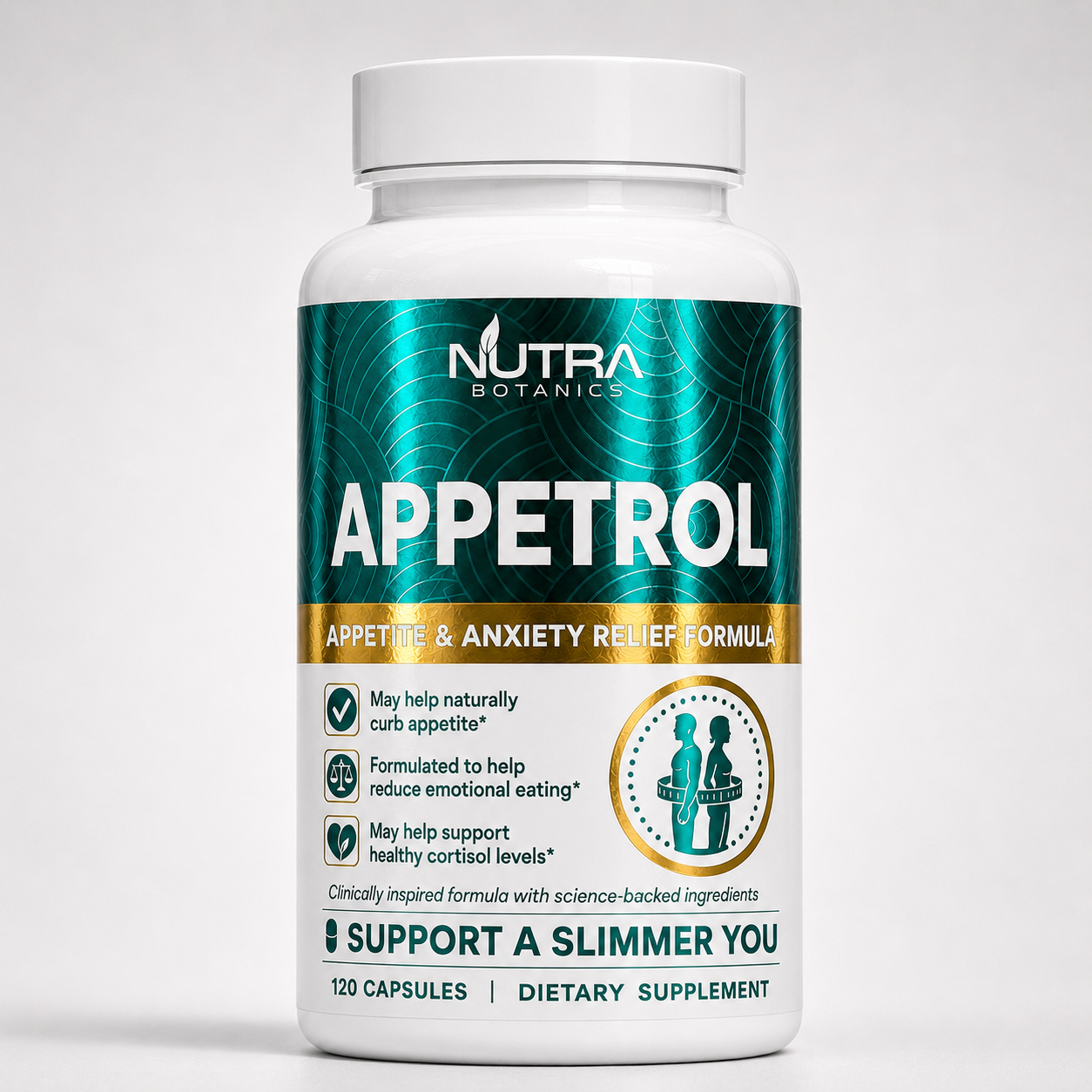
Appetrol Appetite Support
Capsules · 40 servings · once-daily
- 500 mg ashwagandha (studied 300–600 mg/day range for stress-cravings)
- 300 mg green tea extract + garcinia, bacopa & chromium
- 200 mg rhodiola + 100 mg L-theanine for the stress–hunger cycle
- GMP & NSF certified · PhD-supervised testing · no proprietary blends
$34.99Subscribe & save 20%
Shop Appetrol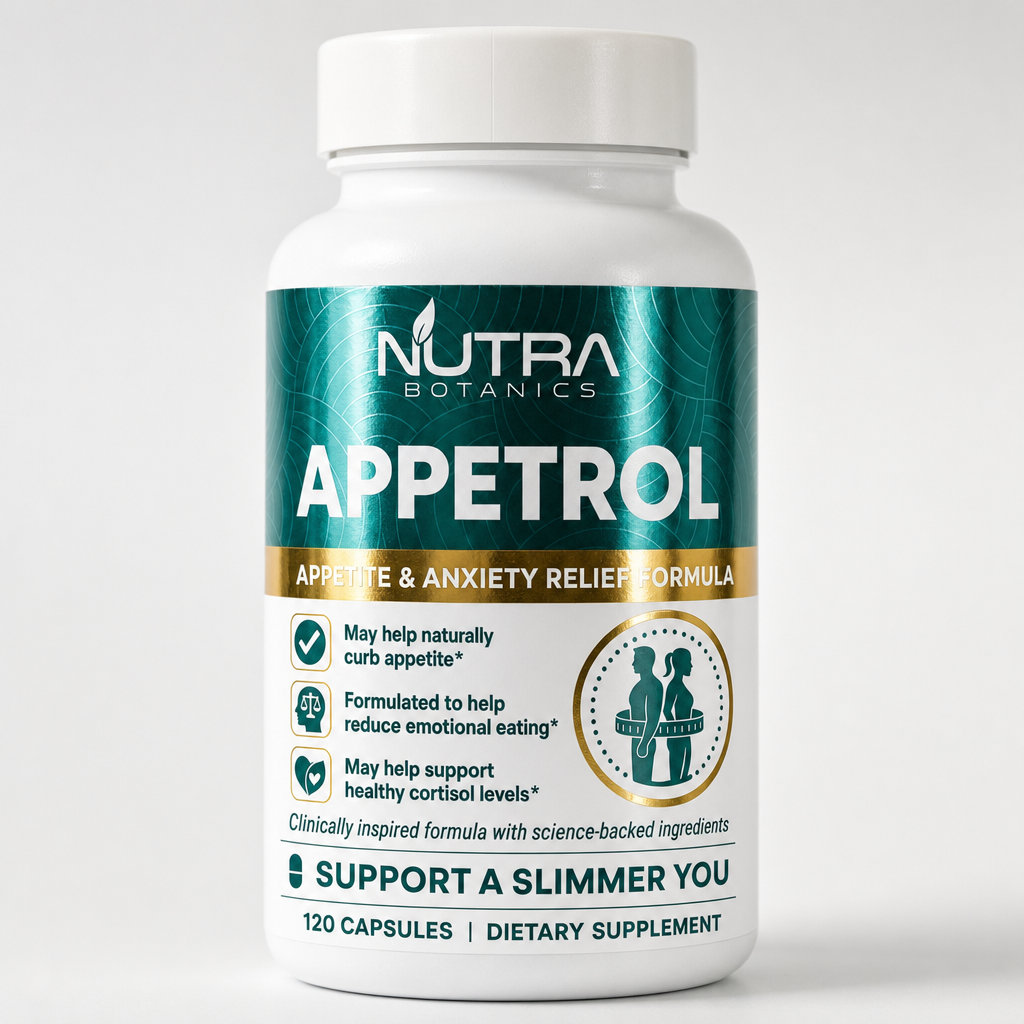
Explore Weight Management
Browse the Nutra Botanics weight-management range
- Appetite support, metabolism and thermogenic formulas side-by-side
- Compare ingredients, dosing and studied use cases in one place
- Find the right stack for cravings, deficit phases or plateaus
- GMP & NSF certified · PhD-supervised testing
Shop the rangeSubscribe & save 20%
Browse Weight Management