"Detox" may be the most-marketed and least-defined word in the supplement industry. The scientific literature is skeptical of the category as a whole — and genuinely supportive of a narrow set of ingredients within it. The honest framing is not "detox works" or "detox doesn't work." It is "the broad product category has thin evidence, but specific ingredients with specific mechanisms have real research bases, and the marketing consistently overstates both."
This review summarizes what peer-reviewed trials, meta-analyses, and systematic reviews actually show about milk thistle (silymarin), N-acetylcysteine (NAC), psyllium, traditional bitters (dandelion, artichoke), stimulant-laxative botanicals (cascara, senna, aloe ferox), colon cleanses, foot pads, and juice cleanses. Where the evidence is solid, we say so. Where the industry runs ahead of the data — which it often does — we say that too.
Key Takeaways
- Klein and Kiat (2015) published a critical systematic review and concluded no commercial detox product has replicated RCT evidence for toxin elimination in healthy people. The category-level claim is not supported.
- Specific ingredients within the category have real evidence: silymarin (45+ trials for liver enzymes), NAC (clinical glutathione precursor), psyllium (bowel regularity + LDL), Bacillus coagulans (microbiome).
- The body's actual detoxification runs continuously in liver phase I/II, kidneys, gut, and skin. Supplements support margins and specific pathways — they do not substitute for baseline function.
- Stimulant-laxative cleanses (cascara, senna, aloe ferox) are short-course only — 7 to 14 days max. Longer use causes dependence, electrolyte imbalance and melanosis coli.
- Foot pads, ionic baths and juice cleanses have no credible evidence base. The largest gap between marketing claims and trial data in the category sits here.
Related reading: Choosing a Gut Cleanse, 7 Signs Your Gut Needs a Detox, Best Supplements for Liver Health, 15 Natural Detox Foods Backed by Science.
What Detox Supplements Actually Do
The body's detoxification systems are not a "thing to turn on" with a supplement. They are continuously active biochemistry: the liver's phase I (CYP450 enzyme) and phase II (glucuronidation, sulfation, glutathione conjugation) pathways, kidney filtration and excretion, gut-microbiome metabolism, and skin/lung excretion. In a healthy adult with adequate hydration, protein, micronutrients and sleep, these systems clear endogenous metabolites and exogenous xenobiotics without supplemental help.
What detox-category supplements actually do — at best — is one of four things: support a phase of liver biochemistry (silymarin, NAC, sulforaphane), regulate bowel transit and microbiome (psyllium, B. coagulans, bitters), stimulate bile flow (dandelion, artichoke), or force a short-term bowel-emptying event (stimulant laxatives). None of these are "toxin magnets" that selectively pull environmental chemicals out of tissue — no supplement has been shown to do that.
The two mechanistic levers with the clearest peer-reviewed trial evidence are: hepatocyte membrane stabilization and phase II support (silymarin, NAC), and bowel-transit/microbiome support (psyllium, Bacillus coagulans). A third — bile-flow modulation via bitters — has traditional use and mechanistic plausibility but thinner modern trial data.
The Klein & Kiat Review — What the Category-Level Evidence Shows
Klein and Kiat (2015), "Detox diets for toxin elimination and weight management: a critical review of the evidence," published in the Journal of Human Nutrition and Dietetics, remains the most-cited critical review of the category. They examined commercial detox diets and products for evidence of actual toxin elimination and concluded that there were no well-designed RCTs supporting the toxin-elimination claims made by commercial detox programs in healthy populations.
That is a category-level finding about detox programs as sold. It is not the same as saying individual ingredients don't work — it says the product-category claim ("this eliminates toxins") lacks RCT support. Several subsequent reviews (Obert 2017; Ernst 2012) reached similar conclusions on juice cleanses, detox foot pads, ionic baths, and whole-body "cleansing" protocols.
A fair reading of the literature: the broad marketing frame is not research-supported, but some of the ingredients routinely included in these products do have independent trial bases for related (not toxin-elimination) endpoints — liver enzymes, bowel regularity, antioxidant status, microbiome composition. Buying the ingredient for its actual evidence base is different from buying the product for its marketed claim.
Milk Thistle (Silymarin) for Liver Enzymes
Silymarin, the active flavonolignan complex from milk thistle (Silybum marianum), has the most-trialed evidence base in the detox category — more than 45 peer-reviewed clinical trials across non-alcoholic fatty liver disease (NAFLD), alcoholic liver disease, hepatitis C, and drug-induced hepatotoxicity. Abenavoli et al. (2018) published a review of silymarin's chemistry and liver-disease pharmacology, summarizing trials showing modest but significant reductions in ALT and AST liver enzymes at 140 to 420 mg/day of standardized silymarin over 12 to 24 weeks in patients with liver pathology.
Mechanistically, silymarin stabilizes hepatocyte membranes against oxidative damage, upregulates phase II glutathione conjugation, and has direct antioxidant activity on hepatic reactive oxygen species. It is the single most-supported hepatoprotective supplement ingredient in the peer-reviewed literature. It is used clinically in Europe for mushroom poisoning (Amanita phalloides) as an adjunct.
The honest caveat: effect sizes in healthy populations are smaller than in liver-disease patients, and silymarin is not a "detoxifier" in the selective-toxin-removal sense — it supports the organ doing the work. For adults with elevated liver enzymes, heavy alcohol history, NAFLD risk, or medication-associated liver strain, silymarin has the best evidence base in the category. For healthy adults with normal enzymes, incremental benefits are smaller.
NAC, Glutathione, and the Antioxidant Question
N-acetylcysteine (NAC) is the clinical gold standard for glutathione replenishment — used intravenously in hospitals for acetaminophen overdose because it rescues hepatic glutathione stores and prevents fatal hepatotoxicity. Oral NAC at 600 to 1,200 mg/day has replicated trials for raising systemic glutathione, supporting phase II conjugation, and modestly improving antioxidant status biomarkers (Atkuri et al. 2007).
This is a more-evidenced mechanistic story than most of the detox category. Glutathione is the body's primary intracellular antioxidant and phase II conjugation substrate. Depletion is implicated in oxidative stress states, chronic inflammation, and compromised liver function. NAC provides cysteine (the rate-limiting substrate for glutathione synthesis) in a form that reliably crosses the gut wall — oral glutathione itself is mostly hydrolyzed in digestion.
That said, "glutathione support" is a different claim than "toxin elimination." NAC supports a pathway that processes toxins but does not itself eliminate an environmental chemical load in a way that has been demonstrated in healthy adults. The appropriate framing: NAC is a pharmacologically real glutathione precursor with strong toxicology evidence, not a magic detox ingredient.
Other phase II-supportive ingredients with thinner but directionally positive evidence include sulforaphane (from broccoli-sprout extract), alpha-lipoic acid, and selenium. All support pathways the liver already runs; none substitute for them.
Where the Evidence Is Mixed or Weak
Five claims in the detox category deserve honest skepticism:
- Detox foot pads. No credible peer-reviewed evidence supports the claim that foot pads draw toxins through the skin. Color change reflects oxidation of plant components with moisture, not metal or toxin extraction. Multiple independent analyses of used pads have shown no meaningful heavy-metal content.
- Ionic detox foot baths. Color change in the water is an electrolysis reaction between the electrodes and salt in the water — not toxin extraction from the body. Kennedy et al. (2012) and independent analyses have confirmed this. The marketing claim is not research-supported.
- Long-term colon cleanses with stimulant laxatives. Cascara sagrada, senna, and aloe ferox produce a short-term bowel-emptying effect via anthraquinone-mediated peristalsis. Extended use (beyond 7 to 14 days) causes dependence, loss of natural peristalsis, electrolyte imbalance, and melanosis coli (pigmented colonic mucosa). The American College of Gastroenterology cautions against chronic use.
- Whole-body juice cleanses. Obert et al. (2017) and multiple reviews have found no replicated evidence that multi-day juice cleanses improve biomarkers beyond short-term caloric restriction effects. The "detox" claim is not supported; the weight loss is water and glycogen and rebounds on refeeding.
- Proprietary "20-ingredient detox blends". Products that dilute active-dose ingredients (e.g., silymarin, NAC) across a long proprietary blend typically under-dose each ingredient below the studied threshold. A 50 mg silymarin dose in a "detox blend" is well below the 140+ mg/day trials use.
Who Sees the Best Results in the Research
Pooled across the detox-category literature, the populations most likely to see measurable benefit from specific ingredients are:
- Adults with elevated liver enzymes, NAFLD risk, heavy alcohol history, or medication-associated liver strain — silymarin at 140 to 420 mg/day has the clearest evidence here.
- Adults with constipation-predominant bowel irregularity — psyllium at 5 to 10 g/day with adequate water has FDA health-claim-level evidence for bowel regularity and LDL.
- Adults on medications that deplete glutathione or generate oxidative metabolites — NAC at 600 to 1,200 mg/day has replicated glutathione-precursor evidence.
- Adults with microbiome dysbiosis or post-antibiotic gut symptoms — Bacillus coagulans and other spore-forming probiotics have growing trial evidence for bloating and bowel regularity.
- Adults using short-course cleanses for occasional reset (7 to 14 days max), within a broader approach of hydration, fiber, sleep, and reduced alcohol — not as a substitute for those.
Adults already hydrated, eating adequately fibered, sleeping well, and not drinking heavily see smaller marginal returns from detox supplements. The body's detox systems are already running. Supplements support margins; they do not rescue a foundationally poor regimen.
The Bottom Line
Do detox supplements work? The category-level claim — that commercial detox products eliminate environmental toxins in healthy people — does not have RCT support. That is the Klein-Kiat finding and it still stands. Specific ingredients routinely included in detox formulas — silymarin, NAC, psyllium, Bacillus coagulans, artichoke/dandelion bitters — do have real evidence for related endpoints (liver enzymes, bowel regularity, glutathione status, microbiome). Foot pads, ionic baths, and juice cleanses lean on marketing where the data does not support them.
What none of them are: selective toxin magnets, replacements for hydration, fiber, sleep, and reduced alcohol, or shortcuts around the liver and kidney functions that are already running. Use detox supplements as ingredient-specific adjuncts with known mechanisms, short-course only for stimulant-laxative formulas (7 to 14 days), dose within the studied range, and build the foundation underneath them rather than above them.
These statements have not been evaluated by the Food and Drug Administration. This product is not intended to diagnose, treat, cure, or prevent any disease.
Frequently Asked Questions
Do detox supplements actually work?
What's the actual research on silymarin, NAC and psyllium?
How long should a detox or cleanse last?
Which detox ingredients have the strongest evidence?
Are detox supplements safe?
Can a supplement replace diet, hydration and sleep?
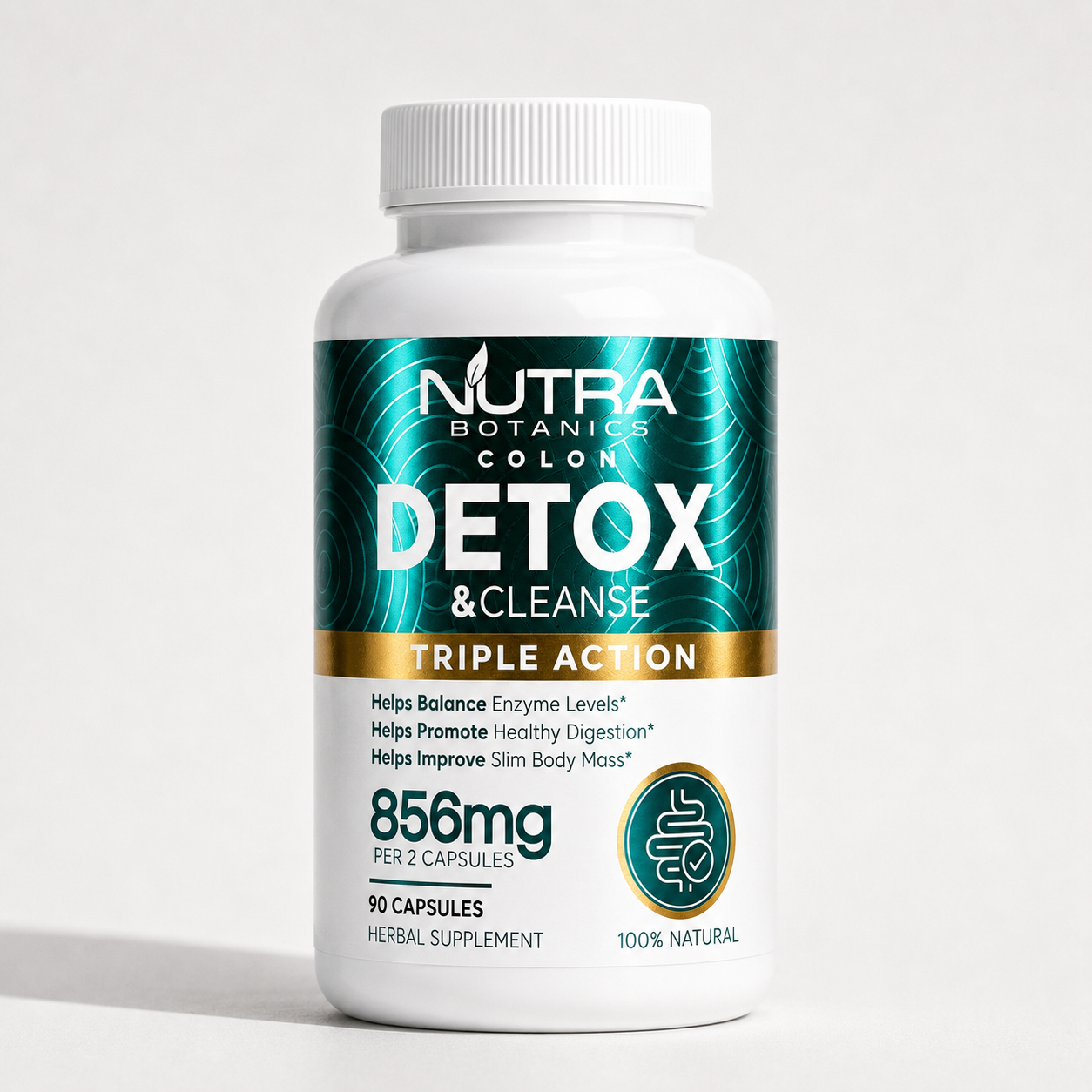
Colon Detox & Cleanse
Capsules · 45 servings · 7 to 14 day cleanse
- 856 mg 14-botanical blend led by psyllium husk for studied transit support
- Cascara sagrada & aloe ferox for short-cycle bowel motility (not for daily long-term use)
- Fennel seed, dandelion root and ginger for digestive bitters & bile flow
- Bacillus coagulans probiotic · vegan capsules · PhD-supervised testing
$32.99Subscribe & save 20%
Shop Colon Detox & Cleanse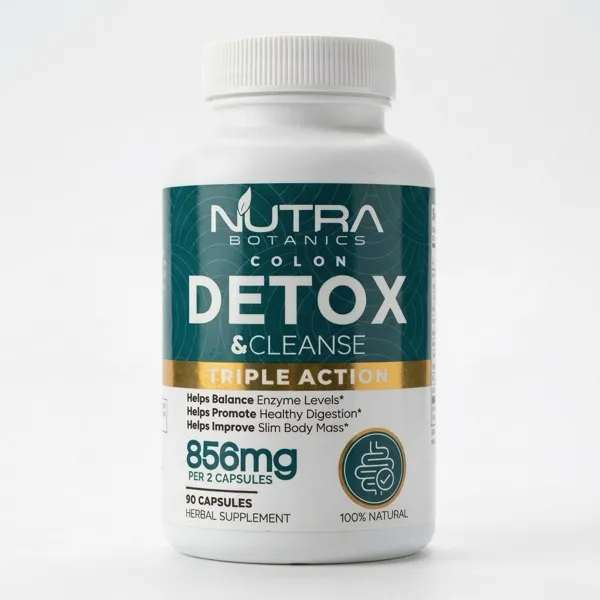
Explore the Wellness Range
Browse the Nutra Botanics gut, liver and cleanse formulas
- Compare cleanse, probiotic and liver-support options side-by-side
- See studied ingredients, doses and use-case fit in one place
- Pair a cleanse with daily digestive or liver-support maintenance
- GMP & NSF certified · PhD-supervised testing
Shop the rangeSubscribe & save 20%
Browse Wellness