
What Is Collagen?
Collagen is the most abundant protein in the human body, forming the structural framework for your skin, bones, tendons, ligaments, blood vessels, and organs. Think of it as the biological glue that holds your body together. The word itself comes from the Greek "kolla," meaning glue, which gives you a sense of how fundamental this protein is to your physical structure.
Unlike other proteins that serve primarily metabolic or enzymatic functions, collagen is a structural protein. It forms long, fibrous chains that weave together into a triple-helix structure, creating a scaffold that gives tissues their strength, elasticity, and resilience. Without adequate collagen, your skin would sag, your joints would grind, and your bones would become brittle.
Collagen is made up of amino acids, primarily glycine, proline, and hydroxyproline. These amino acids are arranged in a unique repeating pattern that allows collagen fibers to coil tightly and resist stretching forces. This molecular architecture is what makes collagen so remarkably strong. Gram for gram, Type I collagen fibers are stronger than steel.
Collagen by the Numbers
Collagen accounts for approximately 30% of all the protein in your body and up to 75% of the dry weight of your skin. It is not evenly distributed, however. Some tissues rely on collagen far more than others. Understanding where collagen is concentrated helps explain why its decline affects so many different aspects of your health simultaneously.
Where Is Collagen Found in Your Body?
Collagen is present in virtually every organ and tissue, but its concentration varies dramatically. Your tendons are composed of roughly 85% collagen by dry weight, making them the most collagen-dense structures in your body. This makes sense because tendons need to withstand enormous tensile forces as they connect muscle to bone.
Your skin, the body's largest organ, is about 75% collagen by dry weight. This collagen network is responsible for skin's firmness, elasticity, and ability to bounce back after being stretched. Cartilage, the smooth tissue that cushions your joints, contains about 70% collagen, primarily Type II. Even your bones, which many people think of as pure mineral, are actually about 30% collagen, which provides the flexible matrix that prevents bones from being too brittle.
The Three Main Types of Collagen
Scientists have identified 28 distinct types of collagen, but three types account for the vast majority of the collagen in your body. Each type has a unique structure and serves different functions in different tissues. Understanding these distinctions is important when choosing a collagen supplement because the type of collagen you take determines the benefits you receive.
| Feature | Type I | Type II | Type III |
|---|---|---|---|
| Primary Source | Bovine, marine (fish) | Chicken sternum cartilage | Bovine, porcine |
| Found In | Skin, bones, tendons, ligaments, teeth | Cartilage, vitreous humor (eyes) | Skin, blood vessels, intestines, organs |
| Best For | Skin health, anti-aging, bone density, wound healing | Joint support, cartilage repair, arthritis relief | Skin elasticity, cardiovascular health, gut integrity |
| % of Body's Collagen | 90% | 5-10% | 5-10% |
| Structure | Dense, tightly packed fibers | Looser, more elastic network | Thinner fibers, often paired with Type I |
Type I collagen is by far the most abundant, making up about 90% of the collagen in your body. It forms dense, tightly packed fibers that provide tensile strength to skin, bones, and tendons. Type II collagen has a looser, more elastic structure that is ideally suited for cushioning joints. Type III collagen often works alongside Type I and is particularly important for the structural integrity of hollow organs and blood vessels.
How Your Body Makes Collagen
Collagen synthesis is a complex, multi-step process that begins inside your cells and ends in the extracellular matrix. Understanding this process reveals why certain nutrients are essential for maintaining healthy collagen levels and why supplementation can be so effective.
Collagen production begins when fibroblast cells read the genetic instructions for collagen and assemble individual amino acids (primarily glycine, proline, and lysine) into a chain called procollagen. This chain requires vitamin C to catalyze the hydroxylation of proline and lysine residues, which is essential for the collagen triple helix to form properly.
Once three procollagen chains wind together into a triple helix, the molecule is secreted outside the cell. Enzymes then trim the ends of the procollagen molecule, converting it into tropocollagen. These tropocollagen units self-assemble into collagen fibrils, which bundle together into the strong collagen fibers that give your tissues their structure.
This entire process depends on adequate supplies of amino acids (from protein or collagen supplements), vitamin C, zinc, and copper. A deficiency in any of these cofactors can impair collagen production significantly.
Why Collagen Declines with Age
Starting in your early twenties, your body's collagen production begins a gradual but relentless decline of approximately 1% per year. By age 40, you may have lost 20% or more of your collagen stores. By age 60, that figure can reach 40% or more. This decline is one of the primary biological drivers of visible aging and many age-related health concerns.
Several factors accelerate collagen degradation beyond the natural aging process. Ultraviolet radiation from sun exposure breaks down collagen fibers in the skin and triggers enzymes called matrix metalloproteinases (MMPs) that actively destroy collagen. Smoking introduces free radicals that damage collagen and impair new collagen synthesis. A diet high in sugar promotes glycation, a process where sugar molecules attach to collagen fibers and make them stiff and brittle.
Chronic inflammation, whether from stress, poor diet, or underlying health conditions, also accelerates collagen breakdown. These combined factors explain why some people appear to age much faster than others, even at the same chronological age. The good news is that many of these factors are modifiable, and collagen supplementation can help offset some of the decline.
The Key Benefits of Collagen
The benefits of maintaining healthy collagen levels extend across virtually every system in your body. Here are the most well-documented benefits supported by clinical research:
- Skin health: Collagen supplementation has been shown to improve skin hydration, elasticity, and wrinkle depth in multiple clinical trials. Most studies report visible improvements within 4 to 8 weeks of daily use.
- Joint support: Collagen provides the raw materials for cartilage maintenance and repair. Studies show significant reductions in joint pain and stiffness, particularly in athletes and older adults with osteoarthritis.
- Bone density: Collagen makes up about 30% of bone mass and provides the flexible framework that prevents bones from becoming brittle. Research suggests that collagen supplementation can improve bone mineral density in postmenopausal women.
- Gut integrity: The amino acids in collagen, particularly glycine and glutamine, support the integrity of the intestinal lining and promote healthy digestion.
- Hair and nails: Collagen provides the building blocks for keratin production, leading to stronger nails and thicker hair with consistent supplementation.
- Muscle recovery: Collagen supports the connective tissues that surround muscles and may enhance muscle protein synthesis when combined with resistance training.
Collagen Supplementation: What the Science Says
Over the past decade, the body of clinical evidence supporting collagen supplementation has grown substantially. Dozens of randomized, placebo-controlled trials have demonstrated measurable benefits across skin, joint, and bone health outcomes.
"Oral collagen supplementation significantly improved skin hydration, elasticity, roughness, and density in the majority of clinical trials. The evidence suggests that collagen peptides are bioactive compounds that reach the skin after oral ingestion and stimulate dermal collagen synthesis." Journal of Drugs in Dermatology, 2019 — Systematic Review of 11 Clinical Trials
The key to effective collagen supplementation is hydrolysis. Hydrolyzed collagen peptides are collagen proteins that have been broken down into smaller fragments, typically between 2,000 and 5,000 daltons in molecular weight. This smaller size allows them to be absorbed efficiently through the intestinal wall and transported via the bloodstream to target tissues like skin and cartilage.
Studies consistently show that hydrolyzed collagen peptides have a bioavailability of over 90%, meaning almost all of what you consume reaches your bloodstream and becomes available for your body to use. This is a significant advantage over consuming whole collagen from dietary sources like bone broth, where the collagen molecules are much larger and less readily absorbed.
Liquid collagen formulas offer an additional advantage: they bypass the dissolution step required by capsules and tablets, allowing for faster absorption and potentially higher bioavailability. This is why many health professionals recommend liquid collagen as the preferred delivery format for maximum results.
Choosing the Right Collagen Supplement
With hundreds of collagen supplements on the market, choosing the right one can feel overwhelming. Here are the key factors to evaluate when selecting a collagen product:
- Type of collagen: For general anti-aging and skin health, look for Type I and Type III collagen. For joint support, Type II collagen or a formula with joint-specific ingredients is ideal.
- Hydrolyzed form: Always choose hydrolyzed collagen peptides for superior absorption. Avoid products that use unhydrolyzed collagen, which is poorly absorbed.
- Dosage: Clinical studies typically use doses between 2,500 mg and 10,000 mg per day. Look for a product that delivers at least 5,000 mg per serving.
- Third-party testing: Choose brands that verify purity and potency through independent laboratory testing.
- Delivery format: Liquid collagen is absorbed more quickly than pills or powders and is easier to incorporate into a daily routine.
- Collagen is the most abundant protein in your body, making up 30% of total protein and forming the structural foundation of skin, bones, joints, and connective tissues.
- There are 28 types of collagen, but Types I, II, and III are most important for supplementation. Type I supports skin and bones, Type II supports joints, and Type III supports skin elasticity and blood vessels.
- Collagen production declines by about 1% per year after age 20, accelerated by sun exposure, smoking, sugar, and chronic inflammation.
- Hydrolyzed collagen peptides have over 90% bioavailability, and liquid formats offer the fastest absorption.
- Clinical research supports collagen supplementation for improved skin health, reduced joint pain, stronger bones, and enhanced recovery.
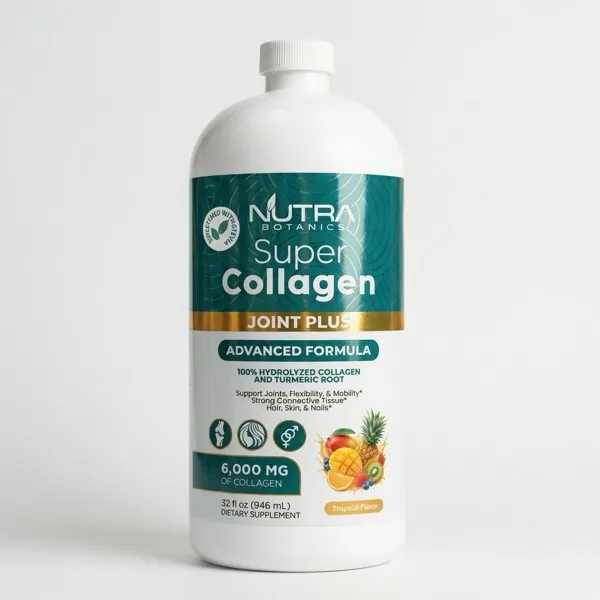
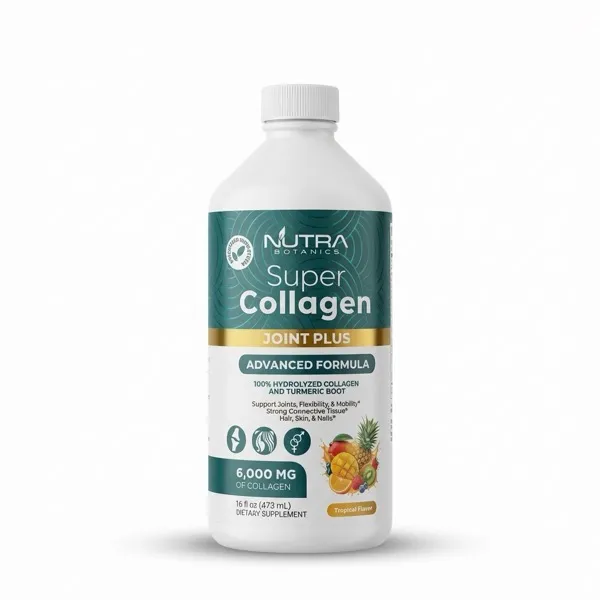
Start Your Collagen Journey Today
Experience the difference premium, third-party tested collagen can make for your skin, joints, and overall health.
Shop Collagen Products