
What can collagen supplements help with? Human studies have reported improvements in skin hydration, joint comfort and some muscle measures. The answer depends on the goal, the collagen used and the study. Digestion, hair and nails deserve their own closer look.
Three checks before you choose
- Start with one goal. Skin hydration, joint comfort and nail growth are different outcomes.
- Read the complete label. Check the collagen preparation, amount per serving, other ingredients and warnings.
- Compare what you will use. A measured liquid and a powder offer different routines. Bottle size changes how many servings you buy.
1. Skin: hydration and elasticity
Hydration means how much moisture your skin holds. Elasticity means how well it springs back. A 2021 review of 19 trials reported improvements in these measures and wrinkles among people taking hydrolyzed collagen.
A 2025 review of 23 trials also found positive results overall. However, the higher-quality studies and studies without pharmaceutical-company funding did not show significant improvements. That distinction matters when you see a promise of younger-looking skin.
A 2026 review combining earlier reviews reported favorable skin and muscle/joint findings. Yet 15 of its 16 included reviews had low or critically low quality. Read these results as findings about the studied products, rather than a guarantee for every bottle.
Make the comparison useful: look for the actual collagen amount and preparation. A broad beauty claim tells you less than a clear ingredient panel. Our collagen research review takes a closer look at those differences.
2. Joints: why the formula matters
Joint comfort is a different goal from skin hydration. A 2024 review of 35 trials examined collagen preparations in people with osteoarthritis, a joint disease. Its main analysis found small to moderate improvements in pain and function compared with control groups.
The studies used different collagen preparations. Those findings do not establish that a retail blend treats arthritis. For ongoing joint pain, discuss supplement use with the healthcare professional managing your care.
At the label: check whether the product contains hydrolyzed collagen or undenatured type II collagen. Then read the other ingredients. The joint-focused collagen guide explains the research and practical label checks in more detail.
3. Digestion: what the bloating study found
A 2022 digestive-symptom study followed women taking 20 g of Peptan collagen daily for eight weeks. Of 40 recruited participants, 14 completed it; 13 reported fewer digestive symptoms. There was no comparison group, and collagen supplier Rousselot funded the study.
The study measured reported symptoms, including bloating. It did not demonstrate repair of the gut lining. Its serving and collagen preparation also differ from Joint Plus. See our collagen and bloating guide for the full comparison.
For digestive concerns: compare all ingredients and discuss persistent symptoms with your healthcare professional. Choose a product for its disclosed formula, rather than a promised week of gut repair.
4. Hair and nails: two separate questions
A 2017 nail study followed 25 people taking 2.5 g of VERISOL collagen daily for 24 weeks. It reported faster nail growth and fewer broken nails. Participants knew what they were taking, and there was no comparison group.
That was a nail study, not a hair-growth study. It cannot establish thicker hair or the same nail results from another formula. Keeping those two goals separate makes a beauty supplement easier to assess.
5. Muscle: collagen alongside training
In a 2015 trial, 53 older men with age-related muscle loss completed 12 weeks of strength training. Those taking 15 g of collagen daily had greater improvements in fat-free mass (body weight excluding fat) and strength than the placebo group.
A 2025 correction clarified that Gelita supplied the samples and covered participant compensation and sample analysis. It also disclosed a related patent application naming one author as a co-inventor, with no royalties or other related payment.
The participants trained throughout the trial. This study does not establish faster recovery or fewer injuries for every athlete. Treat collagen as one ingredient to assess within your training and nutrition routine.
Types and preparations: read beyond the headline
The research on collagen composition distinguishes hydrolyzed collagen from native, or undenatured, collagen. These preparations have different structures and are not interchangeable. The review's authors work for a manufacturer of an undenatured type II collagen ingredient.
- Hydrolyzed collagen: collagen broken into smaller pieces called peptides.
- Undenatured type II collagen: a preparation that retains its original structure.
- Type I, II or III: a type name alone does not tell you how a supplement was prepared or what its finished formula achieves.
Joint Plus lists hydrolyzed collagen. Use its current label for the actual ingredients and amounts. Avoid assuming that the bottle contains a measured type I/III blend when the panel does not disclose one.
Make the serving fit your routine
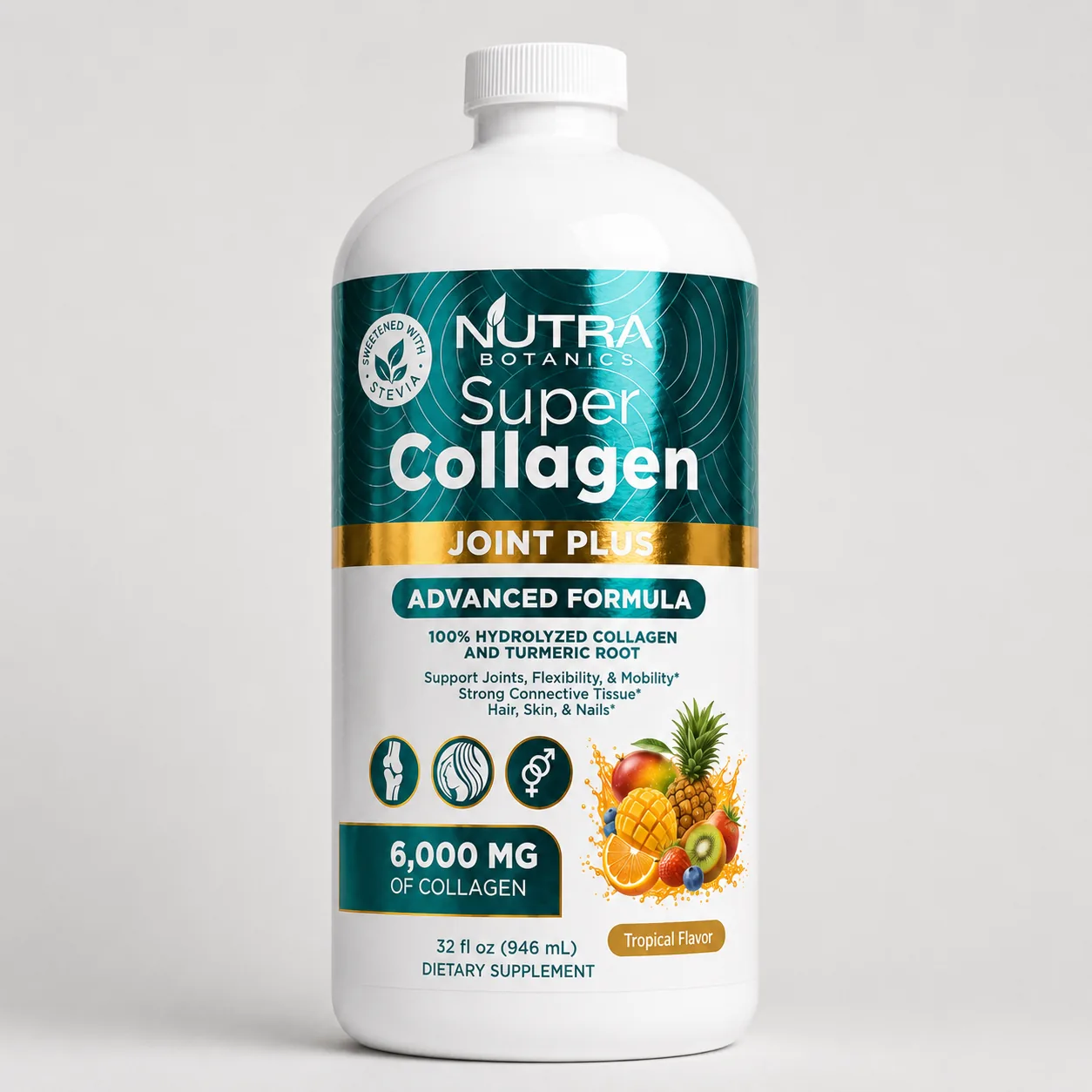
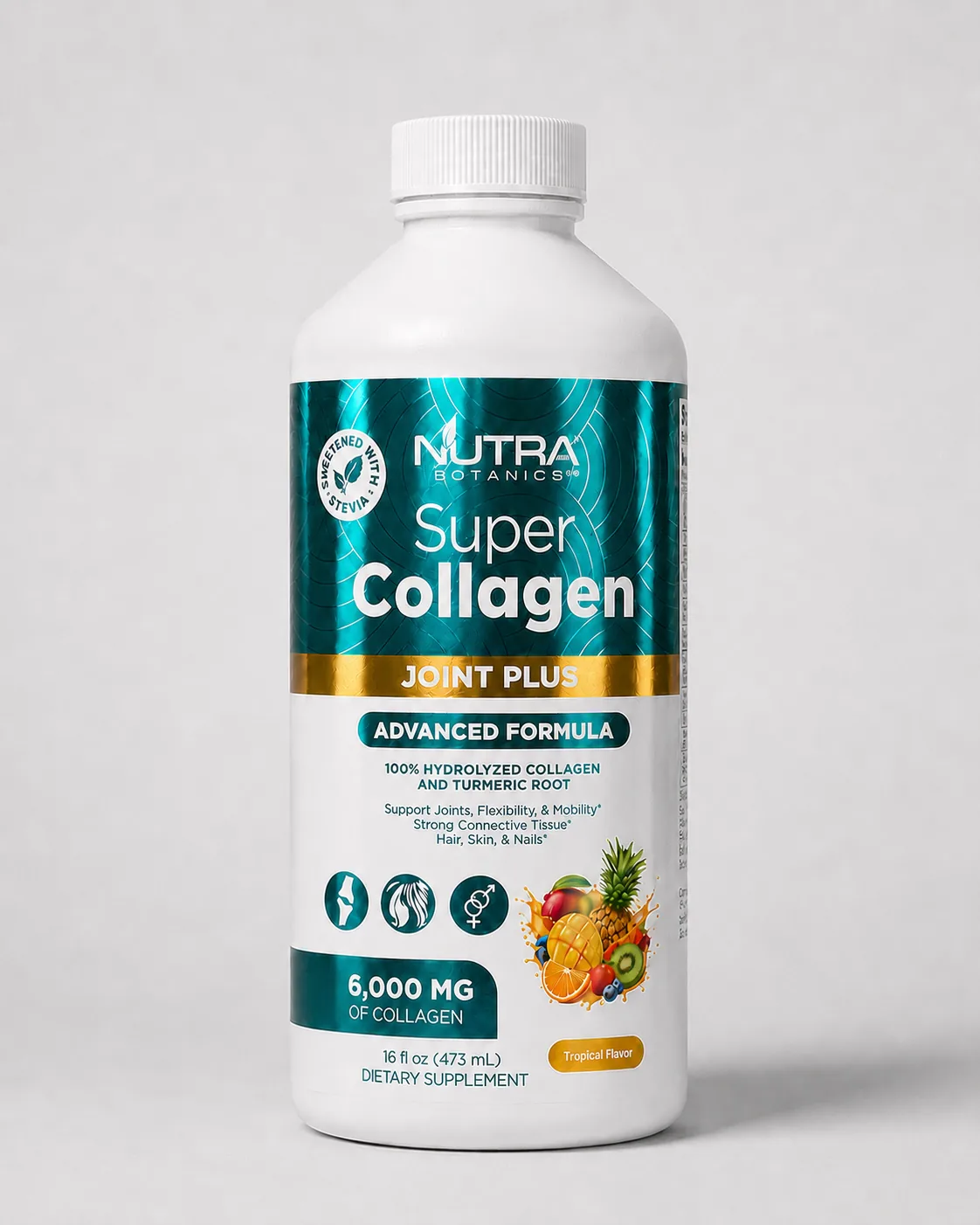
Joint Plus provides 6 g of collagen and 100 mg of vitamin C per 30 mL serving. It is a measured liquid, so there is no powder to mix. Shake well and keep it refrigerated, as the label directs.
Vitamin C helps your body form normal collagen, which supports connective tissue. That is a recognized role of vitamin C, rather than proof that this finished blend produces every result described above.
Follow your package's complete directions and warnings. For more practical reading, see collagen serving amounts, timing and routine and foods that support collagen production.
Same serving, two bottle sizes
The 16 oz Joint Plus bottle lists 16 servings; the 32 oz bottle lists 32. Both disclose the same collagen and vitamin C amounts per 30 mL serving. The larger bottle gives you more servings, rather than a stronger serving.
| Label detail | 16 oz | 32 oz |
|---|---|---|
| Servings | 16 | 32 |
| Serving size | 30 mL | 30 mL |
| Collagen | 6 g | 6 g |
| Vitamin C | 100 mg | 100 mg |
Choose by ingredients, routine and value
Joint Plus also lists glucosamine, MSM, chondroitin, turmeric, hyaluronic acid and tart cherry. Read the full panel and warnings before choosing this multi-ingredient blend. Labeled servings tell you what is in the bottle; your directions determine how quickly you use them.
Find the bottle that fits
Compare both sizes, their current purchase options and price per labeled serving in one place.
Compare Joint Plus bottle sizesYou can also browse collagen formulas to review the current product range.
*These statements have not been evaluated by the Food and Drug Administration. This product is not intended to diagnose, treat, cure, or prevent any disease. Individual results may vary.
Your collagen questions, answered
What are the most evidence-backed benefits of collagen supplementation?
Does collagen really work, or is it just hype?
How is collagen absorbed by the body?
At what age should you start taking collagen?
Can collagen supplements improve gut health?
Is collagen better taken in the morning or at night?
Sources and safe use
Read the full ingredient list, warnings and directions. If you take medication or manage a health condition, discuss the complete blend with your healthcare professional. FDA supplement guidance explains why ingredients and interactions matter.
For questions about allergens, added ingredients and unwanted reactions, read our collagen side effects and safety checklist.
Research used in this guide
- Skin outcomes review, 2021
- Skin outcomes and study quality, 2025
- Review of skin and muscle/joint reviews, 2026
- Joint outcomes review, 2024, and the earlier joint review, 2019
- Digestive-symptom study, 2022
- Nail study, 2017
- Strength-training trial, 2015, with its disclosure correction, 2025
- Collagen composition review, 2023
- Human absorption study, 2005