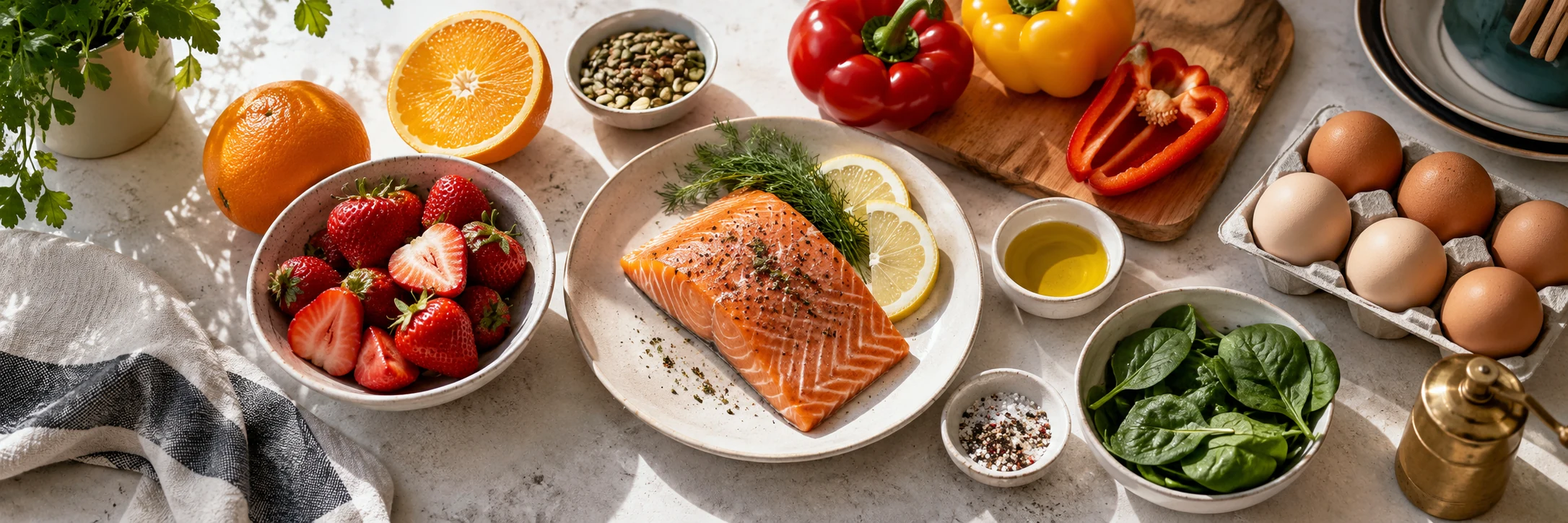
Build your plate around protein and produce
Food supplies nutrients your body uses to make collagen. Pair varied protein foods with vitamin C-rich produce.
Want a practical starting point? Try eggs with bell peppers, salmon with a tomato salad, or lentils with broccoli. The 12 foods below give you options you can actually use.
Choosing a supplement? Start with our collagen buying guide. For study results, read what collagen research actually measured.
What your body needs to make collagen
Protein helps maintain skin and cartilage. Vary fish, chicken and eggs with beans, lentils, tofu, nuts and seeds. You can choose a routine that fits your preferences.
Two minerals matter here too. Copper is involved in making connective tissue, while zinc supports protein production. Nuts and seeds contribute copper; protein foods such as poultry and seafood can contribute zinc. Varying these foods helps you cover more of your nutrient needs.
For the bigger picture, our complete collagen guide explains collagen types, formats and common shopping questions.
Vitamin C: a clear role, familiar foods
Your body needs vitamin C to make collagen. Oranges, peppers, kiwi and strawberries are familiar choices to include alongside protein.
Most adult women need 75 mg daily; most adult men need 90 mg. Pregnancy, breastfeeding and smoking change those recommendations. Use these amounts as daily nutrition guides.
12 foods, with easy ways to use them
Each food has a different place in your routine. Some supply protein or vitamins; others make a meal more enjoyable. The list is a meal-planning tool, not a ranking of proven skin or joint results.
| Food | What it adds and how to use it |
|---|---|
| 1. Bone broth | Amino acids, with amounts that vary by preparation. Do not assume a fixed collagen amount per cup. Try it: Use it as a soup base. Compare the carton labels. |
| 2. Salmon | Protein and omega-3 fats. Try it: Serve with greens and a tomato salad. |
| 3. Citrus fruits | Vitamin C, with a medium orange providing about 70 mg. Try it: Add orange segments to breakfast or a salad. |
| 4. Berries | Strawberries contribute vitamin C. Different berries have different amounts. Try it: Keep sliced strawberries ready for a snack. |
| 5. Leafy greens | Spinach contributes vitamin C and copper. Try it: Fold spinach into eggs or add it to soup. |
| 6. Garlic | Flavor that helps make vegetables and protein dishes appealing. Try it: Use it in a bean stew or chicken marinade. |
| 7. Eggs | A convenient protein option. Try it: Scramble with peppers or slice onto a salad. |
| 8. Bell peppers | Raw red peppers supply vitamin C: about 95 mg in half a cup. Try it: Slice for a snack or add to a grain bowl. |
| 9. Tomatoes | Vitamin C, about 17 mg in a medium raw tomato. Try it: Pair with beans, fish or chicken. |
| 10. Avocado | Copper, alongside a creamy texture. Try it: Use as a topping for toast or a grain bowl. |
| 11. Nuts and seeds | Copper sources include cashews and sunflower seeds. Try it: Scatter a small handful over a salad. |
| 12. Chicken | A familiar protein choice. Try it: Roast with garlic and serve with broccoli. |
Food information: USDA protein foods, NIH vitamin C foods, NIH copper foods.
A laboratory study found substantial differences in amino acids across bone broths made with different recipes. Enjoy broth as food, but do not use a guessed collagen number to compare it with a labeled supplement. Read the bone broth analysis.
Use garlic to make beans, vegetables and protein dishes taste good. A routine you enjoy is easier to repeat.
Compare vitamin C in real portions
These approximate amounts use the specific portions shown. They come from the NIH Office of Dietary Supplements food table, based on USDA data. Storage and cooking can change vitamin C content.
A simple day of meals
Use this as a flexible example, not a prescribed menu. Choose portions that fit your needs and swap ingredients to suit your preferences.
- Breakfast: Eggs with spinach and bell peppers, plus an orange.
- Lunch: Salmon over greens with tomatoes, avocado and sunflower seeds.
- Snack: Sliced strawberries and a small handful of cashews.
- Dinner: Garlic-roasted chicken with broccoli, or a bean-and-vegetable soup.
Prefer plant-based meals? Swap tofu, beans or lentils for fish and chicken. A supplement is optional.
Food or a supplement? Compare what each offers
Start with your goal. Food belongs in your everyday meals. A labeled collagen supplement gives you a stated amount to measure and compare, if you decide that format fits your routine.
A 2015 study tested specific fish and porcine collagen preparations for skin outcomes. Rousselot supplied the products, and a coauthor worked for the company. It did not compare these 12 foods with a supplement, or show that combining them produces better results. Read the original study.
Before buying for a particular outcome, check our updated collagen research review. It separates the preparation tested, the result measured and what that means for a shopper.
| Choice | What to check |
|---|---|
| Everyday meals | Protein choices, fruit and vegetables, preferences and your overall diet. |
| Bone broth | The individual product label. Its amino acid content can vary; a generic collagen-per-cup claim is not a reliable comparison. |
| Collagen supplement | Stated collagen amount, serving size, source, other ingredients, warnings and cost per serving. |
For label details, see collagen amounts and servings and marine versus bovine collagen. For fitting it into your day, see collagen timing and routine.
Keep the rest of your routine simple
Sun protection matters for skin aging. The American Academy of Dermatology recommends shade, protective clothing and broad-spectrum, water-resistant SPF 30 or higher. Smoking also speeds skin aging. Food and supplements do not replace these habits. See the dermatologists' guidance.
Keep a regular sleep routine and fluids available through your day. Focus on habits you can maintain, alongside meals you enjoy.
Sugar can react with proteins in a process called glycation, which researchers discuss in skin aging. That process does not let you calculate collagen loss from a dessert. Focus on your overall eating pattern rather than treating one food as a collagen destroyer. Read the glycation review.
Want a measured liquid option?
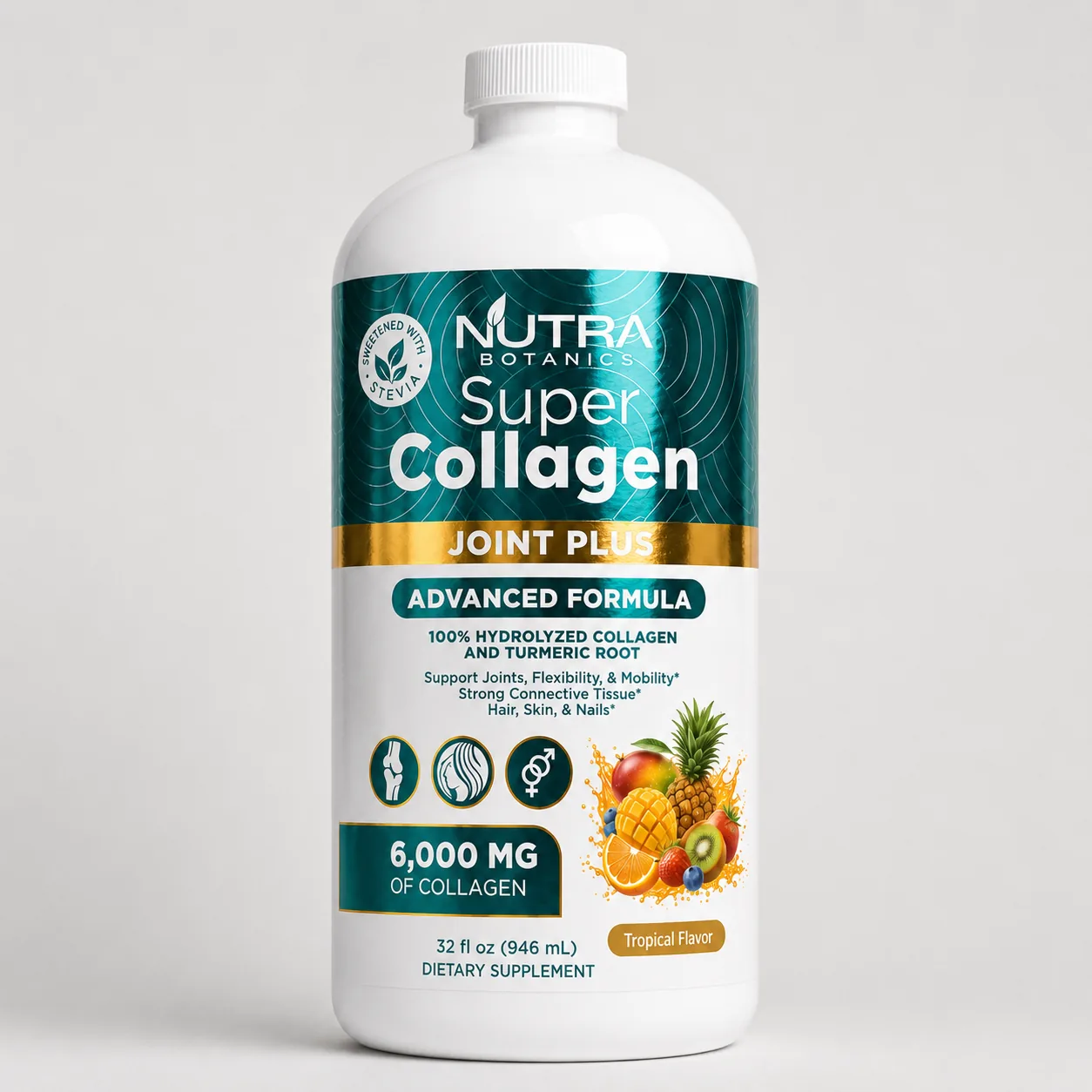
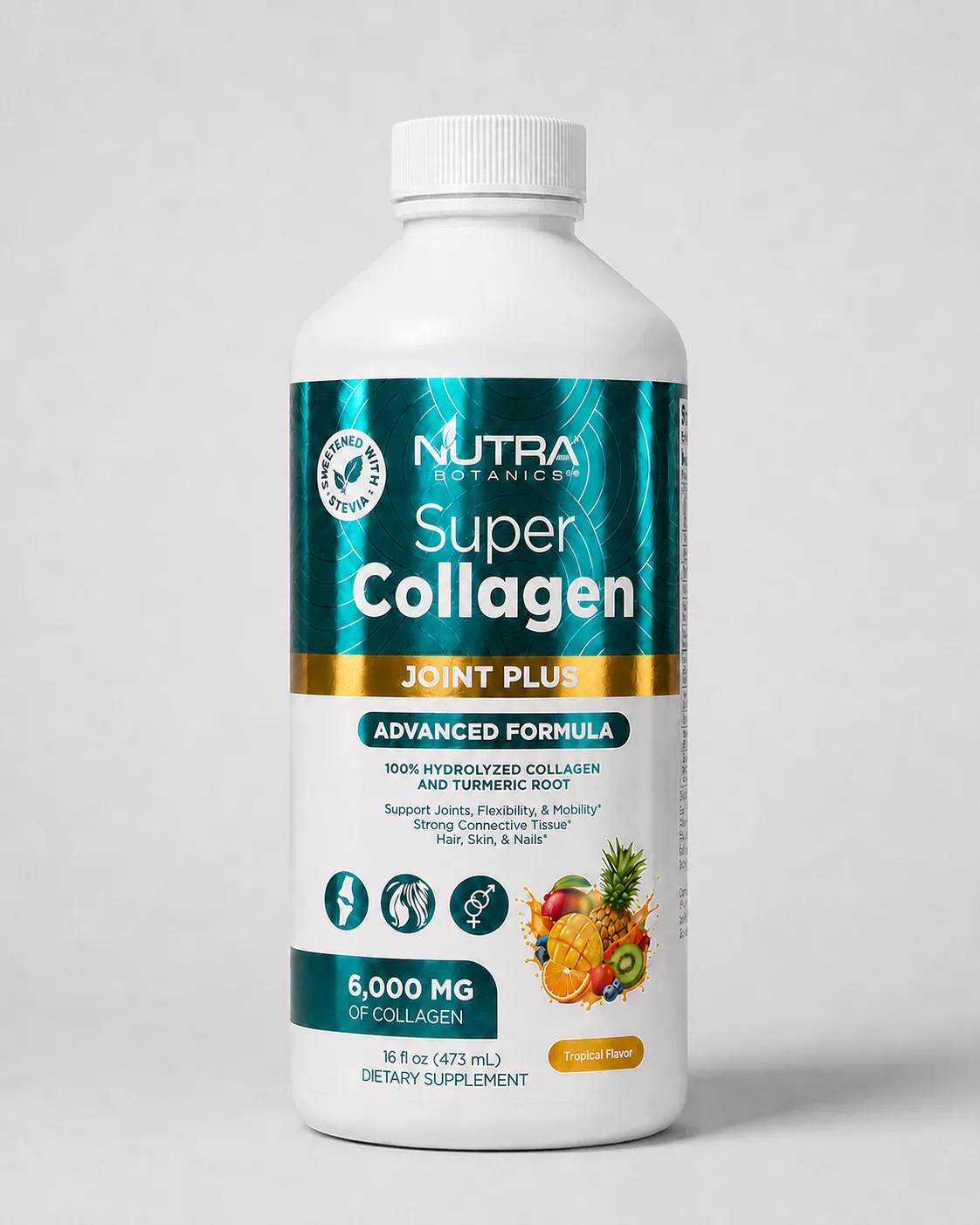
Both Super Collagen Joint Plus sizes list 6 g of collagen and 100 mg of vitamin C per 30 mL serving. The 16 oz bottle lists 16 servings; the 32 oz bottle lists 32. Compare the full formula and warnings before choosing.
Choose the bottle that fits your routine
Compare labeled servings, current prices and cost per serving in one place.
Compare 16 oz and 32 oz bottlesWant to explore other goals? Browse all Nutra Botanics formulas.
*These statements have not been evaluated by the Food and Drug Administration. This product is not intended to diagnose, treat, cure, or prevent any disease. Individual results may vary.
Sources and choosing safely
Food examples are meal ideas, not evidence of a finished-product result. Read the full supplement label and warnings. If you have a medical condition or take medication, ask your healthcare professional about the complete formula.
Food and collagen: your questions
What foods are highest in collagen?
Can you get enough collagen from food alone?
What vitamins are needed for collagen production?
Does eating collagen-rich foods actually increase body collagen?
Do plant-based diets support collagen production?
Does sugar destroy collagen?