Choose a collagen supplement by its complete label, serving size and fit with your routine. Start with the benefit you care about, then check the collagen preparation, other ingredients, source and cost per serving. A bigger scoop or higher price does not automatically make a better choice.
Five checks before you buy
- Your goal: look for research that measures the benefit you want.
- The full serving: check the amount of collagen, not just the size of the scoop or bottle.
- The complete formula: read other ingredients, allergens, directions and storage.
- Quality information: ask what testing covers and whether it matches the product or lot.
- Everyday value: compare servings, price and the effort needed to use it.
What are collagen peptides?
Hydrolyzed collagen is collagen broken into smaller pieces, called peptides. A human absorption study detected small collagen fragments in blood after people took gelatin hydrolysates. That shows absorption, rather than proving that a drink rebuilds cartilage or delivers visible skin changes.
For shopping, match the preparation as well as the amount. Hydrolyzed peptides and undenatured collagen are different preparations. A study on one is not evidence for every product with “collagen” on the front.
Which benefits should you look for?
Skin: hydration and elasticity
A 2026 review of 35 trials found improvements in measured skin hydration, elasticity and moisture retention. Findings for wrinkles and skin structure did not hold up reliably in additional analyses. Measured changes are different from a guaranteed visible transformation.
Study quality matters. A 2025 review found positive results overall, but no significant benefits in the higher-quality studies or those without pharmaceutical-company funding. Look for a specific preparation and outcome, rather than an anti-aging promise.
Explore collagen research for skin and skin texture and cellulite to compare the claims that matter to you.
Joints: comfort during activity
A 24-week athlete trial tested 10 g of a particular collagen hydrolysate daily. Several joint-pain ratings improved versus placebo, with data analyzed for 97 of 147 recruited athletes. Those results do not establish cartilage rebuilding or prove the same effect for another formula.
For this goal, focus on the preparation and outcome studied. Our collagen and joint comfort guide explains the distinction between everyday support and treatment for a joint condition.
Nails and hair: separate the claims
A 2017 nail study followed 25 people taking 2.5 g of VERISOL daily for 24 weeks. Nail growth and breakage improved, but there was no placebo group. It was not a four-week trial and did not establish a hair-regrowth benefit.
Check whether a hair claim comes from a study that actually measured hair. The hair and nails guide helps you read these two claims separately.
Gut health: ask what was measured
For a digestive-health claim, ask for research in people that measured the relevant symptoms. Describing an ingredient’s role in cells is different from showing that a supplement heals the gut. The collagen and gut health guide explores that difference.
Bones: a specific research setting
A 12-month trial in 131 postmenopausal women with low bone density tested 5 g of FORTIBONE against placebo. Bone density improved. Calcium and vitamin D were encouraged, not controlled treatments; the study was partly industry-funded. It did not establish fracture prevention.
These studies test particular ingredients or preparations. They are not finished-product trials of Nutra Botanics Super Collagen Joint Plus.
Powder, liquid or capsules?
Choose the format you can use comfortably. Compare the full serving and preparation before deciding that one format is stronger.
| Format | Everyday use | Check before buying |
|---|---|---|
| Powder | Mix a measured scoop into a suitable drink or food. | Collagen per scoop, flavor, mixing directions and total servings. |
| Liquid | Measure a ready-made serving without mixing powder. | Collagen per measured serving, other ingredients and storage after opening. |
| Capsules | Take the number of capsules listed in the directions. | Amount per full serving, capsule count and days of use at that serving. |
Check instructions before adding a powder to hot drinks. For more detail, read the liquid, powder and capsule comparison.
How much collagen is in the serving?
There is no single amount that fits every collagen preparation and goal. A 2019 skin-research review included hydrolysate studies using 2.5–10 g daily. The amount tested is part of the study, not a universal instruction to take a larger serving.
Read “Serving Size” and the collagen amount together. If the label lists three capsules as one serving, the amount shown usually refers to all three. Compare complete servings, then follow your chosen product’s directions. See the collagen serving-size guide.
A real label example
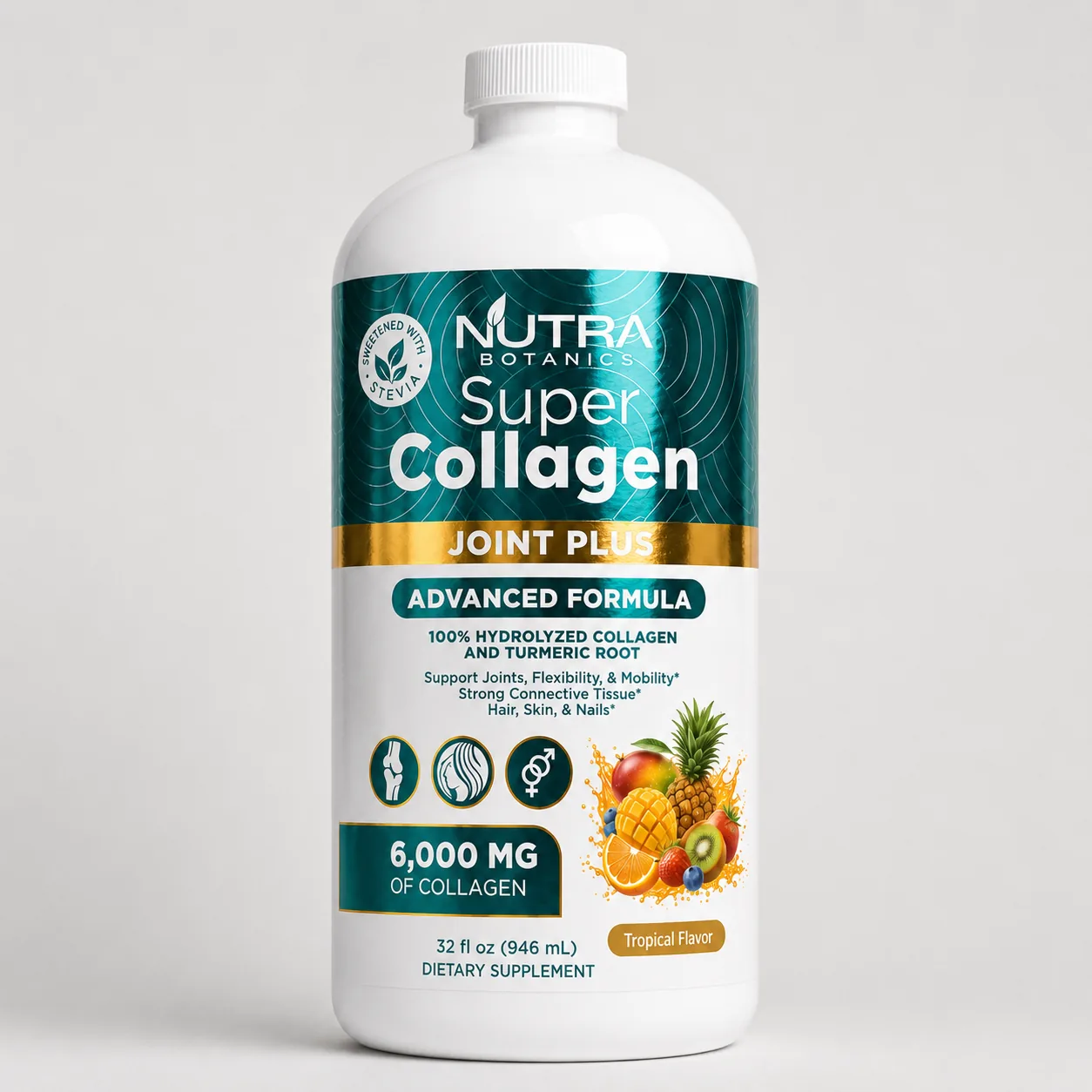
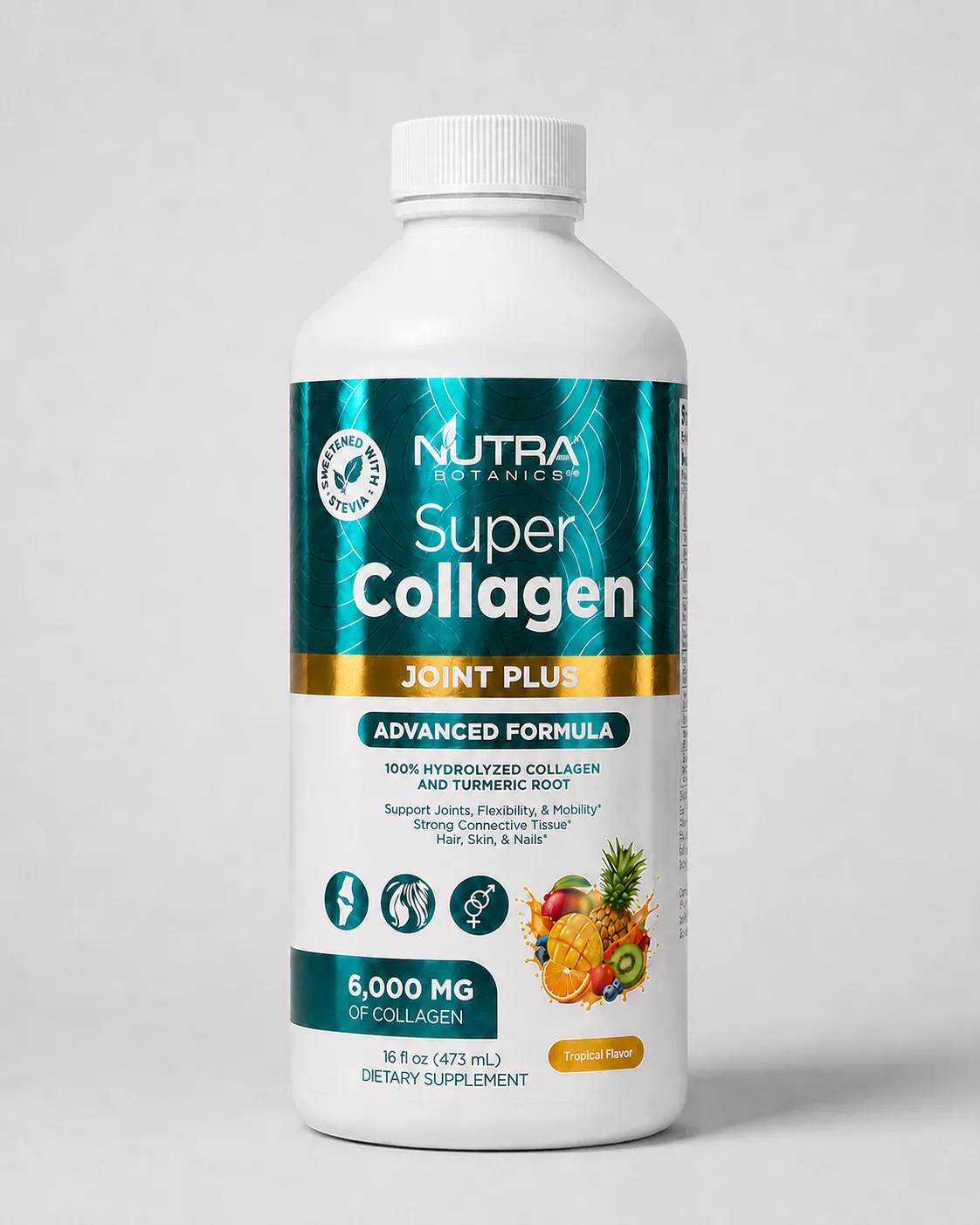
Both Nutra Botanics Super Collagen Joint Plus bottles list 6 g of collagen and 100 mg of vitamin C per 30 mL serving. The 16 oz bottle lists 16 servings; the 32 oz bottle lists 32. Bottle size changes the supply, not the labeled amount per serving.
Compare value: divide the price by the labeled number of servings. Then check your actual usage directions. A bottle with 32 labeled servings does not last 32 days if your selected directions use two servings daily.
Make the routine work for you
Start with the complete directions, including measuring, mixing and storage. Choose a convenient point in your day that fits those instructions. An easy routine is useful; it does not make breakfast or bedtime a proven shortcut to results.
Vitamin C helps your body make collagen. The NIH vitamin C guide lists citrus fruit, peppers and other food sources. This role does not mean everyone needs an extra 500–1,000 mg supplement alongside collagen.
The Joint Plus labels say to take two tablespoons daily, or twice daily for joint comfort and flexibility. Shake well and keep refrigerated. Measure the serving and read the complete warnings before choosing how to use either bottle.
How long should you give it?
Match expectations to the outcome. For example, a skin-wrinkle trial tested a specific preparation for eight weeks. The joint and nail studies above ran longer. These are research schedules, rather than promised deadlines for your skin, hair or joints.
Write down what you want to assess before starting. Review the same goal at sensible check-ins, including comfort, convenience and cost. Keep other routines in view so you do not automatically credit every change to a supplement.
Use the collagen timing guide and 30, 60 and 90-day check-in guide to plan a useful review.
Are symptoms a reason to buy collagen?
Wrinkles, brittle nails, hair changes or joint discomfort are not a collagen-deficiency diagnosis. Do not let a checklist decide the cause for you. If a change is new, persistent or worrying, seek help understanding it before selecting a supplement.
The guide to common collagen-related concerns is a starting point for questions, not a diagnostic test.
Who might consider it?
People comparing support for skin or activity
Start with a specific goal and research that resembles your situation. A study in athletes or postmenopausal women does not establish a need for every adult. Age 25 or 40 alone is not a reason everyone must start collagen.
For life-stage considerations, read collagen choices for women over 40. Men can use the same label, goal and evidence checks.
People looking for a convenient formula
If a measured liquid fits your day better than mixing powder or taking capsules, that is a meaningful advantage. Choose for convenience, suitability and value, alongside evidence for the benefit you want. Keep food and normal care part of the picture.
People with an existing health condition
Check the full blend with a healthcare professional if you have a health condition or take medicines. The FDA recommends discussing supplements before use. A collagen supplement does not replace treatment for arthritis, osteoporosis or another condition.
Four claims worth checking
- “Liquid always works better.” A ready-made serving offers convenience. The format alone does not prove a stronger benefit.
- “More grams means better results.” Match the preparation and research outcome, then follow the label.
- “A premium price proves premium research.” Check the study, ingredients, servings and testing information.
- “Only women use collagen.” Choose by your goal and suitability, rather than a gender-based marketing claim.
When comparing a food such as broth with a supplement, use its actual nutrition information. Do not assume every cup supplies the same collagen amount. Explore more collagen myths and facts.
Read the whole label
Check the ingredient source, allergens, other ingredients and warnings. The FDA does not approve dietary supplements before sale. “Natural” or “FDA registered” is not a guarantee that a formula suits you. Ask a pharmacist about the full blend if you combine supplements with medicines.
For quality checks, ask what was tested, by whom and whether the report matches the product or lot. Quality testing for ingredient content or contaminants is different from proving a benefit. Check the named certificate’s scope instead of treating a logo as an all-purpose guarantee.
Keep the label handy and discuss any unwanted reaction with a healthcare professional. Read the collagen safety guide for questions to bring to that conversation.
Common buying questions
What is the best collagen supplement to take?
How long until I see results from collagen?
Should I take collagen every day?
Can I take collagen with other supplements?
Is marine or bovine collagen better?
Does collagen break a fast?
Can vegans take collagen?
What happens when you stop taking collagen?
Find the bottle that fits your routine
Compare the 16 oz and 32 oz Super Collagen Joint Plus bottles. See labeled servings, current prices, complete ingredients and storage details together.
Compare the two bottle sizes