Does collagen help with cellulite? One specific collagen preparation showed improvement in a trial. That does not establish results from every collagen product.
If you are comparing supplements, start with the complete formula and your actual goal. This guide separates the research from the shopping decision, then explains what the two Joint Plus bottles offer.
Cellulite is common, even in fit bodies
Cellulite is the dimpled texture many women notice on their thighs or buttocks. It can appear in very fit bodies too. It is different from excess fat, so losing fat does not necessarily remove the dimples. Dermatologist guidance explains the difference.
The way skin, fat and the tissue bands beneath them fit together affects its appearance. Researchers identify those bands, called septae, as an important part of cellulite. The cause is more complex than simply needing more collagen. Read the anatomy review.
What collagen contributes to skin
Collagen is a structural protein in skin and other connective tissues. Its fibers help give those tissues strength. That role explains the interest in collagen research; it does not prove that taking a supplement will remove cellulite. Learn about collagen's structure.

Keep the goal specific. Skin hydration, elasticity and cellulite appearance are different outcomes. A study about one should not be used as proof of all three. Our collagen and skin guide explains how to read those claims.
What the cellulite trial found
A 2015 placebo-controlled trial tested 2.5 g of VERISOL daily in 105 women for six months. Measured skin waviness improved 8% overall versus placebo; a separate cellulite score improved 9% in the normal-BMI group (body mass index).
One author disclosed employment with supplier GELITA. The preparation was powder dissolved in liquid. These measurements are not a percentage of cellulite that disappeared. Read the original trial.
The American Academy of Dermatology's broader guidance does not recommend supplements for reducing cellulite. A positive finding for one preparation should not become a blanket recommendation. See its treatment overview.
For a useful research check, ask three questions: Was this the same preparation? Was the amount the same? Did the study measure the result I want? A larger number on a bottle cannot answer those questions.
Choose liquid for a routine that fits
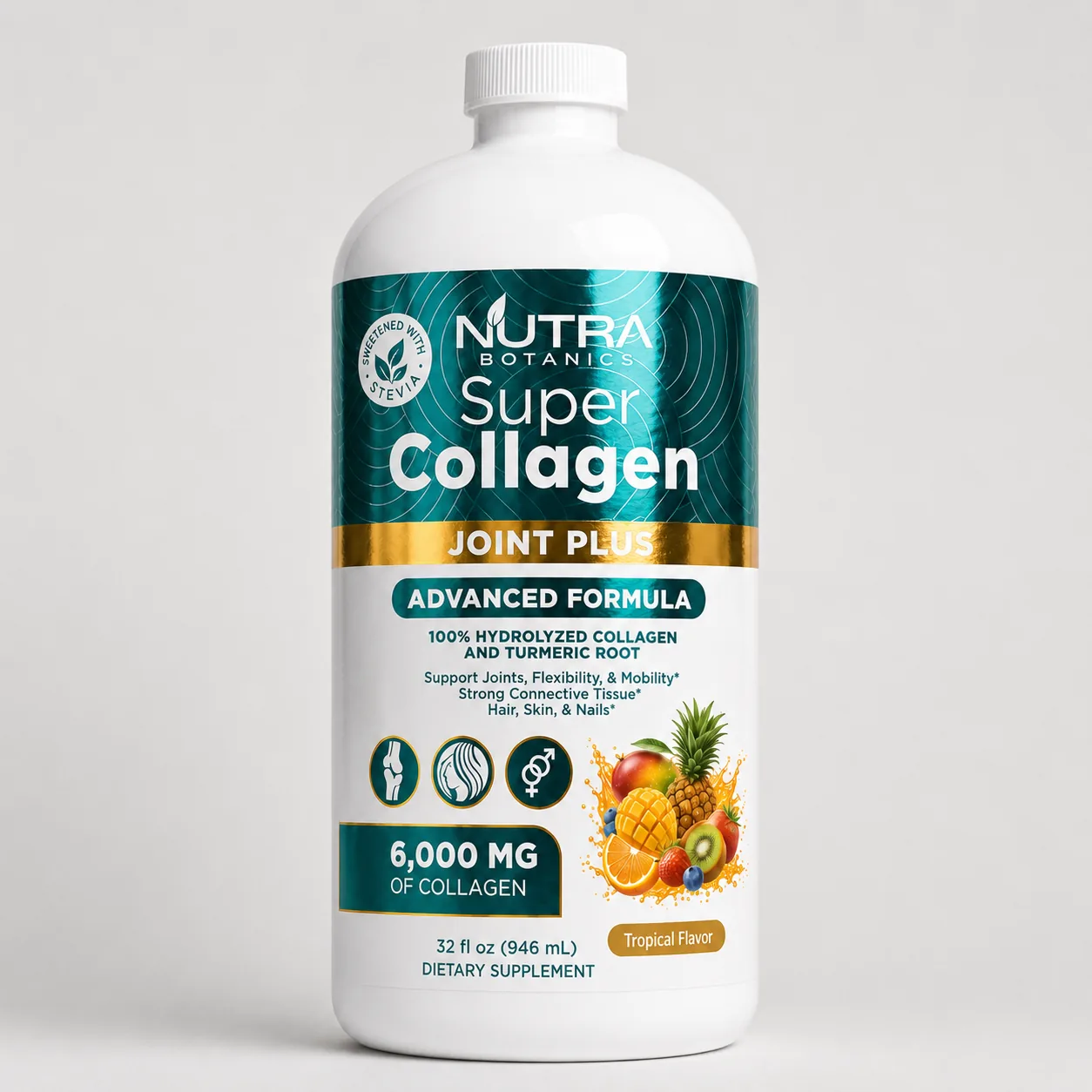
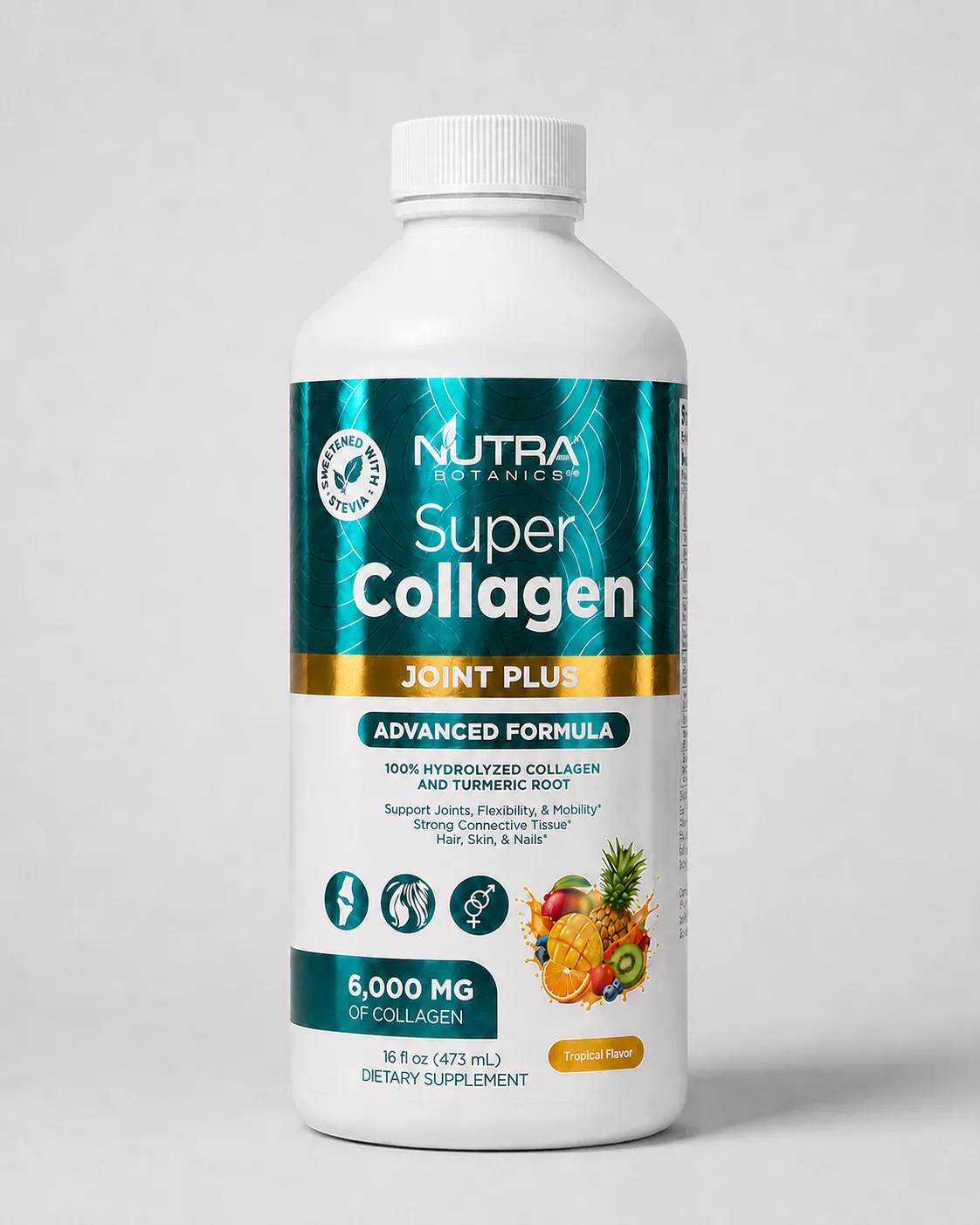
Joint Plus is a measured liquid serving, with 6 g of collagen and 100 mg of vitamin C per 30 mL. You can check both amounts on the Supplement Facts panel. The labels direct you to shake well and keep the bottle refrigerated.
A liquid may suit you if you prefer pouring a serving to mixing powder. A powder may suit you if mixing it into a drink is already part of your day. Choose the format you can use as directed, then compare the full ingredient list.
Look past the word collagen. Check serving size, other ingredients, warnings and storage. The collagen buying guide covers these checks; our research review separates study findings from product claims.
No format earns an automatic claim of better absorption or cellulite reduction. Joint Plus is a blend with its own complete label, not the specific preparation described in the trial.
Study length is not a personal deadline
Researchers assessed the trial at three and six months. It had no follow-up after participants stopped supplementation.
That does not provide a week-by-week schedule for your skin. If you try a supplement, decide what fits your budget and routine. Keep the actual directions handy instead of increasing a serving because a promised deadline has passed.
Our timing guide can help you plan a routine. For serving questions, use the complete bottle label and our collagen amount guide.
Build a practical skin routine
- Include strength-building activity. More muscle may make skin appear firmer and cellulite less noticeable. Choose activity you can sustain.
- Include vitamin C foods. Your body needs vitamin C to make collagen. Oranges, peppers and other fruits and vegetables can contribute. NIH explains its role and food sources.
- Keep the routine manageable. Avoid buying several products at once just because each promises smoother skin. Review complete labels before combining supplements.
For meal ideas, see foods that support collagen production. Adding food variety is a more useful starting point than a complicated supplement stack or an arbitrary high-dose vitamin rule.
Weight changes affect people differently. Losing weight may make cellulite less visible for some, while loose skin can make it more noticeable. If you want cosmetic treatment advice, a dermatologist can discuss options and expectations.
A better way to compare promises
| What you see | What to check |
|---|---|
| Smoother skin | Was cellulite measured, or was the study about hydration or elasticity? |
| Clinically studied collagen | Which preparation was tested? The name of an ingredient is not a trial of the finished blend. |
| More collagen | Compare the amount per labeled serving. A bigger bottle may simply contain more servings. |
| Fast results | Check actual study timing. A calendar on a sales page is not your personal result schedule. |
The useful purchase is one you understand: a formula that fits your goal, directions you can follow and a price you can compare. You should not have to decode a long ingredient explanation to find the basic facts.
Compare the Joint Plus bottles
The 16 oz and 32 oz labels both list 6 g of collagen and 100 mg of vitamin C per 30 mL. The smaller bottle lists 16 servings; the larger lists 32. The larger bottle offers more labeled servings, not a stronger serving.
Compare cost per labeled serving and the size that fits your routine. Check current prices, complete directions and warnings on the product pages. For other formulas, browse the shop.
Choose with the full facts in front of you
See both bottle sizes together, with serving amounts and links to their complete labels.
Compare Joint Plus bottle sizesQuestions about collagen and cellulite
Can collagen supplements actually reduce cellulite?
How does collagen work on cellulite specifically?
How long until I see cellulite improvement from collagen?
Does collagen work for cellulite on thighs vs. arms vs. stomach?
Will collagen work for cellulite if I am overweight?
Do topical collagen creams work for cellulite?
Sources behind this guide