Can collagen help hair and nails? Nail findings are encouraging. Hair results depend on the formula tested. Before buying, check whether the evidence addresses your goal and read the complete label.
Start with your goal
- For brittle nails, pair sensible care with a clear look at the research.
- For new hair loss, find the cause before choosing a supplement.
- When comparing bottles, check the full formula, serving size and storage directions.
Hair, nails and collagen: different roles
Keratin is a family of tough proteins that gives hair and nails their structure. Collagen is a different protein. Calling both “beauty proteins” does not mean they do the same job. Read the keratin overview.
Collagen helps give the body's tissues their framework. Its structure includes amino acids such as glycine and proline. These are protein building blocks, but knowing their role does not establish that taking a particular bottle will grow thicker hair. See the collagen structure review.
Choose the outcome you care about first: fewer nail breaks, fuller-looking hair or a broader collagen routine. Then check whether the product information and research address that outcome. Our guide to five collagen uses separates the main questions.
What the building blocks tell you
Proline and glycine are parts of collagen's structure. An explanation of those building blocks can help you understand an ingredient. It is not the same as a human study showing better hair growth or nail strength from a finished formula.
Vitamin C helps your body form collagen normally. It belongs in the nutrition picture, alongside a varied diet. This familiar role does not establish an extra hair-growth benefit from every collagen and vitamin C blend. Read the NIH vitamin C fact sheet.
Want to understand the wider routine? The complete collagen guide covers the bigger picture, while the skin guide explains moisture and elasticity as separate outcomes.
Hair changes follow a cycle
Hair follicles move through several stages. In the growth stage, hair lengthens. A short transition follows, then a resting stage. These stages explain how hair changes over time; they do not establish that collagen extends the growth stage. Read the hair physiology overview.
If shedding or thinning is new, note when it started and how long it has continued. A dermatologist can examine the scalp and look for the cause. That is more useful than assuming every change calls for the same supplement. See how hair loss is assessed.
Give brittle nails a better daily routine
Repeated water exposure can weaken nails. Wear gloves for dishes or cleaning, moisturize after handwashing and keep nail edges smooth. These practical habits address everyday wear without adding another supplement. Read the dermatologist nail-care tips.
If you try a product, keep a simple record of nail breaks and any other changes to your routine. This helps you judge whether it is useful to you. A personal record is a buying aid, not proof that the supplement caused a change.

What the nail and hair studies actually tested
A small collagen study for brittle nails
In a 2017 study, 25 participants took 2.5 g of VERISOL collagen peptides daily for 24 weeks. Researchers reported a 12% increase in nail growth rate and 42% fewer broken nails. Read the original nail study.
Everyone received collagen; there was no placebo group. These encouraging findings cannot establish the same result for other formulas or separate collagen's effect from other changes.
A hair study tested a different formula
A 2015 trial compared Viviscal Extra Strength, a marine-protein supplement, with placebo for 90 days in women reporting temporary thinning. It found improvements in hair counts and shedding. This was not a trial of collagen alone or Super Collagen Joint Plus. Read the trial abstract.
A 2023 review found potential benefits from several specific hair supplements. Its findings depended on the product and study design, and the authors called for larger trials. A positive study for one formula does not validate every supplement with a similar ingredient. Read the hair-supplement review.
For a broader view, our collagen research guide explains how to read a trial and compare the actual outcomes before making a buying decision.
Look for the actual formula tested, what researchers measured and whether a comparison group was included. Those details are more useful than a percentage shown without context.
Collagen, biotin or keratin?
Start with what the ingredient is, then ask what evidence supports the product you are considering. A familiar name on the front label is only part of the decision.
| Ingredient | What to check before buying |
|---|---|
| Collagen | Check the complete formula and the outcome tested. A nail finding does not establish a hair-growth benefit. |
| Biotin | Most people get enough from food. Evidence for extra biotin improving hair and nails is limited. |
| Keratin | Look for human research on the actual oral product. The name alone does not tell you how well a supplement works. |
When comparing collagen sources or types, also check ingredients, warnings and suitability. Our collagen supplement guide helps you read beyond the front label.
Build a routine, not a crowded supplement stack
Food comes first. Biotin is found in foods such as eggs, fish, nuts and seeds, and deficiency is rare in the United States. Buying a higher-dose beauty supplement does not automatically mean your body needs more. Read the NIH biotin guide.
If you take biotin, tell your healthcare team before blood tests. Supplements above recommended amounts can distort some lab results, including thyroid tests. Ask for instructions that fit your supplement and test rather than choosing your own stopping schedule.
Keep the routine manageable: review what you already take, avoid overlapping ingredients and choose a format you can measure correctly. For meal ideas, see foods that support collagen nutrition.
Choose the bottle that fits your routine
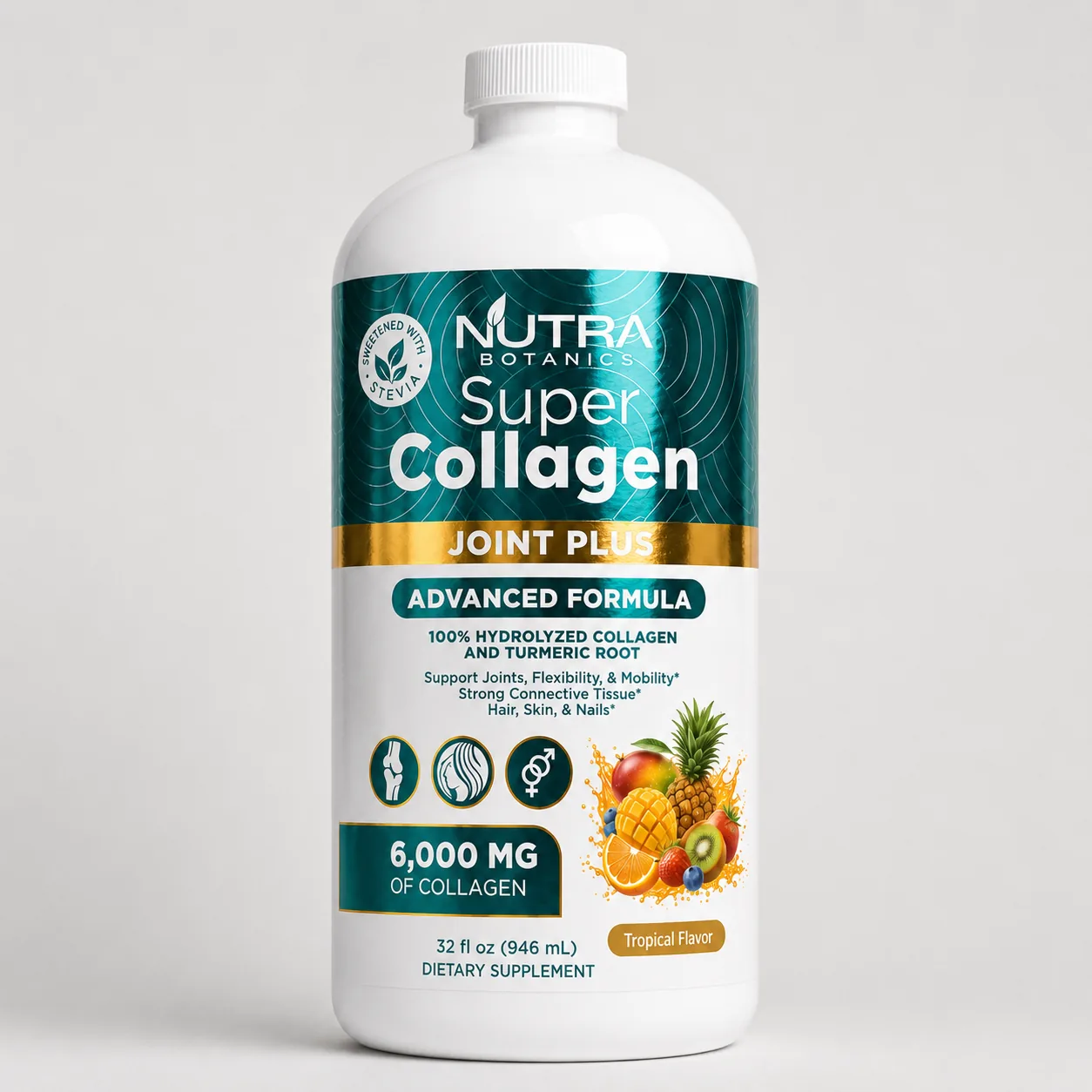
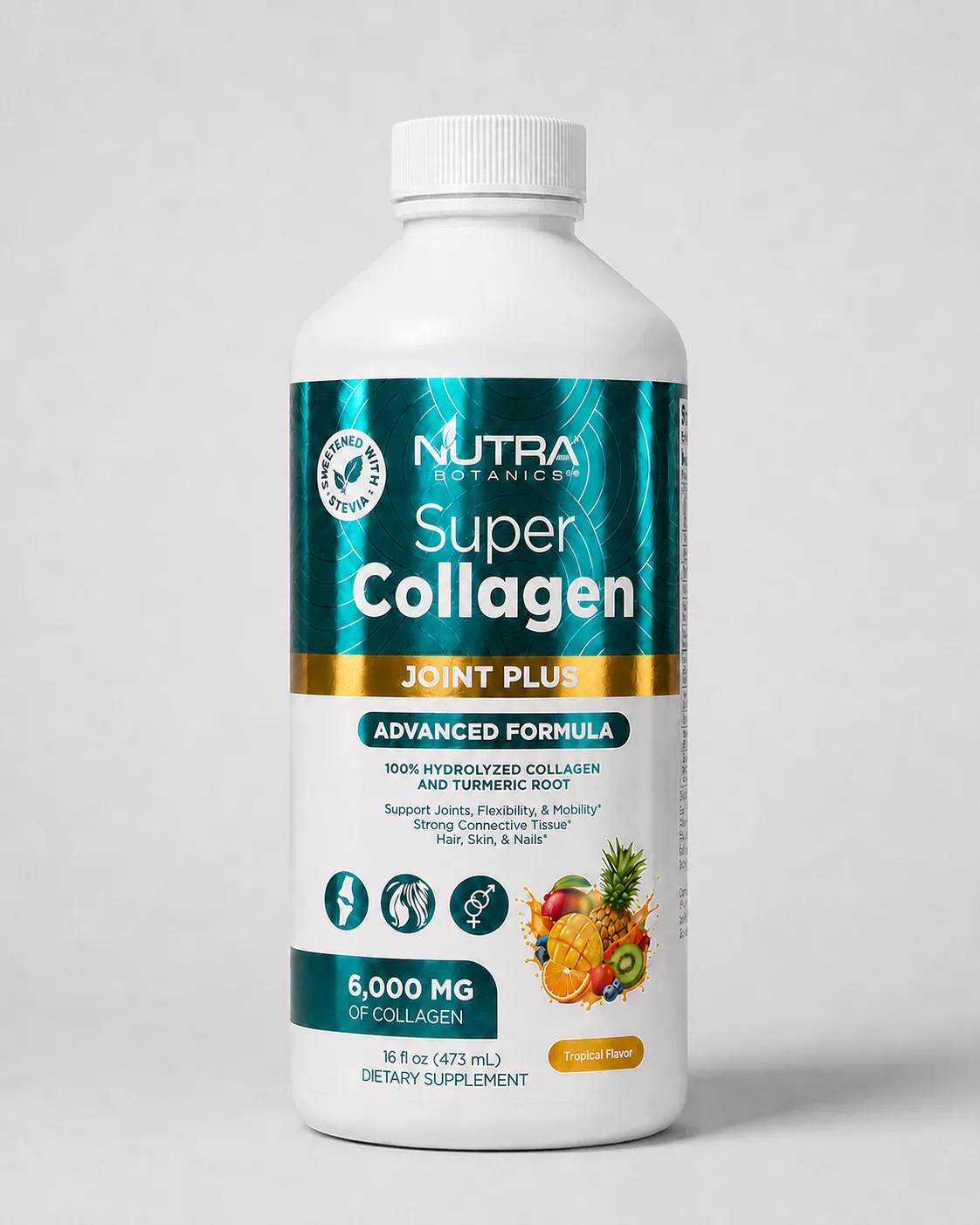
Super Collagen Joint Plus offers a measured liquid routine without powder mixing. Both the 16 oz and 32 oz labels list 6 g of collagen and 100 mg of vitamin C per 30 mL serving. The larger bottle adds labeled servings, not a stronger serving.
The 16 oz label lists 16 servings; the 32 oz label lists 32. Compare the complete blend and current price, then choose the amount that fits your routine. Neither bottle's ingredient list establishes the hair or nail results of a different research preparation.
Shake well, measure the amount and follow your bottle's complete directions. Joint Plus labels instruct refrigeration. Read the warnings before starting, especially if you take medicines or other supplements. Increasing a blend also increases its other ingredients.
For more help with the practical details, read how to compare collagen amounts and how to fit collagen into your day. Keep your label's directions as the starting point.
Find your fit: 16 oz or 32 oz
Compare labeled servings, complete ingredients and current bottle prices before choosing your liquid routine.
Compare Joint Plus bottle sizesSources and sensible next steps
Supplements can interact with medicines. Check with your healthcare professional about suitability, especially during pregnancy, nursing or treatment. If you have a bad reaction, stop taking the product and seek advice. Read the FDA supplement guidance.
Research links appear beside the relevant explanation, so you can check the original information. Product serving and storage details come from the approved 16 oz and 32 oz labels. This article does not report a clinical trial of Joint Plus for hair growth or nail strength.
*These statements have not been evaluated by the Food and Drug Administration. This product is not intended to diagnose, treat, cure, or prevent any disease. Individual results may vary.
Questions before you choose
Does collagen really help hair growth?
How long does collagen take to strengthen nails?
What type of collagen is best for hair and nails?
Should I take collagen or biotin for hair and nails?
Can collagen prevent hair loss?
How much collagen per day is needed for hair benefits?