
Does collagen actually work? Some human studies report improvements in skin measurements, joint symptoms or other specific outcomes. Results vary with the preparation, participants and study quality. The useful question is whether the research matches your goal and the formula you are considering.
Three things to check before buying
- The outcome: Skin moisture, comfortable movement and stronger nails are separate questions.
- The study: Look for the preparation tested, the comparison group and what researchers measured.
- The label: Check the serving, complete ingredients, storage and cost per serving.
Collagen in the body is not the same as a supplement result
Collagen is a family of proteins that helps give tissues strength and shape. A collagen review describes about 30% of mammalian protein mass as collagen. This describes the body's makeup, not how much of a supplement reaches your skin or joints.
Think of it as part of the body's supporting framework. Knowing that a tissue contains collagen does not establish that swallowing more repairs that tissue. For buying decisions, human outcomes matter more than a diagram of where collagen is found.
How age and sun exposure change collagen
A study of aged and sun-damaged human skin found more fragmented collagen than in young, protected skin. Fragmented means the supporting fibers have broken into pieces. It helps explain skin changes, but does not measure your personal yearly collagen loss.
Age alone cannot tell you which supplement to buy, how much to take or what result to expect. A body function and a tested supplement benefit are different kinds of evidence.
Compare the finding with your goal
A headline percentage can hide important differences. This overview separates outcomes; the studies and their limits follow below.
| Your goal | What the finding means |
|---|---|
| Skin | Some combined trial results favor skin moisture and elasticity. Study quality and funding checks can change the conclusion. |
| Joints | Trials of different collagen preparations report improvements in pain and function. They do not establish a treatment claim for every retail blend. |
| Nails | One small study reported improved brittle-nail measures, but it lacked a control group. Nail findings are not hair-growth findings. |
| Bones | A year-long trial measured bone density in women past menopause. It was not an eight-week skin study or a fracture-prevention test. |
| Training | A trial paired specific peptides with supervised strength training. It tested the added benefit during training, not a supplement-only routine. |
What the outcome studies actually found
Skin: read both the result and the quality checks
A 2021 review combined 19 studies with 1,125 participants, mostly women. The combined results favored hydration, elasticity and wrinkles. Hydration means skin moisture; elasticity means how skin stretches and returns. These are separate measurements, not one universal beauty result.
A 2025 review of 23 trials also found favorable overall results. However, its high-quality studies and studies without pharmaceutical-company funding showed no significant benefit. That distinction belongs alongside the positive headline when judging how confident a skin claim should be.
Joints: the preparation matters
A 2024 review of osteoarthritis trials found small to moderate improvements in pain and function versus comparison groups. It included different collagen preparations. These findings concern those preparations and participants; they do not establish that Joint Plus treats osteoarthritis or rebuilds cartilage.
For persistent symptoms, seek individual care rather than relying on a supplement. Our joint-focused collagen guide explains preparation differences, while the study-period guide separates follow-up dates from promised response dates.
Bones: density is a specific measurement
A 12-month trial enrolled 131 women past menopause with reduced bone density. It tested 5 g daily of FORTIBONE peptides. Bone density improved versus placebo at the lower spine and femoral neck, the narrow area below the hip's ball joint.
A density measurement is not the same as a count of broken bones. The trial did not establish fewer fractures or an osteoporosis treatment effect for Joint Plus.
Nails, hair and digestion need separate answers
A brittle-nail study followed 25 people taking 2.5 g of VERISOL daily for 24 weeks. Nail growth and breakage measures improved. Participants knew what they were taking, and there was no control group, so other explanations for the changes remain possible.
Nail research cannot establish thicker hair. Likewise, an explanation about collagen's amino acids is not a human test of gut repair. Read the separate guides to hair and nail claims and collagen and digestion before treating them as interchangeable benefits.
Training and tendons: distinguish measurements from recovery promises
In a 12-week training trial, 53 older men with low muscle mass completed supervised sessions and took 15 g of BODYBALANCE peptides or placebo daily. The peptide group had greater improvements in strength and fat-free mass, meaning body mass excluding fat.
Both groups trained. The trial tested an added benefit during that program; it did not demonstrate the same result from taking a supplement without training.
A 2025 correction to the training trial's disclosures adds that Gelita supplied the study samples and paid participant compensation and sample-analysis costs. One author was named as a co-inventor on a related patent application and reported receiving no royalties or other payments from it.
The authors said the investigators planned, monitored and analyzed the study independently. Read these disclosures alongside the results and the trial's specific training program.
A small gelatin experiment in eight men measured blood markers and engineered ligament responses after vitamin C-enriched gelatin and rope-skipping. Those laboratory measurements are not a clinical demonstration of healed tendons, fewer injuries or a finished-product recovery effect.
How to read newer reviews and absorption claims
A 2026 umbrella review, a review of published reviews, searched through March 2025. It reported favorable skin, muscle and joint findings across 16 reviews. It rated only one review high quality, four low and eleven critically low. A larger research collection still needs those quality checks.
Its analysis found no significant improvement in recovery of maximum strength at 24 or 48 hours. Changes in strength or tissue measurements are not proof of faster recovery. The measured outcome matters, even within a favorable review.
In a human digestion study, researchers detected food-derived collagen peptides in blood after gelatin hydrolysates. Peptides are small protein fragments. Detecting them helps explain digestion; it does not show that over 90% reaches your target tissue or prove a visible result from your bottle.
Liquid, powder and capsules can offer different routines. A convenient format is a real buying advantage, but convenience is not evidence that one form universally outperforms an equivalent preparation. See how collagen sources differ and compare the complete label.
Want to build a practical routine? Start with food and collagen formation, check your product's serving directions, then choose a reminder using our collagen timing guide.
Choose using the complete formula
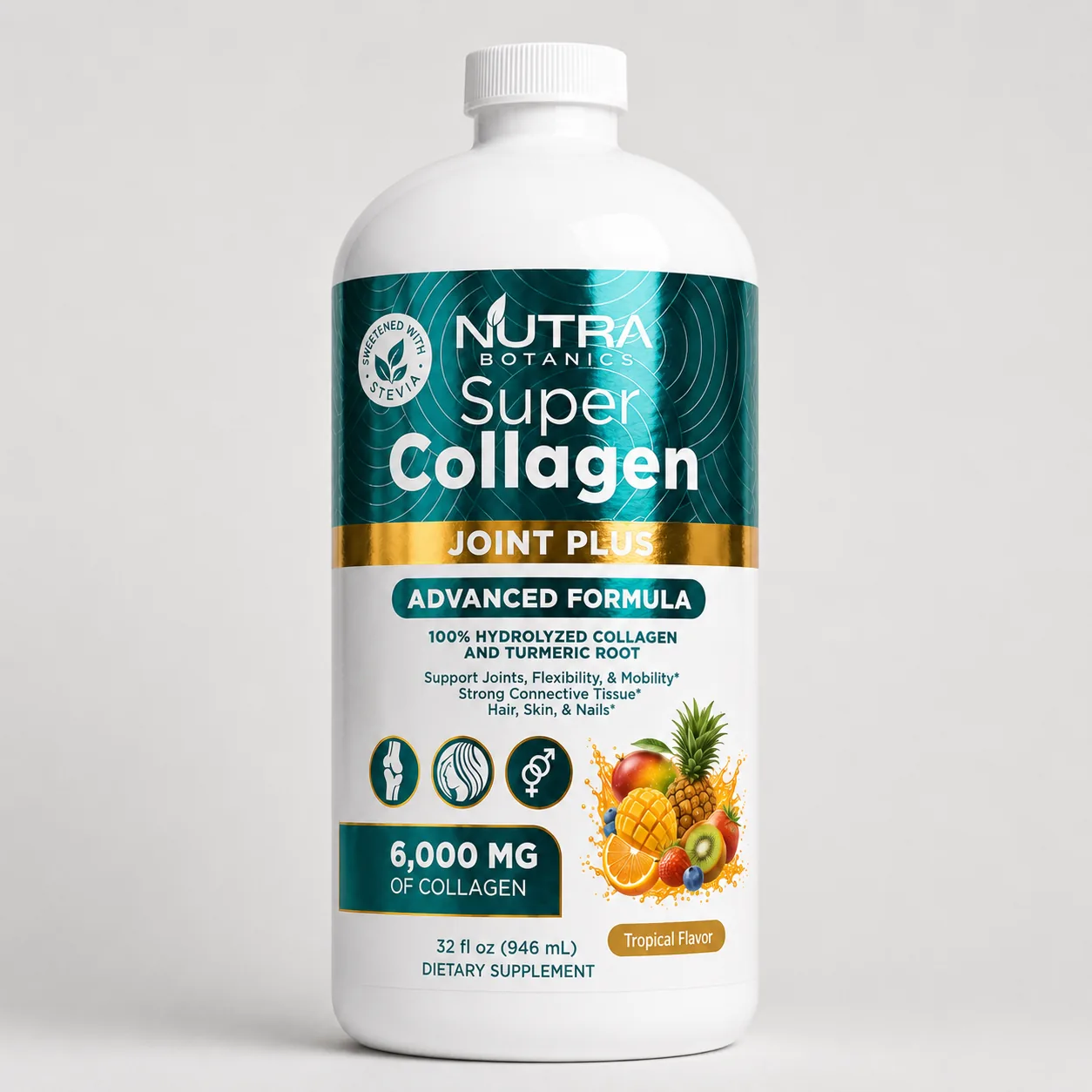
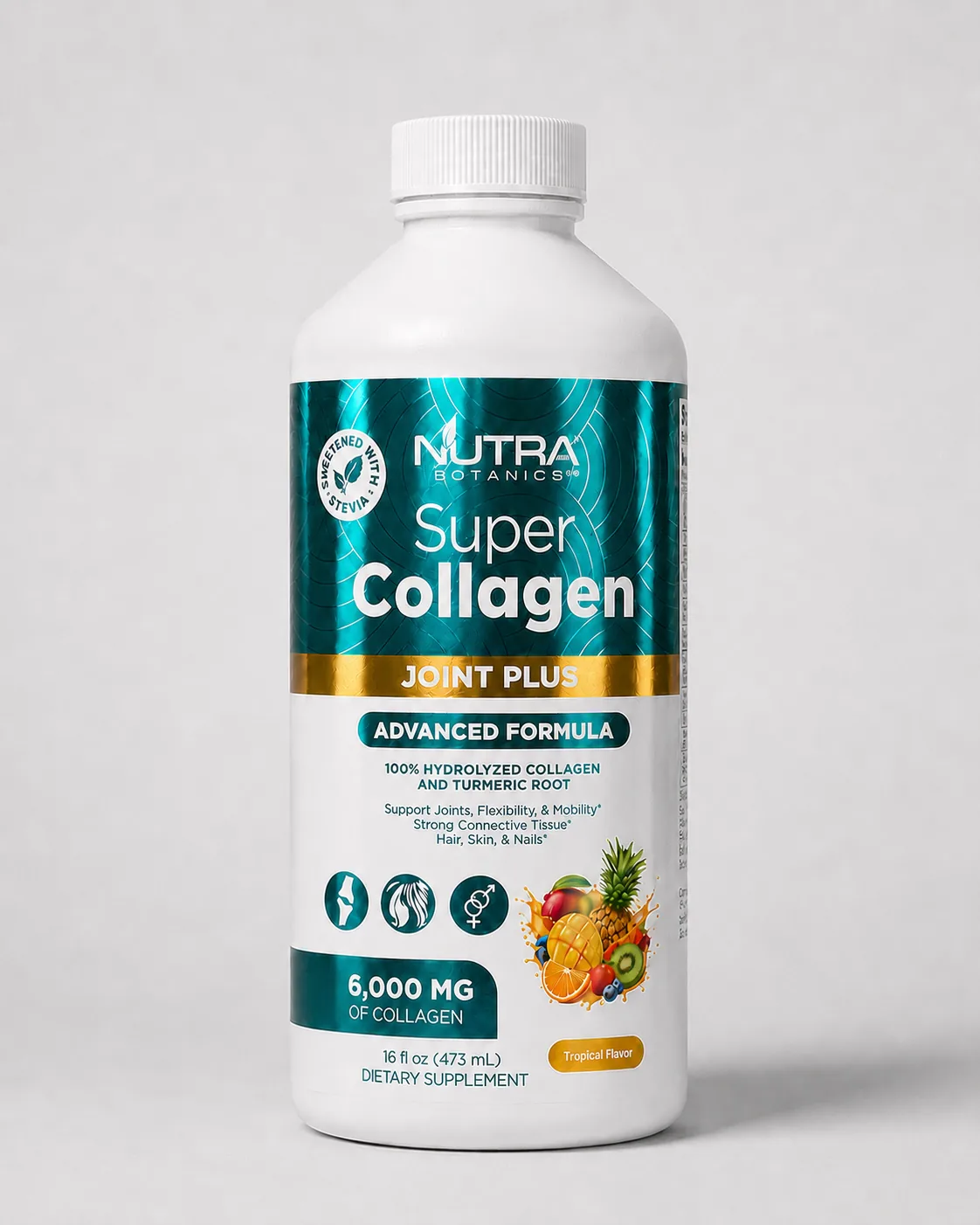
Compare the two bottle sizes, labeled servings and current purchase options.
Compare Joint Plus bottle sizesYour collagen questions, answered
What exactly is collagen?
What are the different types of collagen?
What is hydrolyzed collagen and why does it matter?
How much collagen should I take daily?
Is collagen the same as gelatin?
Can my body make its own collagen from food?
Sources and safe use
Follow the complete package directions and warnings. Review the blend with your healthcare professional if you take medicines, are pregnant or nursing, or manage a health condition. Supplements can interact with medicines or each other. If you experience an adverse reaction, stop use and seek medical advice.
Research used in this guide
- 2011 collagen family and structure review
- 2003 human skin structure study
- 2021 skin outcome review
- 2025 skin study quality and funding review
- 2019 osteoarthritis review, published online in 2018
- 2024 osteoarthritis outcome review
- 2018 bone density trial
- 2017 brittle-nail study
- 2015 resistance-training trial
- 2025 funding and patent disclosure correction to the training trial
- 2017 gelatin and laboratory-marker experiment
- 2026 umbrella review
- 2005 human digestion study
- NIH vitamin C fact sheet
- FDA supplement consumer guidance