Can collagen help with bloating? A small human study reported improvement, but it does not establish collagen as a treatment for digestive conditions. Here is how to read that finding and make a useful product comparison.
Start with three useful checks
- Check what was studied. A laboratory finding, a symptom report and a controlled human trial answer different questions.
- Read the full serving. Compare the exact ingredient amount, added ingredients and directions.
- Choose for your routine. Format and bottle size can make a supplement easier to use. Persistent symptoms need their own assessment.
What your gut lining does
Your intestinal lining forms a selective barrier. It helps control what passes through. Researchers use intestinal permeability to describe how easily substances cross that barrier.
Digestion also breaks food into smaller parts your body can absorb and use. Proteins break into amino acids. NIDDK explains the digestive process in everyday terms.
Amino acids: useful nutrition, different ingredients
Collagen contains amino acids including glycine, proline and hydroxyproline. Their presence describes the protein's composition. It does not tell you how much an individual supplement improves digestive symptoms.
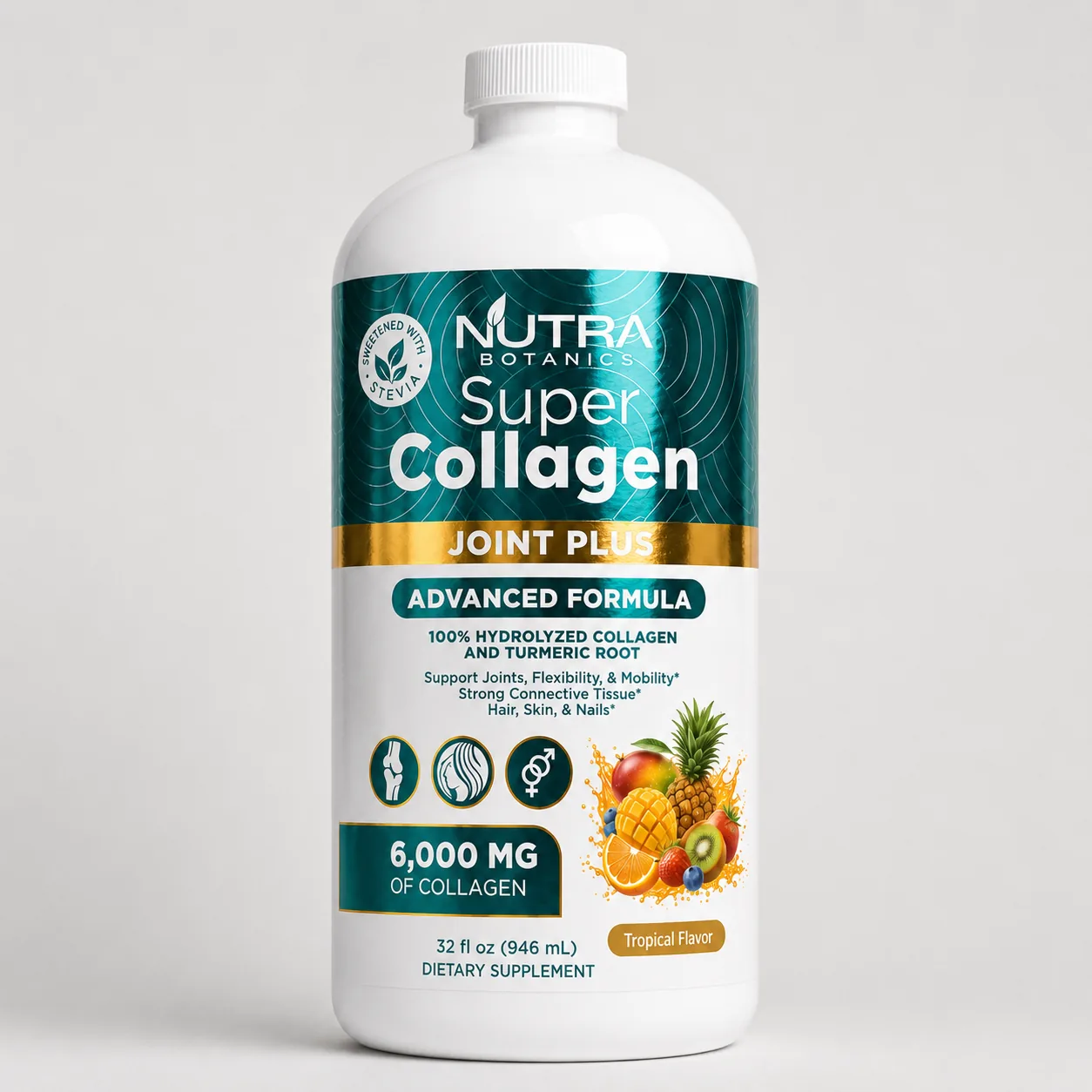
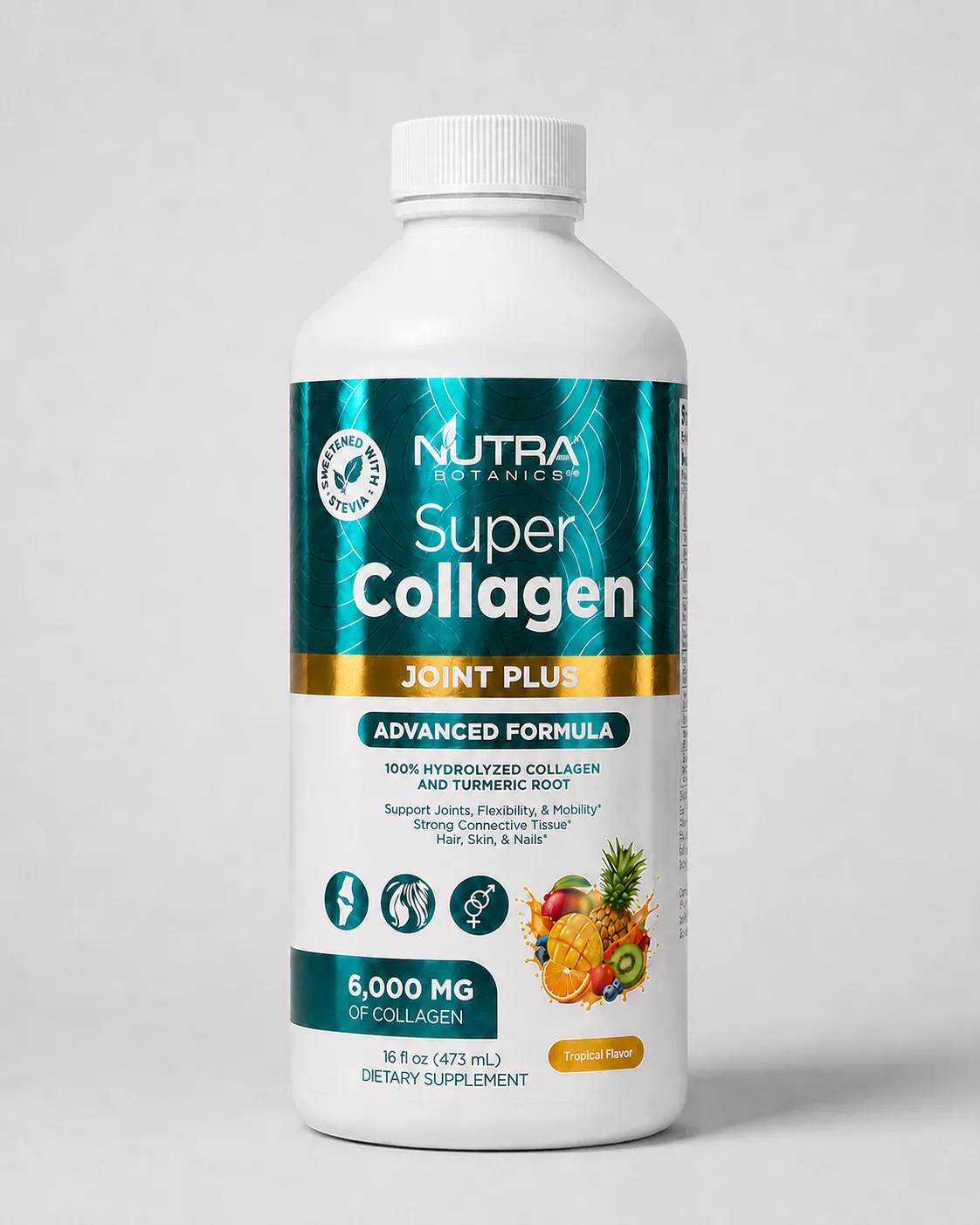
A collagen amount is also different from a separately listed amino acid amount. For example, the Joint Plus labels list 6 g of hydrolyzed collagen per serving; they do not list a separate dose of L-glutamine.
When comparing products, use the actual ingredient panel. Avoid treating a generic amino acid percentage chart as a measurement of the bottle in your hand.
What the human bloating study found
The 2022 Gutme! study tested 20 g of Peptan collagen daily for eight weeks. Forty women were recruited; 14 completed the course, and 13 reported fewer digestive symptoms, including bloating.
There was no comparison group, and participants knew they were taking collagen. Rousselot funded the study. The result is an early signal to investigate, rather than proof of gut healing or an outcome every buyer should expect.
For your own comparison, look for the exact preparation, amount and outcome in a study. Then compare those details with the current label. Our collagen research guide discusses that approach across different uses.
Does collagen repair a “leaky gut”?
A 2017 laboratory study tested fish-derived collagen peptides on Caco-2 cells. It found changes in barrier function under those test conditions. These were cultured cells, not people taking a retail supplement.
A barrier finding is different from treating a digestive illness. A clinical review of intestinal permeability explains why barrier measurements and disease outcomes need to be assessed separately.
That distinction matters when a label or advertisement says “gut repair.” Ask what was measured in people and whether the study tested the same product. An ingredient name alone does not answer those questions.
Keep skin and digestion goals separate

If skin is your main reason for choosing collagen, compare studies of skin outcomes. If digestion is your goal, look for digestive outcomes. A result in one area does not establish the other.
Our collagen benefits guide and food and collagen guide cover related questions. Use each for its own topic, rather than assuming one formula provides every advertised benefit.
Bloating is a reason to investigate, not a collagen test
Gas and bloating can have several causes. Talk with a doctor if symptoms bother you, change suddenly or occur with abdominal pain, diarrhea, constipation or weight loss. NIDDK's symptom guidance explains when to get advice.
Write down what you notice and when it happens, including meals and supplements. This gives you something concrete to discuss. Our bloating guide can help you organize the questions you want answered.
Compare collagen, probiotics and L-glutamine
| Ingredient | What it is | What to check |
|---|---|---|
| Collagen | A protein ingredient, often labeled as collagen peptides. | What preparation and amount are in one serving? |
| Probiotics | Live bacteria or yeasts. Effects depend on the strain. | Was this strain studied for the outcome you want? |
| L-glutamine | An amino acid ingredient. | Is it separately listed, and what does its own research address? |
NCCIH explains why probiotic effects depend on the organism. A finding for one kind should not be assumed for every probiotic. Safety also matters, especially with serious illness or a weakened immune system.
A placebo-controlled glutamine trial reported symptom improvement in a specific group with diarrhea-predominant IBS after an infection and increased intestinal permeability. It did not test collagen or establish a universal supplement combination.
What Joint Plus offers for your routine
Super Collagen Joint Plus is ready to pour. Both sizes list 6 g of hydrolyzed collagen and 100 mg vitamin C per 30 mL serving. Choose 16 oz for 16 labeled servings or 32 oz for 32.
Vitamin C supports your body's normal collagen formation. NIH explains that nutritional role. It is a specific reason to understand the blend, rather than a promise to treat bloating.
The labels also list glucosamine, MSM, chondroitin, turmeric, hyaluronic acid and tart cherry. Read every ingredient and the warnings, especially when comparing a multi-ingredient liquid with a plain powder.
Shake well and keep refrigerated, as the labels direct. Use the current package directions. A serving count is not automatically a count of days, because the stated frequency matters.
Our collagen serving guide and timing guide cover practical use questions. Check the label before borrowing amounts or schedules from a different product.
For other formats, browse the formula catalog. If your main interest is joint support, continue with the collagen and joint-research guide.
Quick answers about collagen and digestion
How much collagen do I need for gut health benefits?
Is bone broth or collagen supplements better for gut health?
Can collagen help with IBS or digestive issues?
How long does collagen take to improve gut health?
Does collagen help with bloating?
How does collagen support gut health?
*These statements have not been evaluated by the Food and Drug Administration. This product is not intended to diagnose, treat, cure, or prevent any disease. Individual results may vary.
Research, label sources and safety context
Nutra Botanics sells supplements and publishes this guide. The research discussed here is not a clinical trial of our finished Joint Plus formula.
FDA advises reviewing the label and discussing supplement use when medicines or health conditions are involved.
- Abrahams (2022): digestive symptoms in women, a study without a comparison group
- Chen (2017): fish collagen peptides in cultured intestinal cells
- Camilleri (2019): intestinal permeability and clinical outcomes
- Collagen amino acid composition
- Zhou (2018): glutamine in a specific post-infection IBS group
- 32 oz label and directions and 16 oz label and directions