
How long does collagen take to work? There is no result date that applies to everyone. Some studies report changes in selected skin measures after several weeks. A 90-day plan can help you review a routine, but it cannot promise smoother skin, easier movement or stronger nails by day 90.
Use these three check-ins to decide what matters to you, follow your product's directions and assess whether it earns a place in your routine.
Your 90-day check-in plan
- Days 1–30: Choose one goal and record your starting point.
- Days 30–60: Review your experience without chasing a promised deadline.
- Days 60–90: Consider the value, ease of use and any change that matters to you.
Related reading: Does Collagen Actually Work? (Research Review), 12 Foods That Boost Collagen Production, How Much Collagen Per Day, Best Time to Take Collagen.
Days 1–30: Set up your routine
Start with one concern, such as how your skin feels or comfort during your usual activities. Write a short note before you begin. For skin photos, use the same light and angle each time so a change in lighting does not look like a change in your skin.
Read the complete ingredient list and directions. Choose a time that fits your day, measure the labeled serving and note how the formula agrees with you. This first month is a practical check-in, not a proven collagen loading phase.
A human absorption study detected small collagen-derived protein fragments in blood after people consumed gelatin hydrolysate. Absorption can happen long before a visible change. That finding does not prove that a serving goes directly to your skin or rebuilds cartilage.
Days 30–60: Check your experience
Ask yourself two useful questions: is this easy to use as directed, and have I noticed a change in the concern I chose? A personal note can help with that decision. It cannot separate a supplement's effect from changes in skincare, exercise, diet or sleep.
When did studies measure changes?
The preparation, people and outcome matter as much as the number of weeks. These examples show why a single calendar cannot cover every goal.
| Goal studied | What the study found |
|---|---|
| Skin elasticity | A trial in 69 women tested 2.5 g or 5 g of specific collagen peptides daily for eight weeks. Elasticity improved compared with placebo; moisture and skin water-loss findings did not reach statistical significance. Read the elasticity trial. |
| Eye-area wrinkles | A separate trial in 114 women tested 2.5 g of VERISOL daily for eight weeks. Wrinkle volume was lower than with placebo at four and eight weeks. Read the wrinkle trial. |
| Brittle nails | A small study followed 25 people taking a specific preparation for 24 weeks. It reported improved nail growth and fewer broken nails, but had no placebo group. It does not establish stronger nails in the first month. Read the nail study. |
These are findings for the tested preparations, not results demonstrated for Super Collagen Joint Plus. Skin findings also cannot set a schedule for joint comfort or hair growth. A study's average does not tell you how much you will notice.
Days 60–90: Decide what fits
Return to your starting note. Has anything changed in a way that matters to you? Consider whether the routine is comfortable, affordable and easy to keep. A useful product decision includes those practical details, not just a before-and-after photo.
- If you notice a worthwhile change: weigh it alongside other changes in your routine and review ongoing use.
- If you notice no change: do not assume a result must arrive after another bottle.
- If the formula does not agree with you: do not push through a problem to complete a challenge.
Day 90 is a decision point, not a guaranteed peak. Taking more to catch up with a marketing timeline is not a sound reason to change your serving.
What changes the picture?
Your goal: skin elasticity, wrinkles, joint comfort and nail growth are different outcomes. A finding for one does not prove the others.
The formula: check the actual preparation and complete blend. A product with the same number of grams is not automatically the preparation tested in a trial. A larger serving is not automatically faster.
Your everyday nutrition: vitamin C helps your body make collagen. Food sources can supply it; adding more is not a proven shortcut to faster supplement results. See the NIH vitamin C guide for its role and intake information.
Do you need to keep taking it?
The eight-week wrinkle trial followed participants for four weeks after they stopped and still found a difference from placebo. That short follow-up cannot predict an indefinite effect or tell you when a change would fade.
There is no universal rule that you must take collagen forever, or that all benefits disappear a set number of weeks after stopping. Revisit the complete label, your experience and the ongoing cost before deciding.
Choose a bottle around your routine
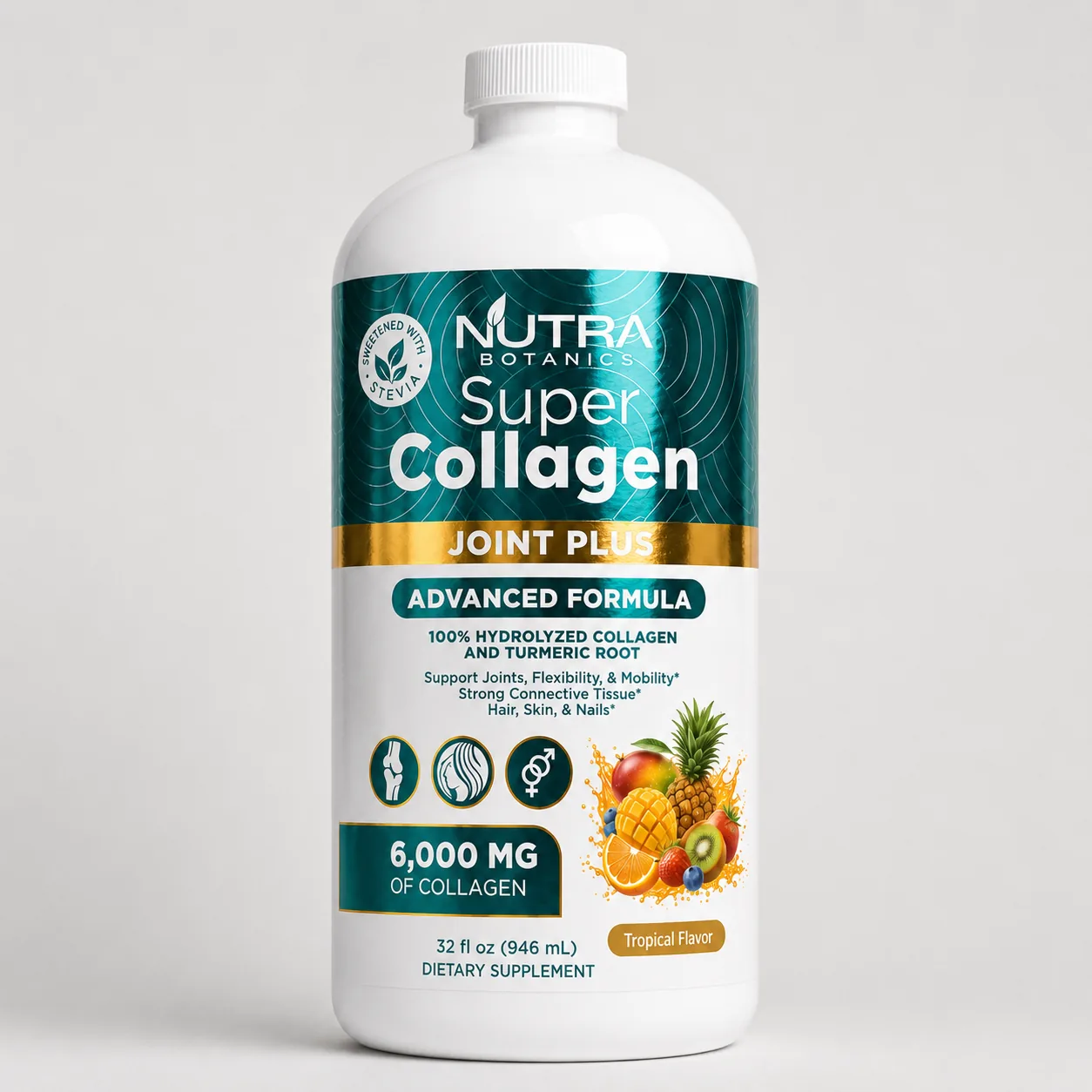
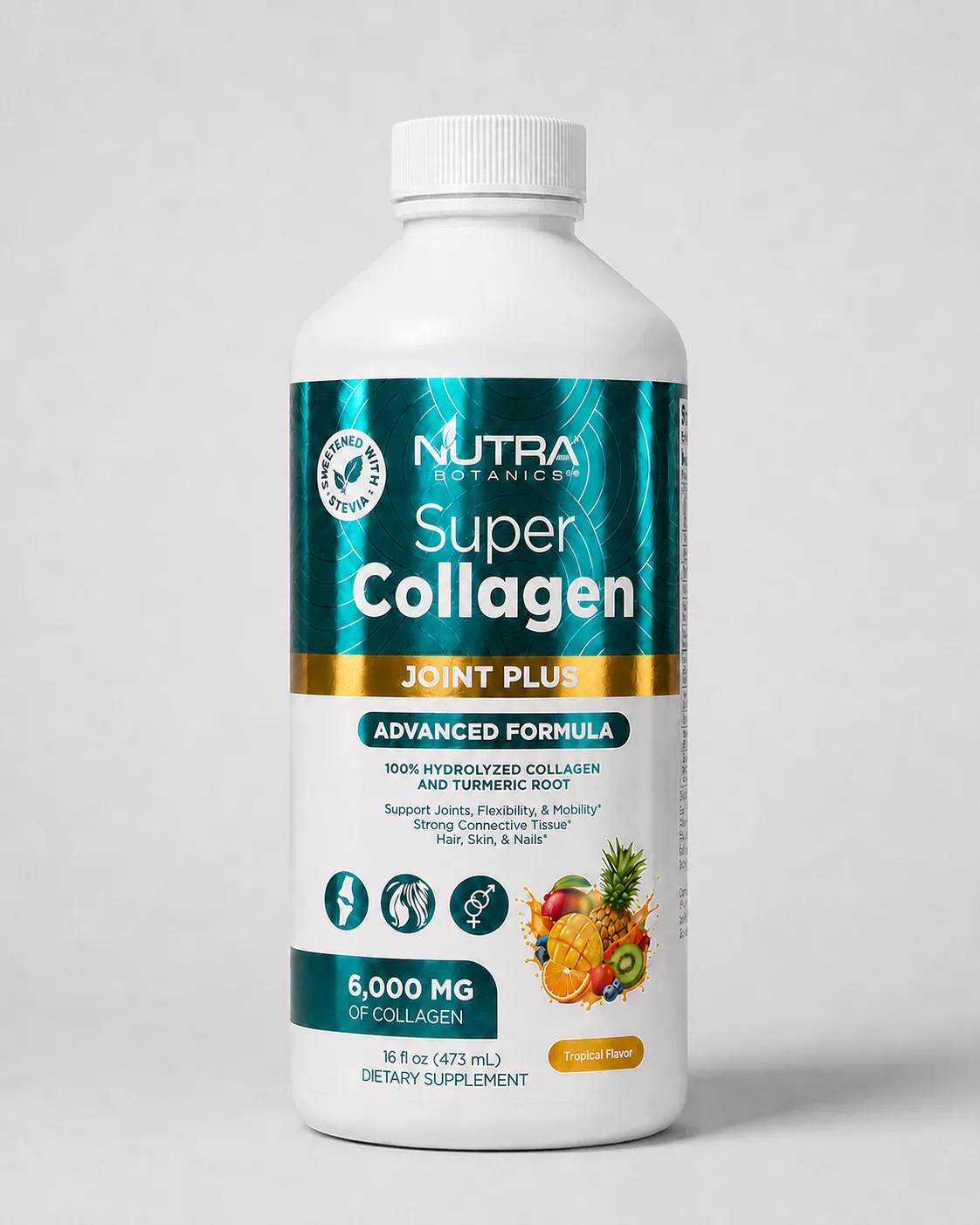
Both Super Collagen Joint Plus labels list 6 g of collagen and 100 mg of vitamin C per 30 mL serving. The 16 oz bottle lists 16 servings; the 32 oz bottle lists 32. Bottle size changes the labeled serving count, not the collagen amount in each serving.
Review the full blend and directions before choosing. Both labels say to shake well and keep refrigerated after opening. The number of days a bottle lasts depends on how you use it according to its complete directions.
Same serving. Two bottle sizes.
Compare labeled servings, current prices and cost per serving before choosing.
Compare the 16 oz and 32 oz bottlesRead the evidence in context
The 2021 review cited in this guide combined 19 studies and reported improvements in selected skin measures. Combining studies does not create a personal 30, 60 or 90-day result schedule.
A 2025 review found positive results overall, but no significant skin benefit in the higher-quality or non-pharmaceutical-funded groups. Those differences matter when judging the strength of a result claim.
A July 2026 review reported improvements in measured hydration, elasticity and skin water retention. Wrinkle, roughness and skin-density results were less reliable in further checks. A change measured by an instrument is not automatically a visible transformation.
Check suitability with a healthcare professional if you take medicines or have a health condition. Supplements can interact with medicines and do not replace treatment. The FDA explains supplement safety and labeling.
Your timeline questions, answered
How soon will I see results from collagen?
Do I need to take collagen forever?
What dose should I take for fastest results?
Can I speed up collagen results?
Why don't I see results yet at 30 days?
Should I expect dramatic changes at 90 days?