
L-Carnitine has been studied for more than four decades as an exercise, recovery, and body-composition ingredient. Depending on which review you read, it is either "essential for any training stack" or "worthless unless you are deficient." Both framings miss the point. The published data tell a more specific story — L-Carnitine works for particular endpoints, in particular populations, under particular conditions. The conditions matter.
This review summarizes what 20+ peer-reviewed trials and meta-analyses actually show about L-Carnitine. Where the research is solid, we say so. Where it is contested or weak, we say that too.
Key Takeaways
- L-Carnitine uptake into muscle is insulin-dependent — without carbohydrate co-ingestion, most of the dose does not partition into the tissue where it does work.
- Exercise-recovery outcomes (muscle damage markers, soreness, oxygenation) are the most consistently positive endpoint in the research, and LCLT is the form most of that literature used.
- Body-composition effects are smaller and more variable than marketing implies — typically 1 to 2 lbs of fat mass change across 8 to 24 weeks when paired with training.
- ALCAR (Acetyl-L-Carnitine) is studied for cognitive and mood-related endpoints separately from exercise outcomes.
- Studies using less than 2g/day, or running fewer than 12 weeks, often fail to detect changes — the saturation window has not opened yet.
Related reading: L-Carnitine Supplement Guide (how to choose), L-Carnitine Dosage, L-Carnitine & Exercise, Liquid vs Capsules.
What L-Carnitine Is and the Uptake Problem
L-Carnitine is an amino-acid-derived compound synthesized in the body from lysine and methionine. Its primary role in human physiology is transporting long-chain fatty acids across the inner mitochondrial membrane so they can be oxidized for energy. Dietary L-Carnitine comes primarily from red meat; endogenous synthesis covers the rest.
The central finding that shapes all of the exercise and body-composition research: oral L-Carnitine absorbs readily into the bloodstream, but uptake into muscle tissue is insulin-dependent. The Stephens et al. uptake studies — which used hyperinsulinemic-euglycemic clamps and carbohydrate co-ingestion protocols — demonstrated that without insulin signaling, muscle carnitine content does not meaningfully rise even when plasma concentrations are elevated.
This is why two studies can use the same dose of the same product and report very different outcomes. Study design — specifically, whether L-Carnitine was paired with a carbohydrate-containing meal — frequently explains the divergence in results.
The Research on Exercise Recovery and Performance
Exercise-recovery outcomes are where the L-Carnitine literature is at its strongest. Kraemer and Volek's research group at the University of Connecticut ran a series of trials using L-Carnitine L-Tartrate (LCLT) at 1 to 2 grams per day, paired with resistance training. The pattern across those trials was consistent: reduced markers of exercise-induced muscle damage (creatine kinase, myoglobin), reduced delayed-onset soreness ratings, and improved post-exercise recovery markers.
A separate body of research has measured muscle oxygenation and blood-flow endpoints with LCLT supplementation and reported improvements in tissue oxygen saturation during and after exercise. Mechanistically, this aligns with L-Carnitine's role in fatty-acid oxidation and mitochondrial function.
Time-to-exhaustion and peak power outcomes are more mixed. A handful of trials have reported improvements; others have found no effect. The recovery and damage-reduction endpoints are the more reliable findings.
The Research on Body Composition and Fatigue
Pooled analyses of L-Carnitine and body composition show a modest but statistically detectable effect. A 2016 meta-analysis by Pooyandjoo et al. pooled 9 trials (n=911) and reported an average weight reduction of roughly 2.9 lbs favoring L-Carnitine over placebo. The effect was larger in overweight and obese adults than in lean, already-trained populations — a pattern consistent with most weight-management ingredients.
Fatigue outcomes are a separate research strand. Trials in aging adults and in chronic-fatigue populations (using 2 to 4 grams per day) have reported reductions in self-reported fatigue scores and modest improvements in physical performance. Effect sizes are moderate, not dramatic.
The consistent take-away across body-composition trials: effects are real but small, they require consistent daily dosing across a 12+ week window, and they are more reliably observed when L-Carnitine is paired with training rather than used alone.
The Research on Cognitive Outcomes (ALCAR)
Acetyl-L-Carnitine (ALCAR) is a distinct research track from LCLT. ALCAR crosses the blood-brain barrier more readily, which is why it is the form used in most cognitive, mood, and peripheral-nerve studies. The research base here is older and more heterogeneous: small improvements reported in trials measuring mental fatigue, cognitive function in older adults, and symptoms associated with diabetic neuropathy. A Cochrane review on ALCAR in mild cognitive impairment concluded the evidence was promising but limited by study size and heterogeneity.
For readers considering L-Carnitine strictly for exercise goals, ALCAR is not the default form to pick — LCLT is better matched to the exercise-recovery evidence base. The two forms target different endpoints.
Where the Evidence Is Mixed or Weak
Four areas deserve honest skepticism:
- Single-dose pre-workout use. The popular idea of taking L-Carnitine 30 minutes before exercise to "unlock fat burning" does not hold up. Acute dosing does not appreciably change muscle carnitine content; weeks of consistent daily dosing do.
- Low-dose trials. Studies using 500 mg or 1 g per day frequently show null or small effects. The literature's positive findings concentrate in the 2 to 3 g/day range.
- Short trials. 4-week trials are rarely long enough to observe muscle-saturation effects. If the endpoint is body composition, 12 weeks should be the minimum window considered.
- Cardiovascular claims. L-Carnitine has been studied in heart-failure populations with mixed results. These are specialized clinical populations using medical-grade dosing protocols — the findings do not straightforwardly translate to general-population supplementation claims.
Who Sees the Best Results in the Research
Pooled across the trial literature, the populations most likely to show measurable outcomes from L-Carnitine supplementation are:
- Adults over 40 with age-related declines in endogenous carnitine synthesis and muscle carnitine content.
- Vegetarians and vegans, whose baseline muscle carnitine levels tend to be lower than meat-eaters.
- Recreational and competitive athletes using LCLT for recovery and muscle-damage reduction.
- Overweight adults combining L-Carnitine with resistance training and a structured caloric approach.
Lean, already-trained, meat-eating adults in their 20s show the smallest responses in the research. That does not mean zero effect — it means the baseline is already closer to saturation, so the marginal gain is small.
The Bottom Line
Does L-Carnitine work? Yes — for specific endpoints, under specific conditions. It is well-supported for exercise recovery and soreness when taken as LCLT at 2 to 3 g/day with a carbohydrate-containing meal across 12+ weeks. It shows modest body-composition effects in overweight and aging populations. It has a separate, distinct research base as ALCAR for cognitive outcomes.
What it is not: a stimulant, an acute fat-burner, a substitute for training and caloric awareness, or something you can take on an empty stomach and expect to reach the outcomes the research actually measured. Set realistic expectations, match the protocol to the endpoint, and give it the full tissue-saturation window before judging whether it works for your situation.
These statements have not been evaluated by the Food and Drug Administration. This product is not intended to diagnose, treat, cure, or prevent any disease.
Frequently Asked Questions
How much L-Carnitine do I need to see results in the research?
How long does L-Carnitine take to work in published studies?
Does L-Carnitine work without exercise?
Does L-Carnitine need to be taken with carbohydrates?
Is L-Carnitine safe for long-term use?
Does L-Carnitine L-Tartrate work better than Acetyl-L-Carnitine for exercise?
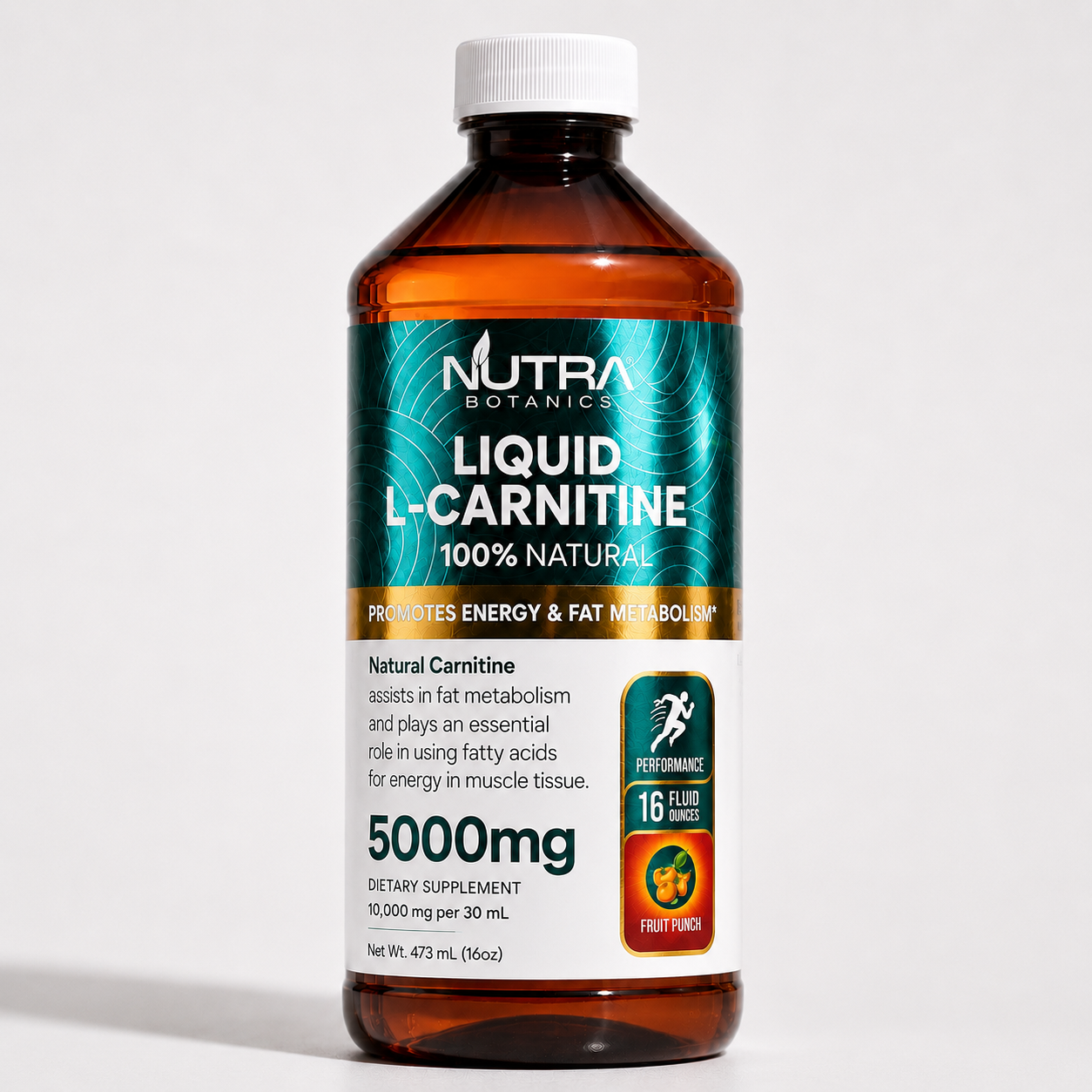
L-Carnitine
Liquid · 30 servings
- Researched-dose L-Carnitine per serving · matches studied range
- Liquid format · pair with a carb-containing meal for insulin-mediated uptake
- GMP & NSF certified · PhD-supervised testing
- Stimulant-free · no caffeine, no artificial colors or fillers
$29.95Subscribe & save 20%
Shop L-Carnitine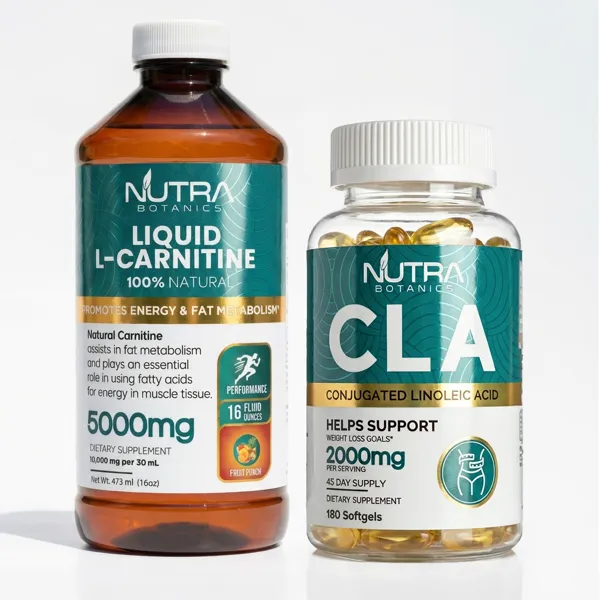
Explore Weight Management
Browse the Nutra Botanics weight management range
- L-Carnitine, CLA, appetite support, and bundles
- Compare formats, dosing, and stack partners
- Find the right fit for your composition goals
- GMP & NSF certified · PhD-supervised testing
Shop the rangeSubscribe & save 20%
Browse Weight Management