Get research-backed answers about cla dosage: how much per day?. This guide addresses the most common questions based on current evidence.
Key Takeaways
- 3–6g per day is the clinically supported range; doses above 6g have not shown additional benefit in most trials
- Split into 2–3 servings taken with meals containing fat for optimal absorption
- Look for a formulation standardized to 80% active isomers (c9,t11 and t10,c12)
- 12 weeks is the typical study duration where body-composition changes become measurable
- Take consistently every day — effects are cumulative, not acute
Related reading: Does CLA Actually Work, CLA Benefits for Men, CLA for Women Over 40, CLA Side Effects.
The Research-Supported Dose Range
Across the majority of peer-reviewed CLA trials, the effective dose range sits between 3 and 6 grams per day of total CLA, with 3.2–4g being the most commonly studied window. A 2007 meta-analysis by Whigham and colleagues, published in The American Journal of Clinical Nutrition, pooled data from 18 randomized controlled trials and found that 3.2g/day produced an average fat-mass reduction of 0.09kg per week over a minimum 12-week duration. The effect is modest but statistically significant.
Going below 3g per day produces inconsistent results in the literature. Going above 6g per day has not shown additional fat-loss benefit and has been associated with higher rates of GI discomfort and, in some studies, changes in insulin sensitivity markers. The 3–6g window is the evidence-backed sweet spot.
For reference: most commercial CLA softgels contain 1–1.5g per softgel (80% CLA from safflower oil). A 3.2g protocol typically means 2–3 softgels per day.
Why Split Dosing With Fat-Containing Meals
CLA is a fat-soluble fatty acid, which means its absorption is improved when taken alongside dietary fat. Taking a CLA softgel with a low-fat snack or on an empty stomach can reduce absorption by roughly 30–50% compared to taking it with a meal containing 10+ grams of fat.
Splitting the daily dose across 2–3 servings with meals accomplishes two things. First, it consistently pairs CLA intake with dietary fat, optimizing absorption. Second, it distributes the daily load across the day, which has been associated with slightly lower rates of GI side effects compared to taking the full dose at once.
The practical protocol: 1g with breakfast, 1–2g with lunch, 1g with dinner. Adjust to match your own meal schedule — consistency with fat-containing meals matters more than exact timing.
The 80% Active Isomer Standard
Not all CLA products are equivalent. CLA is a family of conjugated linoleic acid isomers, and only two of them have meaningful research behind them: c9,t11 (cis-9, trans-11) and t10,c12 (trans-10, cis-12). Commercial products standardized to "80% active isomers" are the formulations used in the majority of clinical trials.
The t10,c12 isomer is the one most associated with body-composition effects in the research. The c9,t11 isomer is associated with immune and inflammatory pathways, with weaker direct fat-loss evidence. Quality CLA products provide roughly equal proportions of both isomers, mirroring the ratios used in published trials.
Lower-grade products sometimes contain less than 80% active isomers, with the remaining content being linoleic acid or non-active CLA isomers. These deliver less of the active compound per gram — meaning a 1g capsule may only contain 600–700mg of actual active CLA, undermining dose targeting.
Why the 12-Week Timeline Matters
CLA does not produce acute, single-dose effects. It works through gradual changes in adipocyte metabolism, lipid oxidation, and fatty acid handling — changes that accumulate over weeks, not hours. This is why the majority of CLA studies run for at least 12 weeks before measuring body-composition endpoints.
A 2007 trial by Gaullier and colleagues in The American Journal of Clinical Nutrition followed 180 participants over 12 months at 3.4g/day, and found that fat-loss benefits continued to accumulate throughout the first 6 months before plateauing. Short-term trials under 8 weeks often miss the effect entirely because the body-composition changes are too small to measure over that window.
The practical implication: give CLA a minimum of 12 weeks at a consistent dose before evaluating whether it is working for you. Judging it at 4 weeks will produce a false negative.
Stacking CLA With Training and Nutrition
CLA works best as an accent to training and a modest caloric deficit — not as a standalone fat-loss tool. The 2007 Whigham meta-analysis found that CLA produced the largest effect in participants who were also resistance training and in a modest caloric deficit. Participants who took CLA without structured training or a deficit showed smaller changes.
This matches the mechanism: CLA supports fat mobilization and oxidation, but you still need the physiological demand (exercise) and the metabolic context (deficit) for that mobilized fat to actually be oxidized. Without one of those, CLA has little to work on.
The practical stack: 3.2–4g CLA per day split across meals, plus resistance training 3–4 days per week, plus a modest 300–500 calorie daily deficit. In that context, CLA contributes a small but measurable additional fat-loss signal on top of the foundational work.
Who Should Reconsider or Skip CLA
CLA is generally well tolerated at 3–6g/day, but certain populations should consult a healthcare provider before starting. Anyone with pre-existing insulin resistance or type 2 diabetes should discuss CLA with their provider, since some trials have observed modest changes in insulin sensitivity markers at higher doses.
Those on blood-thinning medication, those with active liver conditions, and those who are pregnant or nursing should avoid CLA without medical supervision. GI discomfort (loose stools, mild cramping) is the most commonly reported side effect in the research — usually resolved by taking CLA with a full meal rather than on an empty stomach.
If 12 weeks at 3.2–4g/day produces no measurable change in body composition despite consistent training and a deficit, the evidence suggests CLA is not the limiting factor for you, and the supplementation can be stopped.
Frequently Asked Questions
What is the optimal daily dose of CLA?
Should I take CLA with or without food?
How long before CLA works?
Is more CLA better?
CLA Softgels
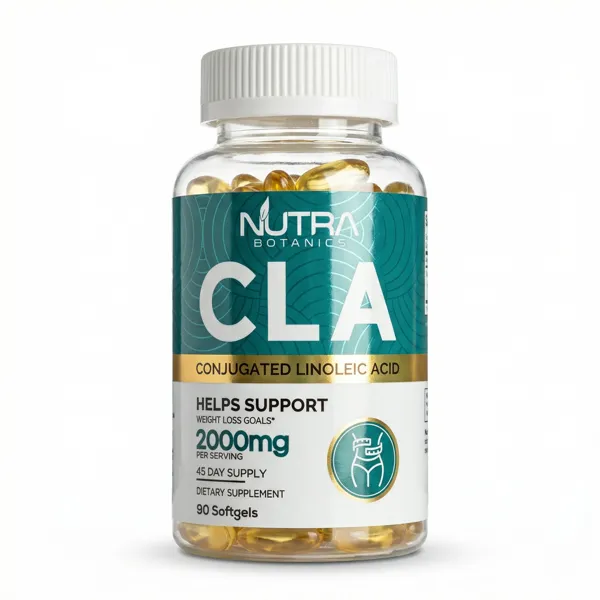
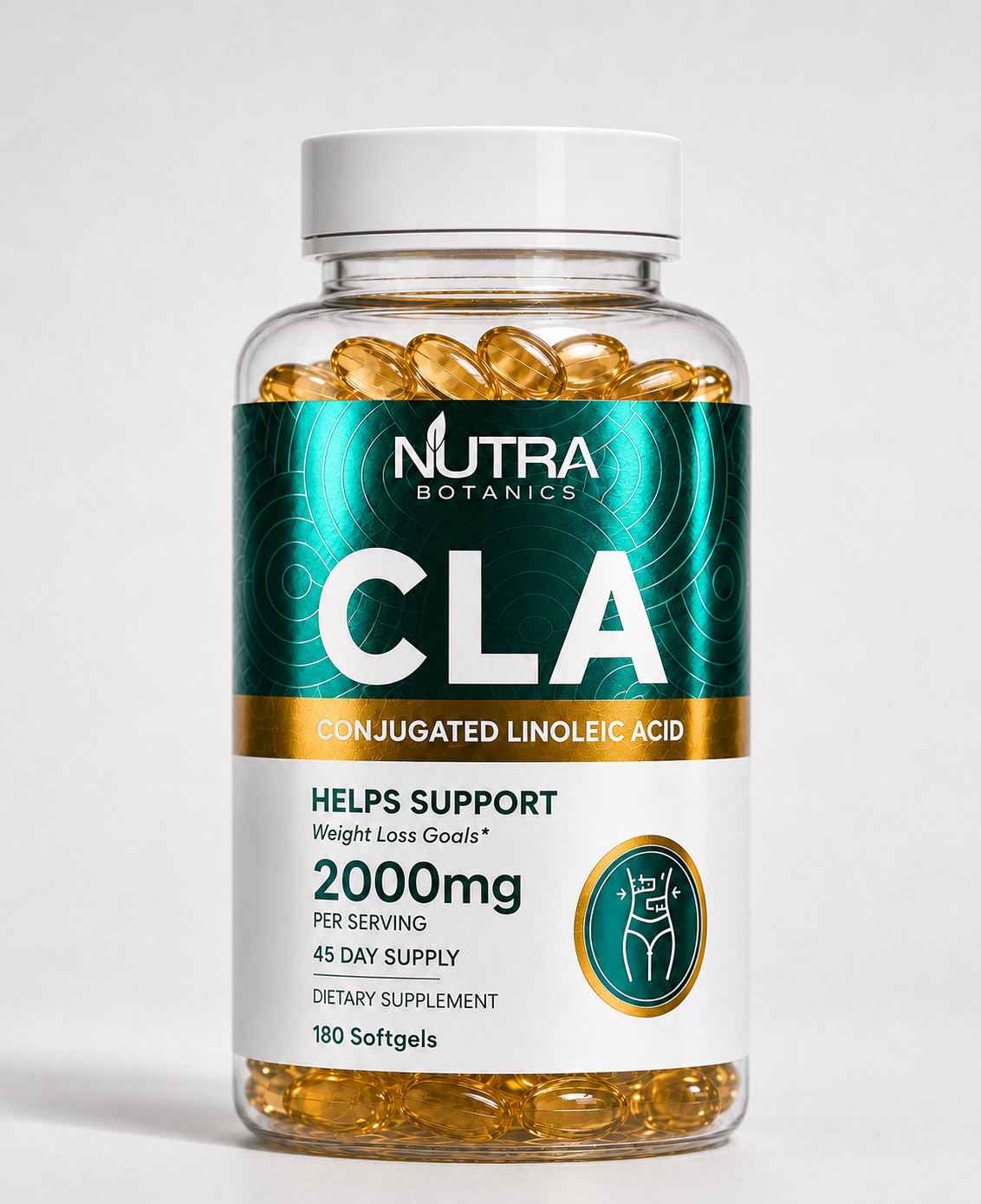
Safflower-derived · 90 softgels
- 1,000mg Conjugated Linoleic Acid per softgel
- Supports body composition goals alongside training
- Non-stimulant · appropriate for long-term use
- GMP & NSF certified · PhD-supervised testing
$24.95Free shipping over $75
Shop CLA Softgels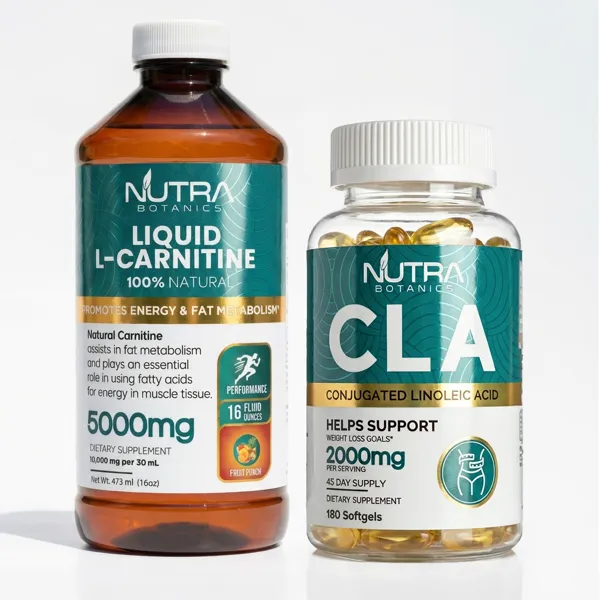
Explore Weight Management
Browse the Nutra Botanics weight management range
- CLA, L-carnitine, appetite support, and bundles
- Compare formats, dosing, and stack partners
- Find the right fit for your composition goals
- GMP & NSF certified · PhD-supervised testing
Shop the rangeSubscribe & save 20%
Browse Weight Management