"CLA for belly fat" is one of the most-searched supplement queries — and one of the most over-promised. The honest answer is more interesting than the marketing claims: CLA does have measurable effects on abdominal fat in clinical trials, but they're modest, isomer-specific, and depend heavily on what you're already doing in the gym and kitchen. Here's exactly what the research shows.
Key Takeaways
- A 2007 meta-analysis of 18 trials found CLA reduced fat mass by about 0.09 kg per week vs placebo at 3.2g/day (Whigham 2007)
- A 4-week RCT in abdominally obese men found CLA reduced sagittal abdominal diameter — the most direct visceral-fat measurement (Risérus 2001)
- Effective doses across trials: 3.2 to 4 grams of total CLA daily, split across meals — higher doses don't deliver more
- The trans-10, cis-12 isomer drives the fat-loss effect; quality supplements use a 50:50 isomer blend
- People with insulin resistance or type 2 diabetes should consult a provider — t10c12 in isolation has been shown to reduce insulin sensitivity*
Related reading: CLA Dosage Guide, Does CLA Actually Work, How to Choose a CLA Supplement, CLA Side Effects.
Belly Fat: Visceral vs Subcutaneous
Not all belly fat is the same. Subcutaneous fat sits just under the skin — pinchable, mostly cosmetic. Visceral fat wraps the organs deeper inside the abdominal cavity, is metabolically active, and is the type most strongly linked to insulin resistance, cardiovascular risk, and metabolic syndrome. Most CLA research that measured belly fat specifically tracked sagittal abdominal diameter or waist circumference — proxies that capture both compartments but skew toward visceral.
This distinction matters because lifestyle drivers (chronic stress, poor sleep, refined carbohydrate intake, inadequate resistance training) preferentially deposit visceral fat. CLA does not override those drivers. It works at the margins of an already-aligned routine.
How CLA Targets Abdominal Fat
CLA is a family of conjugated linoleic acid isomers found naturally in dairy and grass-fed beef. Two pathways are relevant to belly fat:
- Reduced fat storage: CLA appears to inhibit lipoprotein lipase activity in adipose tissue — the enzyme that pulls dietary fat into fat cells for storage.*
- Increased fat oxidation: CLA upregulates carnitine palmitoyltransferase-1 (CPT-1), which transports fatty acids into mitochondria for use as fuel.*
Both effects are isomer-specific and dose-dependent — and both are modest. CLA is not a thermogenic stimulant; you won't feel it working. The effect compounds slowly over weeks of consistent intake.
What the Research Actually Shows
Three trials anchor the evidence base for CLA and abdominal fat specifically:
Whigham et al. (2007) — A meta-analysis of 18 randomized controlled trials in the American Journal of Clinical Nutrition pooled the body-composition data on CLA. The headline finding: CLA produced a fat-mass reduction of approximately 0.09 kg per week compared to placebo at the standard 3.2g/day dose (Whigham 2007). Over a 12-week trial that's about 1 kg (~2.4 lbs) of fat-mass loss attributable specifically to CLA — modest but consistent across trials.
Risérus et al. (2001) — Twenty-five abdominally obese men with signs of metabolic syndrome were randomized to 4.2g/day of a CLA isomer mix or placebo for 4 weeks. The CLA group showed a statistically significant reduction in sagittal abdominal diameter, the closest noninvasive measure of visceral fat (Risérus 2001). This is one of the few trials specifically targeting belly fat in the population most concerned about it.
Gaullier et al. (2004) — A 1-year RCT in 180 overweight adults (BMI 25–30) compared CLA-FFA, CLA-triacylglycerol, and olive oil placebo. Both CLA forms produced significant body fat mass reduction over 12 months, with the largest declines in the first 6 months and effects sustained through the 12-month mark (Gaullier 2004). This is the longest controlled trial in the literature and supports CLA's safety and durability at standard doses.
Which Isomer Matters (t10c12 vs c9t11)
CLA exists as multiple isomers. Two matter for body composition:
- trans-10, cis-12 (t10c12): The isomer responsible for most of the fat-loss effect. It also carries the documented insulin-sensitivity caveat (see Safety below).
- cis-9, trans-11 (c9t11): The dominant isomer in dairy and grass-fed beef. Has anti-inflammatory effects but minimal direct fat-loss action.
Quality CLA supplements derived from safflower oil contain a roughly 50:50 mix of these two isomers — which mirrors the dose composition used in essentially all the published positive trials. Avoid products that don't specify isomer ratios.
Belly Fat Dosing Protocol
The dose-response data is clear: clinical effects appear at 3.2 to 4 grams of total CLA daily, and higher doses don't deliver additional benefit. Practical protocol:
- Dose: 3.2g/day total CLA (typically 4 softgels at 800mg each, or 3 softgels at 1,000mg)
- Timing: Split across 2–3 meals containing some dietary fat (CLA is fat-soluble — absorption is poor on an empty stomach)
- Duration: Minimum 12 weeks before evaluating; the strongest data shows continued benefit through 6–12 months
- Stack with: Resistance training 2–3x/week (preserves lean mass while you're in a fat-loss phase) and 0.7–1g protein per pound bodyweight
For people focused specifically on metabolic-pathway support, CLA pairs naturally with L-carnitine — the carnitine system is what shuttles fatty acids into mitochondria for the oxidation step CLA upregulates. See our metabolism supplements guide for the full stack rationale.
Safety & the Insulin-Resistance Caveat
The 1-year Gaullier trial documented good general tolerability of CLA blends at 3.4g/day in overweight adults (Gaullier 2004). That's the reassuring half of the picture. The cautionary half:
A 2002 study by Risérus et al. in Diabetes Care found that the t10c12 isomer in isolation (not the standard 50:50 blend) reduced insulin sensitivity in obese men with metabolic syndrome over 12 weeks (Risérus 2002). This finding has not replicated cleanly with the standard 50:50 isomer blend used in most commercial supplements, but it warrants caution for two groups specifically:
- People with type 2 diabetes or significant insulin resistance
- People taking blood-glucose-lowering medications (metformin, sulfonylureas, insulin)
Both groups should consult a healthcare provider before starting CLA. For most other healthy adults using a balanced 50:50 isomer product at standard doses, CLA is well-tolerated — mild GI upset is the most commonly reported side effect and typically resolves with food.
Frequently Asked Questions
Does CLA actually reduce belly fat?
How long does CLA take to work for belly fat?
What's the right CLA dose for belly fat loss?
Which CLA isomer matters for visceral fat?
Can I lose belly fat with CLA but no exercise?
Are there safety concerns with CLA for fat loss?
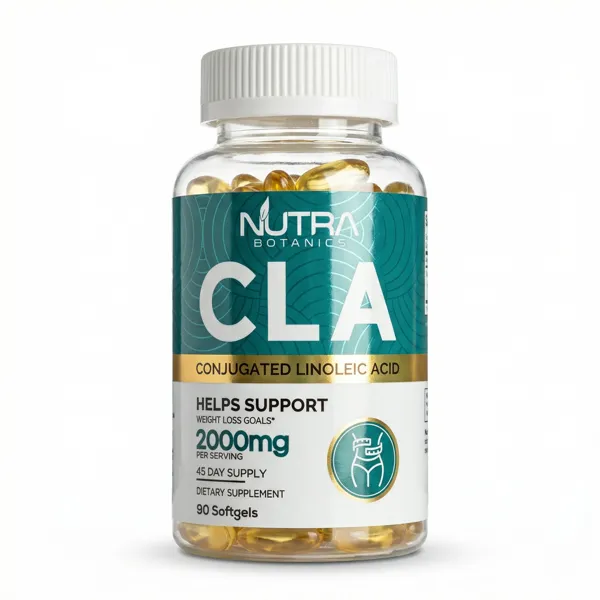
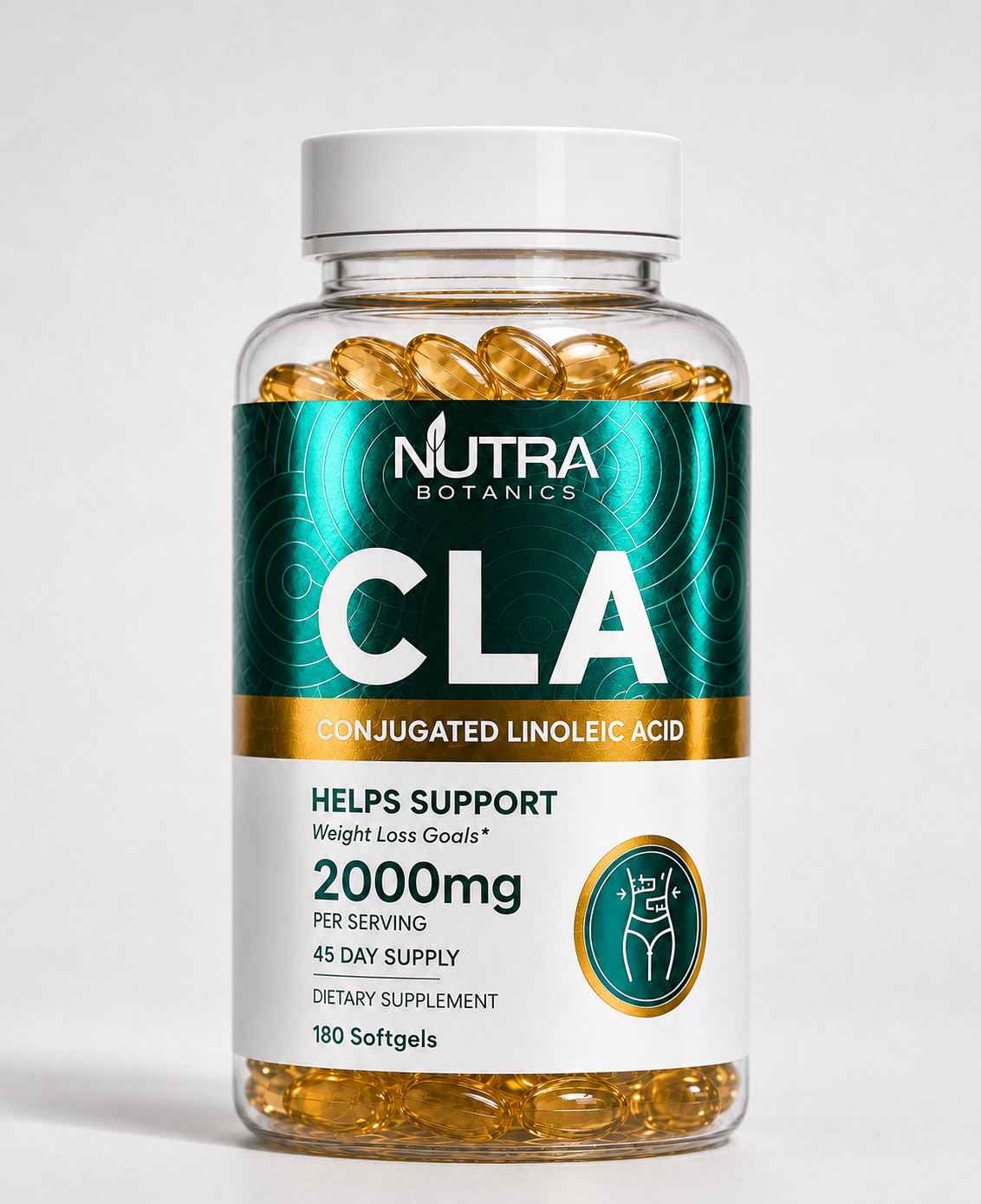
CLA Softgels
Safflower-derived · 90 softgels
- 1,000mg Conjugated Linoleic Acid per softgel
- Supports body composition goals alongside training
- Non-stimulant · appropriate for long-term use
- GMP & NSF certified · PhD-supervised testing
$24.95Free shipping over $75
Shop CLA Softgels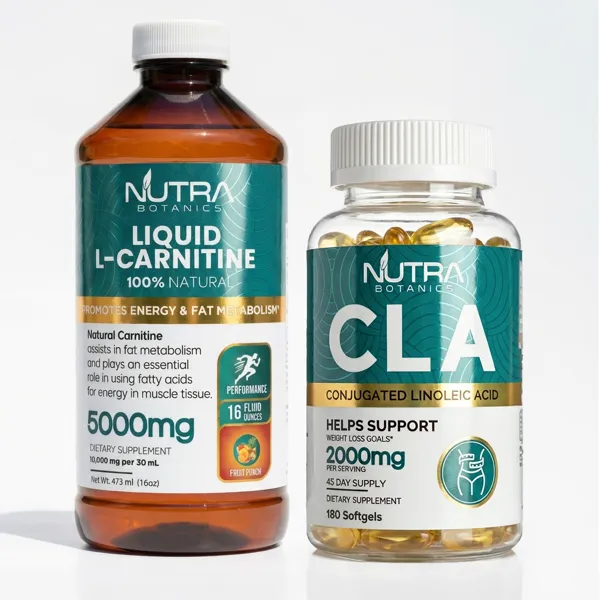
Explore Weight Management
Browse the Nutra Botanics weight management range
- CLA, L-carnitine, appetite support, and bundles
- Compare formats, dosing, and stack partners
- Find the right fit for your composition goals
- GMP & NSF certified · PhD-supervised testing
Shop the rangeSubscribe & save 20%
Browse Weight Management