
BCAAs were one of the best-selling sports supplements of the 2010s, and the science has caught up with the marketing in both directions. The muscle-protein-synthesis story that launched the category is real but partial. The "BCAAs vs whey" debate has a clear winner when you run the head-to-head trials. And the soreness-and-recovery data lands somewhere between "modest but real" and "depends entirely on your diet."
This review summarizes what peer-reviewed trials and meta-analyses actually show about branched-chain amino acids for muscle building, recovery, fasted training, and endurance — and where whey protein, EAAs, and whole food make BCAAs redundant. Where the evidence is solid, we say so. Where it is weaker than the marketing implies, we say that too.
Key Takeaways
- BCAAs trigger a partial muscle-protein-synthesis response via leucine's activation of mTOR, but cannot sustain a full anabolic response without the other six essential amino acids.
- Whey protein contains all nine EAAs plus roughly 25 to 30 percent BCAAs by weight — head-to-head, whey outperforms BCAAs on lean-mass outcomes at matched leucine.
- Meta-analytic evidence supports a small-to-moderate reduction in muscle soreness and creatine kinase markers when BCAAs are taken around high-intensity or eccentric training.
- Studied doses cluster at 5 to 10 g per serving, 2:1:1 ratio, taken before or during training. Higher ratios (4:1:1 or 8:1:1) do not outperform 2:1:1 in head-to-head trials.
- The clearest benefit populations in the literature are fasted trainees, caloric-deficit athletes, endurance athletes reporting central-fatigue effects, and people with low total protein intake.
Related reading: BCAAs vs EAAs vs Whey, BCAA Benefits, BCAA Dosage, EAA vs BCAA, When to Take BCAAs.
What BCAAs Actually Are
Branched-chain amino acids are three of the nine essential amino acids the body cannot synthesize on its own: leucine, isoleucine, and valine. They are "branched-chain" because of their molecular structure, and they are metabolized primarily in skeletal muscle rather than the liver — one of the mechanistic hooks the supplement category was built on. Together they make up roughly 35 percent of the essential amino acids in skeletal muscle and play distinct roles in protein synthesis and energy metabolism.
Leucine is the star of the three. It is the most direct activator of the mechanistic target of rapamycin complex 1 (mTORC1), the signaling pathway that triggers muscle protein synthesis (MPS). Isoleucine contributes to glucose uptake and has modest independent effects on MPS. Valine has the weakest independent anabolic signal and is present largely to keep the ratio physiologically balanced.
The research-backed dose range is 5 to 10 g per serving, and the most-studied ratio is 2:1:1 (leucine:isoleucine:valine) — the same ratio found in whole-food protein and whey. Products marketing 4:1:1 or 8:1:1 ratios lean on the "leucine is the activator" argument, but head-to-head trials at matched total leucine do not show superiority for the higher ratios.
The Research on Muscle Protein Synthesis
The foundational insight is real: leucine activates mTORC1, and mTORC1 triggers muscle protein synthesis. Isotope-tracer studies from Norton, Layman, and colleagues through the 2000s established the "leucine threshold" — roughly 2.5 to 3 g of leucine per meal is needed to maximally trigger MPS in healthy adults.
The critical nuance: triggering MPS is not the same as sustaining it. MPS is a two-phase process — signal initiation (what leucine does) and substrate supply (what the other six EAAs do). Jackman et al. (2017) compared 5.6 g BCAAs post-exercise against placebo and saw a 22 percent increase in MPS — real but roughly 50 percent smaller than the response from an equivalent whey protein dose in similar trial designs.
Wolfe's 2017 review in the Journal of the International Society of Sports Nutrition laid out the case explicitly: BCAAs alone cannot sustain a full anabolic response because the other EAAs are rate-limiting. When the non-BCAA essential amino acids (methionine, lysine, histidine, phenylalanine, threonine, tryptophan) are scarce, the MPS signal initiated by leucine cannot drive full protein accretion. The body scavenges from existing tissue to compensate.
In practical terms: BCAAs produce a real but partial MPS response that is measurably smaller than a complete protein source at matched leucine. That is the scientific core of the "BCAAs can't replace whey" argument.
The Research on Recovery and Soreness
Soreness is where BCAAs have their strongest independent evidence base. Multiple meta-analyses (Fouré 2017; Rahimi 2017) have pooled BCAA trials around high-intensity or eccentric training and reported small-to-moderate reductions in delayed-onset muscle soreness (DOMS) and in markers of muscle damage such as creatine kinase.
Typical effect sizes in the literature: a 1 to 2 point reduction on a 10-point soreness scale at 24 to 72 hours post-exercise, and 15 to 30 percent lower peak CK elevations versus placebo. The mechanism is thought to involve attenuation of muscle-protein breakdown during training and reduced exercise-induced tryptophan uptake into the brain (which also explains the central-fatigue story in endurance contexts).
Two major caveats. First, most positive trials enroll subjects in caloric-restricted or relatively low-protein states — exactly the populations where a BCAA-shaped gap exists to fill. Second, at matched leucine, whey protein produces comparable or larger soreness reductions in head-to-head comparisons. The soreness benefit is real but is not unique to BCAAs.
BCAAs vs Whey vs EAAs
This is the comparison that upended the BCAA category in the late 2010s. A standard 25 g serving of whey protein contains roughly 5.5 to 6 g of BCAAs by weight, plus all six other essential amino acids, plus bioactive peptides. The leucine content is typically 2.5 to 3 g per 25 g serving — at or above the MPS threshold — and it comes packaged with the full substrate set.
Head-to-head: Churchward-Venne et al. (2014) tested leucine-enriched BCAAs against complete whey at matched leucine and found whey drove a significantly larger MPS response, because substrate availability was the bottleneck once the signal was initiated. Subsequent trials have consistently replicated this pattern.
EAAs (essential amino acids, all nine) split the difference: they provide the full substrate set at lower total protein than whey, are calorie-light, and avoid the dairy matrix. In head-to-head work, EAAs outperform BCAAs on MPS at matched cost and approach whey's response. For anyone training fasted or in aggressive calorie restriction where whole protein is not practical, EAAs are the research-aligned choice over BCAAs.
The honest positioning: BCAAs are the right tool when EAAs and whey are not available, or when a specific use case (intra-workout hydration, flavor, low-calorie intra-training fuel) calls for BCAAs specifically. They are not a better muscle-building tool than whey — they are a narrower one.
Where the Evidence Is Mixed or Weak
Four BCAA claims deserve honest skepticism:
- "BCAAs build muscle on their own." The isotope-tracer literature is clear that BCAAs alone produce a partial, smaller-magnitude MPS response than complete protein. Position stands from the ISSN and multiple meta-analyses state that BCAAs are not an effective substitute for complete protein for hypertrophy.
- "4:1:1 or 8:1:1 ratios are better." Head-to-head trials at matched total leucine have not shown superiority for leucine-enriched ratios above 2:1:1. The marketing of mega-leucine ratios outpaces the trial evidence.
- "BCAAs boost fat loss." Direct fat-loss evidence is weak. What the literature supports is muscle-preservation during caloric deficits, which indirectly supports body composition. Framing BCAAs as a fat-burner is inconsistent with the data.
- "BCAAs improve endurance by reducing central fatigue." The tryptophan-competition mechanism is real but produces modest effect sizes in endurance trials, and effects are inconsistent across studies. The benefit is niche, not foundational.
Who Sees the Best Results in the Research
Pooled across the literature, the athletes and populations most likely to see measurable BCAA benefit are:
- Athletes training fasted, where a complete protein feed is impractical but some anabolic signal is useful mid-session.
- Individuals in aggressive caloric deficits where muscle-preservation margins are thin and protein timing is constrained.
- Endurance athletes in long-duration events, where the central-fatigue / tryptophan-competition mechanism may contribute marginal effects.
- People with low total daily protein intake (under 1.2 g/kg bodyweight), where adding any EAA signal helps — but complete protein is a better answer.
Well-fed resistance trainees already hitting 1.6 to 2.2 g/kg bodyweight of daily protein from varied sources see the smallest returns from added BCAAs. At that baseline, the MPS ceiling is already saturated across the day and the marginal BCAA dose produces diminishing returns.
The Bottom Line
Do BCAAs work? Yes — for specific endpoints, in specific populations, at the right dose. They trigger a real but partial MPS response. They modestly reduce soreness and CK markers around high-intensity or eccentric training. They support muscle preservation during caloric deficits and fasted sessions. Those effects are backed by meta-analytic evidence.
What BCAAs are not: a better muscle-building tool than whey or EAAs at matched leucine; a fat-burner; a replacement for complete protein at daily intake; or a miracle for well-fed athletes already meeting protein targets. If whey or EAAs are available and your total protein is solid, BCAAs are a narrow-use tool. If you are training fasted, cutting aggressively, or doing long endurance work, they have a clearer place in the stack. Pick the tool that matches the situation — and stop buying the "BCAAs vs protein" false choice that the marketing leans on.
These statements have not been evaluated by the Food and Drug Administration. This product is not intended to diagnose, treat, cure, or prevent any disease.
Frequently Asked Questions
Do BCAAs actually build muscle?
Are BCAAs better than whey protein for muscle growth?
Do BCAAs reduce muscle soreness?
How much BCAA should I take and when?
Who actually benefits from BCAA supplementation?
Are BCAAs safe for long-term use?
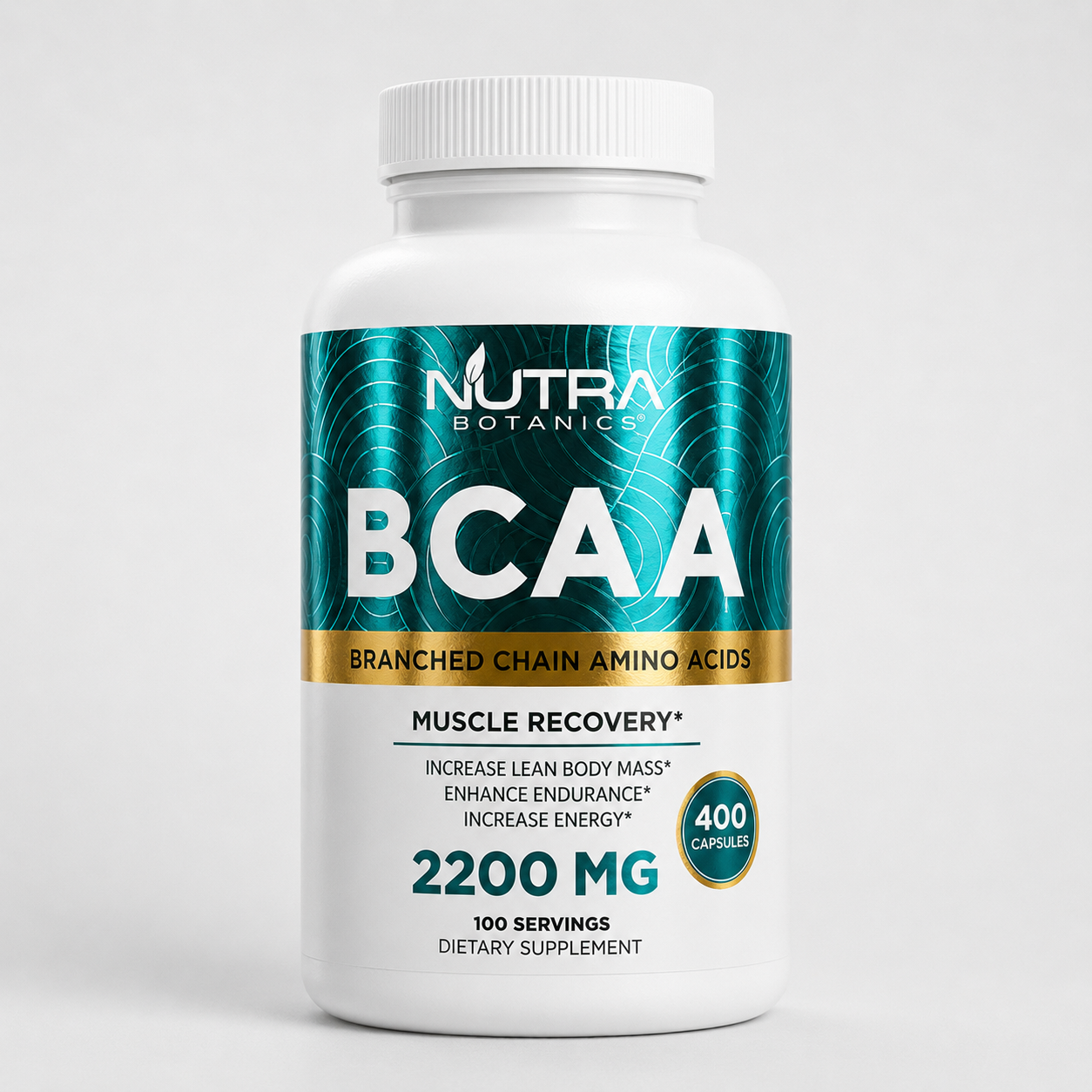
BCAA 2:1:1
Powder · 30 servings · intra-workout
- 7 g BCAAs per serving in the researched 2:1:1 ratio
- Leucine dosed above the 2.5–3 g MPS threshold per serving
- Added electrolytes for intra-workout hydration support
- GMP & NSF certified · PhD-supervised testing · no proprietary blends
$32.95Subscribe & save 20%
Shop BCAA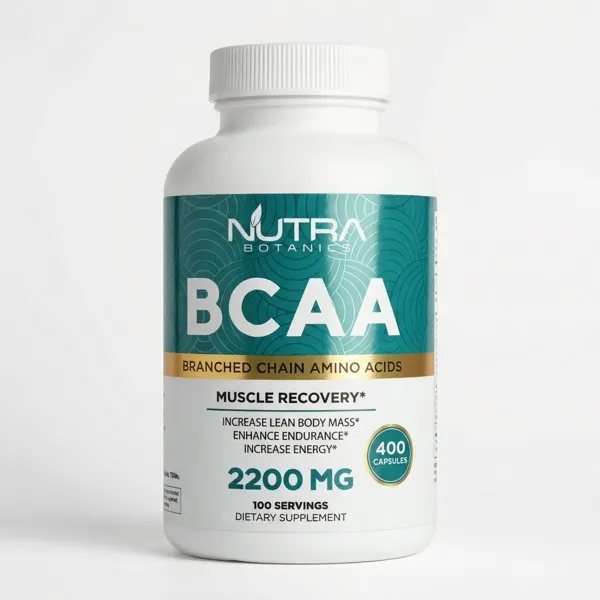
Explore Performance
Browse the Nutra Botanics performance range
- BCAA, EAA, pre-workout, creatine, and recovery options
- Compare dosing, ratios, and studied use cases side-by-side
- Find the right stack for fasted, deficit, or endurance training
- GMP & NSF certified · PhD-supervised testing
Shop the rangeSubscribe & save 20%
Browse Performance