Creatine is the most-studied ergogenic supplement in the peer-reviewed literature. More than 500 published trials span strength, power, hypertrophy, recovery, cognitive outcomes, and aging. Despite that evidence base, public framing still tends to polarize — either "the only supplement worth taking" or "overhyped water retention." Both framings miss what the data actually show. Creatine works for specific endpoints, in specific populations, under specific dosing conditions, and the details matter.
This review summarizes what 500+ peer-reviewed trials, meta-analyses, and the International Society of Sports Nutrition (ISSN) position stand actually report about creatine monohydrate. Where the research is solid, we say so. Where it is contested or weak, we say that too.
Key Takeaways
- Creatine monohydrate is by far the most-studied form — the ISSN position stand identifies it as the reference standard, and no alternative form has outperformed it in head-to-head trials.
- Strength and power outcomes are the most consistently positive endpoint, with typical gains of 5 to 15 percent in repeated high-intensity work over 4 to 12 weeks of training.
- Hypertrophy effects are real but modest — roughly 1 to 2 kg of additional lean mass over 8 to 12 weeks when paired with resistance training.
- Cognitive and aging-related endpoints are an emerging research track, with the largest effects in vegetarians, vegans, and sleep-deprived populations whose baseline creatine stores are lower.
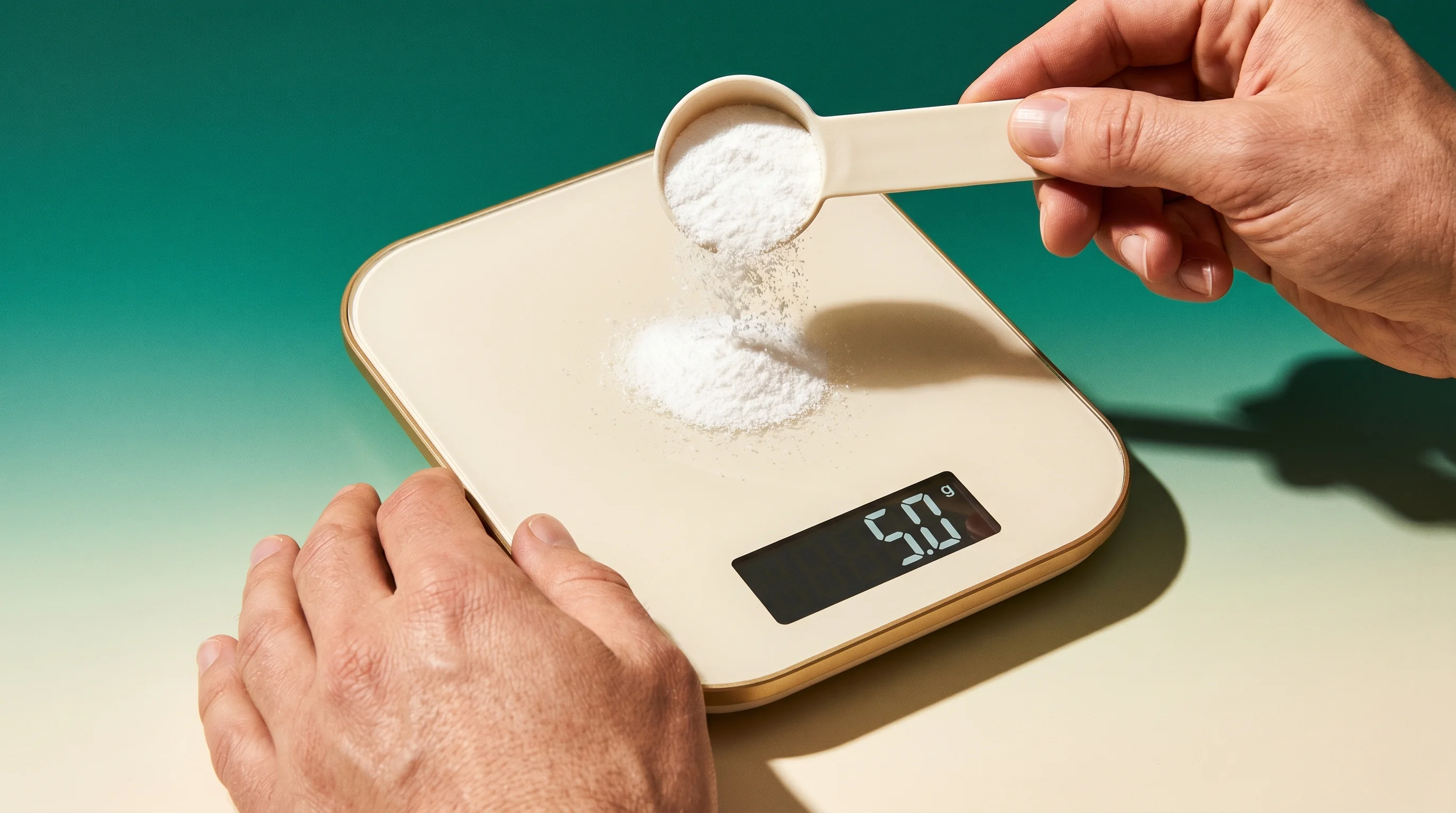
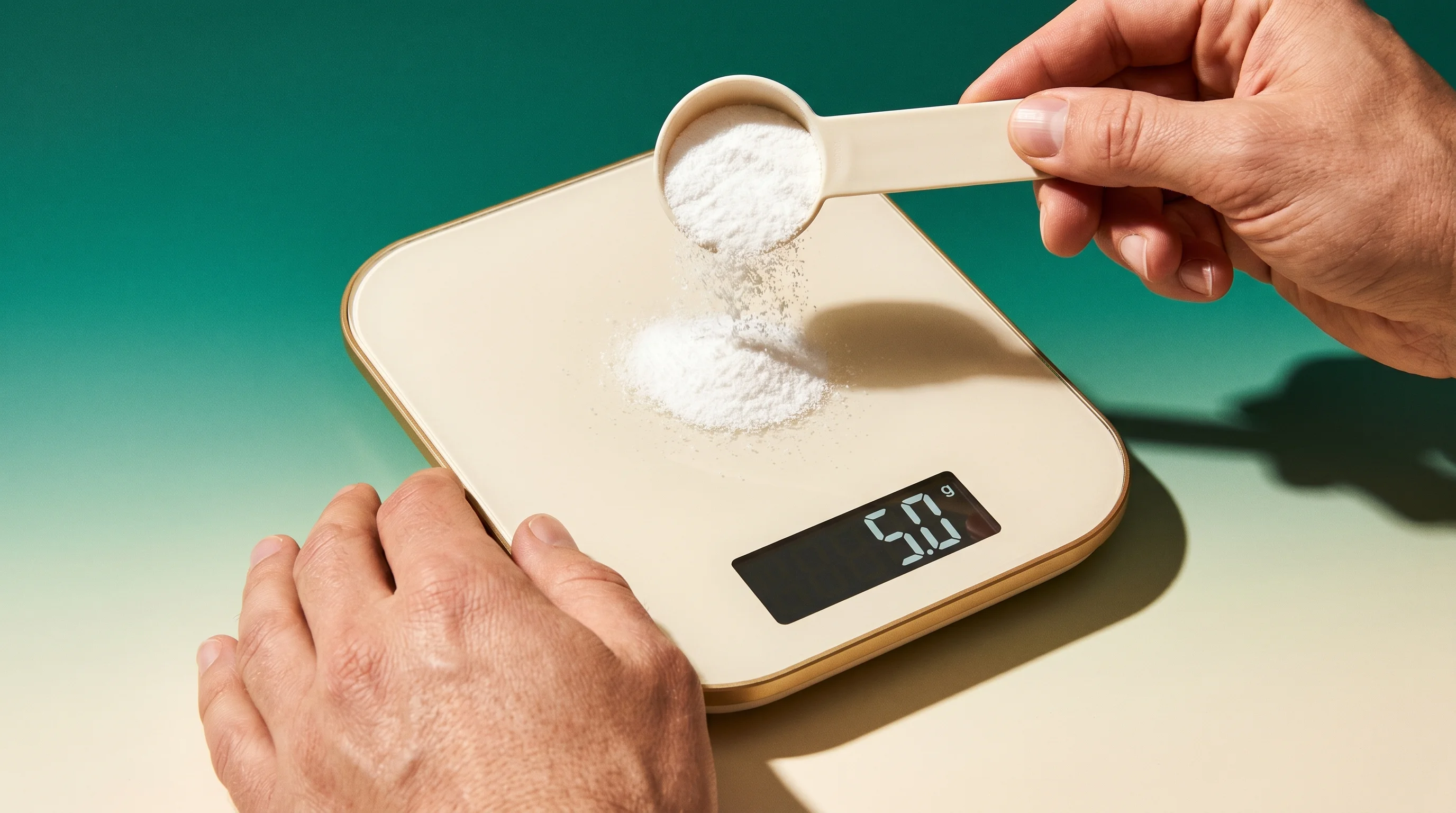
- Loading (20 g/day for 5 to 7 days) saturates muscle stores faster; 3 to 5 g/day reaches the same saturation in roughly 3 to 4 weeks without a load.
Related reading: Creatine Supplement Guide (how to choose), Creatine Loading Phase, Monohydrate vs HCl, Cognitive Benefits.
What Creatine Is and How It Works
Creatine is a nitrogenous organic acid synthesized endogenously in the liver, kidneys, and pancreas from three amino acids: arginine, glycine, and methionine. Roughly 95 percent of the body's creatine pool is stored in skeletal muscle, predominantly as phosphocreatine (PCr). Dietary creatine comes primarily from red meat and fish; endogenous synthesis covers the rest.
The mechanism that anchors virtually every positive trial outcome is the phosphocreatine energy system. During short, high-intensity efforts — a heavy set, a sprint, a jump — PCr donates its phosphate group to ADP, rapidly regenerating ATP. Higher total muscle creatine means more PCr available, which means more reps before the system runs dry. This is why the strongest signal in the literature shows up in repeated-effort, high-intensity work rather than endurance output.
Supplementation raises the muscle creatine pool toward its upper ceiling — the saturation window. Most adults sit at roughly 60 to 80 percent of that ceiling from diet alone; supplementation at 3 to 5 g/day closes the gap within 3 to 4 weeks, or within 5 to 7 days if a 20 g/day loading phase is used.
The Research on Strength and Power
Strength and power outcomes are where the creatine literature is at its strongest. Kreider's meta-analyses (Kreider et al. 2017), Rawson and Volek's trials (Rawson & Volek 2003), and the ISSN position stand all converge on the same pattern: roughly 5 to 15 percent improvements in 1-rep-max strength, repeated-sprint capacity, and high-intensity work output when creatine is paired with a structured training program over 4 to 12 weeks.
The effect is largest on endpoints that draw heavily on the PCr system — repeated sets in the 1 to 10 rep range, sprint intervals, jump performance, and explosive compound lifts. Trained lifters typically see smaller absolute gains than untrained novices, but the additive effect over a program still separates supplemented groups from placebo-matched controls in most well-powered trials.
The ISSN's official position (Kreider et al. 2017) is unambiguous: creatine monohydrate is the most effective ergogenic nutritional supplement currently available in terms of increasing high-intensity exercise capacity and lean body mass during training. That statement is drawn directly from the pooled literature — it is not marketing language.
The Research on Hypertrophy and Body Composition
Hypertrophy effects in the creatine literature are real but smaller than marketing commonly implies. Pooled across well-controlled trials, creatine adds roughly 1 to 2 kg of additional lean mass over 8 to 12 weeks of resistance training versus placebo-matched controls training the same program (Rawson & Volek 2003). The mechanism is partly intracellular water retention (which supports cellular signaling), partly increased training volume capacity, and partly a direct anabolic-signaling contribution.
Initial water-weight gain of 1 to 2 lbs in the first week or two of loading is common and is intracellular — inside muscle fibers, not bloating under the skin. Trials using DEXA and MRI consistently show that long-term lean-mass gains in supplemented groups reflect true hypertrophy, not just fluid shift.
Body-composition effects require training. Creatine alone, sedentary, does not meaningfully change fat mass or lean mass. The supplement works by enabling more total training volume over time; the adaptation still has to be earned in the gym.
The Research on Cognitive and Aging Outcomes
Cognitive endpoints are a newer research track than the strength literature, but one that is expanding rapidly. The brain maintains its own creatine pool, and several trials have measured effects on memory, processing speed, mental fatigue, and sleep-deprived cognitive performance. A 2018 meta-analysis (Avgerinos et al. 2018) pooled studies in this domain and reported measurable improvements on short-term memory and reasoning tasks, with the largest effects in vegetarians — whose baseline brain creatine is typically lower than meat-eaters.
Sleep-deprivation protocols show another reliable signal: supplementation partially offsets cognitive and mood declines during 24-hour sleep restriction. This does not replace sleep, but the effect is measurable and has been replicated.
In aging populations, creatine is increasingly studied for sarcopenia prevention and bone-density support when paired with resistance training. Trials in adults over 60 have reported gains in muscle strength and functional outcomes (chair-stand, gait speed) that meaningfully exceed training alone (Chilibeck et al. 2017).
Where the Evidence Is Mixed or Weak
Four areas deserve honest skepticism:
- Endurance outcomes. The PCr system is not the rate-limiting energy pathway during sustained aerobic work. Most endurance-specific trials show null effects, with a handful of positive signals in endpoints that include interval or sprint components.
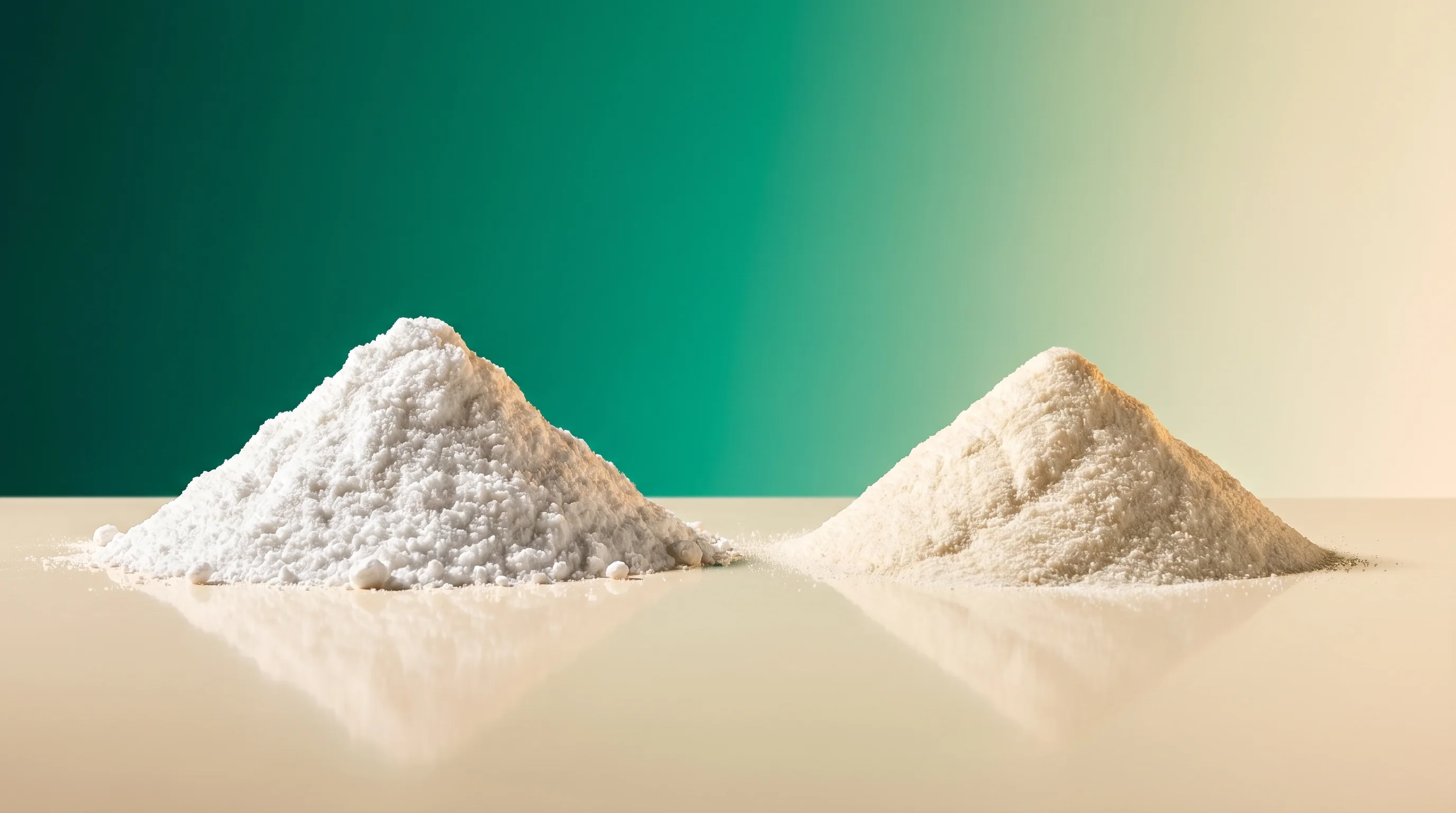
- "HCl is better than monohydrate." Head-to-head trials at matched doses have not demonstrated superior outcomes for creatine HCl, ethyl ester, or buffered forms versus monohydrate. Monohydrate remains the reference standard in the research and in the ISSN position stand.
- Hair-loss concern. This claim traces primarily to a single 2009 South African rugby study (van der Merwe et al. 2009) reporting DHT increases with creatine loading. That finding has not been replicated in subsequent trials, and no creatine trial has measured hair loss as an outcome. The causal chain from DHT shift to hair loss is assumed, not observed, in the creatine literature.
- Kidney-damage concern. In healthy adults, creatine supplementation at standard doses has not been shown to impair kidney function in long-term trials of up to 21 months (Kreider et al. 2003) and up to 5 years in the ISSN position review (Kreider et al. 2017). Elevated creatinine on lab panels is a downstream product of creatine use and does not indicate dysfunction. Adults with pre-existing renal conditions should consult a provider first.
Who Sees the Best Results in the Research
Pooled across the trial literature, the populations most likely to show measurable outcomes from creatine supplementation are:
- Vegetarians and vegans, whose baseline muscle and brain creatine stores are lower and whose responder magnitude is typically larger in both strength and cognitive endpoints.
- Untrained or early-stage lifters beginning a structured resistance program — the novice-adaptation window compounds with supplementation.
- Power and strength athletes whose sport-specific demands emphasize repeated high-intensity efforts.
- Aging adults (60+) pairing creatine with resistance training for sarcopenia prevention and functional capacity.
- Sleep-restricted populations (shift workers, new parents, travel) for partial cognitive offset.
Highly trained, meat-eating athletes already near their upper creatine ceiling show the smallest responses in the research. That does not mean zero effect — it means baseline saturation is already closer to the ceiling, so the marginal gain is smaller.
The Bottom Line
Does creatine work? Yes — across more peer-reviewed endpoints than any other sports-nutrition ingredient. It is strongly supported for strength, power, and repeated high-intensity work output. It shows real but modest hypertrophy effects when paired with training. It has a growing, distinct research base for cognitive and aging-related outcomes. Monohydrate remains the reference form; loading is optional.
What it is not: a substitute for training, a drug-like strength aid that works without the program, or something any particular alternative form has been shown to beat in matched-dose head-to-head trials. Set realistic expectations, dose consistently, and give the saturation window its full runway before judging whether creatine works for your situation.
These statements have not been evaluated by the Food and Drug Administration. This product is not intended to diagnose, treat, cure, or prevent any disease.
Frequently Asked Questions
How much creatine do I need to see results in the research?
How long does creatine take to work in published studies?
Does creatine work without exercise?
Is creatine monohydrate really better than HCl or other forms?
Is creatine safe for long-term use?
Does creatine cause hair loss?
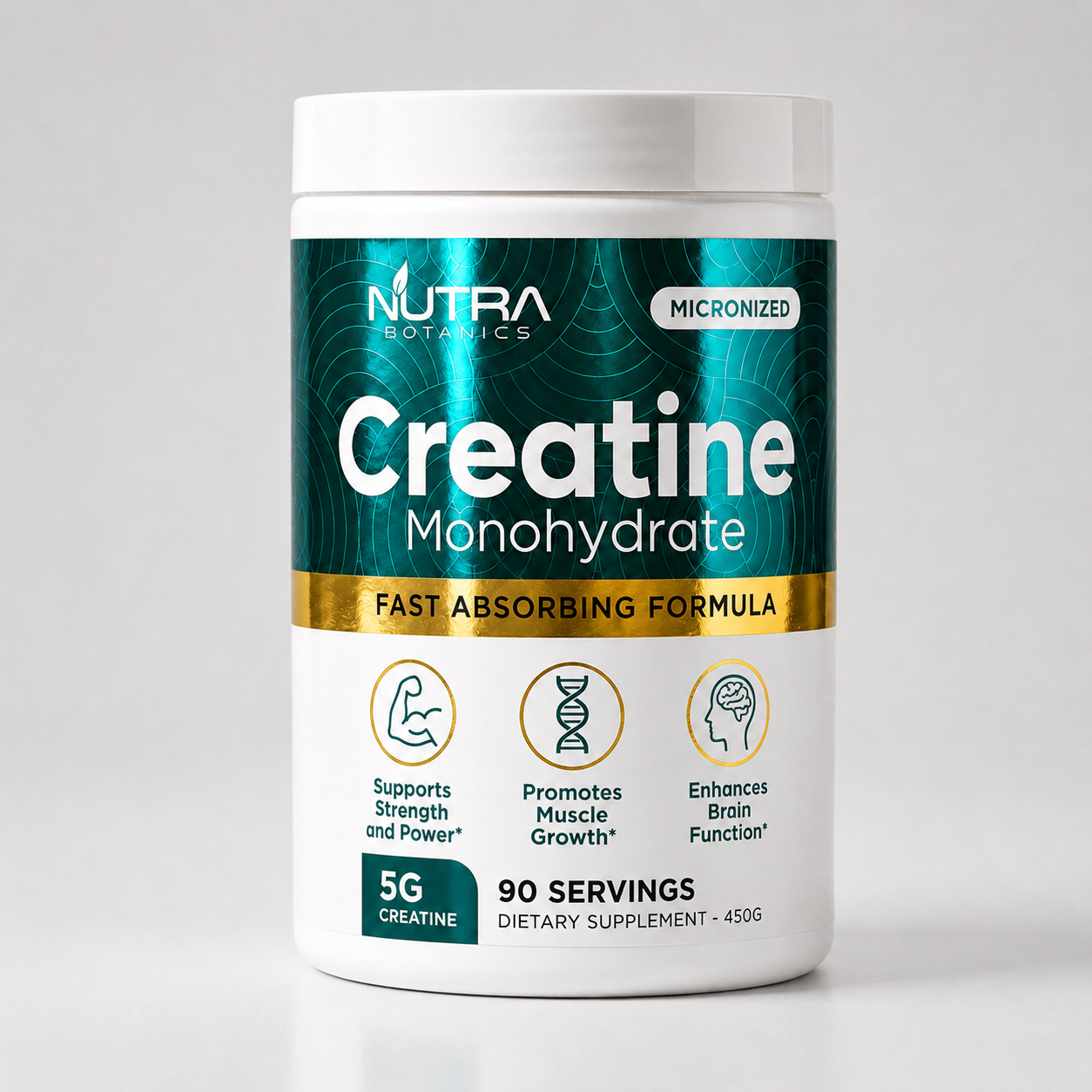
Creatine Monohydrate
Powder · 60 servings
- 5 g pure creatine monohydrate per serving · matches the ISSN reference dose
- Micronized for mixability · unflavored, stacks with anything
- GMP & NSF certified · PhD-supervised testing
- Stimulant-free · no fillers, no dyes, no flavoring agents
$29.95Subscribe & save 20%
Shop Creatine
Explore Performance
Browse the Nutra Botanics performance range
- Creatine, protein, recovery, and stack partners
- Compare formats, dosing, and training protocols
- Find the right fit for your strength and power goals
- GMP & NSF certified · PhD-supervised testing
Shop the rangeSubscribe & save 20%
Browse Performance