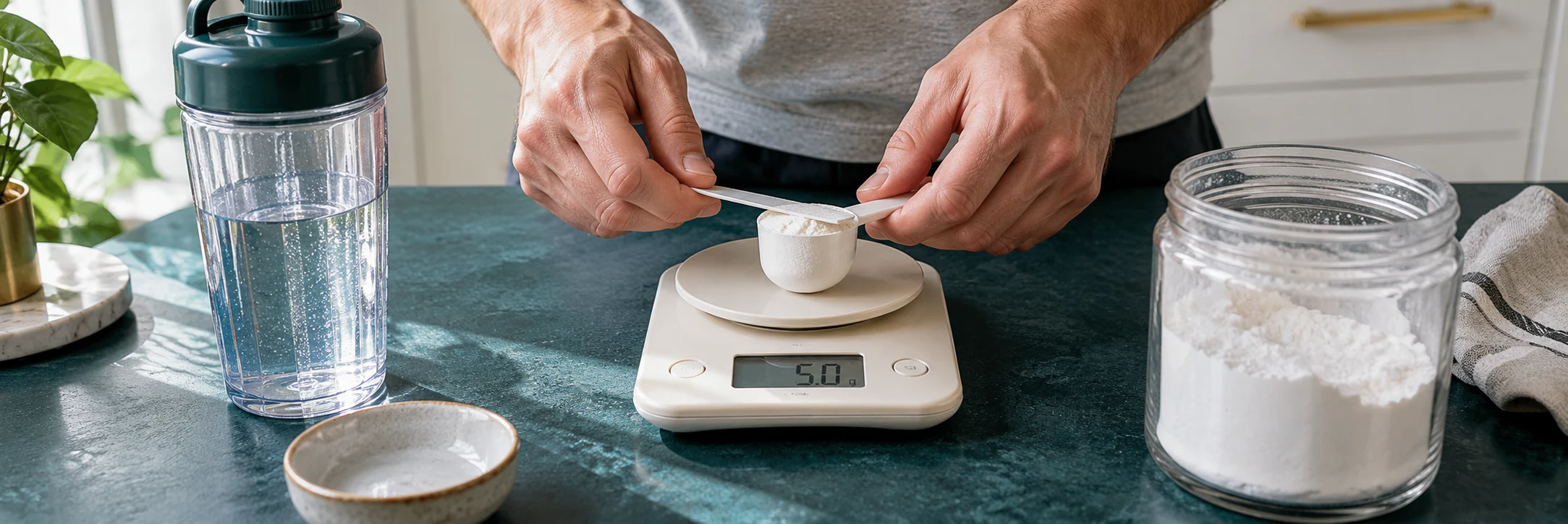
Build your creatine routine around the current label and a time you can remember. Nutra Botanics lists one 5 g scoop of creatine monohydrate, mixed thoroughly into a drink. Loading is optional in research; a faster rise in muscle stores is not a promise of faster visible results.
Start with the practical steps below, then use the progress checklist to separate training changes from scale changes. The guide also covers coffee, rest days, choosing a formula and questions worth discussing with your healthcare professional.
Your routine, made simple
- The role: creatine helps replenish quick muscle energy for repeated, intense efforts.
- The choice: monohydrate has an extensive research history. An upgraded name is not proof of better results.
- The routine: use the current serving directions. Research loading amounts are a separate question.
- The check: record comparable workouts, comfort and consistency. One weigh-in cannot show what changed.
QUICK VIDEO GUIDE · 27 SECONDS · ENGLISH CAPTIONS
Make the next rep count.
Quick muscle energy for repeated, intense efforts. See the labeled scoop and preparation, then explore the complete guide below.
Brand-produced video with AI-generated photographic scenes and synthetic narration.
Choose your next question: your routine, starting creatine, monohydrate versus HCl or loading versus a daily routine.
What Creatine Can Support
Creatine's clearest performance role is repeated, high-intensity work, such as lifting and sprinting. The NIH exercise-supplement guide explains that role and the differences between studied populations.
More support for hard training
In a 12-week trial in 19 resistance-trained men, creatine alongside heavy training produced greater strength and fat-free-mass gains than placebo. That supports a training role, but the result does not set a percentage gain or deadline for your workouts.
Repeated effort, rather than a stimulant rush
In a small trial in 14 active men, creatine improved repeated bench-press and jump-squat performance. Focus on comparable hard efforts, rather than a stimulant rush. See how this differs from endurance performance.
Cognition: a separate research question
Creatine has been studied for cognition in different populations and at different amounts. A 2024 meta-analysis found improvements in some tests; a separate systematic review found mixed results. This does not establish sharper thinking for every daily user. Our brain-health guide explores that research question.
Bone density: avoid a stronger promise
Training results are not proof of greater bone density. A two-year trial in 237 postmenopausal women did not find an added bone mineral density benefit from creatine alongside resistance training and walking. Review our creatine guide for women over 40 with that distinction in mind.
Older adults: pair the question with training
A 2026 review of randomized trials in older adults found a small strength benefit with resistance training. Its pooled muscle-mass and physical-performance outcomes were not statistically significant. These outcomes should not become a promise of muscle preservation or improved mobility without exercise. Read the guide for adults over 50 for more context.
Choose evidence that matches your goal
A result from a training study does not prove a mood or treatment benefit. For this shopping decision, focus on your activity and the ingredient's performance role. Personal treatment decisions belong with your healthcare professional.
Forms of Creatine Compared
Start by comparing creatine monohydrate, then ask what another form adds. A more elaborate label does not establish better absorption, greater gains or fewer side effects.
A trial in 36 resistance-trained participants found no advantage for a buffered form over monohydrate in the measured muscle-creatine, body-composition or performance outcomes. That study tested buffered creatine, not every alternative form.
- Read the ingredient: the form and amount should be easy to identify.
- Separate texture from results: micronized describes smaller particles. That word alone does not prove superior gains.
- Compare actual value: use the current price and labeled servings, rather than a universal price multiplier.
Our monohydrate versus HCl guide covers the research and label questions. For the broader background, read the ISSN position paper.
How to Take Creatine: Dose & Timing
Keep the routine simple: check the serving, mix as directed and choose a reliable reminder. You do not need a complicated stack to understand what is in your scoop.
Your practical checklist
Check your tub: the current Nutra Botanics formula page lists one scoop (5 g). Mix thoroughly into a drink. Follow the container directions; do not increase the serving or add loading without qualified guidance.
Choose your reminder: connect the serving to an existing habit, such as preparing your usual drink. Keep a simple record so you know whether the routine is consistent.
Understand loading: in research in 31 men, 20 g daily for six days raised muscle creatine by about 20%. A gradual approach of 3 g daily reached a similar rise over 28 days. These are research protocols, not directions for this tub or deadlines for visible results.
Pick a convenient time: a trial in 34 college athletes found no added benefit from taking creatine immediately before versus after training. Choose a workable time rather than chasing a proven minute-by-minute advantage.
Keep drinks straightforward: follow the mixing directions and consider other ingredients already in the drink. Coffee and protein questions are answered below.
Review the routine: look at training, tolerance and whether the supplement still fits your goal. Continuing forever is not a requirement, and stopping does not erase your training history.
Explore creatine timing or the loading decision if either question affects your routine.
Track Progress Without a Fixed Deadline
A change in muscle stores, a heavier weigh-in and a better workout are different signals. Use comparable sessions to assess progress. Avoid treating a fixed week or an extra rep as a result everyone should expect.
| What to track | Your progress check | How to read it |
|---|---|---|
| Routine | Note when you take the labeled serving. | A record helps you distinguish consistency from guesswork. |
| Training | Compare load, reps and rest periods across similar sessions. | Better sessions are useful signals. Training, food, sleep and practice also matter. |
| Scale | Look at the trend under similar weighing conditions. | Water, food and other factors affect weight. A change alone does not prove new muscle or fat gain. |
| Comfort | Record stomach symptoms and any changes in your routine. | Persistent symptoms are a reason to pause and seek personal advice, rather than increase the serving. |
Want the research behind the timing question? Read muscle-store changes versus training progress.
Safety & Common Concerns
Safety findings need the right context. Research in healthy adults does not mean every person, amount or product is risk-free. If you have a medical condition, take medication or are pregnant or breastfeeding, discuss supplement use with your healthcare professional.
Hair loss: what the newer trial measured
A 12-week trial in resistance-trained men found no difference between creatine and placebo in measured hair or hormone outcomes. It does not settle every person's long-term risk. Our creatine and hair-loss guide separates hormone tests from actual hair measurements.
Kidney tests: tell your clinician about creatine
Creatinine is a breakdown product used in kidney blood tests. A 35-day trial in healthy young men found no between-group difference in the kidney-injury markers measured, although creatinine increased within the creatine groups. Tell your clinician what you take before testing. Do not dismiss an abnormal result as harmless on your own.
Water weight and stomach symptoms are different
A trial in 32 trained men and women found increased total body water and body mass with creatine. It did not establish that all added water was inside muscle cells. A scale change does not predict how you will look, and stomach discomfort is a separate issue. See creatine and weight changes.
Creatine is not a steroid
Creatine is a compound your body makes and that some foods provide. It is different from an anabolic steroid. If you compete under testing rules, check the specific product and current certification documentation rather than relying on an ingredient name.
Match Creatine to Your Activity
Start with what you do, rather than a promise based on age, sex or diet alone. These questions can help you choose the right next guide.
Compare the evidence with your actual lifting program. A supplement supports the routine; it does not supply the training.
Starting stores can differ with diet. A vegetarian training trial found lower baseline stores and a larger response, but diet alone cannot predict your result.
Compare research in women with your training and goal. Sex alone does not predict how much a supplement will help.
Match strength findings to the exercise programs studied. Creatine should not replace strength training or individualized care.
Check the population, amount and test in the research. A training benefit does not establish better everyday focus.
Separate repeated hard efforts from steady endurance work. Choose according to the demands of your sport.
Explore the guide for women who train, beginners, adults over 50, endurance athletes or brain-health research.
Choosing a Creatine Supplement
Compare the ingredient form, complete serving, added ingredients and cost per labeled serving. Ask for current documentation if independent testing or a certification is important to your purchase; a claim on a product label is not a laboratory report.
- Form: identify creatine monohydrate or the specific alternative.
- Serving: read grams per scoop and servings in the actual tub.
- Formula: check flavoring, caffeine and other added ingredients.
- Value: divide the current purchase price by labeled servings.
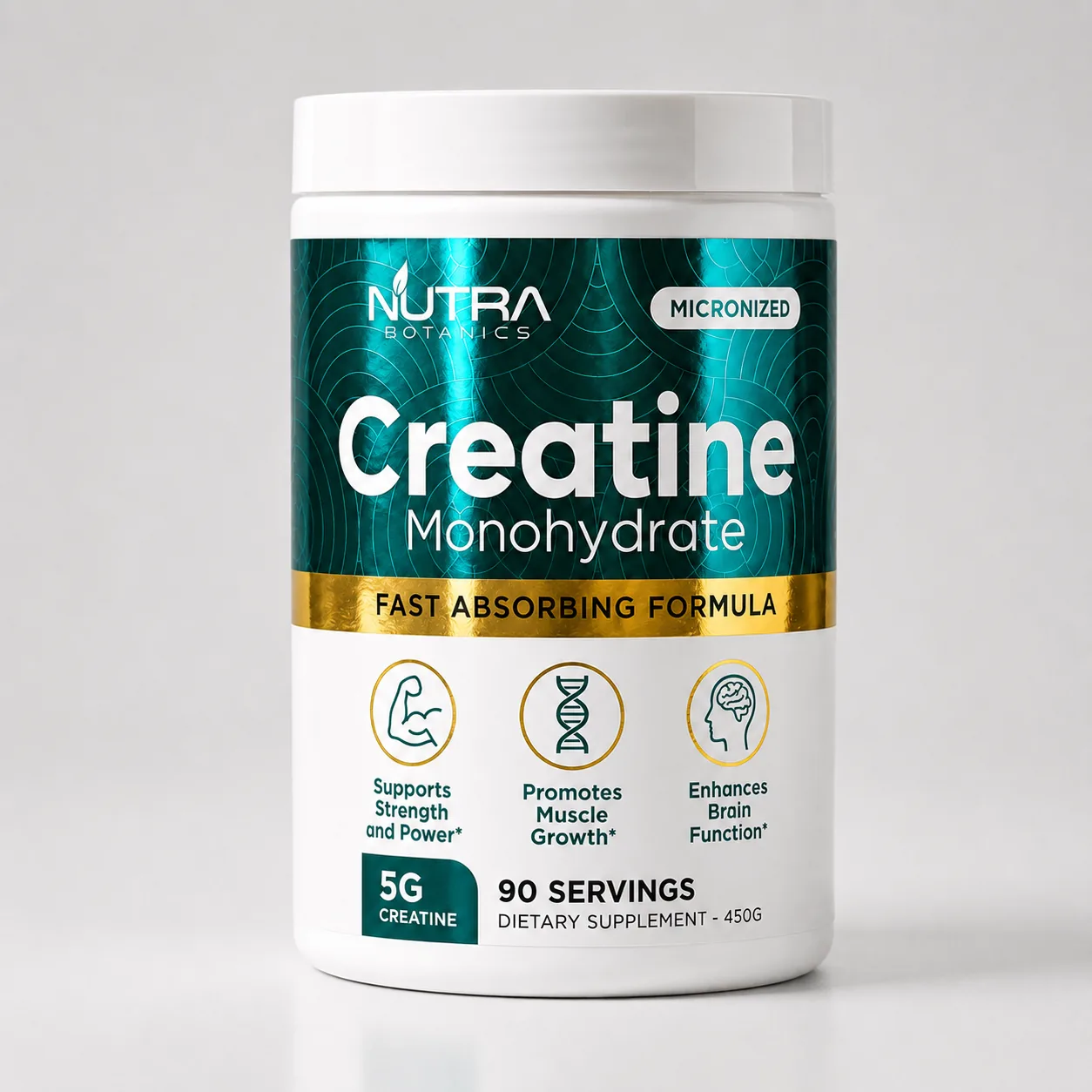
A real label example: Nutra Botanics Creatine Monohydrate is an unflavored, single-ingredient 450 g powder with 5 g per scoop and 90 servings. At the current $29.99 one-time price, that is about $0.33 per labeled serving. This calculation compares price, not a guaranteed effect.
Use the training formula comparison to inspect current labels and purchase options. Creatine and amino-acid powders serve different roles; see creatine versus BCAA before treating them as alternatives.
Frequently Asked Questions
Do I need to take creatine forever, or can I stop?
You can stop. Muscle stores gradually return toward baseline after supplementation ends. That does not set a timetable for losing training progress. Review whether the routine still fits your goal.
Is loading necessary, or a marketing invention?
Loading is optional in research. It can raise muscle stores sooner than a gradual approach, without establishing faster visible gains. Follow your current container directions; seek qualified guidance before adding loading.
Can I take creatine on rest days?
Daily research routines include rest days. Check the current directions for your product rather than changing the serving according to each workout. If you miss a serving, do not assume doubling the next one is appropriate.
Does creatine work for endurance athletes?
Repeated, intense efforts are a different goal from steady endurance. Match the research to your sport. Our endurance guide explains that distinction.
Can I mix creatine with coffee or protein?
A protein drink may be a practical mixing choice if it fits the label directions. Coffee adds caffeine. Research on taking caffeine with creatine is mixed, and some participants have reported stomach discomfort. Check the ingredients in your drink; do not assume the combination is better. See the caffeine review.
Is creatine safe for teenagers?
Adult safety findings do not establish safety for every teenager. A review of adolescent research found limited evidence, with no included studies designed to assess safety. A parent and qualified healthcare professional should assess the athlete, product and activity before use.
What’s the difference between creatine and protein?
Protein supplies amino acids for building and repairing tissue. Creatine supports quick muscle energy. Our creatine versus protein guide helps you compare their jobs.
Should I take creatine if I don’t lift weights?
Start with your activity. Repeated hard efforts differ from steady exercise. Training, thinking and healthy-aging research answer separate questions; do not assume the same benefit applies to each.

Check the Formulas by Purpose
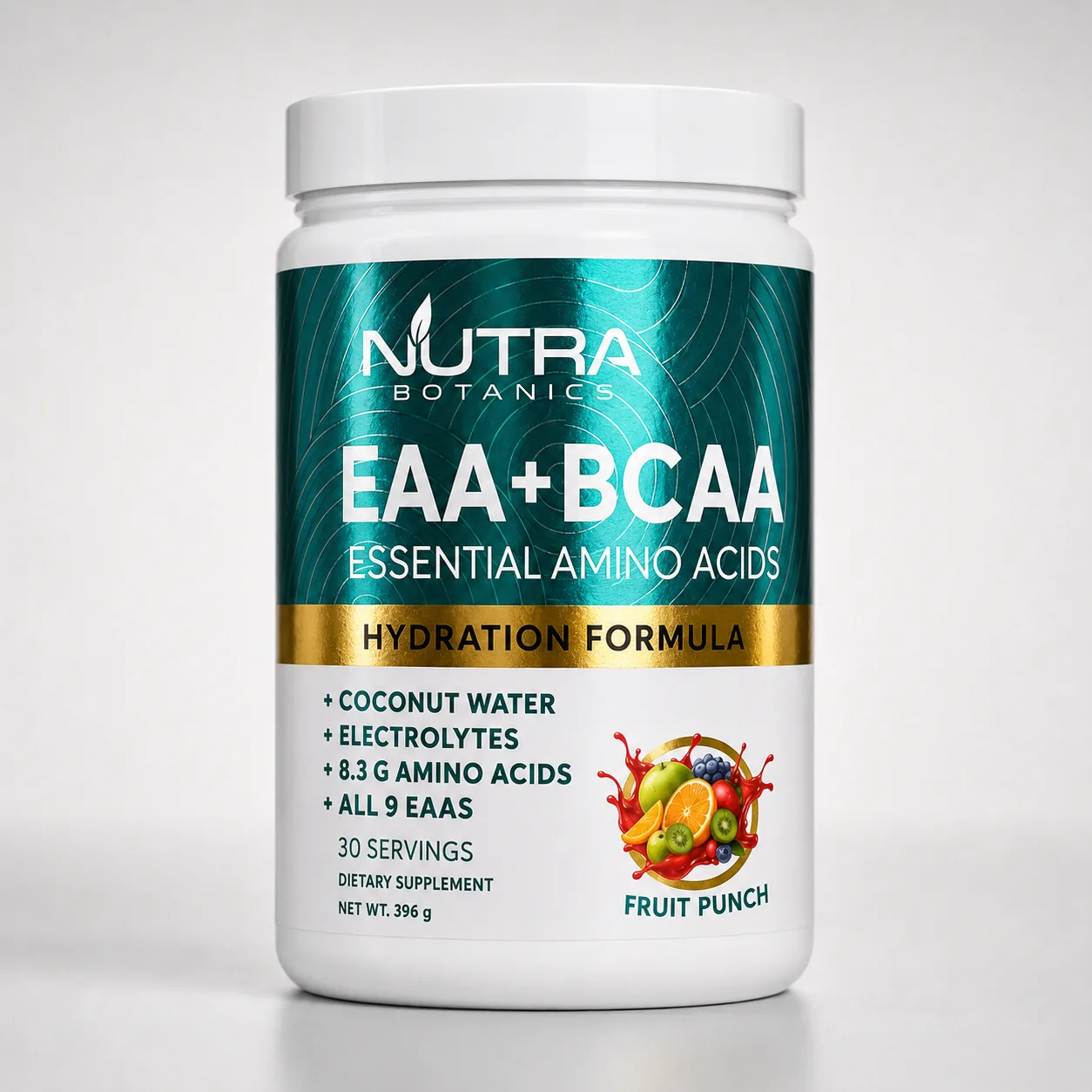
Before combining supplements, compare their jobs and check for overlapping ingredients. Our muscle-building supplement guide helps you make that decision without assuming everyone needs a stack.