
Yes, creatine can help you get more from strength training. Research supports gains in some strength and power tests, with additional lean mass when it is paired with resistance exercise. The size of the benefit varies, and a study average is not a personal guarantee.
This guide separates training results from early brain-health findings, explains what “lean mass” includes, and helps you compare a creatine label before buying. It reviews research on the ingredient, not a clinical trial of a particular Nutra Botanics product.
What matters most
- Choose by your goal. Strength and repeated hard efforts are a better match for creatine than expecting a boost in every kind of exercise.
- Pair it with training. The strongest practical case is adding creatine to a consistent resistance program.
- Read beyond the scale. Lean mass includes water as well as muscle, so a quick weight increase does not show how much muscle you built.
- Check the serving. Compare the named form, grams of creatine, other ingredients and cost per labeled serving.
Looking for the routine? See how to take creatine, whether a loading phase is needed, monohydrate versus HCl, or the brain-health research.
How creatine helps a hard-working muscle
Your body makes creatine, and foods such as meat and fish provide some too. Muscles use stored creatine to help replenish ATP, the energy they spend during a heavy lift, jump or short sprint.
Supplementing can increase that muscle reserve. Think of it as support for repeating demanding efforts, not an instant source of energy like caffeine. This mechanism is described in the 2017 ISSN position stand, a research review and professional position statement.
What the strength studies actually found
Creatine has a strong research history for resistance training. An early review by Rawson and Volek examined 22 studies and found greater average strength and weightlifting-performance gains with creatine plus training than with placebo plus training. Responses varied considerably.
A 2025 strength and power meta-analysis brought together 69 studies involving 1,937 participants across several outcomes. It found added benefits on bench or chest press, squat, vertical jump and cycling peak power. The overall leg-press and handgrip results did not show a clear added benefit.
| What was measured | What it tells you |
|---|---|
| Strength and power, 2025 69 studies across the review | With resistance training, pooled added gains were about 1.43 kg for bench or chest press and 5.64 kg for squat. Results differed by test and population, so these are not a fixed percentage boost for every lift. |
| Lean body mass, 2024 12 studies in adults under 50 | Creatine plus resistance training added an average 1.14 kg of lean body mass compared with training alone. Lean mass includes water; this result does not mean 1.14 kg of new muscle fibers. |
| Muscle size, 2023 10 studies using direct imaging | The added muscle-size effect was very small overall. Measuring individual muscles gives a different view from a whole-body lean-mass number. |
For your routine, the useful expectation is support for progress over time. Track the load, repetitions and quality of your sessions. A more demanding program, sleep, food intake and consistency all affect your results, so a before-and-after lift cannot isolate creatine’s contribution.
More lean mass is not all new muscle
The 2024 body-composition review supports an added lean-mass benefit alongside resistance training. Its pooled result is useful, but it is not a promise of a particular gain within eight or twelve weeks.
Creatine can increase body water, particularly early in a loading phase. That can move your weight or a lean-mass measurement before much new muscle tissue has developed. A review using MRI, CT or ultrasound found a much smaller additional effect on the size of individual muscles.
Judge the routine, not one weigh-in
Use training performance and longer-term measurements alongside body weight. An early scale change can include water. Creatine supplies neither protein nor a training stimulus, so keep nutrition and resistance exercise central to your muscle-building plan.
Brain health and older adults: separate the findings
Brain energy is a promising research area, but exercise results do not automatically apply to memory. The 2018 cognitive systematic review covered six trials and described possible short-term memory or reasoning benefits, with mixed results in other tasks.
A 2024 cognitive meta-analysis found a small memory benefit, with moderate certainty, but no clear improvement in overall cognition or executive function. A larger 2023 trial did not find a greater benefit for vegetarians than omnivores. Diet alone cannot tell you who will respond best.
Sleep-loss experiments test unusual conditions and sometimes high doses. They do not establish that a normal daily serving offsets missed sleep for a shift worker or new parent. Read the memory and mental-fatigue guide for the study differences.
For older adults who lift, a 2017 meta-analysis included 22 studies with 721 participants. Creatine plus training improved lean mass, chest-press strength and leg-press strength on average. Those measured outcomes do not by themselves prove prevention of sarcopenia, osteoporosis or dementia.
Forms, hair loss and kidney tests
Do you need a more elaborate form?
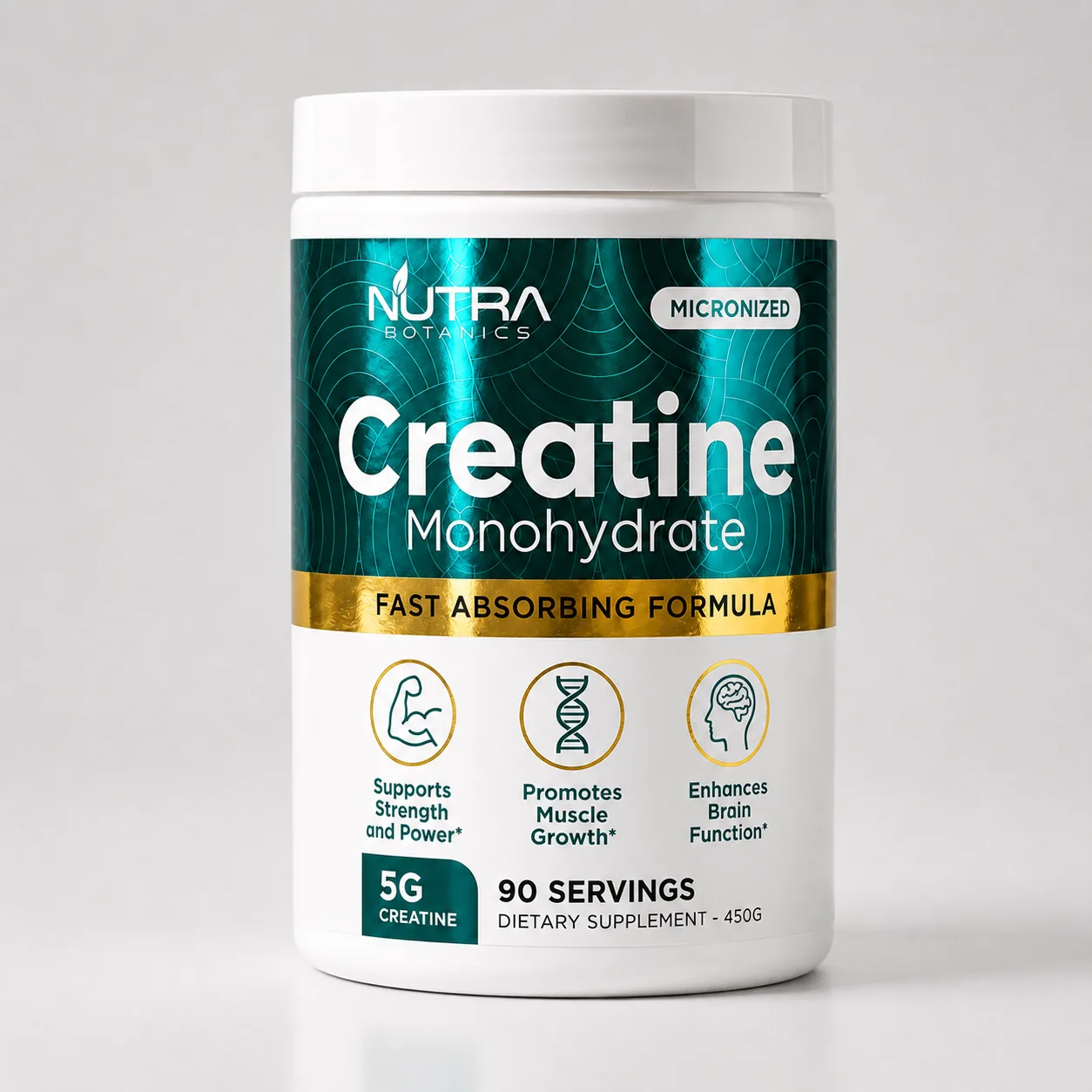
Creatine monohydrate has an extensive research base. In a small 2024 training trial, HCl showed no benefit over monohydrate. That study does not settle every comparison, but it does not support paying more on the assumption that HCl is stronger. “Micronized” describes smaller particles for mixing, not proof of stronger effects.
Hair loss: a newer trial measured hair directly
The original concern came from a 2009 rugby-player study that measured DHT, a hormone, rather than hair loss. A 2025 randomized trial did assess hair density and thickness. Thirty-eight trained men completed twelve weeks, with no significant creatine-versus-placebo differences in hair or hormone outcomes.
That result is reassuring for the people and period studied. It cannot establish the outcome of lifelong use or explain an individual’s hair loss. Some authors disclosed supplement-industry relationships; the published report includes those disclosures.
Kidney safety: interpret the test in context
A 2003 study of college football players followed health markers over 21 months and found no clinically significant adverse differences between creatine users and nonusers. It was an open-label athlete study, not a five-year randomized trial in everyone.
A 2026 kidney-function meta-analysis included 19 randomized trials and one randomized crossover study. Creatinine rose on average, while urea and estimated filtration did not show significant group differences. The authors still called for randomized trials lasting beyond a year.
Creatinine is one part of a kidney assessment. Tell your clinician you take creatine, and have an abnormal result evaluated rather than assuming it is harmless. Ask first if you have kidney disease, take medication, are pregnant or breastfeeding, or have another health condition.
Is creatine a good fit for your goal?
You lift or repeat hard efforts
This is the clearest practical match. Add creatine to consistent training, and monitor your progress instead of expecting an immediate surge of energy.
You mainly do steady endurance work
Creatine is less directly matched to a long, steady effort. Consider the demands of your sessions and whether extra body weight matters to your activity.
You are choosing it for memory
Check the cognitive evidence separately. A muscle-performance benefit is not proof that the same serving improves every mental task.
Training experience, diet and baseline muscle stores can influence a response, but they do not give a reliable personal ranking. Being vegetarian, a beginner, a woman or an older adult does not tell you in advance how large your benefit will be.
Make the label work for your routine
Research commonly uses daily creatine rather than a single pre-workout serving. A muscle-loading study in men found that 3 grams daily raised stores gradually over 28 days, while loading raised them sooner. Faster saturation does not guarantee faster visible muscle growth.
For using a product, follow its current label directions and warnings. Do not multiply servings to copy a loading or brain-health experiment. See the loading guide for how the research approaches differ.
Check the Nutra Botanics serving
- Named ingredient: micronized creatine monohydrate, with no other ingredients listed.
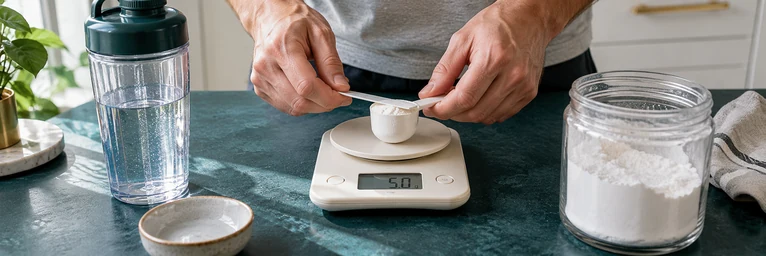
- Labeled serving: one scoop provides 5 grams. The 450-gram container lists 90 servings.
- Serving value: the current $29.99 one-time price is about $0.33 per labeled serving before tax and shipping. Check the product page for current options and directions.
- Purpose: this unflavored powder is a creatine serving, not a protein supplement or a caffeinated pre-workout. Check other supplements for duplicate creatine.
These statements have not been evaluated by the Food and Drug Administration. This product is not intended to diagnose, treat, cure, or prevent any disease.
Your creatine questions, answered
How much creatine do I need to see results in the research?
How long does creatine take to work in published studies?
Does creatine work without exercise?
Is creatine monohydrate really better than HCl or other forms?
Is creatine safe for long-term use?
Does creatine cause hair loss?