
Creatine may offer a modest benefit on some memory tests, but it is not a guaranteed focus boost. Results depend on the task, study group and protocol. Use this guide to separate promising findings from broad “brain health” claims, then check the form, serving and value before you buy.
Three useful points before you choose
- Memory is one part of cognition. A better memory-test score does not establish better attention, decision-making or everyday productivity.
- Sleep-loss research is a special case. A laboratory result after a sleepless night is not a reason to sleep less or copy a high-dose protocol.
- Start with a clear label. Creatine monohydrate, labeled serving size and other ingredients tell you more than a “maximum brain power” promise.
For practical routine questions, see the creatine beginner's guide, complete creatine supplement guide and guide to choosing a convenient time. The guide for women covers its own research and training context.
How creatine fits into the brain's energy supply
Brain cells need a steady energy supply. Creatine helps recycle ATP, a molecule cells use for immediate energy. The stored form, phosphocreatine, helps provide that quick reserve. This explains why researchers study creatine for mental tasks as well as exercise.
That role is a starting point, rather than proof that taking a supplement improves every mental skill. A small human imaging study found higher total brain creatine after supplementation. A different age-and-diet study found increased muscle stores without an overall rise in brain phosphocreatine.
Those studies measured different forms of creatine and used different protocols. Brain and muscle responses should not be treated as interchangeable. For a shopper, the useful question is what a human trial actually measured, rather than whether the mechanism sounds convincing.
What memory studies actually found
A 2024 review of 16 trials and 492 participants found a modest average memory benefit. Confidence in that memory finding was moderate; evidence for attention and processing speed was less certain. There was no clear overall cognitive or executive-function benefit. These findings do not support one percentage boost for everyone.
The classic Rae trial from 2003 tested 45 young vegetarian adults for six weeks. Scores improved on working-memory and abstract-reasoning tests. It appeared in Proceedings of the Royal Society B, and its selected participants cannot represent every adult who wants to feel sharper.
A larger 2023 trial of 123 adults suggested a possible small benefit. Its main memory and reasoning tests did not reach the usual threshold for clear statistical significance. It also found no improvement on the additional exploratory tasks. Compare the results instead of relying on the most positive study alone.
| Study and group | What it tells you |
|---|---|
| 2024 pooled review 16 trials; 492 participants. Different adult groups and protocols. | Modest average memory benefit, with moderate confidence. Attention and processing-speed evidence was less certain. No clear benefit for overall cognition or executive function. |
| 2003 Rae trial 45 young vegetarian adults. 5 g daily for six weeks. | Improved working-memory and reasoning-test scores. This supports those specific findings, rather than a promise of a permanent IQ increase or the same result in everyone. |
| 2023 larger trial 123 adults with mixed diets. 5 g daily for six weeks per treatment. | Possible small benefit, without clear improvements on its main tests. Vegetarians did not benefit more than omnivores, and side effects were reported more often with creatine. |
Mental fatigue and sleep loss: keep the setting in view
Feeling drained after hours of work is familiar. Laboratory fatigue research asks a narrower question: can participants perform a particular task better under a defined challenge? That is different from proving an all-day energy boost or treating persistent brain fog.
The Watanabe mental-fatigue study from 2002 used repeated calculation tasks. It reported less mental fatigue during repeated calculations after a short supplementation protocol. Its brain-oxygenation measurement was compatible with greater oxygen use; it did not demonstrate a universal productivity benefit.
The 2007 McMorris sleep-loss study tested several tasks. Its reported advantage on a task involving mental control appeared after 36 hours without sleep. That result does not establish a broad memory and reaction-time benefit after 24 hours. The task and timing matter when interpreting the result.
A 2026 trial in 29 healthy adults found less deterioration on selected tasks after 21 hours without sleep. It used a single dose based on body weight, rather than the Nutra Botanics label's one-scoop serving. This is a research protocol, not a serving recommendation.
A 2026 review of sleep-deprivation studies found encouraging early results, but only five studies met its criteria. The review's search ended in May 2025, so it does not include the 2026 trial above. Neither result establishes that creatine replaces sleep or makes sleep-deprived driving safe.
Older-adult memory findings are not dementia prevention
A small 2007 study in older adults reported improvements on several memory tasks after a short protocol. This is a reason to keep studying cognition. It does not show that every adult over 55 has depleted brain stores or will receive the largest benefit.
A 2026 dementia-focused review found mostly animal or laboratory evidence, plus one small human pilot study. It identified no relevant randomized controlled clinical trials in its search. Those findings do not establish dementia prevention or treatment.
If memory problems are new, persistent or interfering with daily life, seek an assessment rather than choosing a supplement by age alone. For strength-training goals after 50, use the separate older-adult creatine guide, which explains that evidence and the current serving value.
Choose around your goal, rather than a benefit ranking
Diet can help you ask useful questions, but it does not establish a brain deficiency. A study comparing vegetarians and omnivores found lower dietary creatine intake but comparable total creatine in the measured brain region. “No meat” does not prove “20–30% less brain creatine.”
Some early trials found memory benefits in vegetarians. The larger 2023 trial above did not find a greater benefit for them. There is no reliable shopper-facing ladder of “highest,” “high” and “moderate” cognitive benefit that applies to everyone.
You want training support
Creatine's performance role is better established than a broad cognitive boost. Check the serving and fit with your strength routine.
You are short on sleep
Prioritize sleep and safe decisions. Acute laboratory studies do not show that a supplement removes the consequences of sleep debt.
You are worried about memory
Separate an occasional demanding day from persistent symptoms. A product comparison cannot replace an individual assessment.
Compare the label, serving and value
Research uses different amounts and durations. A label's serving size is a product fact, rather than proof of a particular memory outcome. Do not increase servings to copy a high-dose brain study. Follow the container's directions and review your other supplements for duplicate creatine.
What the current Nutra Botanics tub offers
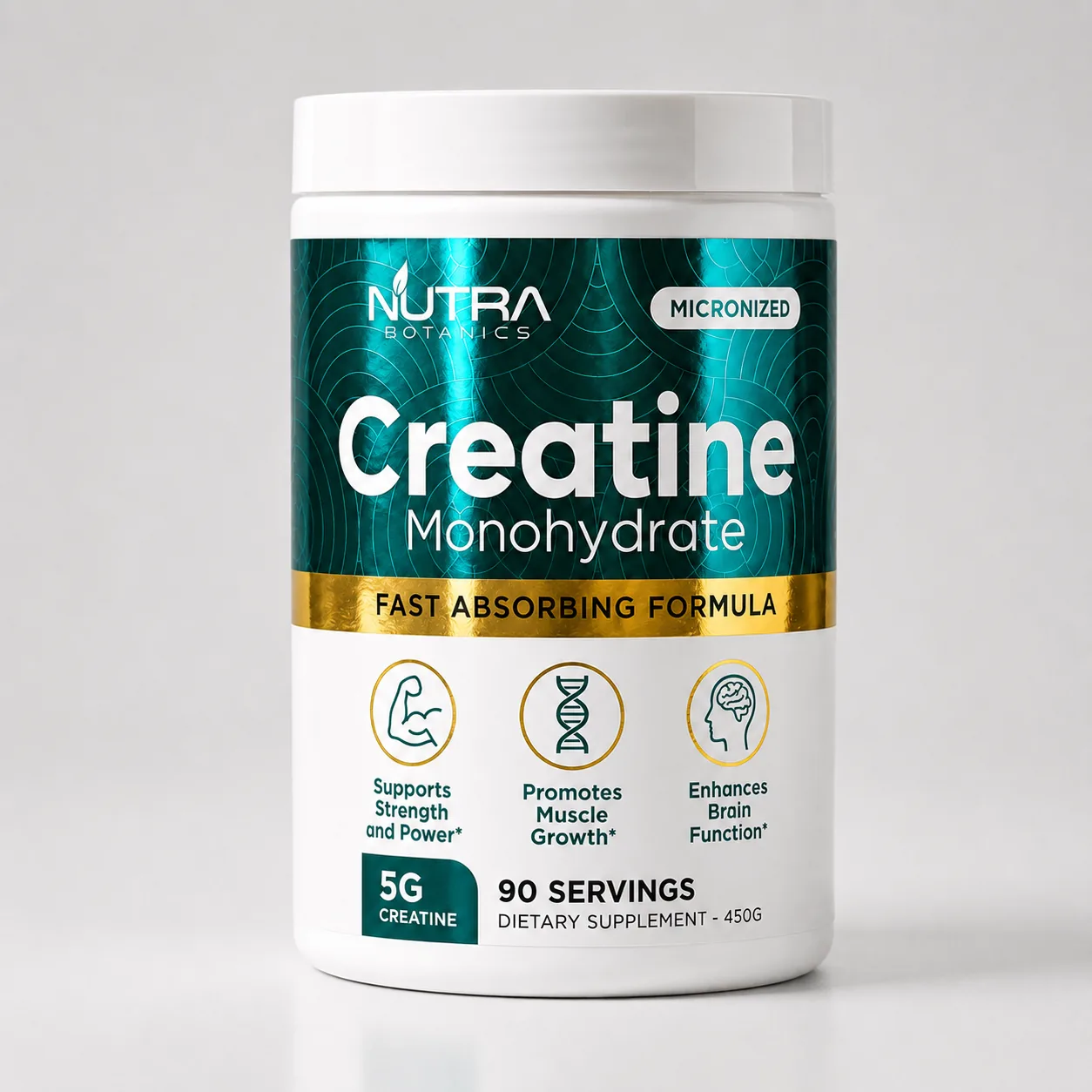
- Form: micronized creatine monohydrate. Micronized describes smaller particles for mixing, not a superior brain-health compound.
- Serving and amount: one 5 g scoop, 450 g per tub and 90 labeled servings.
- Other ingredients: none listed. It is unflavored, with no added caffeine. Your mixing drink may contain other ingredients.
- One-time value: $29.99, about $0.33 per labeled serving before tax and shipping. Check current purchase options before ordering.
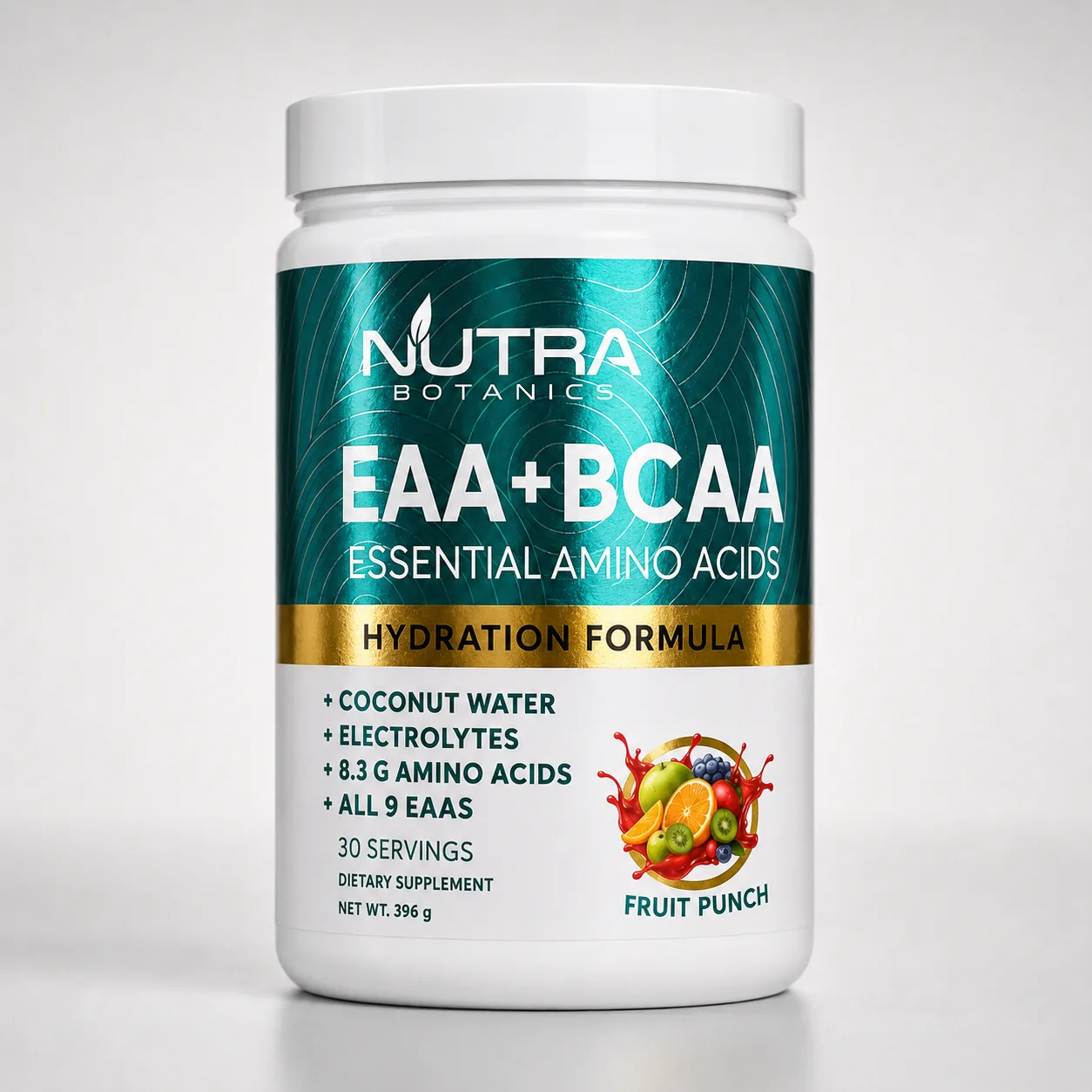
Inspect Creatine Monohydrate's current label and options. Choose a clear ingredient and manageable routine, without assuming the tub guarantees better memory. The EAA formula below serves a different amino-acid purpose; it is not an interchangeable cognition supplement.
A practical evidence and safety check
Creatine's role in brain energy is relevant, but mechanism, imaging and task performance are different kinds of evidence. The 2021 Roschel review examines how brain energy and cognitive results fit together. It calls for better links between brain measurements, protocols and performance on mental tasks.
Check the current label's warnings. Ask a qualified clinician before starting if you have kidney disease, take medication, are pregnant or breastfeeding, or have another condition. Stomach discomfort and water-weight changes can occur. This guide explains research and product facts; it is not a diagnosis or personal dosing plan.
Questions about creatine and cognition
Does creatine improve IQ?
Can creatine treat ADHD, depression, or dementia?
Who should ask a clinician before using creatine?
Which form is most studied?