Creatine is worth considering after 50 if you strength train and want to support repeated hard efforts. Its best-established role is helping muscles replenish their quick energy supply. It is an addition to training, rather than a shortcut to stronger bones, better memory or protection from falls.
Choose around the routine you want
- Want stronger training sessions? Creatine monohydrate has useful evidence alongside resistance training in older adults.
- Concerned about symptoms or medical conditions? Review those separately. Age alone does not establish suitability.
- Comparing tubs? Check the form, serving amount, other ingredients and price per labeled serving.
Start with strength you can use
Think about the movements that matter to you: getting out of a chair, carrying shopping bags or feeling more capable in the gym. A progressive strength routine gives you something practical to work on and measure. Choose exercises and a starting level suited to your abilities.
Creatine helps muscles restore their immediate energy supply for repeated demanding efforts, such as lifting sets. It is not a stimulant or a replacement for enough food. The NIH guide to exercise supplements explains why the type of activity matters when judging a supplement.
There is no single percentage of muscle or bone loss that describes everyone after 50. Nor does a birthday prove your creatine stores are depleted. Training experience, health and starting levels vary. If weakness is new or worsening, get it assessed rather than assuming it is normal aging.
What older-adult research says about strength
A 2017 review of 22 trials found greater lean-mass and strength gains with creatine plus resistance training than with training and placebo. It included 721 men and women, with study-average ages of 57–70. Programs lasted 7–52 weeks. These were group results across different routines.
Extra lean tissue, on average, in the 2017 pooled comparison. The 95% confidence interval was 0.97–1.76 kg. That interval describes uncertainty around the group estimate, rather than a range of promised personal gains.
A 2026 review of 11 trials in adults aged 60 and older found a modest extra strength benefit with creatine and resistance training. It did not find clear added gains in muscle mass or physical function. Different study selections and methods can produce different estimates.
Use that evidence to set a useful goal: support your strength routine and track how you train. A fixed promise of “25% stronger” does not describe the results for every older adult, and a muscle-mass finding cannot stand in for a measured memory or balance benefit.
| Research and group | What to take from it |
|---|---|
| 2017 pooled review 22 trials; 721 men and women. Resistance training for 7–52 weeks. | Extra lean tissue averaged 1.37 kg, with added upper- and lower-body strength gains. This supports a training role, without providing one strength percentage for every person. |
| 2026 pooled review 11 trials in adults aged 60 and older. Creatine with resistance training. | Modest extra strength benefit. Added muscle-mass and physical-function benefits were not clear. Findings should not automatically be applied to frail or functionally limited adults. |
| 2023 bone-health trial 237 postmenopausal women. Two years of creatine, lifting and walking. | No added benefit for bone density or measured strength. Some hip-structure measurements and walking time improved. Bone structure and bone density are different outcomes. |
Put balance and everyday movement on the plan
A better lifting result is useful, but it does not prove that a supplement prevents falls. If balance, walking or getting out of a chair is your main concern, make those goals part of an appropriate activity plan rather than relying on creatine alone.
For adults 65 and older, the CDC activity guidance includes aerobic activity, muscle-strengthening activity and balance work. It also recommends adapting activity to your abilities and conditions. A trainer or healthcare professional can help you choose an appropriate starting point.
Treat bone health as its own question
The early one-year trial in postmenopausal women found less bone-density loss at one hip site. It did not show a 1.2% gain: the creatine group's reported change was a decline of 1.2%, compared with a decline of 3.9% in the placebo group.
The larger two-year trial in the comparison above did not improve bone density. Some hip-structure measures improved, which is a different finding. If you have low bone density or fracture concerns, follow a specific bone-health plan. Creatine should not replace that care.
Keep memory claims separate from strength claims
The often-cited 2003 memory trial tested 45 young vegetarian adults. It found improvements on working-memory and reasoning tests, but it was not an older-adult trial. Its results cannot establish especially strong benefits after 50.
A 2023 trial of 123 adults suggested a possible small cognitive benefit, while its main tests did not show clear statistically significant improvements. Cognitive research does not establish creatine as protection against dementia or a treatment for persistent memory problems.
Make the serving and habit straightforward
- Choose the researched form. Creatine monohydrate is used widely in performance studies. Micronized describes smaller particles for mixing, rather than a different compound.
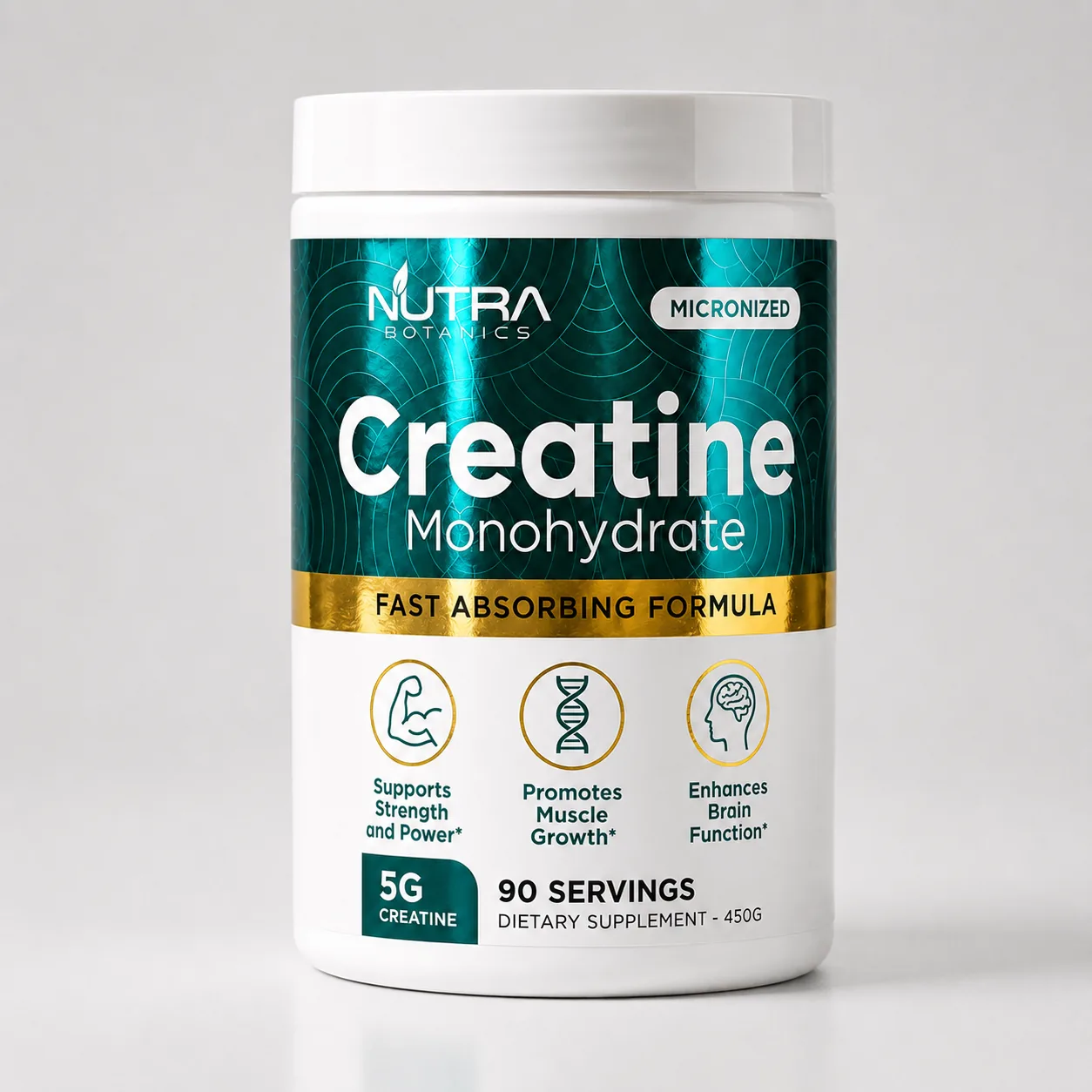
- Use the container's directions. The current Nutra Botanics tub lists one 5 g scoop. Do not copy a study's weight-based dose or increase servings to match a loading protocol without appropriate guidance.
- Check what you already take. Other powders or pre-workouts may contain creatine. Duplicate ingredients can make intake harder to follow.
- Pick a repeatable habit. Mix thoroughly into a drink as directed. Choose a time you can remember rather than chasing a minute-perfect workout window.
A loading phase is optional. A muscle-loading study in men found that 3 g daily increased muscle creatine gradually over 28 days. That measures muscle stores, not a guaranteed time to feel stronger. Higher loading intakes are not necessary to begin a simple routine.
For practical details, see the creatine beginner's guide, complete creatine supplement guide and guide to choosing a convenient time. The creatine guide for women covers its own research context.
Compare the label and serving value
What the current Nutra Botanics tub contains
- Form: micronized creatine monohydrate, with no other ingredients listed.
- Serving: 5 g per labeled scoop.
- Amount: 450 g, with 90 labeled servings.
- Format: unflavored, with no added caffeine. Your chosen drink may contain other ingredients.
- Value: $29.99 one-time, about $0.33 per labeled serving before tax and shipping. Check current purchase options before ordering.
Inspect Creatine Monohydrate's label and current options. Protein supplies amino-acid building blocks, while creatine supports muscle energy for repeated efforts. They answer different questions, so choose around your food intake and training goal rather than assuming you need both.
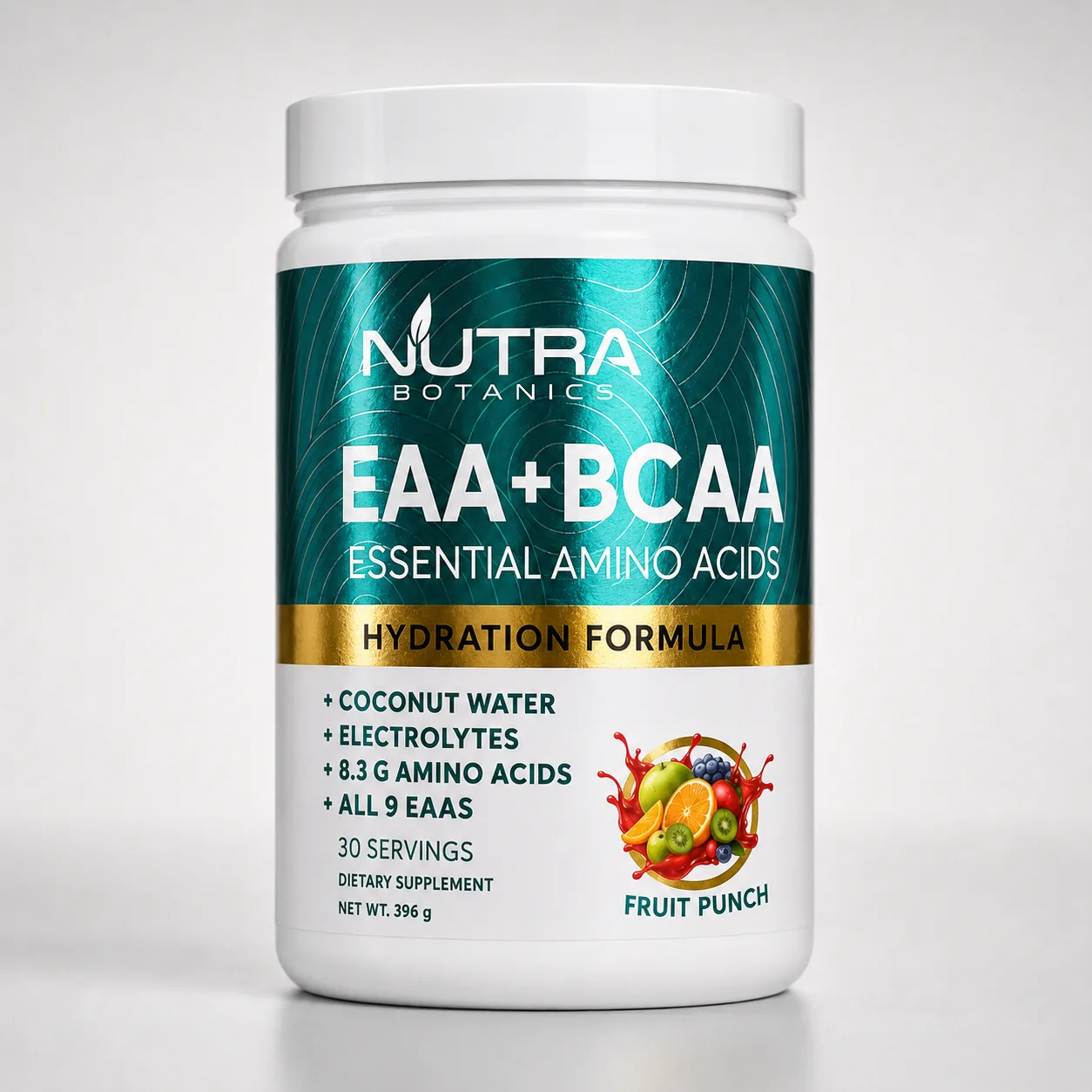
An EAA formula also has its own ingredient purpose; the cards below let you check the formulas separately. If your question is about testosterone, the testosterone-support guide discusses that separately. Creatine is not a substitute for assessing hormone symptoms.
Check suitability and tell your clinician what you use
Ask a healthcare professional before starting if you have kidney disease, take medication or have another condition. Review the current label's warnings. Water-weight changes and stomach discomfort can occur, and neither age nor a general research result can determine your individual suitability.
A 2026 kidney-function review found higher blood creatinine but no clear difference in estimated filtration rate overall. A second 2026 review found different results depending on the test used. Creatinine is a waste product used in kidney assessment, so tell your clinician about creatine use before interpreting a result.
Do not dismiss an abnormal test as “just the supplement.” The findings do not establish safety for every condition or treatment. This guide explains ingredient research and current label facts; it does not provide a diagnosis, a personal dosing plan or proof of a finished-product outcome.
Questions about creatine after 50
Is creatine safe for a 60-year-old to take?
Does creatine damage kidneys in older adults?
Is creatine better than protein powder for older adults?
How long before I notice results from creatine at my age?
Can creatine help with fatigue and low energy after 50?
Do older adults need a loading phase?