Turning 35 does not automatically mean you need a testosterone supplement. Start with what has changed: your energy, sleep, sexual health or recovery. Then check whether the next step is a health assessment, a habit change or a closer look at a supplement label.
The useful starting point
- Age alone does not diagnose low testosterone.
- Symptoms, blood testing and supplement claims answer different questions.
- Compare the full serving and the actual extract, not just a headline ingredient.
- Check medicines, other supplements and safety before adding a blend.
What testosterone can tell you, and what it cannot
Testosterone helps maintain sexual function, muscle and bone health, and red blood cell production. But tiredness or a difficult workout is not a hormone test. Similar changes can have different causes.
If reduced sexual desire, erectile problems or persistent low energy concern you, describe the pattern to a healthcare professional. The Endocrine Society guideline requires compatible symptoms and consistently low testosterone results, confirmed with repeat morning fasting testing. It does not recommend routine screening of every man without symptoms.
After 35, look at your health picture
Age is part of the picture, but there is no universal birthday when levels become too low. A statement such as “you lose a fixed percentage every year” is not a forecast of your own health.
The Endocrine Society’s 2026 position statement emphasizes symptoms, testing and the cause of a low result. Body weight, illness and certain medicines can matter. When low testosterone is linked to obesity, weight management may be part of the treatment plan. That is different from promising that a diet or supplement raises everyone’s level.
Make the conversation specific. Note when the change started, whether your sleep or medicines changed, and whether sexual symptoms are present. Bring your current supplement bottles or labels. This is more useful than comparing yourself with an online age chart.
Read ingredient studies without buying the promise
Some botanical extracts have encouraging human research. To use that research well, check who took the extract, what they took and what the researchers measured. “Testosterone support” is not a guarantee of more energy, muscle or sexual well-being.
Ashwagandha: two studies, different questions
In Wankhede’s 2015 trial, 57 men aged 18–50 with little resistance-training experience were enrolled. Fifty completed eight weeks of training plus either 600 mg daily of KSM-66 root extract or placebo. The extract group had a larger average rise in blood testosterone. This was a small training study, not proof of an effect in every man over 35.
A 2019 crossover trial studied overweight men aged 40–70 with mild fatigue. Eight weeks of Shoden extract produced a greater increase in salivary testosterone than placebo. Fatigue, vigor and sexual well-being did not differ significantly between groups. A hormone measurement and a noticeable benefit are different outcomes.
Fenugreek and Tongkat Ali: compare the extract
A systematic review of herbal trials found positive results for some fenugreek preparations. It also identified small studies and variation in extracts and participants. An ingredient name alone does not establish that a bottle matches a tested preparation.
A 2022 Tongkat Ali review found an overall increase in total testosterone across its pooled trials. It reviewed nine studies and pooled five trials, rather than nine randomized trials. Different preparations, participants and treatment lengths limit how directly the result applies to an individual supplement.
For a closer comparison, read the ashwagandha research guide or fenugreek versus Tongkat Ali. Neither an extract ratio nor a long ingredient list proves that a finished blend has the same effect.
Feeling energized is not a testosterone result
An immediate change in alertness cannot tell you what happened to a hormone level. The same applies to a product described as an “adaptogen,” a term commonly used for herbs marketed for stress support. Check the actual ingredient and the outcome studied.
Some ashwagandha preparations may help with stress or insomnia, according to NCCIH. That does not establish a lasting testosterone effect for every preparation. Choose a product for a supported purpose, rather than treating a feeling as proof that it changed your hormones.
Keep the everyday basics working for you
A regular sleep schedule, strength and aerobic activity, and balanced meals are practical foundations for health. Choose changes you can keep. More intense training or higher supplement doses are not automatically better.
For general adult health, CDC guidance includes at least 150 minutes of moderate aerobic activity each week and muscle-strengthening activity on two days. These are health targets, not a prescription for a particular testosterone increase.
Use our practical sleep, food and exercise guide to plan your week. If symptoms persist, keep the health assessment moving instead of waiting for a supplement to solve them.
Five checks before choosing Testo Boost
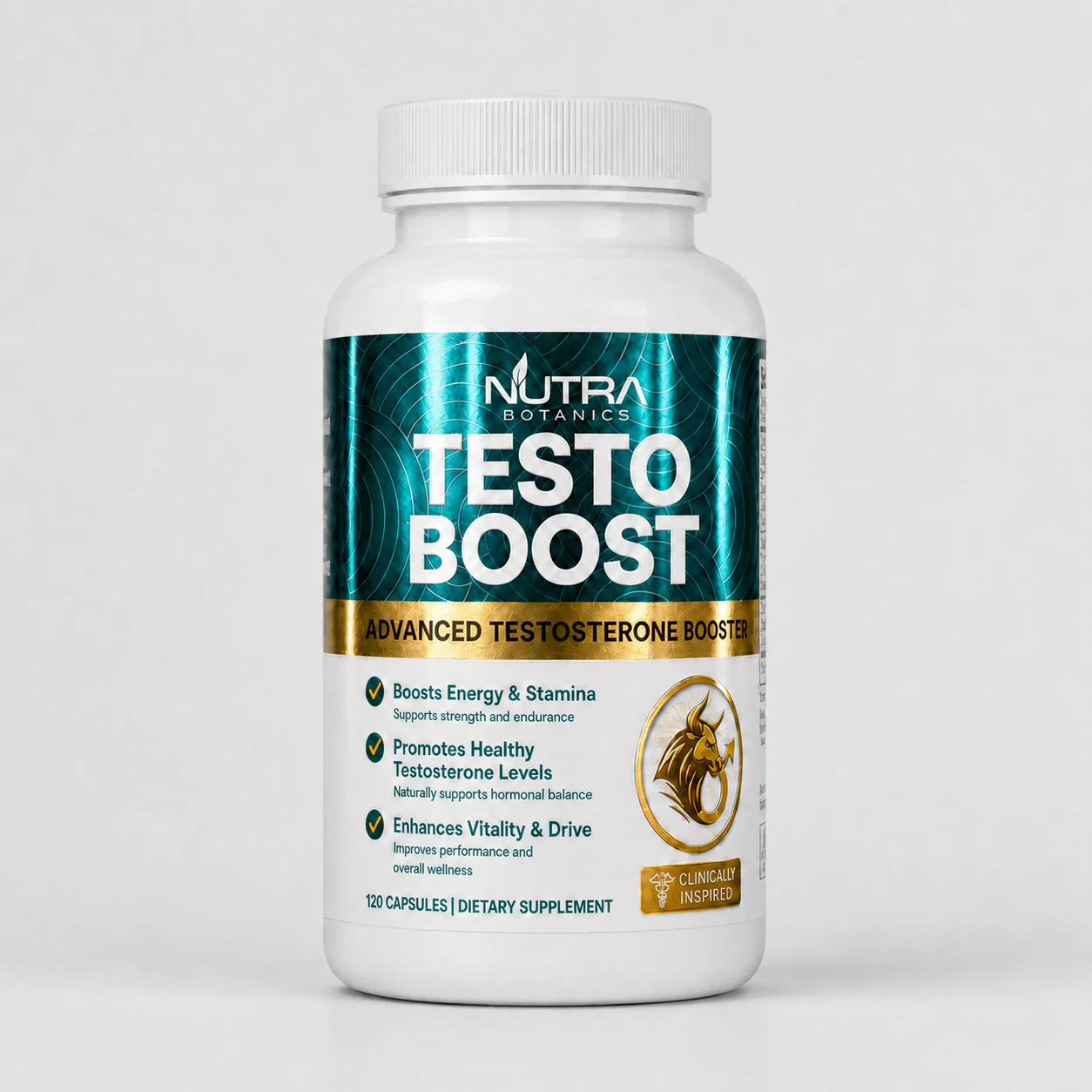
The current approved label gives you a concrete place to start. Each amount below is for four capsules. A four-capsule serving and a single capsule are not interchangeable.
| Label item | Current labeled amount | Your buying check |
|---|---|---|
| Ashwagandha | 500 mg extract, standardized to 5% withanolides | The label does not name KSM-66 or Shoden. Do not treat their study results as a test of this blend. |
| Fenugreek | 500 mg extract, standardized to 60% saponins | Compare the preparation as well as the amount. A matching milligram value alone is not a study match. |
| Tongkat Ali | 300 mg extract, listed as 100:1 | An extraction ratio does not show the same composition as a named trial extract. |
| Zinc and vitamin D | 11 mg zinc and 20 mcg vitamin D (800 IU) | Count these amounts when checking your multivitamin and other supplements. Avoid unintentionally doubling up. |
| Bottle and capsule | 120 capsules, 30 labeled servings; gelatin capsule shell | Check the full routine and capsule suitability, not only the front-label headline. |
The full formula contains additional ingredients. Nutrient roles and individual-ingredient studies do not establish that Testo Boost treats low testosterone or guarantees a hormone increase. Read its complete Supplement Facts, directions and warnings before deciding.
Choose the next step that fits your concern
- Persistent symptoms: arrange an assessment and ask whether testing is appropriate.
- A habit you want to improve: choose a manageable sleep, food or activity change.
- A supplement you want to compare: start with the full label, extract details and your existing routine.
See the full formula before you decide
Testo Boost brings its listed botanical extracts and nutrients into a capsule format. Check what is included and how the label directs you to use it.
See Testo Boost ingredients and directionsSafety and sources, in plain language
Natural ingredients can still have side effects or interact with medicines. NCCIH advises against ashwagandha for people with thyroid or autoimmune disorders, before surgery, or with hormone-sensitive prostate cancer. It can cause drowsiness or digestive upset, and rare liver injuries have been reported. Review a blend with a pharmacist or clinician if you take medicines.
This is a Nutra Botanics article with links to our own product. The checks above use the current approved Testo Boost label. The research concerns particular ingredients or extracts, not a verified trial of the finished Testo Boost formula.
See the research and guidance used for this update
- Endocrine Society: diagnosing testosterone deficiency
- Endocrine Society: July 2026 position statement
- Wankhede, 2015: root extract alongside resistance training
- Lopresti, 2019: a different extract in overweight men
- Smith, 2021: review of herbal testosterone trials
- Leisegang, 2022: Tongkat Ali review and pooled trials
- NCCIH: ashwagandha usefulness and safety
- CDC: general adult activity guidance
Questions before choosing a supplement
Do testosterone levels suddenly drop at 35?
Can tiredness tell me that my testosterone is low?
Does ashwagandha research apply to every testosterone supplement?
How do I compare the amount on the bottle with a study?
What does one serving of Testo Boost contain?
Can a natural supplement replace treatment for diagnosed low testosterone?
Editor's Note · October 14, 2026