Testosterone after 40 is a health question, not a birthday deadline. If something has changed, start with the symptoms and your everyday routine. A useful next step is understanding what a test can tell you, then deciding whether a supplement fits a separate nutritional goal.
Before you compare products
- Age alone does not diagnose low testosterone.
- A single result needs context, including the test and your symptoms.
- Keep an assessment moving if symptoms persist; do not wait for a supplement deadline.
- Read the complete formula separately from deciding whether you need treatment.
Does testosterone drop at 40?
Testosterone can decrease with age. That does not mean every man loses the same percentage each year or becomes deficient at 40. Your test result and health history are more useful than a prediction based on your birthday.
Changes in sexual desire, erections or muscle mass can be reasons to discuss testing. They do not diagnose low testosterone by themselves. MedlinePlus explains what a testosterone test measures and why a result needs to be interpreted with symptoms and other health information.
Total versus free testosterone, made clearer
Total testosterone includes hormone attached to proteins and the unattached portion. Free testosterone refers to the unattached portion. The two results describe different things, so comparing their numbers directly is not useful.
You may also see SHBG, a protein that binds testosterone, on a report. The Endocrine Society guideline explains when a free-testosterone measurement may help, such as a borderline total result or a condition that changes SHBG. Your clinician chooses the appropriate tests.
Prepare for a useful health conversation
Bring a short description of what changed, when it started and how it affects your day. Include previous test reports and the labels of everything you take. This helps keep the conversation focused on your situation.
| Bring or ask | Useful detail | Question for your provider |
|---|---|---|
| Changes you have noticed | When they started and how often they happen | What possible causes should we assess? |
| Previous test report | The test name, units, reference range and collection time | Does this result need confirmation or a different test? |
| Medicine and supplement list | Names and amounts, including any men's formula | Could anything I take affect the result or my symptoms? |
| Sleep and health changes | What changed recently, without assigning your own cause | Which issues should we investigate or address first? |
| Your goals and plans | What you want help with, including any fertility plans | How do those goals affect the options we discuss? |
A test is one part of the assessment. The guideline calls for compatible symptoms and consistently low results, confirmed with repeat morning fasting testing. It also recommends looking for the cause before deciding on treatment.
Keep everyday habits separate from hormone promises
Choose a sleep schedule, activity routine and eating pattern you can keep. These give your general health a useful foundation. They are not a guarantee of a particular testosterone increase.
For practical examples, use our sleep, food and activity guide. Write down changes that matter to you, but do not treat better gym performance or energy as a substitute for a hormone assessment.
What a men's formula can tell you
A label can tell you what a product supplies and how the manufacturer directs you to use it. It cannot tell you your testosterone level. Individual-ingredient research and a verified effect of a finished blend are different kinds of evidence.
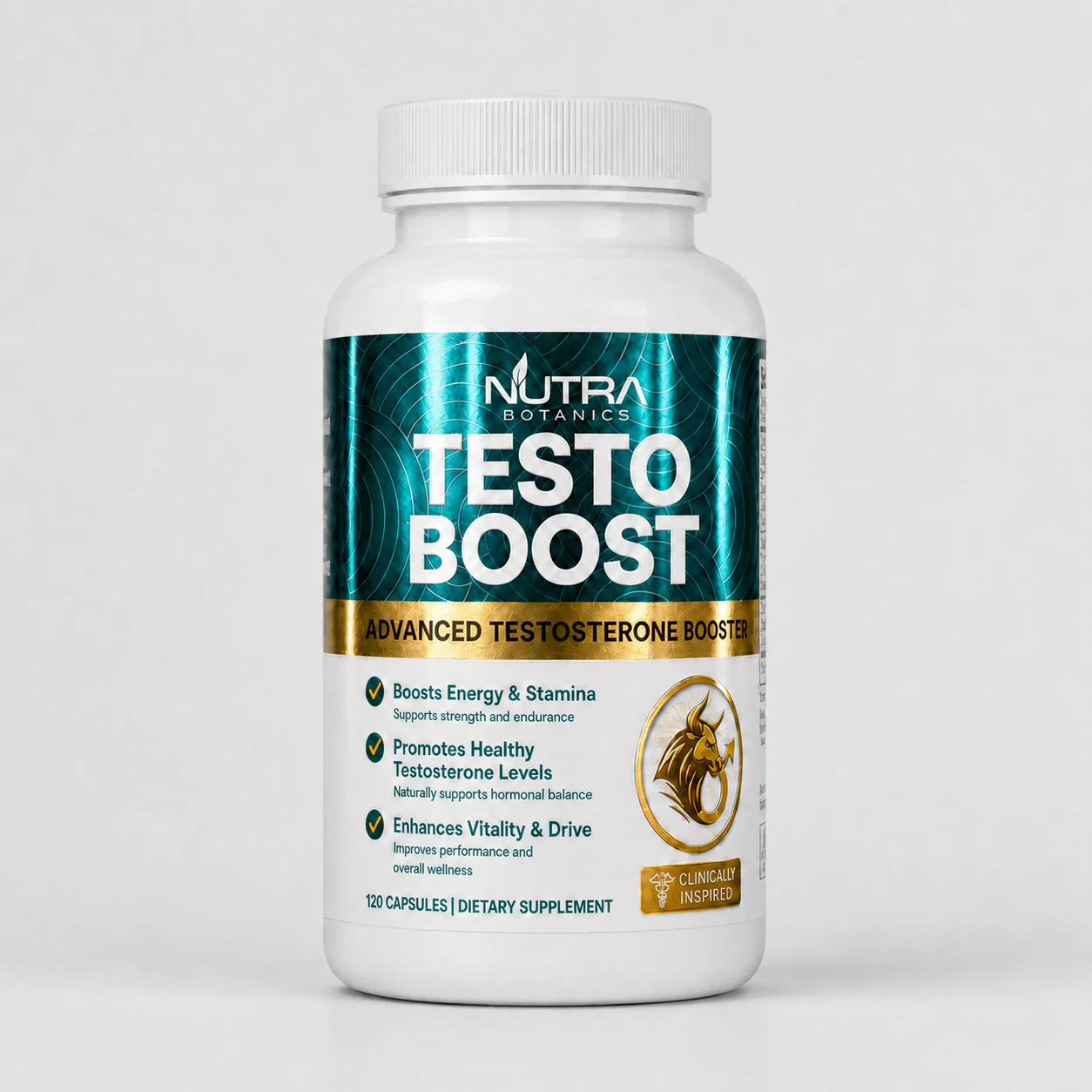
For example, Testo Boost lists four capsules per serving and 30 labeled servings in a 120-capsule bottle. Its approved label includes zinc, vitamin D and botanical extracts. Check the full formula against your other supplements and medicines rather than choosing by age alone.
Read our current extract and serving comparison if you want to understand the difference between a named trial extract and the preparation on a bottle.
Want to compare the actual formula? See every ingredient, then check directions, capsule suitability and warnings before deciding.
View Testo Boost formula and factsWhen to arrange an assessment
Persistent changes in sexual function or day-to-day health deserve a conversation. You do not need to finish months of supplements first. Explain your concern and ask whether testing is appropriate.
If testing is arranged, ask about timing, fasting and medicines beforehand. Do not stop prescribed medicines on your own. If testosterone therapy is discussed, tell your clinician about any plans to have children; the guideline advises against starting it when fertility is planned in the near term.
Sources and formula context
This article is published by Nutra Botanics and links to our own product. Product serving information was checked against the current approved Testo Boost label. A dietary supplement is not a substitute for diagnosing or treating testosterone deficiency.
Botanical formulas still need suitability checks. Give a pharmacist or clinician the complete label when reviewing medicines or a medical condition. NCCIH's ashwagandha guidance covers ingredient-specific safety questions.
Questions about testosterone after 40
Is low testosterone inevitable after 40?
What is a normal testosterone level at 40?
Why might a low testosterone result need repeating?
What is the difference between total and free testosterone?
Should I try supplements for several months before seeing someone?
Does choosing a men's formula mean I need testosterone therapy?
Editor's Note · October 14, 2026