Start with the habits you can repeat: enough sleep, regular movement and balanced meals. These support your health and may help when a reversible problem is contributing to low testosterone. They do not guarantee a hormone increase.
If changes in sex drive, erections or day-to-day function persist, arrange a health conversation. Feeling tired alone cannot tell you your testosterone level. The Endocrine Society’s guidance considers symptoms alongside consistently low results and repeat morning testing.
Three useful starting points
- Make your sleep schedule realistic, then protect it.
- Build strength and keep aerobic activity in your week.
- Check food, medicines and overlapping supplements before adding a new bottle.
Sleep: protect the routine first
For adults aged 18–60, the CDC recommends at least seven hours of sleep. Regular bed and wake times, a cool bedroom and avoiding late caffeine can make that routine easier.
A small laboratory study of ten young men found lower daytime testosterone after restricted sleep. It supports taking sleep seriously, but does not prove that everyone can reverse the change in a week.
Choose one change you can keep, such as a consistent wake time. If you regularly wake unrefreshed or struggle to sleep, speak with a healthcare provider. A sleep disorder needs more than a bedtime tip.
Exercise: build strength and keep moving
You do not need a workout designed around a hormone spike. Choose activity that you can progress safely and recover from.
The CDC’s adult activity guidance includes at least 150 minutes of moderate aerobic activity and two days of muscle-strengthening activity each week. These are general health targets, not a testosterone treatment plan.
Brisk walks and manageable strength sessions are useful ways to begin. Fit the plan to your ability, build gradually and ask for guidance when a health condition affects exercise. Track consistency and strength, rather than assuming a harder workout means a higher hormone level.
Food: meet your needs without a “booster” diet
Build meals you can sustain. Include a protein source, vegetables or fruit, and enough food for your activity. No single food on a hormone-shopping list replaces that pattern.
Zinc helps your body make proteins and DNA. Meat, seafood, beans, nuts and dairy can contribute to intake. Vitamin D supports calcium absorption and muscle function; fatty fish and fortified foods are useful sources. See NIH’s zinc food guide and vitamin D guide.
Meeting a nutrient need is different from proving a testosterone increase. If you have a restrictive diet or a suspected deficiency, ask which checks are appropriate before choosing a supplement dose.
Weight: use a sustainable plan
For men with diagnosed low testosterone related to overweight or obesity, the Endocrine Society describes weight loss as a usual first step when no other cause has been identified. This does not make weight the explanation for every man’s symptoms.
If weight management fits your needs, make the plan manageable. A clinician or dietitian can help you choose changes that suit your health history. Do not turn a target weight into a promise about your hormone result.
Stress and recovery: make the week workable
Look for what makes healthy habits difficult. Late work, inconsistent sleep and an overloaded training schedule can leave little room for recovery. A short walk, a quieter bedtime routine or a planned rest day may be a practical place to start.
Supplements need their own checks. NCCIH reports stress and sleep benefits from some ashwagandha preparations, with limited testosterone evidence. Different extracts and study groups cannot be treated as one guaranteed response.
Ashwagandha can cause drowsiness or stomach upset, and rare liver injuries have been reported. Check medicines and health conditions with a pharmacist or clinician. NCCIH advises against use in pregnancy, breastfeeding, thyroid or autoimmune disorders, before surgery and in hormone-sensitive prostate cancer.
Your next week: choose a useful first step
Pick one or two changes, then note whether you can keep them. The examples below help you plan a routine. They are not a personal medical prescription or a forecast of hormone results.
| Focus | An example first step | Keep in mind |
|---|---|---|
| Sleep | Keep a regular wake time and protect enough time for sleep. | Persistent sleep problems deserve a health conversation. |
| Movement | Plan manageable strength sessions and regular walks. | General activity targets do not predict a hormone increase. |
| Food | Check your usual meals for variety and reliable nutrient sources. | A suspected deficiency needs its own assessment. |
| Supplements | Write down everything you take, including multivitamins. | Check total amounts and medicine interactions together. |
| Symptoms | Record persistent changes and bring them to your clinician. | Energy, libido and gym performance cannot diagnose low testosterone. |
Before adding a men’s formula
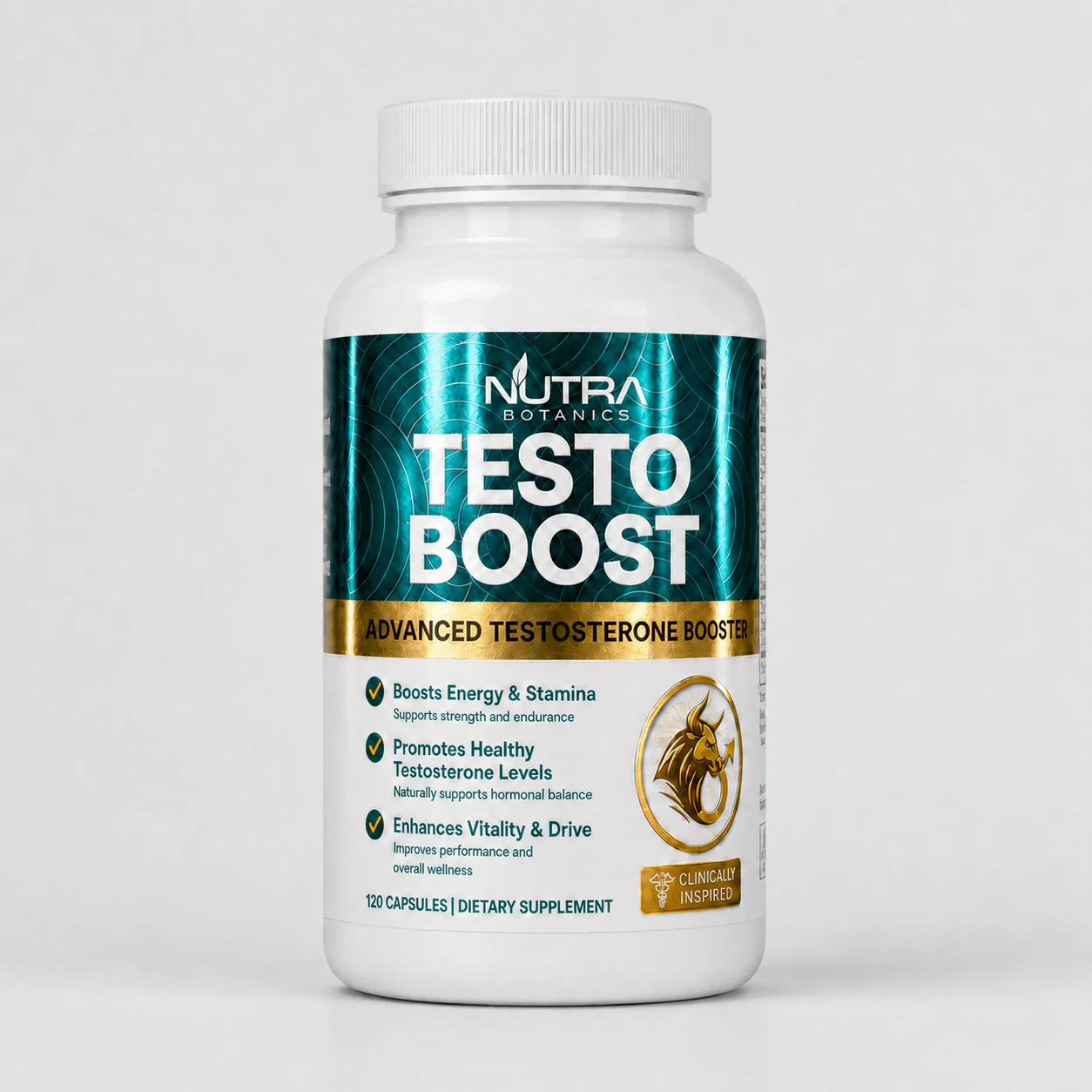
Nutra Botanics sells Testo Boost. Its label helps you compare the formula with your current routine; it does not establish a treatment for low testosterone.
- Full labeled serving
- 4 capsules
- Container
- 120 capsules, 30 servings
- Zinc per serving
- 11 mg
- Vitamin D per serving
- 20 mcg (800 IU)
Check overlapping nutrients, the complete botanical list and directions. The capsule shell contains gelatin. For adults, NIH lists upper limits of 40 mg daily for zinc and 100 mcg (4,000 IU) for vitamin D from all sources, unless medically directed. Those limits are not suggested doses.
Compare Testo Boost ingredients, extracts and suitability. Keep the label available when checking medicines with a pharmacist.
Make an informed formula choice
Read the ingredients together, check the full serving and decide whether the formula fits your routine.
View Testo Boost ingredients and factsSources and editorial context
Reviewed October 13, 2026. This brand-authored guide uses primary sleep research, federal nutrition and activity guidance, and Endocrine Society recommendations. General habits, ingredient studies and finished-product effects are different questions.
- Endocrine Society: diagnosis and repeat morning testing
- Endocrine Society’s 2026 statement: reversible contributors and weight
- CDC: age-specific sleep guidance
- Leproult and Van Cauter, 2011: small sleep-restriction study
- CDC: general adult activity targets
- NIH: zinc roles, intake and safety
- NIH: vitamin D roles, intake and safety
- NCCIH: ashwagandha evidence and precautions
Product amounts were checked against the approved Testo Boost label. This editorial check is not a qualified clinical review or a test of the complete formula.
Useful questions about natural testosterone support
Can you really boost testosterone naturally?
How fast can testosterone increase naturally?
Does diet affect testosterone?
What exercises boost testosterone the most?
Should I take zinc and vitamin D together?
What is the best first step if I think I have low testosterone?