

Creatine can support women’s strength and high-intensity training. It is worth considering when your routine includes lifting or repeated hard efforts. The most useful buying decision starts with the studied form, the amount in a full serving and what your training actually demands.
Start with these four checks
- Creatine monohydrate is the best-studied form for exercise performance.
- Women-specific training research supports possible benefits, with responses that vary.
- A change in water weight is different from a change in body fat.
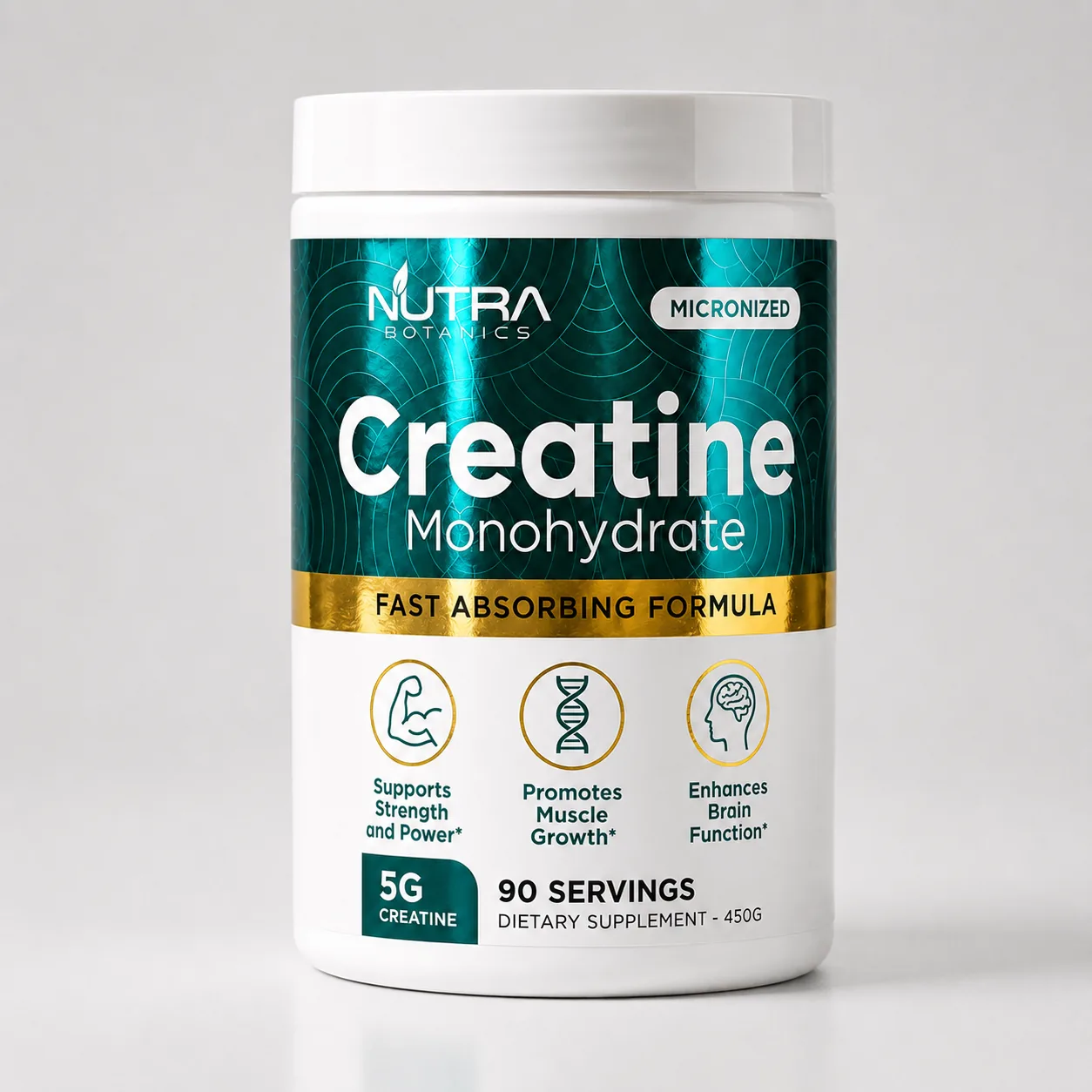
- Nutra Botanics lists 5 g of creatine monohydrate per scoop and 90 servings, about $0.33 per labeled serving at the current one-time price.
Creatine, body shape and water weight
Creatine helps muscles replenish the energy used in short, intense efforts. NIH exercise-performance guidance describes potential benefits for strength, power and repeated maximal contractions. It has less value for endurance-only performance. It is not a protein powder or a stimulant.
“Will creatine make me bulky?” combines several different questions. Muscle growth depends on your training and wider nutrition; a supplement cannot select a particular body shape. Water retention can raise scale weight, as described in the NIH consumer guide. That should not be described as fat gain, but neither should a seller guarantee that your weight will stay unchanged.
Check progress against the goal you actually chose: the quality of your training, the load you can handle or your consistency. A daily scale reading alone cannot tell you whether a strength supplement is helping.
Training benefits: what women-specific research shows
A September 2026 systematic review and meta-analysis included 34 studies, with 21 contributing to its quantitative analysis. It found small pooled effects for performance and body-composition outcomes. Different body-composition measures were combined; this is not proof of fat loss. Evidence certainty was low, so the findings do not guarantee a percentage improvement for every woman.
A 2025 review of active females found that most individual studies did not show a clear advantage over placebo. Study methods, exercise tests and participant characteristics differed. Reading both reviews gives a more useful picture than claiming that every woman will gain a fixed amount of strength.
In an earlier 10-week trial in 19 young women, creatine with resistance training produced larger strength and fat-free-mass gains than placebo with training. The training program was part of the intervention. This result does not establish the same change from taking a supplement without exercising.
Match the claim to the outcome
| Your question | Useful research outcome | What a label cannot promise |
|---|---|---|
| Support for lifting | Strength or repeated-effort performance measured during training | A fixed percentage increase or a specific body shape |
| Support after menopause | Lean mass and strength alongside resistance training | Reversal of menopause symptoms |
| Support for bone health | Bone mineral density measured over a meaningful period | Fracture prevention based on a muscle result |
For a practical starting point, compare the current training formulas. Choose by ingredient and purpose before deciding which format fits your routine.
Memory and mood are separate research questions
In a 2023 randomized crossover trial, 123 participants took 5 g daily for six weeks. The primary working-memory and reasoning tests did not show a statistically significant main effect in the planned analysis. Other analyses suggested a possible small memory benefit, but the study did not reproduce the large earlier effect. Vegetarians did not respond significantly differently from omnivores.
That is different from promising sharper focus, a fixed memory gain or relief from brain fog for every woman. The participants were not exclusively women, and the study was not a menopause treatment trial.
A 2012 trial in women with major depression examined creatine added to prescribed escitalopram. This is research on an adjunct to medical treatment in a diagnosed population. It does not establish everyday mood enhancement from a sports supplement and should not be presented as a replacement for treatment.
Bone health: read the actual measurement
A two-year trial in 237 postmenopausal women combined supplementation with resistance training and walking. Creatine did not improve bone mineral density at the femoral neck, total hip or lumbar spine compared with placebo. Some bone-geometry measures differed, but geometry and density are different outcomes.
The distinction matters when you shop. A supplement researched for training should not be sold as proven to prevent fractures or treat osteoporosis. A strength or lean-mass finding cannot substitute for a bone-density finding.
After menopause: a useful role alongside training
A 2026 postmenopausal meta-analysis combined seven randomized trials with 608 participants. Pooled lean mass was 0.37 kg higher with creatine; leg-press strength also favored creatine. Benefits were evident in trials pairing at least 5 g daily with resistance training. Bone density was unchanged overall.
These group averages support a training-focused reason to consider creatine. They do not justify extra scoops or promises to correct hormones, erase fatigue or reverse age-related changes.
The 2021 women’s lifespan review helped identify female-specific questions. More recent trials and reviews make it important to distinguish training findings from proposed applications in cognition, pregnancy or menopause symptoms. Being discussed in a review does not make every application established.
Serving size, loading and the current bottle
Creatine monohydrate is the form most often studied, according to NIH. Research includes daily maintenance amounts of 3 to 5 g and protocols without a loading phase. Those study protocols are background, not a reason to add extra scoops. For a product decision, use its current label and directions.
These details were checked against the approved manufacturer label and current product page on October 11, 2026. “Micronized” describes particle size. It does not establish a faster clinical effect than other creatine monohydrate products. Individual-ingredient research is not a clinical test of this finished product.
Build your training routine
Explore the single-ingredient powder, complete label and current purchase options.
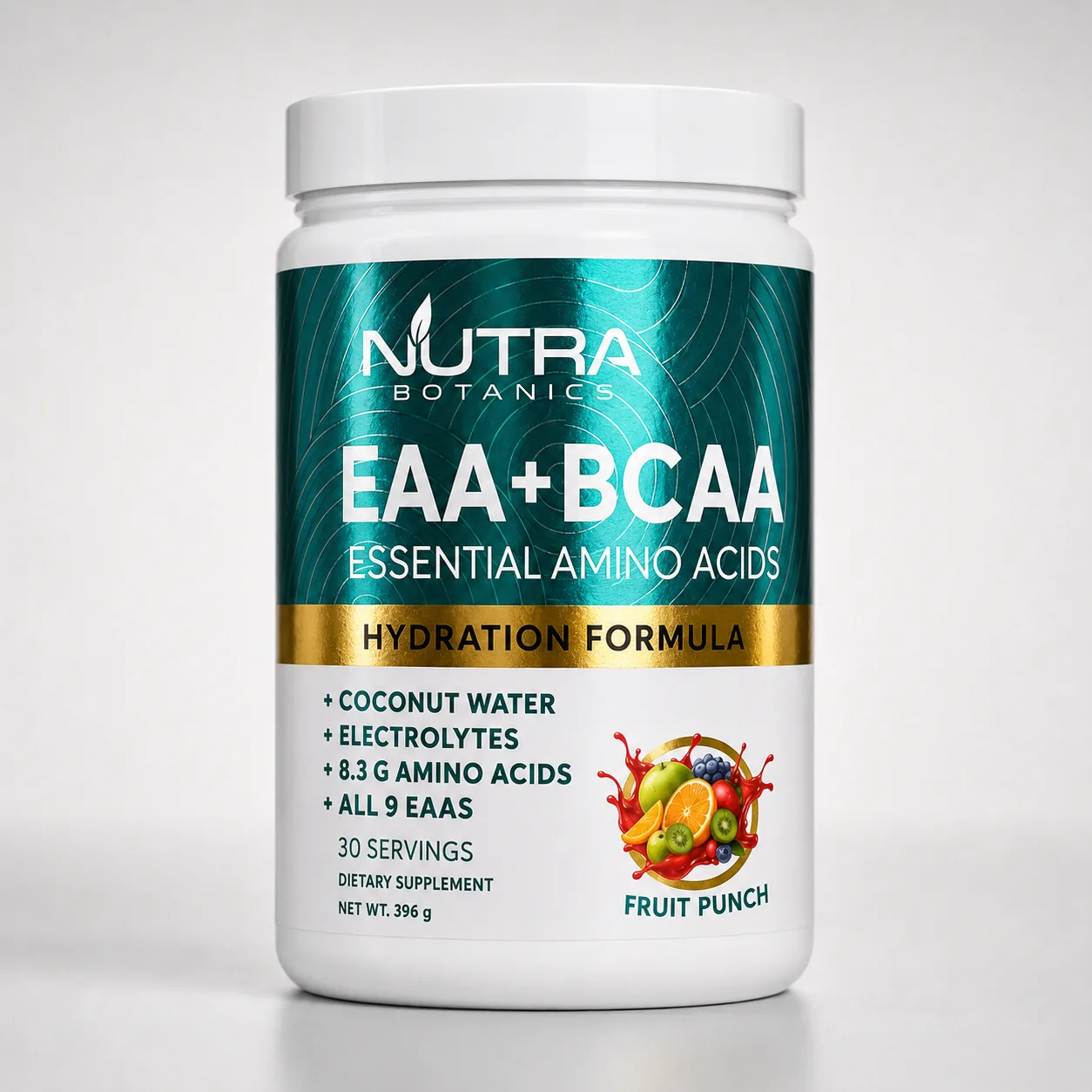
View Creatine MonohydrateCreatine or an amino-acid drink? They serve different purposes. Creatine Monohydrate provides one listed active ingredient. EAA + BCAA Hydration combines amino acids and other ingredients in a flavored drink. Read our creatine and BCAA comparison before choosing. Taking both is not automatically more useful than matching one product to a specific need.
For personal suitability, read the manufacturer warnings. The label directs consultation before use if you are pregnant, nursing, taking medicines or have a medical condition. NIH discusses possible digestive effects and water-weight changes. General adult safety research does not make every supplement suitable for everyone.
Related reading: Creatine for Beginners, How to Take Creatine, When to Take Creatine, Creatine Loading Phase.
Frequently Asked Questions
What does creatine do for women?
Will creatine make me gain weight or look bulky?
How much creatine is in the Nutra Botanics serving?
Do women need a creatine loading phase?
Is creatine proven to improve bone density after menopause?
Is micronized creatine different from creatine monohydrate?
Editor’s Note · October 11, 2026

Explore the formulas
Related Articles



Research and label sources
- Lin 2026: female exercise outcomes, systematic review and meta-analysis
- Tam 2025: creatine in active females, systematic review
- Vandenberghe 1997: resistance-training trial in young women
- Sandkühler 2023: randomized cognitive-performance trial
- Lyoo 2012: creatine added to prescribed depression treatment
- Chilibeck 2023: two-year postmenopausal bone trial
- Naddafha 2026: postmenopausal lean mass, strength and bone meta-analysis
- Smith-Ryan 2021: women’s lifespan review
- NIH Office of Dietary Supplements: exercise-performance guidance
- NIH Office of Dietary Supplements: consumer guide
Product facts checked against the approved manufacturer label (SC7095, Creatine Powder 90 servings) and current label details on October 11, 2026. This is an editorial evidence check, not a qualified clinical review.