Creatine monohydrate is the practical form to compare first. It has the larger research base, and recent direct trials have not shown an HCl advantage for training outcomes. HCl dissolves more readily in water, but easier mixing does not establish a stronger supplement or an equivalent smaller serving.
Choose for evidence, label and value.
- For training: compare the actual human findings, not a solubility multiplier.
- For comfort: separate digestive symptoms from a change in body water.
- For value: check the current price and labeled servings of each named product.
Related reading: Creatine for Women, Creatine for Beginners, How to Take Creatine, When to Take Creatine.
Monohydrate and HCl: what changes?
Monohydrate pairs creatine with a water molecule. HCl, short for hydrochloride, is a creatine salt. They are different chemical forms, not different training goals. The 2022 review of creatine forms explains the chemistry and why results in people matter when comparing them.
Creatine supports the rapid energy supply used in repeated, intense efforts such as lifting and sprinting. NIH’s exercise fact sheet identifies monohydrate as the most widely used and studied form. A new ingredient name alone is not a reason to expect more strength.
Compare what matters to your routine.
| Your question | Monohydrate | HCl |
|---|---|---|
| Which has the broader research? | The established reference form, with substantially more human research. | Direct human studies exist, but the evidence base is smaller. |
| Which gives better training results? | Recent direct trials did not establish that HCl outperformed it. | The cited trials do not show a reliable advantage over monohydrate. |
| Does it need a smaller serving? | Many study protocols use 3 to 5 g daily. Follow your actual product label. | Do not assume a 1 or 2 g serving equals 5 g monohydrate. That is not established as a general rule. |
| What about mixing? | Lower water solubility in the cited laboratory comparison. | Higher water solubility in that experiment. This is not a human strength result. |
| How should I compare price? | Use the container’s current price, listed amount and labeled servings. | Use the same checks for a named HCl product. There is no fixed price premium for every brand. |
What the head-to-head studies found.
2015, four weeks: a small weightlifting study compared monohydrate, two HCl amounts and a control. Although its title emphasizes HCl body-composition changes, its results reported no significant differences between groups. Ten of the forty selected participants were excluded from analysis. That is not proof that HCl is stronger or needs less.
2024, eight weeks: Eghbali and colleagues studied forty people aged 18 to 25 in four resistance-training groups. The creatine groups improved measured strength and body-composition outcomes compared with placebo, but HCl showed no advantage over monohydrate. The trial used body-weight-based amounts, not a universal 1 g HCl serving.
2025, eight weeks: a trial in thirty-one handball and softball athletes compared 5 g daily of each form with placebo. It found no significant between-group differences in its measured performance or body-composition outcomes. Improvements within a group do not prove that it beat the other groups.
These are small, short trials, not proof that every product or dose performs identically. The 2025 paper also discloses that two authors held scientific-advisory roles sponsored by a monohydrate supplier. Read the results and disclosures together.
Easier mixing is not the same as better results.
The often-repeated “38 times” figure comes from a 2010 laboratory study of creatine salts. HCl was more soluble in water under the tested conditions. The same study did not find a significant HCl permeability advantage in its intestinal-cell model. It did not test stronger lifts or bigger muscles in people.
Solubility describes how a substance dissolves. Absorption describes entry into the body. Muscle uptake and training results are further questions. Turning the first measurement into a “38 times stronger” promise skips those steps.
Likewise, a smaller scoop is a label feature, not proof of dose equivalence. Check both the named form and the actual listed amount. “Micronized” describes smaller particles; it does not turn monohydrate into HCl or establish a bigger performance effect.
Water weight and stomach comfort are different.
Creatine can increase body water and scale weight. That differs from stomach fullness, gas or diarrhea. An HCl “no bloat” slogan should not be treated as proof that it prevents either kind of change.
A 2008 trial in fifty-nine male soccer players found more diarrhea with a single 10 g creatine serving than with two 5 g portions. Both groups took the same daily total. This points to serving size as a possible factor; it was not an HCl trial and does not establish that switching forms fixes symptoms.
Start by checking the container’s directions, your actual serving and other supplements that also contain creatine. Do not add a loading regimen just because an article mentions one. If symptoms persist, stop use and get individual advice rather than repeatedly changing products.
For more on the scale change, read creatine and weight gain. For research findings, see what creatine studies actually show.
Compare the actual label and serving cost.
A useful price comparison needs two named products and current prices. A blanket “three to five times more expensive” claim or an unidentified market average does not tell you what your own routine will cost.
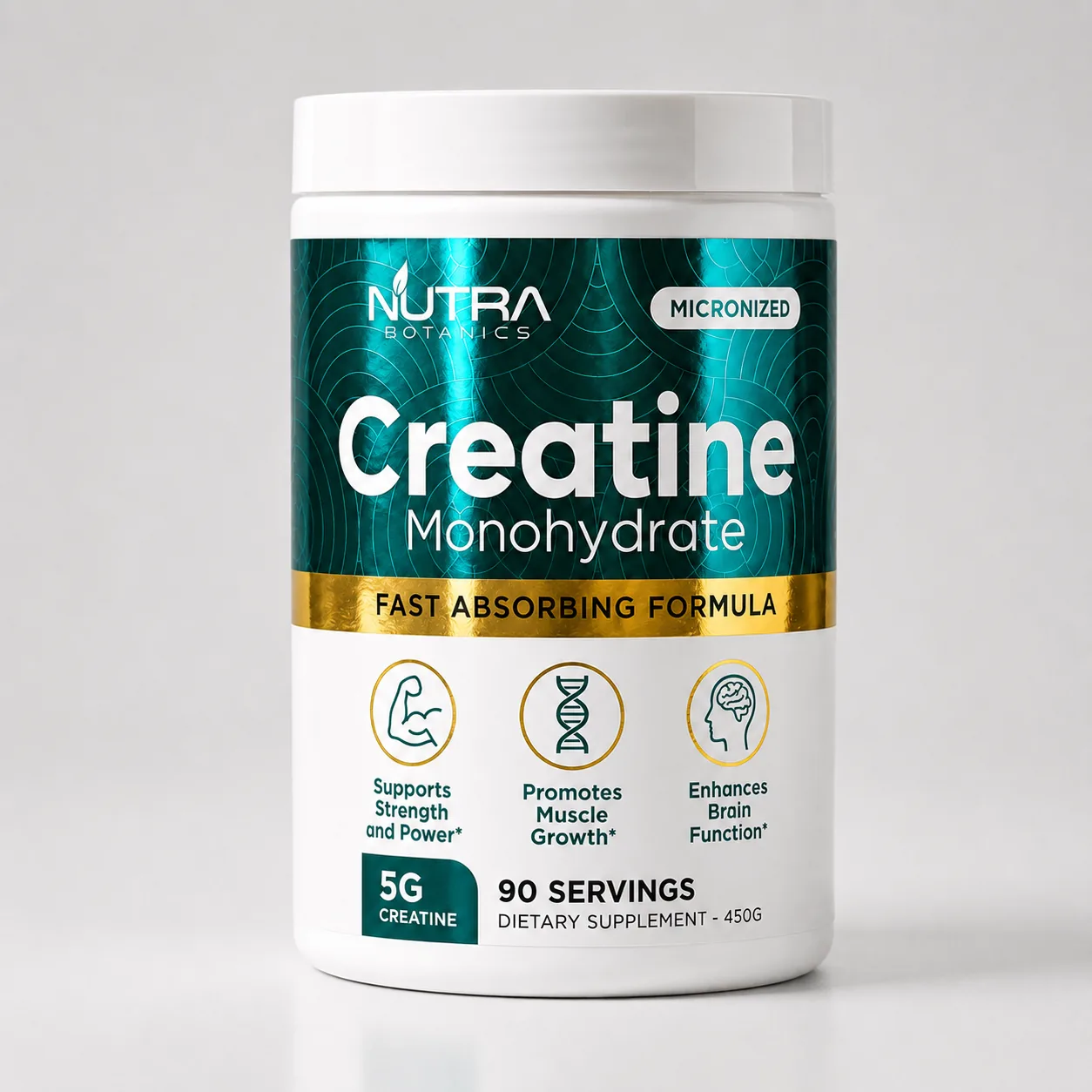
Current Nutra Botanics label check
- Form: micronized creatine monohydrate.
- Labeled serving: one scoop, 5 g.
- Container: 450 g, 90 labeled servings.
- Other ingredients: none listed; unflavored.
- One-time price: $29.99, about $0.33 per labeled serving before tax and shipping.
Checked October 12, 2026. Prices can change. This is a serving-value example, not proof that an HCl serving is interchangeable.
Inspect the creatine label and current priceFor another product, divide its current container price by its labeled servings, then compare the listed form, amount and directions. A cheaper serving can contain less ingredient. A larger amount is not automatically the appropriate amount for you.
Which form should you choose?
If you want a straightforward training option, start by comparing monohydrate. Its established research base makes it a useful reference, and a clear single-ingredient label makes the buying decision easier. There is no demonstrated HCl performance advantage in the direct trials discussed above.
If you prefer an HCl product’s mixing or format, compare its actual label and cost. That preference can matter to your routine, but it does not make the product clinically stronger, universally gentler or proven equivalent at a smaller serving.
Evidence and personal suitability
This article compares ingredient research, not a trial of the finished Nutra Botanics product. The studies differ in participants, amounts and measurements. Follow the current container’s directions and warnings. Ask a healthcare professional before use if you have a health condition, take medication, or are pregnant or breastfeeding.
Questions about choosing a form
Is creatine HCL better than monohydrate?
What is the dose difference between creatine monohydrate and HCL?
Which form of creatine has the most research?
Should I switch from monohydrate to HCL?
Does creatine HCL actually absorb better than creatine monohydrate?
Is creatine HCL worth the higher cost?