Creatine can raise muscle stores within days with a loading approach, or more gradually over several weeks. A noticeable training benefit has no guaranteed start date. The useful question is what changes in your repeated hard efforts over time, rather than whether you feel a buzz or gain a certain amount of weight.
Watch your training, not just the calendar.
- Muscle stores: the amount of creatine measured in muscle is one outcome.
- Performance: repetitions, power and strength are separate outcomes that depend on the task and the person.
- Your routine: follow the actual label, record comparable workouts and give yourself more than one session to judge progress.
Related reading: Creatine for Beginners, How to Take Creatine, When to Take Creatine, Creatine Loading Phase.
Days for stores, repeated sessions for a useful comparison.
A faster rise in muscle creatine is possible, but it does not set a deadline for your next personal best. A gradual approach can also raise stores. Neither route tells you exactly when you will notice a change in the gym.
The NIH exercise fact sheet describes creatine's strongest exercise role in repeated, short bursts of high-intensity activity, such as lifting and sprinting. That is a better match for your progress checks than expecting an immediate stimulant sensation.
Muscle stores and gym results follow different measures.
Creatine helps replenish ATP, the immediate energy supply used during hard efforts. Researchers can measure creatine inside muscle. Your training log measures something different: what you can do with a given exercise, load and rest period.
In Hultman's study of thirty-one men, 20 g daily for six days increased muscle creatine by about 20%. A 3 g daily approach produced a similar, slower increase over twenty-eight days. Those observed protocols do not establish a universal saturation date or a performance deadline.
Loading is optional. Research amounts are not directions for your container. For the practical trade-offs, read loading versus a gradual creatine routine.
Make each week a progress check, not a promised milestone.
Keep a simple record before you try to interpret changes. Note the product, serving, starting date and any change to your training. A weekly review can help you see a pattern without treating every workout as a test the supplement must pass.
A practical weekly check-in
- Compare like with like: the same exercise, load, technique and rest period.
- Record the work: repetitions completed and how performance holds up across repeated sets.
- Add context: sleep, meals, other supplements and changes to the program.
- Track comfort: note digestive symptoms and discuss persistent problems rather than taking more.
For example, completing more repetitions at the same load and technique across comparable sessions is useful information. It still cannot isolate creatine from training, recovery or practice. A single stronger workout or heavier weigh-in is a much weaker comparison.
Compare what studies actually measured.
These findings use different people, protocols and tests. Read each row on its own. They cannot be combined into a percentage-of-saturation curve or a week when everyone gets stronger.
| What changed | Research finding | Your progress check |
|---|---|---|
| Muscle creatine | Hultman measured increases after six days at 20 g daily and over twenty-eight days at 3 g daily. | Record your actual routine. A date or body-weight change does not measure your muscle stores. |
| Repeated hard efforts | A small Volek trial found better repeated lifting and jump-squat performance after a short loading period. | Compare the same task across several sessions. Do not expect a fixed number of extra reps. |
| Strength with training | Another Volek trial measured greater strength increases with creatine during twelve weeks of heavy resistance training. | Track your program's trend. A study's end point is not your personal result date. |
| Body weight and water | Powers measured higher muscle creatine, body weight and total body water in a loading-and-maintenance trial. | Keep scale trends separate from strength. Weight alone does not prove new muscle or absorption. |
| Individual response | Syrotuik and Bell found three levels of muscle-store response in eleven men, measured with muscle samples. | Do not diagnose yourself as a non-responder from appearance, a quiet week or a bathroom scale. |
A scale change is information, not proof it is working.
Body weight can change during creatine use. In Powers' trial of thirty-two resistance-trained men and women, the creatine group had higher muscle creatine, body weight and total body water. The study did not find a change in fluid distribution.
That does not support a promise that everyone gains a fixed amount by day ten, or that all added water is exclusively inside muscle. Your scale cannot separate water, new muscle, fat and other changes. Use consistent weighing conditions and consider the trend alongside your training.
For a clearer explanation of those measurements, read creatine, water weight and body composition. If weight limits matter in your sport, include them in your decision before starting.
Look for support in the work you repeat.
In a 1997 trial of fourteen active men, a short 25 g daily loading protocol improved repeated bench-press and jump-squat performance compared with placebo. This was a small, specific exercise test, not a guarantee of what a gradual routine will feel like in its first week.
A twelve-week trial of nineteen resistance-trained men found greater bench-press and squat strength increases in the creatine group during heavy training. Muscle creatine rose earlier. This illustrates why stored creatine and longer-term training progress should be tracked separately.
For you, the goal is a useful comparison: can you sustain the work your program calls for, using the same technique and conditions? Avoid changing your serving, rest periods and program together, then crediting every change to one supplement.
Keep meals, hydration and training in perspective.
In Steenge's retention study, twelve men received specific creatine and nutrient drinks. Some protein-and-carbohydrate or high-carbohydrate combinations increased whole-body retention. The study did not show that any mixed meal speeds your results by 60%, or that post-workout use is always best.
Choose a routine you can follow under the actual directions. You do not need to build your day around an invented meal multiplier. Compare creatine timing options if you are deciding where it fits.
Keep ordinary training basics in view: enough food, suitable hydration and recovery. The NIH fact sheet emphasizes that supplements add to those foundations. There is no verified extra-water amount in this guide that guarantees faster uptake or prevents symptoms.
A quiet first month does not diagnose nonresponse.
Syrotuik and Bell's response study examined eleven healthy men after a five-day loading protocol. Three had a large muscle-store increase, five an intermediate increase and three a smaller increase. Those groups came from muscle measurements, not from whether participants felt a buzz.
That small study does not establish that 28% of all supplement users are genetic non-responders. It also does not provide a home test based on fullness, body weight or one extra rep. Treat differences between people as a reason to assess your own routine carefully, not as a label to assign yourself.
Use a training trend you can explain.
Useful observations include repetitions completed at a familiar load, performance across later sets and changes in the strength tests your program already uses. Keep technique and rest periods comparable, and note when the program itself changes.
Look across several sessions. Consistency in your notes helps you discuss progress with a coach or qualified professional. It cannot prove that a particular product caused a change, but it gives you a better decision than judging appearance or waiting for a sensation.
Reassess the routine before increasing the amount.
If progress feels unclear, check what you actually took, how consistently you followed the directions and whether the workouts are comparable. Review recovery and other changes as well. A missing scale increase alone is not evidence of poor absorption.
The NIH guidance notes that much of the safety evidence comes from healthy adults, and digestive symptoms can occur. Discuss use with a qualified healthcare professional if you have a medical condition, take medication or develop symptoms. A lack of noticeable results does not justify increasing the serving or adding a loading phase.
Choose a clear label and compare serving value.
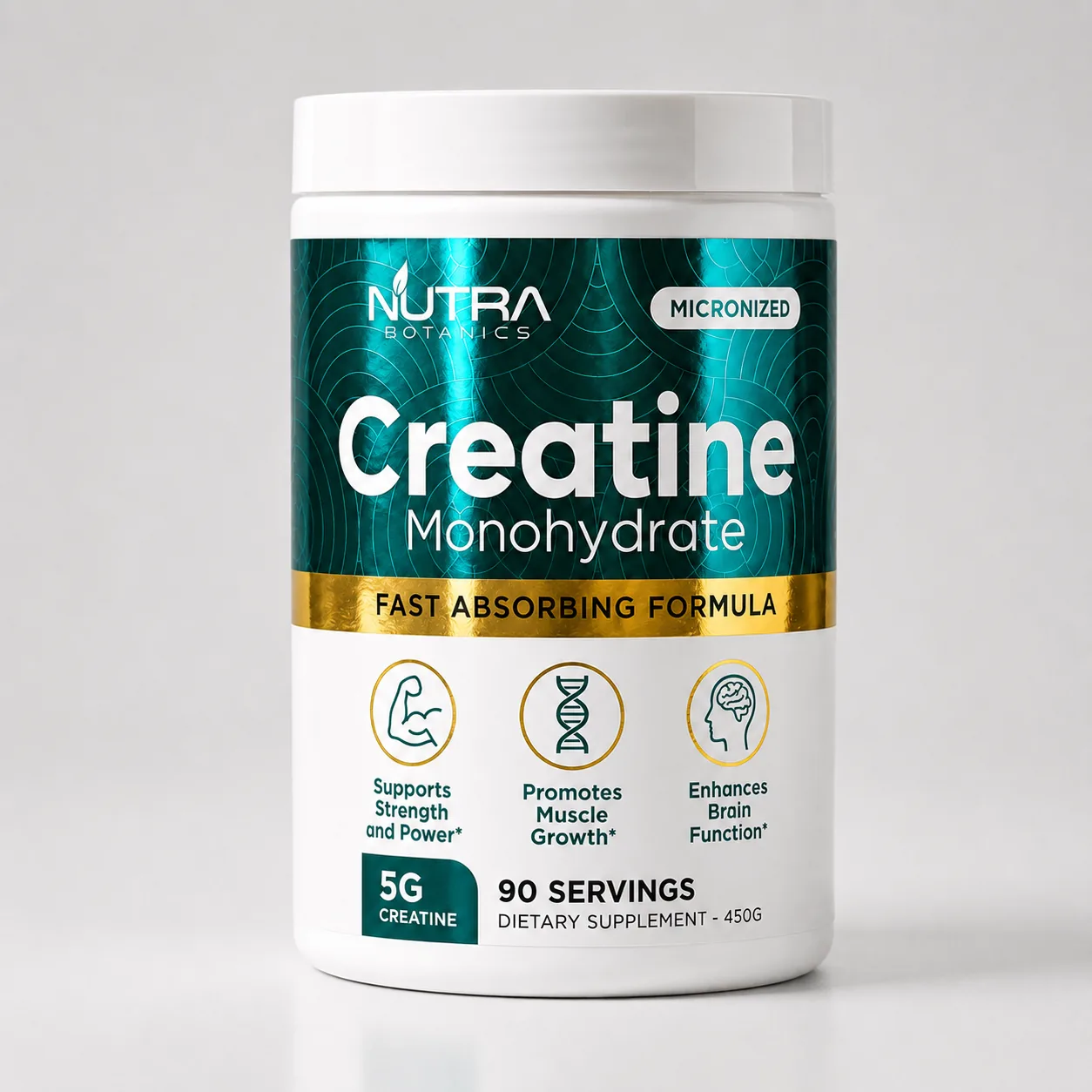
Nutra Botanics Creatine Monohydrate makes the label check straightforward: a single ingredient, an unflavored powder and a listed scoop size. These buying facts help you compare the container with your intended routine.
Current Nutra Botanics label and value
- Form: micronized creatine monohydrate.
- Listed serving: one scoop, 5 g.
- Container: 450 g, 90 labeled servings.
- Other ingredients: none listed; unflavored.
- One-time price: $29.99, about $0.33 per labeled serving before tax and shipping.
Checked October 12, 2026. Prices can change. The serving count describes the label's 5 g scoop, not a promise of ninety days under any research protocol. Read the full directions and warnings before choosing.
Inspect the creatine label and current priceMake the next step simple.
Use the actual directions and a clear training log. Compare repeated sessions, keep scale weight in context and judge whether the routine fits your goal and comfort. For starting questions, visit the beginner's creatine guide or the guide to taking creatine.
Questions about creatine timing and progress
Will I feel anything on day one?
Do I need to take creatine on rest days?
What happens if I stop taking creatine?
Can I take creatine with caffeine?
I've been taking creatine for a few weeks and feel nothing, is it working?