

L-carnitine helps your body move fatty acids into the parts of cells that produce energy. Supplement research also includes exercise recovery and weight management, but the result depends on what was tested. Here is how to connect those findings with a useful buying decision.
What matters before you choose
- Fat transport is carnitine’s normal biological role. It does not establish an instant fat-loss result from a supplement.
- Some L-carnitine tartrate trials report less post-exercise soreness. Match the studied preparation and outcome.
- A weight-management review found a modest average difference, with important limits.
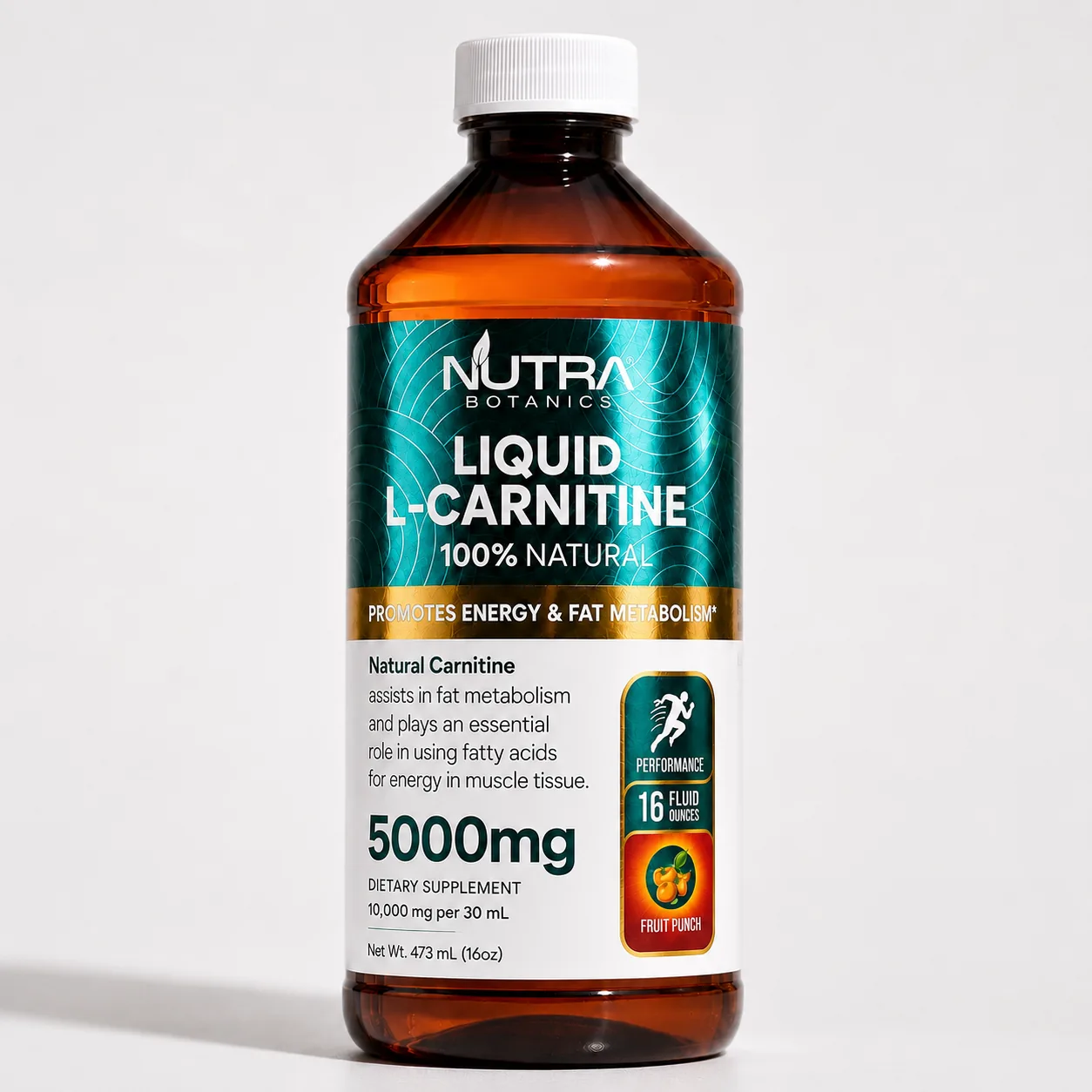
- Liquid L-Carnitine lists 5,000 mg per measured tablespoon. Read the full label instead of increasing your pour.
What L-carnitine does in your body
Carnitine carries long-chain fatty acids into mitochondria, the energy-producing parts of cells. Your body normally makes it, and foods also supply it. The NIH Office of Dietary Supplements explains this natural role and why it is different from showing that a supplement improves performance.
For shopping, separate three questions: what does the ingredient do, what changed in a human study, and does the bottle match that study? A product name or a larger milligram number does not answer all three.
| Your question | What the research measures | What to check before buying |
|---|---|---|
| Fat metabolism | Fuel use during specific exercise tests | The carnitine form and the actual serving, rather than an instant “burn” promise |
| Exercise recovery | Soreness, recovery ratings and muscle-damage markers | Whether the tested tartrate preparation matches the product |
| Weight management | Changes in body weight and other measurements over time | The size of the average difference and which outcomes did not improve |
Fat oxidation: an important role, a specific trial
The 2011 Wall trial followed 14 healthy men for 24 weeks. One group consumed 2 g of L-carnitine L-tartrate with 80 g of carbohydrate twice daily; the control received carbohydrate alone. At 24 weeks, the carnitine group had higher muscle carnitine and changed fuel use during exercise. Work output increased 11% from its own baseline, while the control group did not improve.
This was a small, long study with a specific carbohydrate protocol. It was not a test of a single pre-workout pour or proof that every supplement user will burn more body fat. The carbohydrate intake was part of the experiment, not a reason to add large amounts of sugar to your routine.
Exercise recovery: look beyond the headline
A 2007 Spiering trial studied eight men after three weeks of supplementation. The tested L-carnitine L-tartrate amounts reduced perceived soreness and several exercise-related blood markers compared with placebo. Its small size matters: this finding should not become a universal percentage reduction in muscle damage or a guaranteed recovery timeline.
A larger 2021 randomized trial had 73 completers after five weeks. Capsules supplied 2 g of L-carnitine from 3 g of carnitine tartrate daily. Following an exercise challenge, the supplemented group reported better recovery and soreness scores, had a smaller rise in a muscle-damage marker, and had smaller declines in strength and power. Lonza funded the study, and two authors were company employees.
These are useful recovery findings for the tested ingredient preparations. They are not clinical tests of Nutra Botanics Liquid L-Carnitine, and do not establish that every liquid or capsule delivers the same result. Use recovery research to ask better product questions, rather than to promise a fixed outcome.
Performance and weight management are different outcomes
The positive cycling result above does not establish an endurance benefit for every athlete. A 2016 study of 24 men, including 16 vegetarians, used 2 g of L-carnitine daily for 12 weeks. Muscle carnitine increased in the vegetarians, but physical performance and measured muscle energy metabolism did not significantly improve. Higher stores alone did not predict better performance.
For weight management, the 2020 Talenezhad review pooled 37 randomized trials involving 2,292 participants. The average body-weight difference was 1.21 kg, about 2.7 lb, lower with carnitine than control. The review found no significant overall change in waist circumference or body-fat percentage. When restricted to higher-quality trials, only the body-weight finding remained supported.
That average is modest, not a forecast for an individual shopper. It does not demonstrate targeted belly-fat loss, an immediate pre-workout effect or a result from this finished formula. The review’s dose analysis is also not a personal instruction to choose a larger serving.
Liquid, capsules and the meaning of a serving
Choose a format you can measure and use consistently. Liquid describes the format; tartrate describes an ingredient form. They are not competing names for the same comparison. A recovery trial using tartrate capsules cannot establish that a different liquid works faster or better.
Our liquid versus capsule comparison explains how to compare the ingredient amount, serving volume and convenience. The dosage guide separates research amounts from current bottle directions. Neither format should be chosen on an unsupported “30-minute absorption” claim.
Liquid L-Carnitine: checked label and buying details
These facts were checked against the original manufacturer label and current product page on October 11, 2026. The label directs one measuring tablespoon daily and says to shake well. Its front-panel 10,000 mg per 30 mL describes twice the volume, not an instruction to double the serving. Use a marked measure and your current bottle directions.
The label lists L-carnitine, not a declared carnitine tartrate preparation. Its 5,000 mg serving also differs from amounts in the recovery trials above. More milligrams do not establish a stronger effect, and higher amounts can increase digestive side effects. Check suitability before use rather than trying to reproduce a study with a different product.
Make the formula fit your routine
Check the complete label, current price, directions and purchase options in one place.
Explore Liquid L-CarnitineSuitability and side effects
NIH notes that around 3 g daily can cause nausea, vomiting, cramps, diarrhea or a fishy odor. No tolerable upper intake level has been established. Seizure disorders, certain kidney conditions and medication use need particular care. Discuss suitability with a healthcare professional, including during pregnancy or breastfeeding.
A vegetarian diet does not automatically mean a carnitine deficiency or the largest performance benefit. In the 2016 trial above, the vegetarian participants maintained muscle stores before supplementation and did not improve performance after it. Clinical deficiency treatment is a separate decision from buying a routine supplement.
Start with a specific goal, a complete label and a realistic comparison. Our L-carnitine buying guide helps compare the practical details. Choose the preparation and format that fit your needs without treating a study average as a personal promise.
Related reading: L-Carnitine Dosage, L-Carnitine for Women, L-Carnitine and Exercise, Liquid vs Capsule L-Carnitine.
Frequently Asked Questions
How long does it take for L-carnitine to work?
Should I take L-carnitine before or after a workout?
Is liquid L-carnitine better than capsules?
What is the best dose of L-carnitine?
Can vegetarians and vegans take L-carnitine?
Are there any side effects of L-carnitine?
Editor’s Note · October 11, 2026

Explore the formulas
Related Articles



Research and label sources
- NIH Office of Dietary Supplements: carnitine role and safety
- Wall 2011: muscle fuel use in a 24-week trial
- Spiering 2007: recovery markers in eight men
- Stefan 2021: five-week tartrate recovery trial
- Novakova 2016: carnitine stores and performance in vegetarians
- Talenezhad 2020: weight and body-composition review
Product facts checked against the manufacturer label SC0984 and current product details on October 11, 2026. This is an editorial evidence check, not a qualified clinical review.