Get research-backed answers about l-carnitine benefits: what research shows. This guide addresses the most common questions based on current evidence.
Key Takeaways
- Supports fat oxidation by transporting fatty acids into mitochondria for energy production
- Research shows modest benefits for exercise recovery, muscle soreness, and endurance performance
- 1–3g per day is the clinically effective range across most peer-reviewed trials
- Full tissue saturation typically takes 2–3 months of consistent daily use
- Best paired with a carbohydrate-containing meal to raise insulin and support muscle uptake
Related reading: L-Carnitine Dosage, L-Carnitine for Women, L-Carnitine and Exercise, Liquid vs Capsule L-Carnitine.
What L-Carnitine Is and How It Works
L-carnitine is an amino-acid derivative synthesized in the liver and kidneys from lysine and methionine. Its primary role is as a transporter: it shuttles long-chain fatty acids across the inner mitochondrial membrane, where they can be oxidized for energy. Without L-carnitine, fatty acids cannot enter the mitochondria — making this the rate-limiting step of fat oxidation in muscle tissue.
Approximately 95% of the body's total L-carnitine is stored in skeletal muscle, where the demand for fat oxidation during sustained activity is highest. The body produces L-carnitine endogenously, and dietary intake comes primarily from red meat and dairy. Vegetarians and vegans typically have lower baseline L-carnitine stores than omnivores — which is one reason plant-based athletes are often the most responsive to supplementation.
Supplementation raises plasma L-carnitine concentrations and, with insulin co-stimulation from carbohydrate intake, gradually raises muscle tissue concentrations over 8–12 weeks.
Fat Oxidation and Energy Metabolism
The most widely cited L-carnitine trial on fat oxidation was conducted by Wall and colleagues (2011, The Journal of Physiology). Fourteen healthy male participants took 2g of L-carnitine L-tartrate with 80g of carbohydrate twice daily for 24 weeks. Muscle biopsies showed a 21% increase in muscle L-carnitine concentration, a 55% reduction in muscle glycogen utilization during low-intensity exercise, and improved workload capacity at matched effort.
The practical interpretation: when muscle L-carnitine is elevated, the body preferentially oxidizes fat for energy during low- and moderate-intensity work, sparing muscle glycogen for higher-intensity demands. This is a metabolic efficiency effect, not an acute fat-burning effect.
Doses below 2g and durations under 12 weeks tend to produce smaller changes in muscle L-carnitine concentration, which is why consistency and duration matter more than loading phases for this supplement.
Exercise Recovery and Muscle Soreness
L-carnitine L-tartrate (a specific form with faster absorption) has been studied for exercise recovery endpoints. Volek and colleagues (2002, American Journal of Physiology) gave recreationally trained men 2g of L-carnitine L-tartrate daily for 3 weeks before a squat-based muscle-damaging protocol. The supplementation group showed lower markers of muscle damage (creatine kinase, myoglobin), reduced soreness ratings, and improved muscle-tissue oxygenation compared to placebo.
Subsequent work by Spiering and colleagues (2008, Medicine & Science in Sports & Exercise) extended these findings — showing that 1–2g of L-carnitine L-tartrate reduced exercise-induced muscle damage markers by roughly 40% over a 3-week supplementation window.
The practical takeaway: L-carnitine L-tartrate's recovery benefits emerge within 2–3 weeks and are most pronounced after high-volume or novel training stimuli. The effect is modest but consistent across multiple independent trials.
Endurance Performance and Weight Management
For endurance athletes, L-carnitine's fat-oxidation effects translate into modest workload-capacity improvements at submaximal intensities. Wall's 2011 work showed that participants could perform 11% more work at the same perceived exertion after 24 weeks of supplementation — a clinically meaningful effect for long-distance runners, cyclists, and triathletes.
For weight management, a 2020 meta-analysis by Talenezhad and colleagues in Clinical Nutrition ESPEN pooled data from 37 randomized controlled trials and found an average weight loss of 1.21kg in overweight participants supplementing with L-carnitine compared to placebo, over an average duration of 8–12 weeks. This is a modest but consistent effect — L-carnitine is not a weight-loss drug, but it produces measurable additive changes on top of training and nutrition.
The mechanism is the same across both applications: more efficient fat oxidation during exercise. The effect is real but additive, not substitutive.
Forms, Absorption, and Practical Dosing
Three forms of L-carnitine are commonly available. L-carnitine L-tartrate is the form most studied for exercise recovery and muscle soreness. Acetyl-L-carnitine (ALCAR) crosses the blood-brain barrier and is studied for cognitive and mood endpoints. Standard L-carnitine is the general-purpose form for fat oxidation and energy.
Absorption is significantly enhanced by insulin — which is why L-carnitine is most effective when taken with a carbohydrate-containing meal. Taking L-carnitine on an empty stomach or with a fat-only meal can reduce muscle uptake by 60–70% compared to co-ingestion with carbohydrate.
The practical protocol: 1–2g per day split between two meals containing at least 30g of carbohydrate each. For exercise-specific benefits, one dose pre-workout with a carbohydrate snack maximizes muscle uptake during the training window. Liquid and capsule forms are equally effective at matched doses.
Safety Profile and Who Benefits Most
L-carnitine has an excellent safety profile across decades of research. Doses up to 4g/day have been used in clinical trials without significant adverse effects. GI discomfort (nausea, loose stools) is the most commonly reported side effect, usually at doses above 3g/day taken on an empty stomach.
The populations most likely to benefit are endurance athletes (fat-oxidation efficiency), vegetarians and vegans (lower baseline stores), individuals in a caloric deficit (protecting muscle and optimizing fat oxidation), and adults over 40 (whose endogenous L-carnitine synthesis declines with age).
For already-omnivorous athletes with consistent training and no specific endurance or recovery demands, L-carnitine's marginal benefit is smaller. Like most research-backed supplements, the magnitude of the effect depends on the size of the gap it is filling.
Frequently Asked Questions
How long does it take for L-carnitine to work?
Should I take L-carnitine before or after a workout?
Is liquid L-carnitine better than capsules?
What is the best dose of L-carnitine?
Can vegetarians and vegans take L-carnitine?
Are there any side effects of L-carnitine?
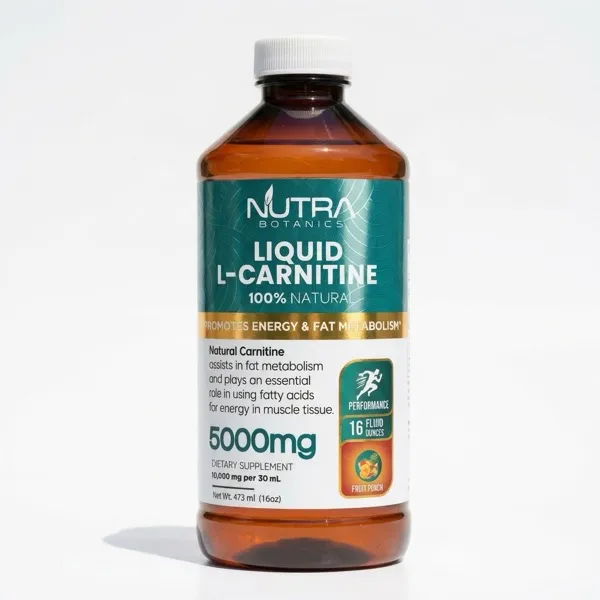
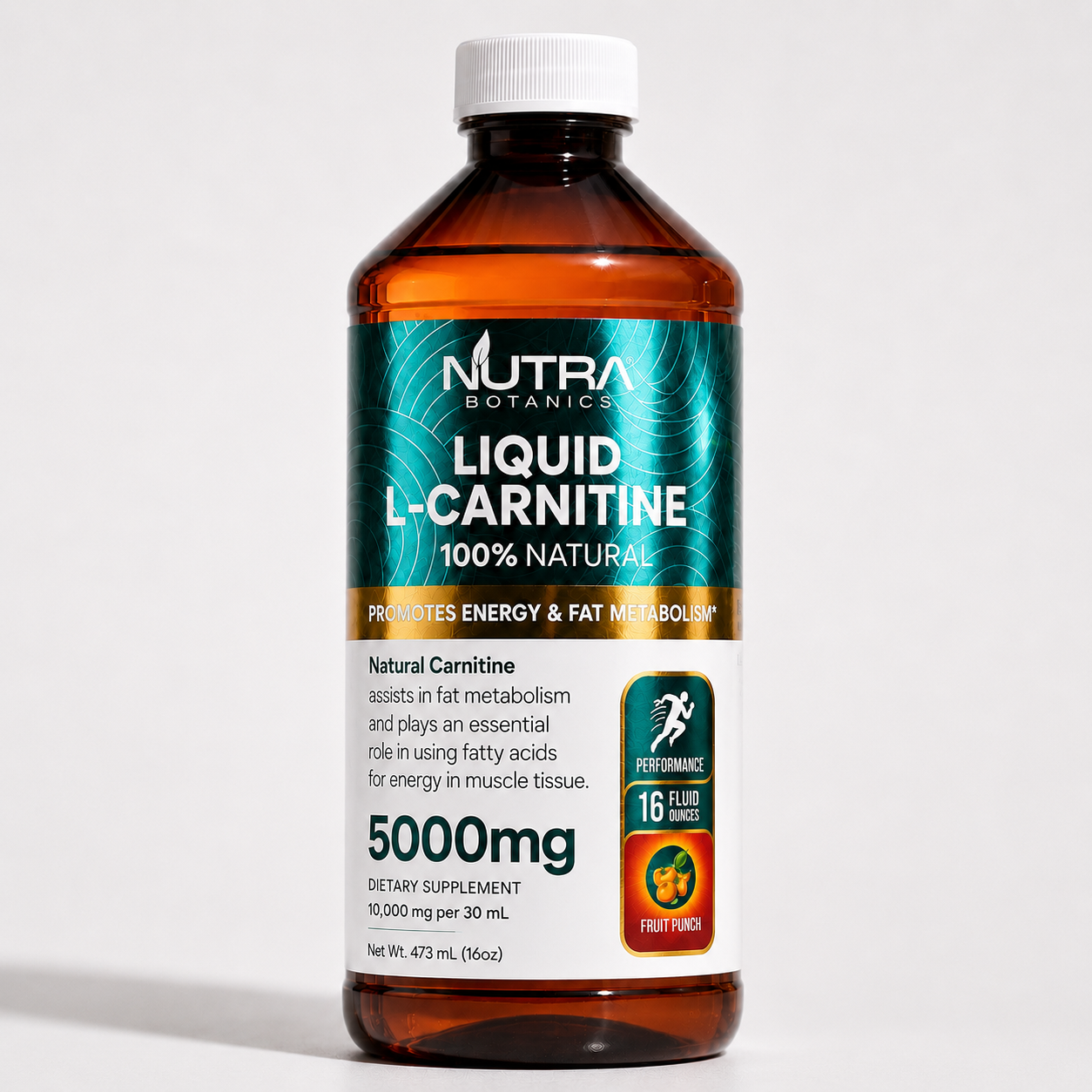
Liquid L-Carnitine 5000
5000mg per serving · 32 servings
- 5,000mg L-Carnitine per 1-tablespoon serving
- Supports fat transport into mitochondria for energy use
- Non-stimulant · pairs well with training days
- GMP & NSF certified · PhD-supervised testing
$22.95Free shipping over $75
Shop Liquid L-Carnitine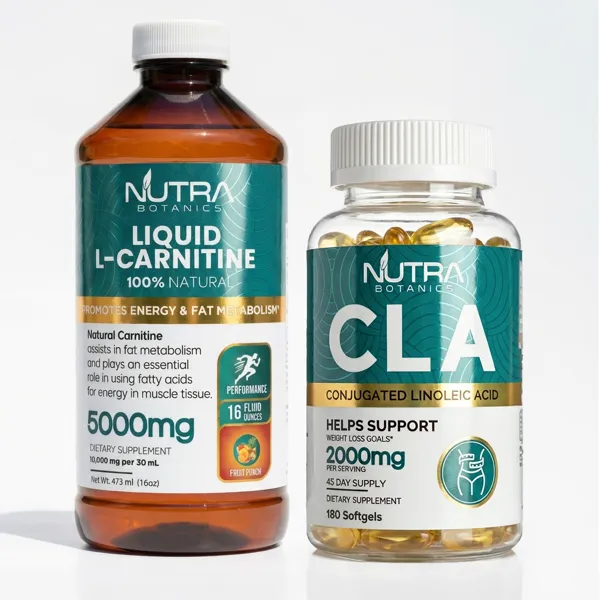
Explore Weight Management
Browse the Nutra Botanics weight management range
- CLA, L-carnitine, appetite support, and bundles
- Compare formats, dosing, and stack partners
- Find the right fit for your composition goals
- GMP & NSF certified · PhD-supervised testing
Shop the rangeSubscribe & save 20%
Browse Weight Management