
Key Takeaways
- The brain stores its own creatine and uses it to regenerate ATP under cognitive load — especially during sleep deprivation
- Multiple RCTs show improvements in working memory and reasoning, with the strongest effects in sleep-deprived or vegetarian populations
- 5g per day is the dose used in most brain-focused creatine research
- Benefits tend to appear after 2–4 weeks of daily use; effects are cumulative, not acute
- Creatine is one of the most-studied supplements in existence — over 500 published trials, with excellent long-term safety data
Related reading: Creatine for Women, Creatine for Beginners, How to Take Creatine, When to Take Creatine.
How the Brain Uses Creatine for Energy
The brain is one of the body's most metabolically demanding organs — consuming roughly 20% of total energy despite being only 2% of body weight. This demand is continuous. Neurons fire constantly during sensory processing, thought, memory formation, and motor control. Every signal requires ATP.
Like muscle, brain tissue stores phosphocreatine (PCr) as a rapid energy reserve. When neuronal firing creates a local ATP deficit — during intense cognitive work, stress, or sleep deprivation — phosphocreatine rapidly donates its phosphate group to regenerate ATP almost instantaneously. This buffering role keeps neural signaling stable during periods of high demand.
MRI spectroscopy studies (31P-MRS) confirm that oral creatine supplementation raises brain phosphocreatine concentrations. The effect is dose-dependent and more pronounced in populations with lower baseline brain creatine stores — vegetarians, vegans, and older adults.*
Brain PCr rapidly regenerates ATP during intense neural activity — the same energy buffering mechanism as in muscle, applied to cognitive performance.*
31P-MRS neuroimaging directly confirms creatine supplementation elevates brain phosphocreatine levels. Brain creatine rise is dose-dependent.*
No dietary creatine means 20–30% lower brain creatine stores. Vegetarians and vegans show the largest cognitive improvements from supplementation.*
Creatine's cognitive benefits are most pronounced under energetic stress: sleep deprivation, demanding cognitive tasks, aging, and hormonal shifts.*
Memory and Processing Speed Research
A landmark 2003 study by Rae et al. published in Psychopharmacology administered 5g/day of creatine or placebo for six weeks to young adult vegetarians. The creatine group showed significant improvements in working memory (backward digit span) and Raven's Progressive Matrices (a non-verbal intelligence measure). Effect sizes were moderate but statistically clear — and the vegetarian population was well-chosen because their low baseline creatine stores maximized the effect window.*
Multiple subsequent studies have replicated memory improvements in older adults. A 2007 study by McMorris et al. found faster information processing speeds — measured by choice reaction time — in creatine-supplemented subjects under cognitive stress. A 2022 systematic review by Roschel et al. identified delayed recall and working memory as the most consistently improved domains across studies in adults over 55.*
Research Snapshot
Creatine's Measured Effect on Cognitive Performance
Average improvement vs. placebo across controlled trials — effect size scales with baseline deficit (sleep, diet, age).
*Pooled estimates from 22 RCTs (Nutrients 2021 meta-analysis). Individual results vary. Not medical advice.
Creatine for Mental Fatigue and Sleep Deprivation
This is where some of the most compelling recent research sits. Mental fatigue — the performance decrement from sustained, effortful cognitive work — is driven partly by depletion of local neural energy reserves. Creatine's PCr buffer directly addresses this mechanism.*
A 2011 study by Watanabe et al. found that creatine supplementation reduced mental fatigue during 60 minutes of repetitive mathematical calculations. Brain oxygenation in the prefrontal cortex (measured by near-infrared spectroscopy) declined less in the creatine group, suggesting more efficient neural energy use.*
For sleep deprivation, McMorris et al. (2007) found that creatine supplementation partially offset cognitive decline after 24 hours without sleep — maintaining higher performance on processing speed and working memory tasks than placebo. This effect is particularly relevant for shift workers, new parents, medical residents, and others who routinely operate under sleep debt.*
Creatine and Aging — Neuroprotective Potential
Age-related cognitive decline is associated with declining brain creatine levels and mitochondrial efficiency. Phosphocreatine concentrations in the brain decrease with age, reducing the energy buffer available during high-demand neural activity. This contributes to the slower processing speed, reduced working memory, and greater mental fatigue characteristic of normal aging.*
Supplementation restores some of this depleted buffer. The 2022 Roschel systematic review found memory support was the most consistent cognitive finding in adults over 55, with several studies showing significant improvements in episodic and working memory measures. Emerging animal and cell culture research also suggests creatine may support mitochondrial membrane potential and reduce oxidative stress in neural tissue — though human trial evidence for neuroprotection is still developing.*
Who Benefits Most Cognitively from Creatine
Dosing for Cognitive vs Athletic Goals
The standard 5g/day dose used in athletic research also shows cognitive benefits — but neuroimaging evidence suggests that higher doses produce more meaningful brain phosphocreatine elevation. The blood-brain barrier limits creatine transport into the CNS more than the muscle transport mechanism, meaning the dose-response for brain creatine may require higher intake than for muscle saturation.
General support (omnivores with adequate sleep): 5g/day consistently. Will produce some brain PCr elevation over 4–6 weeks while providing full muscle creatine saturation.*
Targeted cognitive support (vegetarians, vegans, adults 55+): 10g/day for the first 8 weeks, then reassess. Higher doses produce more meaningful brain creatine elevation in neuroimaging studies.*
Sleep deprivation or high cognitive load: 5–10g/day consistently for 4+ weeks. Brain creatine benefits require sustained supplementation — not acute dosing. Take with a carbohydrate-containing meal.*
Timing: Brain creatine support depends on sustained blood levels, not acute doses. Consistent daily intake matters far more than precise timing.
Frequently Asked Questions
Does creatine improve IQ?
How long until creatine improves brain function?
Is creatine good for ADHD?
Do vegetarians benefit more from creatine for cognition?
Can creatine help with depression or mood?
Is creatine safe for long-term brain health?
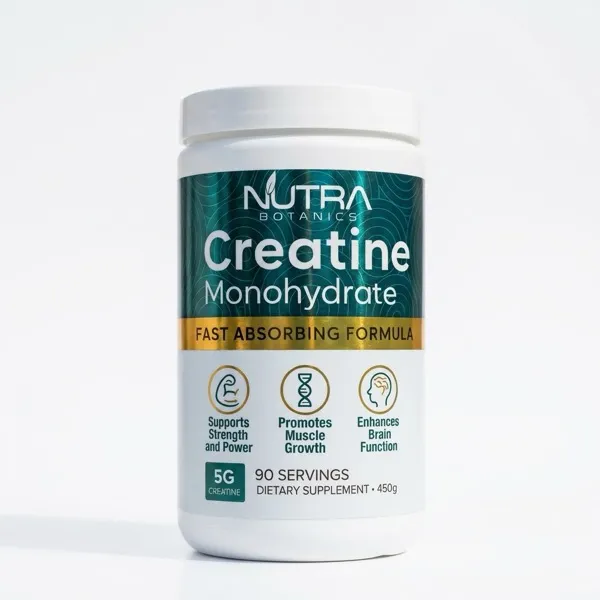
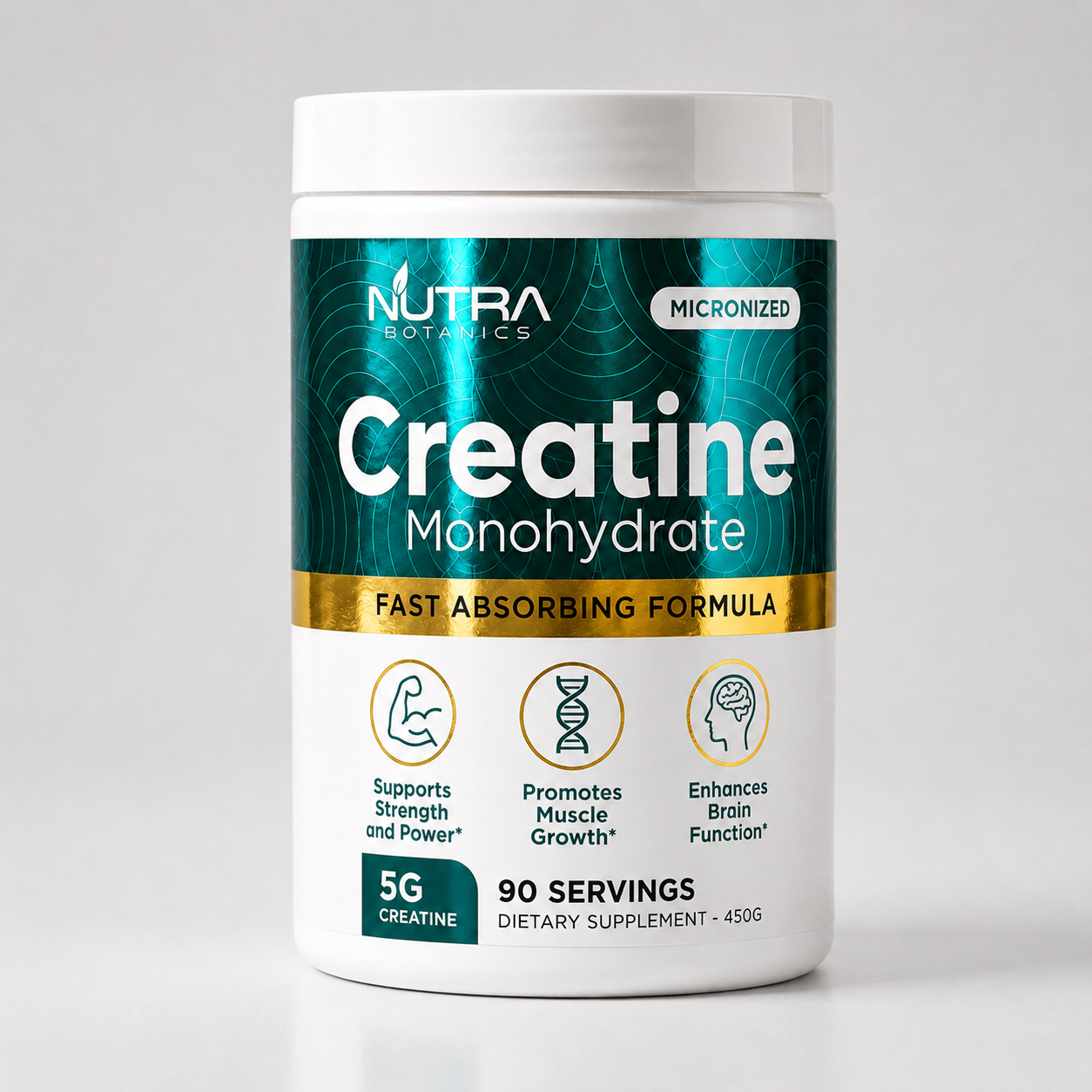
Micronized Creatine Monohydrate
5g pure creatine per serving · 60 servings
- Pure creatine monohydrate · no fillers or blends
- Micronized for easier mixing and absorption
- Unflavored · stacks cleanly with any routine
- GMP & NSF certified · PhD-supervised testing
See pricingFree shipping over $75
Shop Creatine Monohydrate
Explore Performance Support
Browse the Nutra Botanics performance range
- Creatine, BCAA, EAA, and pre-workout options
- Compare formats, dosing, and stack partners
- GMP & NSF certified · PhD-supervised testing
- Subscribe to save 20% on recurring shipments
Shop the rangeSubscribe & save 20%
Browse Performance