
Do testosterone boosters work? Some individual ingredients have produced testosterone changes in human studies, but a supplement’s name does not establish a predictable increase, better energy or greater muscle growth. The strongest buying decision starts with the measured outcome, the actual extract and your reason for considering the product.
Four checks before you choose
- Was the result measured in blood, saliva or a symptom questionnaire?
- Did the study test the same extract and serving as the bottle?
- Were participants nutrient deficient, healthy, training or seeking medical care?
- Does the evidence concern one ingredient or the complete formula?
What a testosterone booster actually is
These supplements combine nutrients, botanicals or other ingredients marketed for testosterone support. They are different from prescription testosterone. A product containing a studied ingredient is not automatically a studied finished product.
A 2024 systematic review examined 52 studies covering 27 proposed boosters and found that most did not increase serum total testosterone. The authors identified potentially helpful exceptions in specific populations, including some ashwagandha and tongkat ali research. This was not evidence that every marketed blend works or that all ingredients can be pooled into one expected percentage.
Zinc, vitamin D and magnesium: keep the context
Zinc: nutrient status matters
In Prasad’s 1996 study, restricting dietary zinc lowered serum testosterone in four young men. Supplementing nine older men with marginal zinc deficiency increased serum testosterone over six months. This supports the importance of zinc status; it does not establish that extra zinc raises testosterone in men already consuming enough. The measured serum result should not be presented as a universal increase in free testosterone.
Vitamin D: an important nutrient is not a guaranteed booster
A June 2026 systematic review and meta-analysis found no statistically clear testosterone effect across 11 comparisons in its primary analysis. Evidence certainty was low, and the review also found no clear changes in the other androgen measures it pooled. Vitamin D content is useful label information, but a shopper should not read it as a demonstrated hormone increase.
Magnesium: an exercise study, not a universal result
A 2011 magnesium study followed athletes and sedentary participants for four weeks and measured testosterone at rest and after exhaustion. Its exercise conditions and supplementation protocol matter. It does not establish a standard result for every men’s-health blend. Testo Boost does not list a separate magnesium nutrient amount; magnesium stearate in its other ingredients is not a labeled magnesium supplement serving.
Ashwagandha: distinguish the measurement from the benefit
The 2019 Lopresti crossover trial tested Shoden ashwagandha in overweight men aged 40 to 70 with mild fatigue. After an eight-week treatment period, salivary testosterone was 14.7% higher relative to placebo. That is a specific salivary-hormone finding, not a promised blood-test improvement.
The study found no significant between-group improvement in fatigue, vigor, sexual wellbeing or psychological wellbeing, and no significant cortisol difference. It therefore does not prove that the hormone finding delivered those benefits or resulted from lowered cortisol.
Check the extract: Shoden and its withanolide-glycoside specification are not interchangeable with every ashwagandha extract. Testo Boost lists 500 mg standardized to 5% withanolides. That label does not identify it as the trial’s Shoden preparation, so the trial percentage should not be presented as this product’s expected result.
Fenugreek, tongkat ali, tribulus and D-aspartic acid
A 2021 review of 32 herbal trials identified positive findings for some fenugreek and ashwagandha extracts. Only six included studies had a low risk of bias. Extract differences, small samples and varied study designs limit broad conclusions. A positive result from one branded fenugreek extract cannot establish an identical effect for another preparation.
The 2024 review considered tongkat ali possibly effective in selected populations. Tribulus and D-aspartic acid were not among its listed effective or possibly effective exceptions. That distinction concerns the testosterone endpoint; it is not a complete evaluation of every other proposed role.
Testo Boost lists fenugreek, tongkat ali and tribulus, but not D-aspartic acid. Compare those actual entries rather than treating a general ingredient article as a description of the bottle.
Three results that should not be confused
| What was measured | What it can tell you | What it does not prove |
|---|---|---|
| A hormone level | A change in the specific blood or saliva measurement used | Better strength, mood, energy or sexual function |
| A symptom score | A difference in the questionnaire or symptom assessed | A testosterone increase without a matching hormone measurement |
| One ingredient | A result for that preparation under the study conditions | The same result from a different extract or a combined product |
For your own comparison, match the outcome to the claim. A hormone result and a training result answer different questions. Look for the study’s participants, placebo comparison, duration and extract specification before using a headline number to judge a product.
Compare the current Testo Boost label
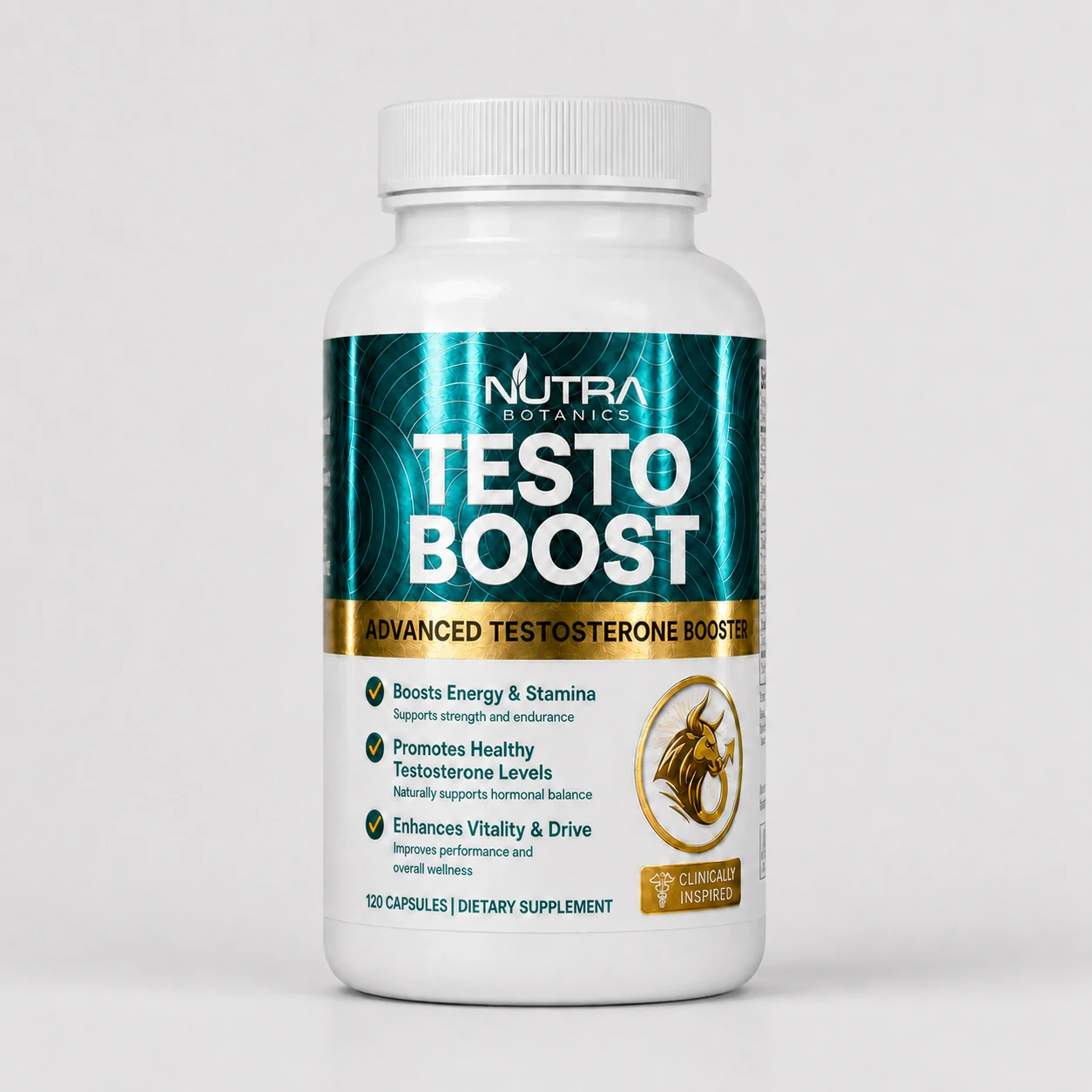
Testo Boost combines vitamins, minerals and botanicals in a capsule format. The current label gives a four-capsule serving, 120 capsules and 30 servings. Its one-time price is $42.99, about $1.43 per labeled serving before shipping or discounts. These are practical buying facts, not a claim about how much your testosterone will change.
| Label entry | Per full serving | Useful buying distinction |
|---|---|---|
| Zinc, as glycinate | 11 mg | Compare nutrient intake without assuming deficiency |
| Vitamin D, as cholecalciferol | 20 mcg | Nutrient content does not establish a hormone increase |
| Ashwagandha extract | 500 mg, 5% withanolides | Not identified as the Shoden preparation discussed above |
| Fenugreek extract | 500 mg, 60% saponins | Check the extract specification, not only the ingredient name |
| Capsule material | Gelatin | Relevant if you avoid animal-derived capsule shells |
See the complete Testo Boost formula for the remaining ingredients, directions, warnings and current purchase options. The manufacturer label lists two capsules in the morning and two before bed with water. Read your current bottle and do not increase servings to imitate a research protocol.
When testing and medical care come first
Persistent symptoms deserve evaluation rather than a self-diagnosis from a shopping page. The Endocrine Society’s patient guidance explains that a diagnosis of hypogonadism requires relevant symptoms and at least two low early-morning blood tests. Your clinician can investigate the cause and discuss appropriate care. A supplement is not a replacement for prescribed treatment.
Bring your full supplement and medicine list to that discussion. Sleep, nutrition, illnesses and medicines can affect the assessment. The NCCIH ashwagandha guidance notes medicine interactions, thyroid and autoimmune considerations, and reported liver injury. It does not establish long-term safety. “Natural” does not remove the need to check suitability.
Choose a formula with clear expectations
Use research to ask better buying questions: which ingredient, which extract, which measurement and which participants? Then compare the bottle’s complete serving, capsule material, directions and value. Testo Boost offers a defined nutrient-and-botanical formula; the sources reviewed here do not establish a clinical outcome for this finished product.
For more context, explore our testosterone biology guide or natural-support ingredient guide. Keep product selection and medical evaluation as separate decisions.
Related reading: Natural Testosterone Support: Studied Ingredients, Ashwagandha & Testosterone, Zinc & Testosterone, Signs of Low T.
These statements have not been evaluated by the Food and Drug Administration. This product is not intended to diagnose, treat, cure, or prevent any disease.
Frequently Asked Questions
Do natural testosterone boosters actually raise testosterone?
How much can a natural testosterone booster raise testosterone?
How long do testosterone boosters take to work in studies?
Which testosterone booster ingredients have human research?
Are natural testosterone boosters safe for long-term use?
Can testosterone boosters replace lifestyle changes or medical treatment?