
Key Takeaways
- Both forms deliver identical L-carnitine — the difference is convenience, absorption rate, and dose per serving
- Liquid is absorbed slightly faster and is easier to titrate the exact dose
- Capsules are more shelf-stable and travel better — liquid requires temperature control
- Effectiveness over 8–12 weeks is essentially equivalent — pick the format you will actually take daily
- Either form paired with a carbohydrate meal supports optimal muscle uptake
Related reading: L-Carnitine Benefits, L-Carnitine Dosage, L-Carnitine for Women, L-Carnitine and Exercise.
Absorption: The Key Difference
The most important difference between liquid and capsule L-carnitine is absorption speed. Research on carnitine pharmacokinetics shows that liquid formulations reach peak plasma concentrations in approximately 30–45 minutes after ingestion, while capsules and tablets require 2–3 hours to reach equivalent blood levels.
| Feature | Liquid L-Carnitine | L-Carnitine Capsules |
|---|---|---|
| Absorption Speed | ✓ ~15–30 minutes | ~45–60 minutes (capsule breakdown) |
| Bioavailability | High — direct mucosal absorption begins in mouth | Good, but delayed by digestion |
| Pre-Workout Timing | ✓ Ideal — peaks during exercise window | Must take 60+ min before training |
| Dose Flexibility | ✓ Easy to measure 500–3,000 mg precisely | Fixed capsule size (typically 500–1,000 mg) |
| Convenience | Requires measuring, refrigeration after opening | ✓ No measuring, stable at room temp |
| Portability | Bottle format, less travel-friendly | ✓ Easy to pack, no spill risk |
| Taste | Often flavored (sweet/tart) | Tasteless |
| Best For | Pre-workout fat burning, athletic performance | Daily maintenance, travel, consistent dosing |
For most metabolic support purposes, this difference is moderate — both forms will eventually deliver carnitine to your tissues. But for pre-workout use — where you want carnitine in circulation during and immediately after exercise — the speed advantage of liquid is significant.
Why Timing Matters for Pre-Workout Carnitine
L-carnitine uptake into muscle tissue is stimulated by exercise and by insulin. When you take liquid L-carnitine 30 minutes before training, carnitine is already in your bloodstream when exercise begins — maximizing muscle uptake and fatty acid transport when demand is highest.*
If you take capsules 30 minutes before training, carnitine is still largely in the GI tract, not yet absorbed. You would need to take capsules 2–3 hours before exercise to achieve the same effect — which is impractical for most people.
This is the primary reason many serious athletes and coaches prefer liquid L-carnitine for pre-workout use.
Bioavailability: Are They Equal?
In terms of total bioavailability — the percentage of the dose that ultimately gets absorbed — liquid and high-quality capsule forms of L-carnitine are roughly equivalent when measured over 24 hours. The difference is speed, not total absorption.
The caveat: capsule quality varies significantly. Cheap capsules with low-grade carnitine salts may have genuinely lower bioavailability. Liquid formulations from reputable brands with verified carnitine concentrations tend to be more consistent.
Dose Flexibility: Liquid Wins
Liquid L-carnitine is significantly easier to dose precisely. With capsules, you are locked into fixed dose increments — typically 500mg or 1,000mg per capsule. To get 1,500mg, you take 3 capsules of 500mg. To get 2,500mg, you take 5 capsules.
With liquid L-carnitine at 5,000mg per tablespoon, you can easily take half a tablespoon (2,500mg), a third of a tablespoon, or any increment in between — mixing it into water, a shake, or taking it straight. This flexibility is particularly useful when dialing in your personal optimal dose.
When Capsules Make More Sense
Capsules have practical advantages in some situations: they are portable, require no refrigeration after opening, and are odorless (some liquid L-carnitine formulas have a strong smell or taste at high concentrations).
For daily supplementation where timing is not critical — particularly for metabolic support throughout the day — capsules are a perfectly effective option. For people who travel frequently or need on-the-go convenience, capsules may be more practical.
The bottom line: if you want the fastest absorption and most flexibility, liquid wins. If you want convenience and portability, capsules are a reasonable alternative.
Frequently Asked Questions
How fast does liquid L-carnitine absorb?
Is 5,000mg per tablespoon too concentrated?
Does liquid L-carnitine need to be refrigerated?
Can I mix liquid L-carnitine with my pre-workout shake?
Are there L-carnitine capsules that absorb as fast as liquid?
How does the taste compare?
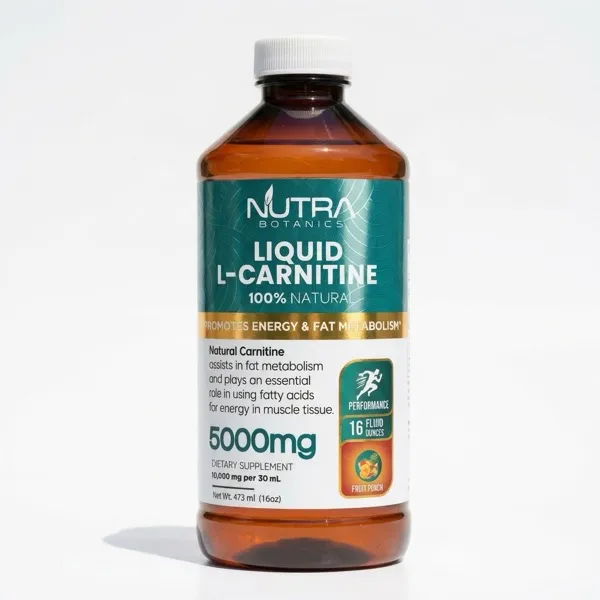
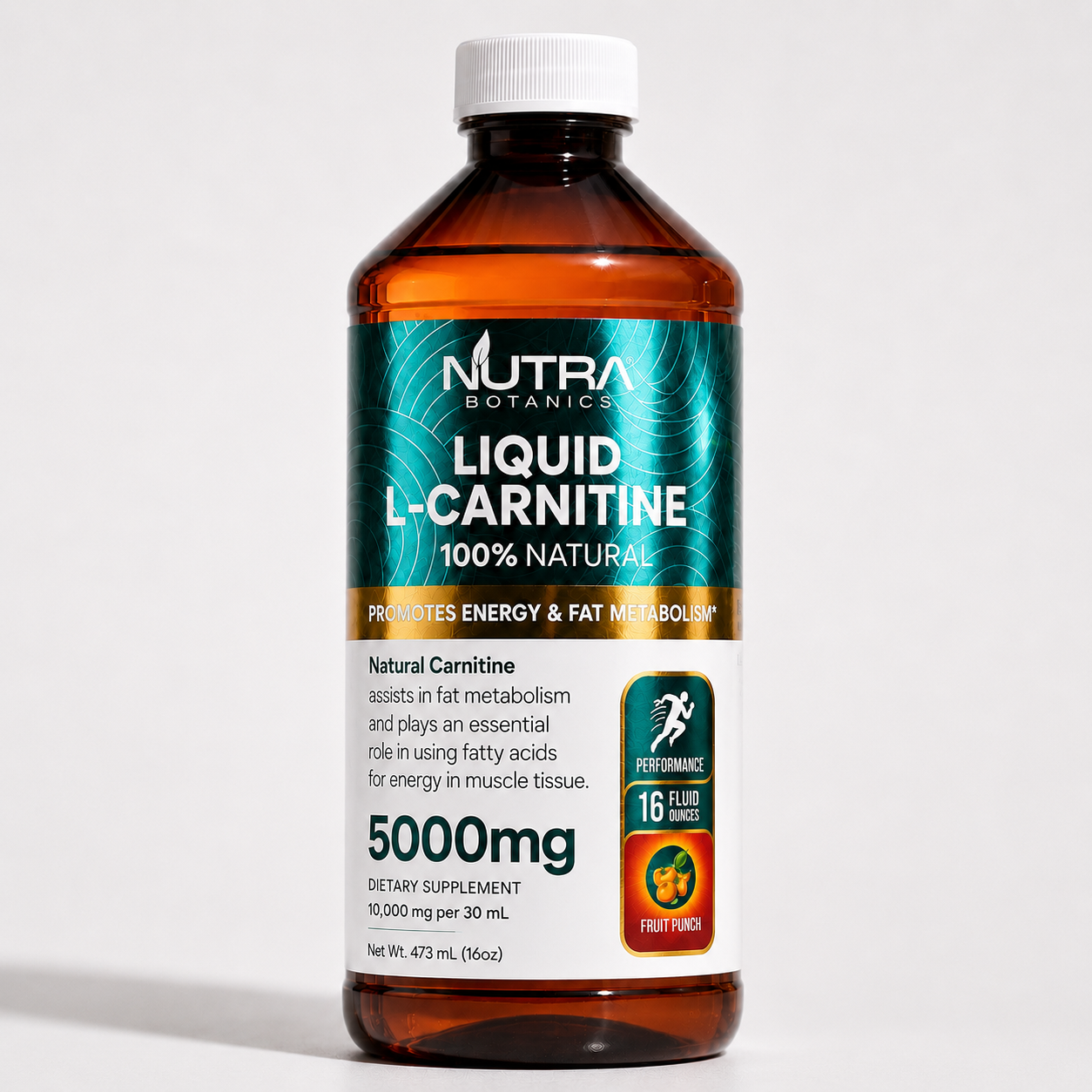
Liquid L-Carnitine 5000
5000mg per serving · 32 servings
- 5,000mg L-Carnitine per 1-tablespoon serving
- Supports fat transport into mitochondria for energy use
- Non-stimulant · pairs well with training days
- GMP & NSF certified · PhD-supervised testing
$22.95Free shipping over $75
Shop Liquid L-Carnitine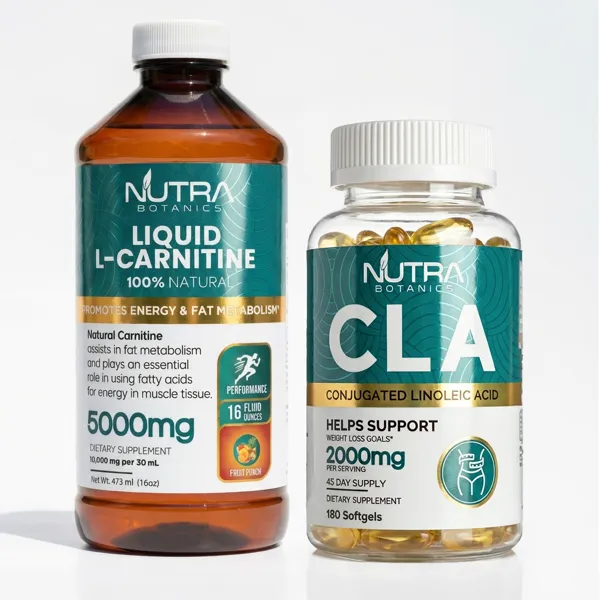
Explore Weight Management
Browse the Nutra Botanics weight management range
- CLA, L-carnitine, appetite support, and bundles
- Compare formats, dosing, and stack partners
- Find the right fit for your composition goals
- GMP & NSF certified · PhD-supervised testing
Shop the rangeSubscribe & save 20%
Browse Weight Management