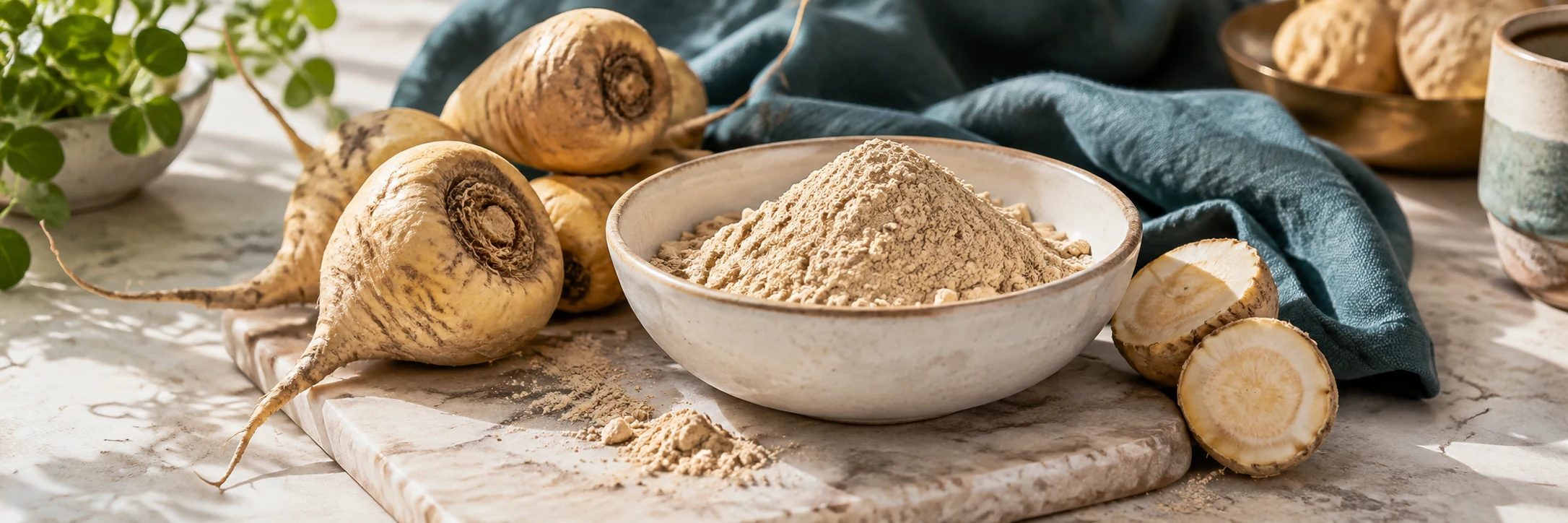
Looking at maca for libido, mood or energy? Start with the benefit you want, then check the preparation on the label. Small studies in women have explored sexual function and menopause-related mood symptoms. They do not establish maca as a way to balance every hormone, and a study of one preparation does not validate every maca supplement.
Your quick guide to maca
- Choose a specific goal. Sexual function, menopause symptoms and everyday fatigue are different questions.
- Read past the front label. Check the maca form, amount per daily serving and other ingredients.
- Keep the research in context. Who was studied and what was measured matter as much as the ingredient name.
What is maca root?
Maca, also called Lepidium meyenii, is a plant grown in the Andes and traditionally used as food. Today it appears in powders, capsules and botanical blends. Its name on a label tells you which ingredient is present, but not whether the product matches a preparation tested in people.
Terms such as "adaptogen" or "hormone balance" do not tell you what change to expect. A more useful question is whether the research matches your reason for considering maca. For example, a sexual-function study in women taking antidepressants answers a different question from a study of mood symptoms after menopause.
What the menopause research found
A small 2008 crossover trial followed 14 postmenopausal women. Each took 3.5 g of maca powder daily for six weeks and placebo for six weeks. Scores for psychological symptoms and sexual dysfunction improved during maca use; measured estrogen and other hormone levels did not change.
This is an early finding in a small group after menopause. It does not establish that maca raises estrogen, normalizes the hormone system or produces the same effects during perimenopause. It also does not justify promising relief from every symptom on a menopause checklist.
For hot flashes, changing periods or persistent sleep disruption, see our perimenopause guide and discuss the symptoms that affect your day. Choose care around that specific problem, rather than a broad promise to "reset" hormones.
Energy: focus on what you want to change
"More energy" can mean better concentration, fewer afternoon slumps or feeling able to exercise. Define the change you want before comparing products. The women's trials discussed here do not establish maca as a treatment for persistent fatigue or demonstrate a dependable daily energy boost.
If your tiredness is new or keeps interfering with your day, bring your sleep pattern, symptoms and medicine list to a healthcare appointment. A botanical label cannot tell you why you feel exhausted. For ordinary training and nutrition shopping, our formula comparison shows current ingredients and serving facts, so you can compare products for their actual purpose.
Maca and libido: who was studied?
A 2015 placebo-controlled trial tested 3 g of maca daily for 12 weeks in women with sexual difficulties associated with antidepressants. Forty-two women contributed to the analysis. Some results favored maca, particularly in a small postmenopausal subgroup, but the average changes on the two main sexual-function scales did not differ significantly from placebo.
That finding supports further research in a specific setting. It does not make maca a proven solution for low libido in every woman. Sexual comfort, desire and medication side effects deserve an individual discussion. Do not stop or change an antidepressant to try a supplement.
Mood and focus are separate questions
The 2008 study measured psychological symptoms in postmenopausal women. Its findings do not establish maca as a depression treatment or prove a memory or "brain fog" benefit. A change on one questionnaire cannot stand in for every mood and cognition claim.
Keep your goal concrete: "I want help with sleep disruption" is more useful than "I need to balance everything." Our hormonal balance guide explains how symptom timing can help you prepare for a conversation about the next step.
Compare maca labels before choosing
The research amounts above describe those trials, not a universal recommendation. A powder, extract and multi-ingredient blend cannot be compared by the front-label number alone. Use the daily directions and complete ingredient panel together.
| Label detail | Why it matters | What to check |
|---|---|---|
| Preparation | Root powder and extract are different preparations. | Read the full ingredient name and form, not just "maca." |
| Maca amount | A blend total may not reveal the individual maca amount. | Find the amount per serving. Note when it is not separately listed. |
| Daily directions | One capsule and one daily serving may be different. | Check how many servings the directions specify each day. |
| Other ingredients | A combination product includes more than maca. | Review every ingredient, warning and overlapping supplement. |
| Research match | The studied preparation, population and goal are specific. | Check that the cited trial actually concerns your reason for buying. |
A useful next step: write down one goal, the exact product name, its daily serving and the other supplements you use. Bring the label to your healthcare provider or pharmacist when deciding whether it fits your situation. The FDA's supplement advice for women explains why medicine interactions, amount and duration belong in that decision.
Sources and safety context
This guide links to the original 2008 trial abstract and the full 2015 trial, plus FDA shopping guidance. A small trial is not a guarantee for a finished supplement. We have not verified a Nutra Botanics maca-only product for this guide.
Pregnancy, breastfeeding, hormone-sensitive conditions and prescription medicines require individual advice before using maca. The FDA advises against using supplements in place of prescribed medicines. A product described as natural or hormone-free is not automatically suitable for you.
Common questions about maca
What does maca root do for women?
How long does maca take to work?
Is maca root safe for women with hormone-sensitive conditions?
What is the best maca dose?
Can maca help with low libido?
Does maca help with menopausal symptoms?

Explore the formulas
Explore current ingredients, directions and Supplement Facts before choosing your formula.
Browse all formulas