Perimenopause support works best when it starts with the symptom disrupting your day. Trouble sleeping, hot flashes and changing periods need different decisions. Build a practical daily routine, compare supplements for a specific nutritional purpose, and ask about established treatments when symptoms keep getting in the way.
Your next step, made clearer
- Pick one priority. Record what happens, how often and how it affects your day.
- Separate comfort from treatment. A comfortable sleep routine is useful, but it is not the same as treating persistent night sweats.
- Read beyond "hormone balance." Look for a named ingredient, amount and purpose, rather than an all-in-one symptom promise.
Related reading: Hormonal balance for women, Supplements for women over 40, PMS and menopause guide, Maca label guide.
What is perimenopause?
Perimenopause is the transition before menopause. Period patterns can change, and some women notice hot flashes, sleep problems or mood changes. Menopause is reached after a full year without a period or spotting. The National Institute on Aging's overview explains the transition and why experiences differ.
A changed cycle is a useful detail to record, not a diagnosis on its own. Note the dates, bleeding pattern and symptoms you want help with. Keep this record alongside your medicine and supplement list so the conversation is about your actual experience.
Do not assume every new symptom comes from menopause. The Office on Women's Health advises evaluation of missed periods and bleeding after menopause. Bring unexpected bleeding or persistent changes to your healthcare provider.
Hot flashes: compare the right options
For frequent hot flashes or night sweats, ask which hormonal and nonhormonal treatments fit your health history. The Menopause Society's 2023 position statement identifies effective prescription options and approaches such as cognitive behavioral therapy and clinical hypnosis. It does not recommend supplements or herbal remedies as hot-flash treatments.
That distinction matters when shopping. A product marketed for stress, sleep or "balance" is not automatically a treatment for hot flashes. Do not use a percentage from one small study as a prediction of how many night sweats you will have.
Black cohosh is often promoted for menopause. However, the 2012 Cochrane review did not find a significant advantage over placebo for hot-flash frequency in the pooled trials. Its conclusion was insufficient evidence, not a proven percentage reduction. This guide therefore does not rank it as the strongest botanical choice.
Sleep: identify what keeps waking you
Start with the pattern: trouble falling asleep, repeated waking or waking earlier than you want. Record night sweats alongside the sleep problem instead of treating them as separate shopping categories.
The NIA sleep guide recommends a regular schedule, a comfortable bedroom and avoiding late-day caffeine. It also explains cognitive behavioral therapy for insomnia when routine changes do not help enough.
Try one manageable change, such as a consistent wake time, and note how the next day feels. If sleep remains poor, discuss both the waking pattern and possible causes. A magnesium or botanical amount on a label does not tell you why you are awake or replace that assessment.
Mood and focus: describe the change
Irritability, low mood and concentration trouble are different experiences. The NIA overview includes mood and concentration changes among possible transition symptoms. Choose a concrete description, such as "I lose focus after a poor night's sleep," rather than assuming every change needs the same supplement.
Write down when it began, what makes it harder and whether it affects work, relationships or everyday tasks. Persistent or distressing symptoms deserve a care discussion. Do not change a prescribed medicine to try a botanical.
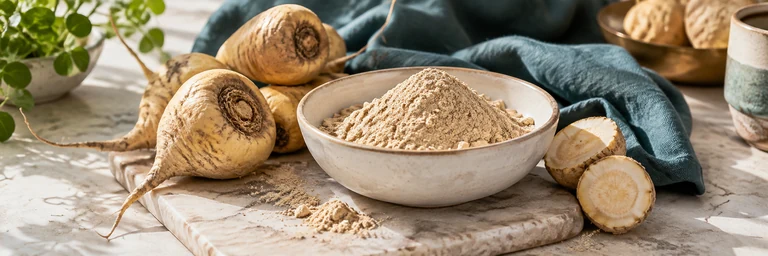
Our hormonal balance guide helps organize symptoms and supplement questions. If you are considering maca, the label guide distinguishes the preparations and women actually studied from broader mood and hormone claims.
Compare supplements and symptom care
Phytoestrogens are plant substances with similarities to estrogen; soy and red clover contain examples. That does not make a capsule equivalent to hormone therapy. NCCIH's menopause overview describes inconsistent symptom results and the need to review safety and medicine interactions.
Use the comparison below to decide what question to ask next. These are different purposes, not competing scores on one symptom-relief scale.
| Your priority | Useful context | Your next step |
|---|---|---|
| Hot flashes and night sweats | Established hormonal and nonhormonal options are different from herbal supplements. | Ask which treatment fits your symptoms and health history. |
| Repeated waking | Sleep habits, night sweats and persistent insomnia need different attention. | Keep a short sleep record and ask about insomnia care if changes are not enough. |
| Bone nutrition | Calcium helps maintain bones; vitamin D helps your body absorb calcium. | Review food intake and any identified nutritional gap before adding another supplement. |
| A botanical blend | The full label matters more than a broad "balance" claim. | Check individual amounts, warnings and overlap with your medicines or other products. |
| Changing bleeding | A missed period is not proof of perimenopause. Bleeding after menopause needs assessment. | Record the change and contact your healthcare provider. |
Build a routine with a clear purpose
Keep ordinary nutrition and symptom treatment distinct. Calcium helps maintain strong bones, and vitamin D helps calcium absorption, as explained in the NIH calcium guide. Adding a supplement should answer a real nutritional need, not promise to stop every menopause symptom.
Start with one repeatable habit: plan calcium-containing foods, reserve time for regular movement or keep a consistent bedtime routine. These are ways to look after daily health. They should not be sold as guaranteed hot-flash treatments or as proof that your hormones have changed.
Before buying, write down the product's exact purpose, daily serving and ingredients. Compare overlapping products so you do not add the same nutrient twice without noticing. Our over-40 supplement guide gives more shopping context. When looking at Nutra Botanics formulas, use their current ingredient panels and directions, rather than treating the collection as a menopause treatment.
Sources and safety context
This guide uses federal consumer guidance, the 2023 Menopause Society statement and the original Cochrane review linked beside the relevant explanations. We removed percentages that combined unrelated study outcomes and ratings with no verified basis.
Review a full supplement label with your clinician or pharmacist if you take medicines, have a hormone-sensitive condition or liver disease, or could be pregnant. Natural does not mean suitable for everyone. The NCCIH overview explains the limits of long-term safety evidence and potential interactions.
Common questions about perimenopause
What are the first signs of perimenopause?
What supplements help with perimenopause?
Does maca help with hot flashes?
How long does perimenopause last?
Is it safe to take supplements during perimenopause?
Can lifestyle changes reduce perimenopause symptoms?

Explore the formulas
Explore current ingredients, directions and Supplement Facts before choosing your formula.
Browse all formulas