
Key Takeaways
- Maca is an adaptogenic root from Peru used for libido, energy, and mood — with a distinct phytochemistry from herbal hormone modulators
- Research shows the most consistent benefits for sexual function, energy, and perimenopausal symptoms
- Maca does not contain plant hormones — it works as an adaptogen, not a phytoestrogen
- 1.5–3g per day of organic maca root is the typical research-supported dose
- Red, black, and yellow maca have subtly different profiles; yellow is the most widely studied default
Related reading: Hormonal Balance for Women, Perimenopause Support, Best Supplements for Women Over 40, Perimenopause, PMS & Menopause Guide.
What Is Maca and How Does It Work?
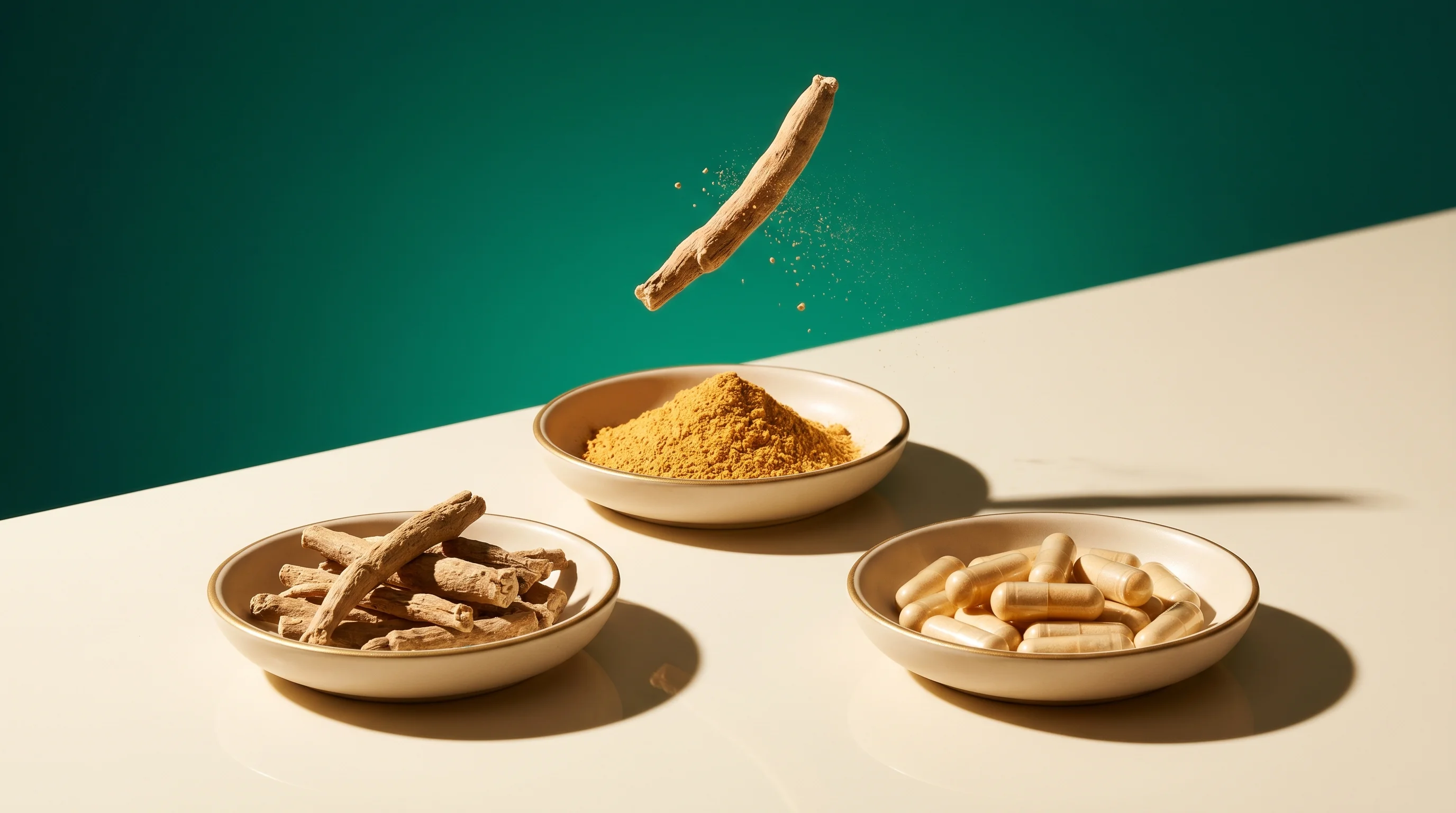
Maca is a root vegetable native to the Peruvian Andes, used for thousands of years as both food and medicine. It's an adaptogen — a plant that helps the body normalize physiological stress responses. Its active compounds include glucosinolates, macamides, and macaenes — unique to maca and thought to be responsible for its endocrine-modulating effects.
Crucially, maca doesn't work like estrogen. It contains no phytoestrogens and doesn't directly bind estrogen receptors. Research suggests it acts at the level of the hypothalamus and pituitary gland — the master controllers of the endocrine system — to normalize the signals that regulate hormone production throughout the body. This mechanism makes it useful across different hormonal contexts, including both high and low estrogen states.
Clinical Evidence for Perimenopausal Women
Four randomized controlled trials have specifically studied maca in perimenopausal and postmenopausal women. The most rigorous, published in Menopause (2008), found that maca significantly reduced the number of hot flashes and night sweats, improved mood scores, and reduced scores on the Greene Climacteric Scale compared to placebo after 3.5 months.
A 2006 pilot RCT found maca supplementation increased estradiol and FSH levels in postmenopausal women and reduced symptoms including hot flashes, vaginal dryness, sleep disruption, and mood instability. Importantly, the hormonal changes were normalizing — the study noted no unsafe estrogen elevations. This pattern supports maca's adaptogenic action rather than a direct estrogenic effect.
Energy and Fatigue
Maca has been used traditionally as an energy food for Andean populations doing high-altitude physical labor — and modern research supports this effect. A crossover trial of cyclists found that 14 days of maca supplementation improved 40km time trial performance. More relevant to most women: multiple clinical reports and a systematic review note consistent improvements in perceived energy and reductions in fatigue with maca use.
The mechanism isn't fully understood but likely involves improved mitochondrial efficiency, iron bioavailability (maca is iron-rich), and adrenal support. For women experiencing perimenopausal fatigue — one of the most common and debilitating symptoms — maca is among the most practical interventions available.
Libido and Sexual Function
Maca's effects on libido are one of its most replicated findings in clinical research. A double-blind RCT published in CNS Neuroscience & Therapeutics found that maca significantly improved sexual dysfunction in women on SSRIs — a population with particularly difficult-to-treat libido issues. Another RCT in healthy postmenopausal women found improvements in sexual dysfunction scores compared to placebo.
The libido benefit appears to be independent of hormone levels and sex-specific — meaning it works in both high and low estrogen contexts. The mechanism may involve macamide compounds that act on the endocannabinoid system and dopamine pathways, supporting motivation and pleasure signaling. Onset in trials is typically 4–6 weeks.
Onset in trials is typically 4–6 weeks.
Mood and Cognitive Function
Anxiety, mood instability, and brain fog are among the most disruptive perimenopausal symptoms — and maca addresses all three in clinical research. The perimenopausal RCTs mentioned above all include mood as an outcome measure, and all show significant improvements. One study specifically found reductions in both anxiety and depression scores over 6 weeks.
For cognitive effects, maca's most relevant mechanism is likely its effect on dopamine and norepinephrine pathways, which support executive function, motivation, and mental clarity. Black maca specifically has been shown in animal models to reverse scopolamine-induced memory impairment — not definitive in humans, but suggestive of a cognitive support effect worth investigating.
How to Take Maca: Forms and Dosing
Maca comes in gelatinized powder (cooked, easier to digest), raw powder, and standardized extract forms. Gelatinized maca is the most bioavailable and easiest on digestion — it's what most clinical trials use. Clinical trial doses range from 1.5–3.5g/day, with most effective doses around 2–3g.
Maca can be added to smoothies, oatmeal, or taken in capsule form. It has a mild, slightly earthy, malt-like flavor that many people find pleasant. It's generally well tolerated with no significant side effects reported in trials. Some people experience mild digestive adjustment when starting — beginning with 1g/day and increasing over 1–2 weeks minimizes this.
Frequently Asked Questions
What does maca root do for women?
How long does maca take to work?
Is maca root safe for women with hormone-sensitive conditions?
What is the best maca dose?
Can maca help with low libido?
Does maca help with menopausal symptoms?

Browse Our Women's Wellness Products
Our women-focused wellness range, filtered by topic
- Filtered view of the Nutra Botanics catalog by topic area
Browse the categoryFree shipping over $75
Shop the Category
Explore the Full Catalog
See everything from Nutra Botanics
- Compare products, ingredients, and dosing across the full line
Shop the rangeSubscribe & save 20%
Shop All Products