
Key Takeaways
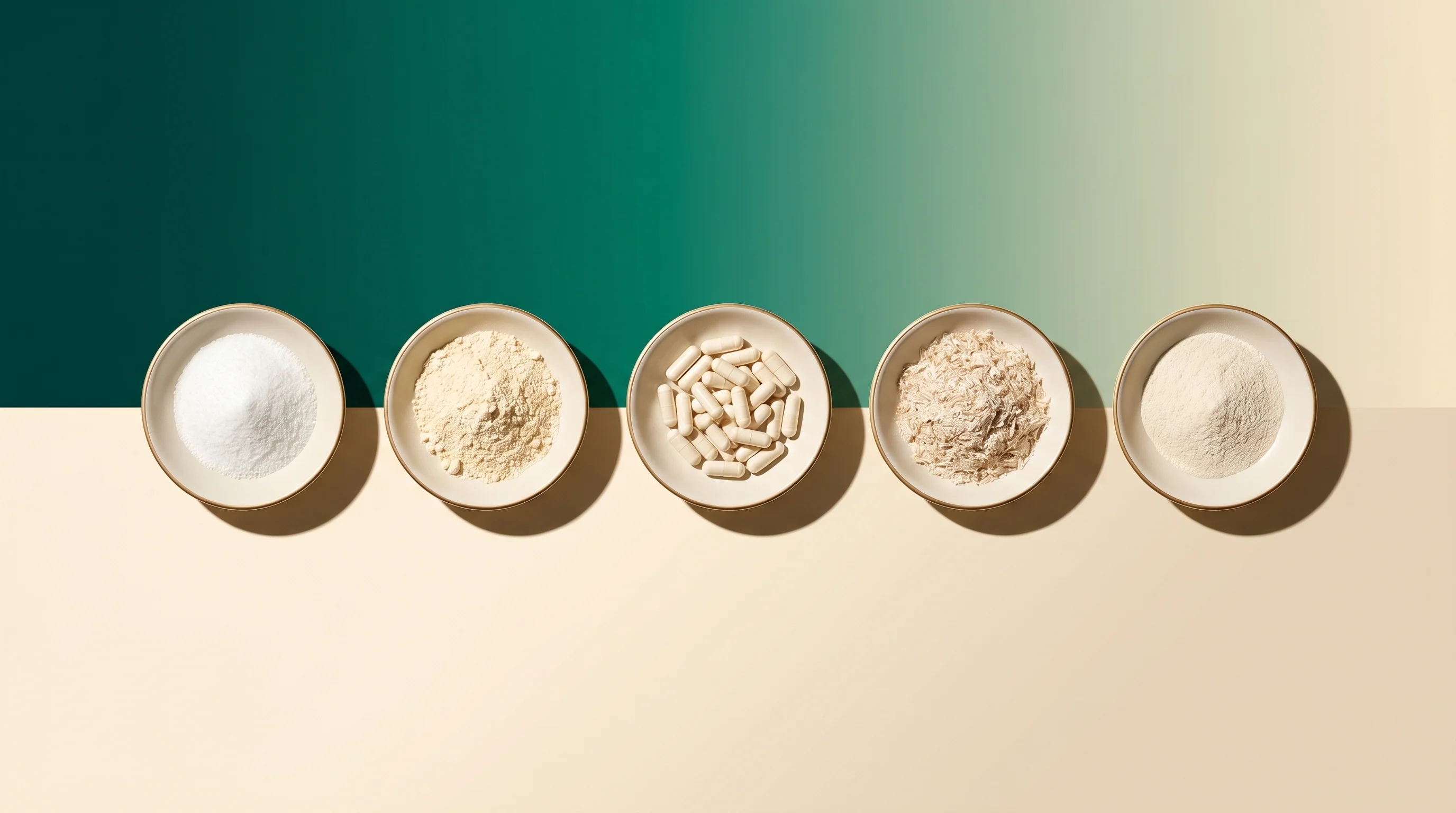
- The evidence-based foundation stack for beginners is five supplements: creatine, protein, omega-3 (EPA+DHA), vitamin D3+K2, and magnesium — in that order of effect-per-dollar
- Creatine monohydrate (3–5g/day, no loading) is the single most-researched performance supplement and the only one with measurable strength gains in 2–4 weeks
- Protein intake of 1.6–2.2g per kg bodyweight is the target — powder is convenient, not mandatory
- Choose products with third-party testing (NSF, Informed Sport, USP) and transparent label dosing — proprietary blends hide sub-therapeutic doses
- Add one supplement at a time, give it 4–8 weeks, then assess — stacking everything at once makes it impossible to know what is working
- Once the foundation is in place, layer in goal-specific stacks for muscle building, women’s hormonal support, weight management, or energy
What Are Supplements, Exactly?
Dietary supplements are products designed to add nutritional value to your diet. They come in many forms, including capsules, powders, liquids, and gummies, and they typically contain vitamins, minerals, amino acids, herbs, or other beneficial compounds. Supplements are not meant to replace a balanced diet. Instead, they fill in nutritional gaps that even the healthiest eaters can have.
Modern farming practices, food processing, and busy lifestyles mean that many people do not get optimal amounts of key nutrients from food alone. That is where targeted supplementation comes in. When chosen wisely, supplements can support your energy levels, recovery, immune function, and overall well-being.
Who Needs Supplements?
The short answer: most people can benefit from at least one or two well-chosen supplements. But certain groups stand to gain even more:
- Active individuals and athletes who have higher nutrient demands due to intense training and recovery needs.
- People over 30 whose natural collagen production declines, and who may need additional joint and bone support.
- Those with dietary restrictions such as vegans, vegetarians, or people with food allergies who may miss out on certain nutrients.
- Busy professionals who struggle to consistently eat nutrient-dense whole foods throughout the day.
- Anyone recovering from illness or injury who may need extra nutritional support for healing.
The 5-Supplement Foundation Stack
If you’re new to supplements, these five categories deliver more measurable benefit-per-dollar than any specialty product on the market. They’re ordered by speed of effect and breadth of evidence — not by what we sell. Of these five, Nutra Botanics manufactures one (creatine); for the others we recommend buying from any third-party-tested brand using the criteria in the selection section below.
1. Creatine Monohydrate — The Single Best Place to Start
Creatine monohydrate is the most-researched performance supplement in existence, with over 700 published studies and effects measurable within 2–4 weeks. It works by replenishing intracellular ATP — your muscle cells’ primary energy currency — which lets you train harder by 1–2 reps per set. Over weeks, that small training-volume increase compounds into meaningful strength and lean mass gains. Newer research also shows benefits for cognitive performance under stress, perimenopausal symptoms, and healthy aging.
Dose: 3–5g/day, taken any time, with or without food. No loading phase needed — the loading protocol just gets you to saturation 2–3 weeks faster but reaches the same end point. Form: stick to monohydrate; the “advanced” forms (HCl, ethyl ester, buffered) cost more and have not outperformed monohydrate in head-to-head trials. Who skips it: people with kidney disease should consult a physician first.
For full dosing, timing, and stacking detail, see our creatine for beginners guide or shop Nutra Botanics Micronized Creatine Monohydrate — micronized for faster mixing and absorption, made in a GMP & NSF certified facility with PhD-supervised in-house testing, single-ingredient.
Creatine is the only beginner supplement with measurable strength effects in 2–4 weeks — and the cheapest per gram of any well-researched ingredient. If you take only one supplement, take this one.
2. Protein — Whey, Plant, or Collagen
Protein is the structural raw material for muscle, connective tissue, enzymes, and hormones. The total daily target is what matters: 1.6–2.2g per kg bodyweight (roughly 0.7–1g per pound). For a 70kg adult that’s 110–155g daily — achievable from whole food alone if every meal centers on a protein source, but a powder makes hitting the target trivially easy on busy days.
Whey protein is the gold-standard for muscle protein synthesis — fast-digesting, complete amino acid profile, ~25g protein per scoop. Plant proteins (pea, soy, blends) work equally well for total daily intake; pure single-source plant proteins (other than soy) are slightly under-leucine, so blended formulas are preferable. Collagen is the exception: it’s technically a protein but is incomplete (low in tryptophan), so it shouldn’t count toward your daily protein target — it’s a connective-tissue support tool, not a muscle-protein source.
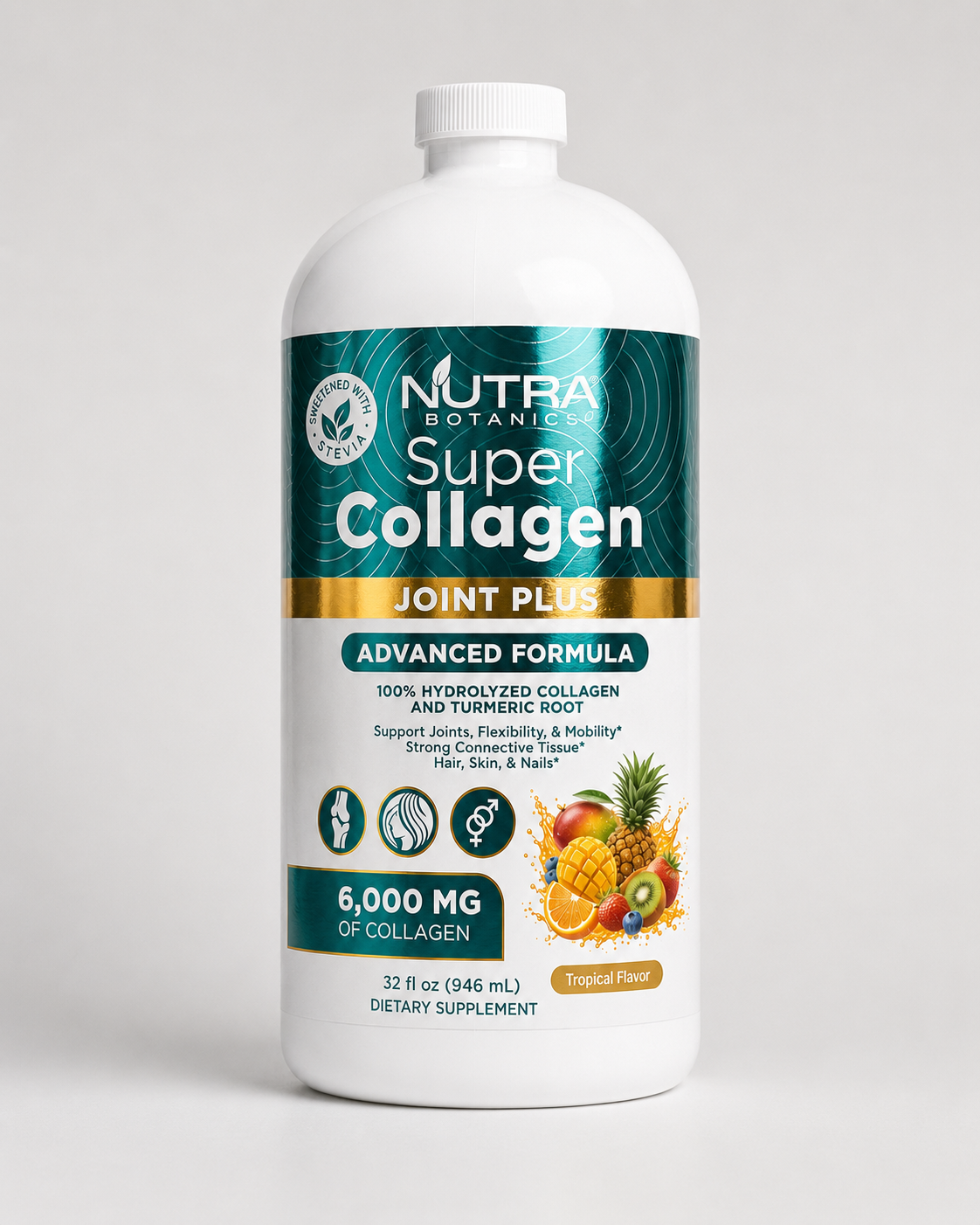
Nutra Botanics doesn’t currently sell a whey or plant protein. We do offer specialty connective-tissue support: Super Collagen Joint Plus for joint comfort and skin elasticity. For a daily protein powder, choose any third-party-tested brand (Informed Sport or NSF Certified for Sport) with a single-ingredient label.
3. Omega-3 (EPA + DHA) — The Most Common Modern Deficit
Omega-3 fatty acids EPA and DHA are essential — meaning your body cannot synthesize them — and the typical Western diet supplies a fraction of the optimal amount. They support cardiovascular function, brain health, healthy inflammatory response, and joint comfort. The strongest evidence is for combined EPA+DHA at 1,000–2,000mg total per day (label combined dose, not total fish oil).
Form: triglyceride or re-esterified triglyceride forms absorb better than the cheaper ethyl ester forms. Source: wild fish oil (anchovy, sardine) for cost-efficiency, or algal oil for vegan/sustainable sourcing. Quality: look for IFOS 5-star certification or third-party verification of low oxidation (TOTOX < 26) — rancid fish oil is the most common quality failure in this category.
Nutra Botanics doesn’t currently sell omega-3. Choose a brand with IFOS or USP certification and check that the EPA+DHA total (not the “fish oil” total) matches the dose you’re paying for.
4. Vitamin D3 + K2 — Foundational and Often Deficient
Vitamin D acts more like a hormone than a vitamin and supports bone density, immune function, mood, and testosterone synthesis. Roughly 40% of US adults are clinically deficient (serum 25(OH)D below 20 ng/mL), and another 30% are insufficient (20–30 ng/mL). The standard daily dose is 1,000–4,000 IU vitamin D3 (cholecalciferol — the form your body actually uses), with the higher end indicated when starting from a deficient baseline.
Pair D3 with vitamin K2 (MK-7 form, 100–200mcg) when supplementing above 2,000 IU. K2 directs the calcium your D3 helps absorb into bones rather than into arterial walls — an important safety consideration for sustained higher-dose D3 use. Test first if you can: a serum 25(OH)D test costs ~$30 and tells you exactly where you’re starting from. Optimal range is 40–60 ng/mL.
Nutra Botanics doesn’t currently sell D3+K2. Any USP-verified D3/K2 combination from a transparent-label brand works.
5. Magnesium — The Stress, Sleep, and Recovery Mineral
Magnesium participates in over 300 enzymatic reactions and is involved in muscle relaxation, nerve transmission, sleep architecture, and stress response. The RDA is 310–420mg/day depending on age and sex, but typical US intake falls 100–200mg short. Most people notice the effects of magnesium supplementation within days — better sleep onset, less muscle cramping, calmer baseline mood.
Form matters more here than for any other supplement on this list:
- Glycinate — calming, sleep-supporting, well-tolerated. Best for evening use and for people sensitive to GI side effects.
- Citrate — well-absorbed, mildly laxative at higher doses. Good if constipation is a co-issue.
- Threonate — the only form that meaningfully crosses the blood-brain barrier; researched for cognitive support. More expensive.
- Avoid: magnesium oxide — cheap and poorly absorbed (~4% bioavailability).
Nutra Botanics doesn’t currently sell magnesium. Look for a single-form product (glycinate or citrate are the best general-use picks) at 200–400mg elemental magnesium per dose — the elemental amount, not the compound weight, is what counts.
Beyond the Foundation: Stacks by Goal
Once the five-supplement foundation is in place, the next layer depends on what you’re actually trying to do. Below are the three goal-based stacks we recommend most often — each one builds on the foundation rather than replacing it.
Active Beginners (Strength, Recovery, Lean Mass)
If your goal is to add muscle and improve performance, the foundation already covers most of what you need (especially creatine and protein). The two additions that earn their place are EAA + BCAA capsules for intra-workout amino acid availability during long or fasted training sessions, and L-Carnitine Liquid for fat oxidation and recovery between sessions. Skip the pre-workout blends until you’ve nailed creatine + protein + sleep.
Women in Midlife (Hormonal Balance, Energy, Joint Comfort)
Perimenopausal and post-menopausal women have specific needs that the basic foundation underserves. Creatine becomes even more important — estrogen decline reduces muscle creatine stores by 70–80%, making supplementation correspondingly more impactful. Layer in Super Collagen Joint Plus for connective tissue and skin, and prioritize the magnesium glycinate and vitamin D3+K2 in the foundation stack. See our women’s health complete guide for the full protocol.
Weight Management (Appetite Control, Fat Oxidation)
Sustainable weight loss is overwhelmingly a behavior-and-nutrition problem, not a supplement problem — but a small set of supplements can meaningfully reduce friction. Appetrol uses glucomannan and 5-HTP for appetite suppression and craving control. CLA Softgels support body composition during a sustained caloric deficit. Metabolism Booster Bundle combines L-carnitine + CLA for stack convenience. None of these replace a caloric deficit; they make adherence easier. Read our natural appetite suppressants guide first.
How to Choose Quality Supplements
Not all supplements are created equal. Here are the key factors to look for when evaluating a supplement brand:
- Independent verification: Look for brands that publish raw-material COAs, run in-house quality testing under qualified supervision, or hold third-party certifications like NSF or Informed Choice. The goal is independent confirmation that what's on the label is actually in the bottle.
- GMP certification: Good Manufacturing Practice certification means the product was made in a facility that meets strict quality and safety standards.
- Transparent labeling: Avoid proprietary blends that hide individual ingredient doses. You should know exactly how much of each ingredient you are getting.
- Clinically studied doses: The best supplements use ingredient amounts that match what was shown to be effective in peer-reviewed research, not underdosed token amounts.
- Clean formulations: Look for products free from unnecessary fillers, artificial colors, and questionable additives.
At Nutra Botanics, every product meets all five of these criteria. Our formulas are developed by an experienced formulation team, verified through PhD-supervised in-house testing, and manufactured in a GMP and NSF certified facility.
Getting Started: Practical Tips
Start with one or two supplements rather than overhauling everything at once. This allows you to assess how each product affects your body and energy levels. Keep a simple journal to track how you feel over the first two to four weeks. Consistency is key: supplements work best when taken regularly as part of your daily routine.
Also, talk to your healthcare provider before starting any new supplement regimen, especially if you are taking medications or managing a health condition.
Ready to Start Your Supplement Journey?
Browse our full range of premium supplements made in a GMP & NSF certified facility and find the right products for your goals.
Shop All SupplementsPremium formulas. PhD-supervised testing. 90-day money-back guarantee.
Shop All ProductsFrequently Asked Questions
What supplements should a beginner start with?
Should beginners take creatine or protein first?
How long before I see results from a new supplement?
Can I take multiple supplements at the same time?
Are supplements safe for daily, long-term use?
How do I know if a supplement brand is trustworthy?
Look for third-party testing (such as NSF or Informed Sport certification), GMP certification for the manufacturing facility, transparent labeling that discloses exact ingredient doses rather than proprietary blends, and clinically studied doses that match peer-reviewed research.
Proprietary blends often hide under-dosed ingredients, which is why transparent dosing matters. Clean formulations without unnecessary fillers or artificial additives are another practical filter when comparing brands.
Do I actually need supplements if I eat a balanced diet?
Supplements are not a substitute for a balanced diet, but research shows that modern farming practices, food processing, and busy lifestyles leave many people short on key nutrients even when they eat reasonably well, and targeted supplementation can fill these gaps.
The most commonly under-consumed nutrients include vitamin D, omega-3 fatty acids, and magnesium. Whole foods should remain the primary source; supplements are a practical backup for nutrients that are hard to get consistently.

Super Collagen Joint Plus
A solid first-supplement pick · 60 capsules
- Hydrolyzed collagen types I, II, and III
- Glucosamine, MSM, and hyaluronic acid built in
- Simple daily capsule · easy to layer into any routine
- GMP & NSF certified · PhD-supervised testing
See pricingFree shipping over $75
Shop Collagen Joint Plus
Explore the Full Catalog
See everything from Nutra Botanics
- Compare products, ingredients, and dosing across the full line
- GMP & NSF certified · PhD-supervised testing
- Subscribe to save 20% on recurring shipments
- Clean formulations · transparent labels
Shop the rangeSubscribe & save 20%
Shop All Products