
Key Takeaways
- Creatine regenerates ATP in neurons, supporting mental performance under sleep loss, high cognitive demand, and stress
- Short-term memory and reasoning tasks show the most consistent improvement in peer-reviewed research
- Vegetarians and vegans tend to show the largest cognitive response (they have lower baseline creatine stores)
- 5g per day for 4+ weeks is the dosing pattern used in most cognitive-benefit studies
- Safety data across 500+ trials and multiple decades is excellent — one of the best-studied supplements available
Related reading: Creatine for Women, Creatine for Beginners, How to Take Creatine, When to Take Creatine.
Creatine Is Not Just a Muscle Supplement
Most people associate creatine with gym performance — explosive lifts, faster sprints, better recovery. But that framing undersells one of creatine's most interesting roles: its function in the brain.
Your brain is one of the most energy-demanding organs in your body, consuming roughly 20% of your total energy despite being only about 2% of your body weight. Like muscle cells, neurons rely on ATP as their primary energy currency. And like muscle, brain tissue uses creatine to rapidly regenerate ATP during periods of high demand.
Brain creatine stores can be increased through supplementation, and this increase has measurable effects on cognitive performance — particularly in populations with lower baseline stores.
How Creatine Works in the Brain
The phosphocreatine system in the brain works the same way as in muscle: when ATP is rapidly consumed during high neural activity, phosphocreatine donates its phosphate group to ADP to regenerate ATP almost instantaneously. This energy buffer allows neurons to sustain activity during cognitive spikes.
When brain creatine stores are low — as they are in vegetarians, vegans, aging adults, or during periods of caloric restriction — this buffer capacity is reduced. The brain can still function, but its ability to maintain peak performance under demanding cognitive conditions is compromised.
Supplementation increases brain creatine concentration measurably. Studies using 31P-MRS (magnetic resonance spectroscopy) have confirmed that oral creatine supplementation does raise brain phosphocreatine levels — the critical finding that validates the mechanism.
What the Research Shows
Research Snapshot
Creatine's Measured Cognitive Effects
Average improvement vs. placebo across controlled cognitive trials — effect size scales with baseline creatine deficit.
*Pooled across 2003–2021 RCTs. Individual results vary. Not medical advice.
Who Sees the Biggest Cognitive Benefit
What Creatine Doesn't Do for the Brain
It's important to be precise about what the research does and doesn't show:
- It's not a stimulant. Creatine doesn't produce the acute alertness or focus of caffeine. The effects are subtler — supporting the brain's energy capacity rather than directly stimulating it.
- Effects on omnivores with high dietary creatine are smaller. If you regularly eat large amounts of red meat and fish, your baseline brain creatine is already reasonably high and supplementation produces less dramatic change.
- Not a treatment for neurological conditions. While creatine is being investigated for certain neurological contexts, no FDA-evaluated claims for treating any brain disease or disorder are supported by current evidence.
Dosage for Cognitive Benefits
The good news: the dosage for cognitive benefits appears to be the same as for physical performance. Most cognitive research uses 3-5g of creatine monohydrate per day.
Some older studies used higher doses (up to 20g/day) in the loading phase, which did produce faster effects, but maintenance studies using 3-5g/day show similar sustained benefits over weeks of consistent supplementation.
There's no specific timing requirement for cognitive effects — unlike with exercise performance, where pre- or post-workout timing matters slightly. Just take 3-5g daily at a consistent time.
Frequently Asked Questions
Does creatine improve cognitive function?
How does creatine affect the brain?
Who benefits most from creatine for cognitive function?
How long does it take to see cognitive benefits from creatine?
Does the timing of when you take creatine matter for brain benefits?
Research suggests there is no specific timing requirement for cognitive benefits from creatine; unlike exercise performance where post-workout timing is slightly preferred, brain-related effects depend on sustained saturation rather than peak daily blood levels.
Most cognitive studies use a consistent daily 3 to 5g dose without prescribing a time of day. Taking it at the same time each day is more important than picking a specific window.
Does creatine continue to support cognitive function as we age?
Research suggests creatine may be particularly beneficial for cognition in older adults because brain creatine stores decline with age, and several controlled trials in adults over 50 have reported measurable improvements in memory and processing speed with daily supplementation.
The Forbes 2021 Nutrients meta-analysis found consistent cognitive benefits across aging populations, with the strongest effects in tasks requiring working memory and attentional processing. A 3 to 5g daily dose is the research-backed range.
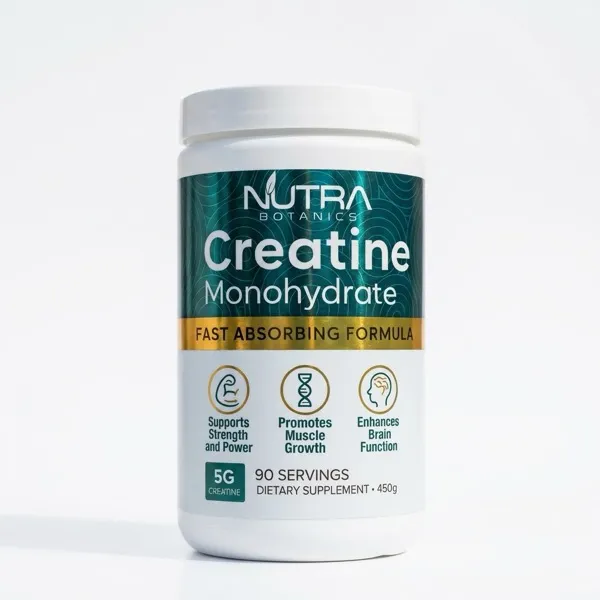
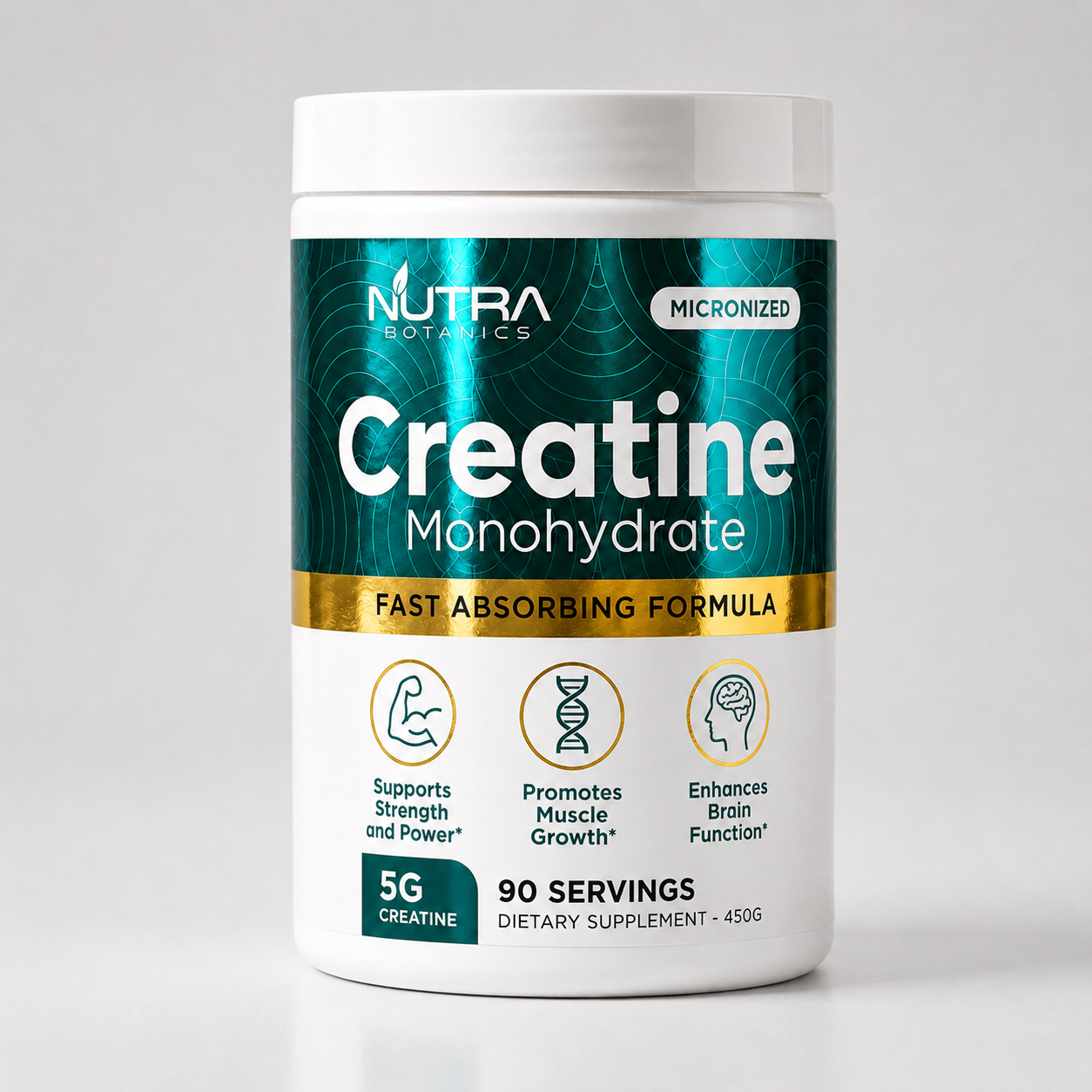
Micronized Creatine Monohydrate
5g pure creatine per serving · 60 servings
- Pure creatine monohydrate · no fillers or blends
- Micronized for easier mixing and absorption
- Unflavored · stacks cleanly with any routine
- GMP & NSF certified · PhD-supervised testing
See pricingFree shipping over $75
Shop Creatine Monohydrate
Explore Performance Support
Browse the Nutra Botanics performance range
- Creatine, BCAA, EAA, and pre-workout options
- Compare formats, dosing, and stack partners
- GMP & NSF certified · PhD-supervised testing
- Subscribe to save 20% on recurring shipments
Shop the rangeSubscribe & save 20%
Browse Performance