Key Takeaway
✓ Key Takeaways
- Loading (20g/day for 5–7 days) rapidly saturates muscles and accelerates performance gains by 3–4 weeks
- Skipping loading and using 3–5g/day achieves the same saturation — it just takes 3–4 weeks instead
- Loading is optional — beneficial for those needing fast results; unnecessary for long-term supplementers
- GI discomfort is common during loading; splitting into 4×5g doses throughout the day minimizes this
- There is no benefit to loading phases longer than 7 days — muscle creatine capacity is finite
Open almost any creatine guide and you'll find the same advice: start with a loading phase — 20 grams per day for 5–7 days, then drop to maintenance. But is this actually necessary? Or is it just a way to go through product faster while creating a dramatic "first week" effect that feels like evidence it's working?
The answer is more nuanced than either camp admits. Loading does something real. It also comes with trade-offs. Whether it's right for you depends on your goals, your timeline, and how your digestive system responds. Here's what the research actually shows.
Key Takeaways
- Loading reaches full muscle saturation about 3 weeks faster than maintenance-only dosing
- Both protocols reach the same endpoint — loading doesn't produce higher peak creatine stores
- Loading causes more initial water retention (2–4 lbs) and more digestive discomfort
- For most people, a standard 3–5g/day protocol without loading is equally effective over 4 weeks
- A "mini-load" of 10g/day for 10 days offers a middle path with fewer side effects
Related reading: Creatine for Women, Creatine for Beginners, How to Take Creatine, When to Take Creatine.
What the Loading Phase Actually Does
Your muscles can store about 120–140 mmol/kg of creatine when fully saturated. Most people start around 100–120 mmol/kg — there's a ceiling, and the loading phase simply fills you up to that ceiling faster.
During loading (typically 20g/day split into 4 doses of 5g), you're flooding your muscles with creatine rapidly. The muscle creatine transporter (CrT) upregulates to absorb the surplus. Within 5–7 days, muscles are at or near full saturation — the same state that would take 3–4 weeks at 5g/day maintenance dosing.
What changes physiologically: more phosphocreatine available in the ATP-PCr energy system, meaning your muscles can sustain higher-intensity efforts for longer before fatiguing. More total creatine also draws more water into muscle cells — which is why the scale goes up and muscles can look slightly fuller almost immediately.
Loading vs. Maintenance: What Research Shows
The key study here was published by Hultman et al. in 1996 and remains the most cited creatine loading trial. They directly compared 20g/day for 6 days versus 3g/day for 28 days and found identical muscle creatine content at the end of each protocol. The loading group just got there three weeks earlier.
This has been replicated across multiple studies. The conclusion is consistent: loading is a faster road to the same destination. If your goal is to be at full creatine saturation by next week, loading works. If you're fine reaching saturation in a month, 3–5g/day without loading gets you there too.
| Factor | Loading Protocol | No-Load Protocol |
|---|---|---|
| Time to saturation | 5–7 days | 3–4 weeks |
| Peak creatine stores | Same | Same |
| Initial water weight | 2–4 lbs | 1–2 lbs (gradual) |
| GI discomfort risk | Higher | Lower |
| Daily dose during phase | 20g (4×5g) | 3–5g |
| Maintenance dose after | 3–5g | 3–5g (same) |
Side Effects of Loading
The most common side effects of loading are gastrointestinal: cramping, bloating, loose stools, and nausea. These occur because 20g of creatine taken in large doses creates osmotic shifts in the gut before absorption. The fix is almost always to split doses into 4–5 smaller servings throughout the day (e.g., 5g at meals) rather than taking 10g twice.
The other notable effect is rapid weight gain of 2–4 lbs, primarily intramuscular water. This can be unsettling for people not expecting it. It's not fat — it's the same water retention that occurs slowly with maintenance dosing, just compressed into a week. That said, for athletes competing in weight-class sports, loading timing matters.
One side effect that does NOT occur with loading: kidney damage in healthy individuals. The research on this is clear. See our creatine beginners guide for a full breakdown of safety data.
Who Actually Benefits From Loading
Loading is most justified when time is a factor. If you have a competition, event, or specific training block starting in two weeks and want to be at full creatine saturation before it begins, loading makes sense. The three-week head start is real and meaningful in those contexts.
Athletes who train at very high volumes and intensities may also notice the rapid-saturation benefit more clearly, since they're depleting phosphocreatine at higher rates during training. For casual gym-goers, the week-to-week difference between loaded and unloaded is likely imperceptible.
Who should skip loading: older adults (water weight fluctuation and digestive discomfort are less worthwhile), people sensitive to GI issues, women who prefer gradual onset, and anyone who finds the rapid weight increase discouraging.
The No-Load Protocol
The no-load approach is exactly what it sounds like: start at 3–5g per day from day one and maintain that indefinitely. No ramp-up, no phase change. Within 3–4 weeks, you'll be at full saturation and experiencing the same benefits as someone who loaded — just without the initial rush.
No-Load Protocol (Recommended for Most)
Week 1–4: 3–5g creatine monohydrate per day
Week 4+: Continue same dose — you're now at full saturation
Week 4+: Continue same dose — you're now at full saturation
Timing: Any consistent time — post-workout on training days is slightly preferred
Indefinite: No need to cycle off — daily maintenance is appropriate long-term
With food: A small carbohydrate or protein source improves uptake
What Happens in the First 4 Weeks
Creatine begins accumulating in muscle tissue. Scale may go up 1–2 lbs (water). Workout performance changes are subtle or unnoticeable yet.
Many users notice they can push slightly harder in the gym — an extra rep or two, slightly less fatigue at the end of sets.
Many users notice they can push slightly harder in the gym — an extra rep or two, slightly less fatigue at the end of sets. Muscles may feel slightly fuller.
Creatine stores nearing full saturation. Performance improvements become more consistent and noticeable. Water weight stabilizes.
Maximum phosphocreatine availability. This is when the full training benefit is present. Consistent from here on with daily maintenance dosing.
Frequently Asked Questions
Is a creatine loading phase necessary?
A loading phase is optional rather than necessary; loading at 20g per day for 5 to 7 days reaches full muscle saturation about three weeks faster than a standard 3 to 5g daily protocol, but both approaches end at the same peak.
Loading makes sense when timeline matters, such as a competition or training block two weeks out. For routine daily use, starting at maintenance dosing is equally effective over four weeks and avoids the rapid water gain and digestive effects that come with loading.
What is the difference between loading and maintenance dosing?
Loading uses 20g per day split into four 5g doses for 5 to 7 days to saturate muscles rapidly; maintenance uses 3 to 5g per day for 3 to 4 weeks to reach the same saturation more gradually.
After either protocol, the ongoing maintenance dose is 3 to 5g per day indefinitely. The difference is purely about how quickly you reach the same endpoint, not about a different endpoint or higher peak.
How long should a creatine loading phase last?
A standard loading phase lasts 5 to 7 days at 20g per day; extending past 7 days provides no added benefit because muscle creatine capacity has a finite ceiling of roughly 120 to 140 mmol per kg of dry muscle.
Once muscles are saturated, additional creatine is excreted rather than stored. After the loading window closes, shift to 3 to 5g per day as your ongoing maintenance dose.
What side effects can happen during loading?
The most common side effects during loading are gastrointestinal: cramping, bloating, loose stools, and nausea, along with 2 to 4 pounds of initial water weight gain as creatine draws water into muscle cells.
Splitting the 20g daily dose into four 5g servings taken with meals reduces digestive discomfort substantially. The water weight is intramuscular rather than fat, and it stabilizes after the first couple of weeks.
Can I skip the loading phase entirely?
Yes, you can skip loading and take 3 to 5g per day from day one; within 3 to 4 weeks your muscles reach the same full saturation as someone who loaded, with less water retention and fewer digestive effects along the way.
The no-load approach is often preferred by older adults, those who prefer gradual onset, and anyone sensitive to digestive discomfort. The endpoint is identical; only the time to get there differs.
Is there a middle-ground loading protocol?
A mini-load of about 10g per day for 10 days offers a middle path; it saturates muscles faster than standard maintenance dosing but causes less digestive discomfort and water weight than a full 20g per day loading protocol.
This approach works for those who want faster results than no-load provides but found 20g per day uncomfortable. After the mini-load window, maintenance dosing of 3 to 5g per day continues as normal.
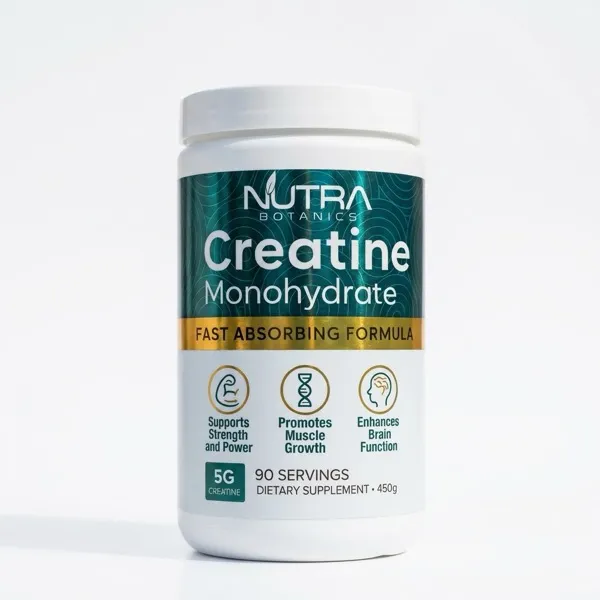
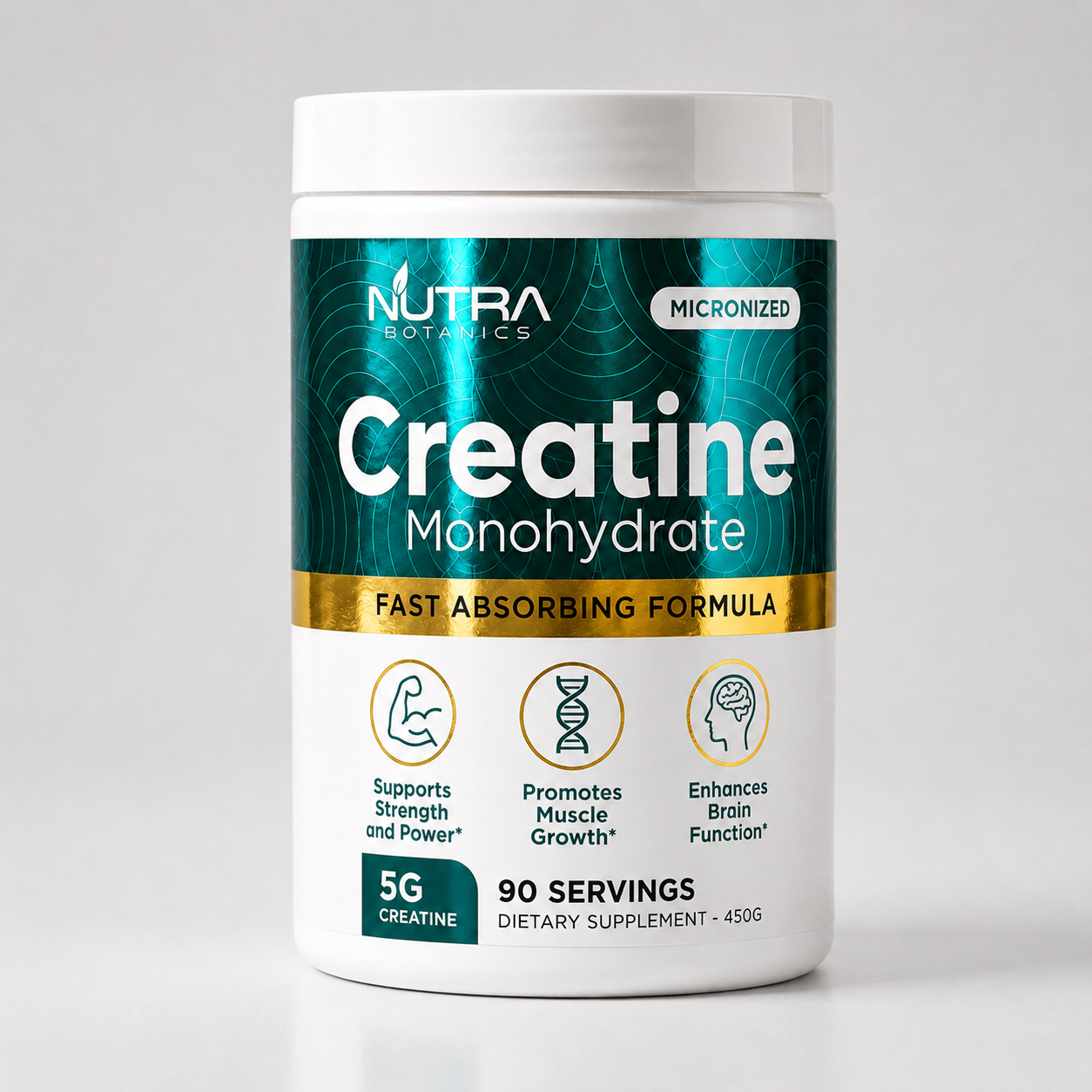
Micronized Creatine Monohydrate
5g pure creatine per serving · 60 servings
- Pure creatine monohydrate · no fillers or blends
- Micronized for easier mixing and absorption
- Unflavored · stacks cleanly with any routine
- GMP & NSF certified · PhD-supervised testing
See pricingFree shipping over $75
Shop Creatine Monohydrate
Explore Performance Support
Browse the Nutra Botanics performance range
- Creatine, BCAA, EAA, and pre-workout options
- Compare formats, dosing, and stack partners
- GMP & NSF certified · PhD-supervised testing
- Subscribe to save 20% on recurring shipments
Shop the rangeSubscribe & save 20%
Browse Performance