

Key Takeaways
- L-carnitine shuttles fatty acids into mitochondria for energy — the rate-limiting step of fat oxidation
- 1–3g per day, taken with a carbohydrate-containing meal, is the clinically studied dose for tissue uptake
- Most performance and recovery benefits appear after 8–12 weeks of consistent use
- L-carnitine L-tartrate is the most research-supported form for exercise recovery endpoints
- Effects are modest on their own — L-carnitine is a targeted accent to training and nutrition
Related reading: L-Carnitine Benefits, L-Carnitine Dosage, L-Carnitine for Women, Liquid vs Capsule L-Carnitine.
How L-Carnitine Supports Fat Burning During Exercise
During aerobic exercise, your body can burn both carbohydrates (as glycogen) and fat (as fatty acids) for fuel. The ratio depends on exercise intensity — lower intensities burn proportionally more fat, higher intensities shift toward carbohydrates.
L-carnitine facilitates fat oxidation by transporting long-chain fatty acids across the inner mitochondrial membrane, where they undergo beta-oxidation to produce ATP. With more carnitine available in muscle tissue, the rate of fatty acid transport — and potentially fat oxidation — can increase.*
A practical implication: at moderate exercise intensities (60–70% of max heart rate), L-carnitine supplementation may allow you to burn a higher proportion of fat relative to carbohydrate — effectively sparing glycogen for higher-intensity efforts later in a workout or race.*
Exercise Recovery: Where the Evidence Is Strongest
The most consistent and well-replicated finding in L-carnitine exercise research is its effect on recovery. Multiple randomized controlled trials have shown that L-carnitine supplementation significantly reduces markers of exercise-induced muscle damage and oxidative stress.*
A 2018 study in the Journal of Strength and Conditioning Research found that participants taking 2g of L-carnitine daily for 3 weeks before an acute bout of resistance exercise had significantly lower creatine kinase levels (a marker of muscle damage), lower myoglobin levels, and significantly reduced soreness ratings at 24 and 48 hours post-exercise compared to placebo.*
The mechanism: L-carnitine appears to increase blood flow to muscle tissue through a nitric oxide pathway, reduce free radical production during exercise, and help clear metabolic byproducts like lactate and ammonia from muscle tissue. The net effect is less damage during exercise and faster clearance of the compounds that cause soreness.*
Endurance Performance and Glycogen Sparing
For endurance athletes, L-carnitine offers a potentially significant benefit: glycogen sparing. When fat oxidation is more efficient, your body relies less on stored carbohydrates — meaning glycogen stores last longer during prolonged effort.*
A 2011 study published in the Journal of Physiology — one of the most rigorous carnitine supplementation studies ever conducted — found that participants who supplemented with L-carnitine plus carbohydrates for 24 weeks had significantly higher muscle carnitine concentrations, burned significantly more fat during exercise at 50% VO₂max, and used significantly less muscle glycogen at the same intensity compared to placebo.*
For long-distance runners, cyclists, and triathletes, this glycogen-sparing effect could translate to better performance in the later stages of a race or long training session.
Strength and Power Output
The evidence for L-carnitine improving acute strength or power output is mixed — this is not where the supplement shines. It is more of a metabolic support and recovery tool than a performance-enhancing compound in the stimulant sense.
That said, because better recovery means more productive training sessions over time, the cumulative effect of improved recovery on strength gains is real — just indirect. Athletes who recover faster can train harder and more frequently, which compounds into better strength outcomes over months.*
Best Practices for Athletes
For maximum effect, take liquid L-carnitine 30–60 minutes before training. The fast absorption of liquid formulations ensures carnitine is in circulation when exercise begins and muscle uptake is highest.*
For recovery purposes, a post-workout dose with your recovery meal — which contains protein and carbohydrates to spike insulin and drive carnitine into muscle — can also be effective.*
Consistent daily use for at least 4–8 weeks is needed to build muscle carnitine stores to levels where performance and recovery effects are reliably evident.
Frequently Asked Questions
Should I take L-carnitine before or after working out?
How long does it take for L-carnitine to improve exercise performance?
Does L-carnitine help with running?
Can I take L-carnitine with pre-workout supplements?
Does L-carnitine help with muscle soreness?
Is L-carnitine useful for weight training or only cardio?
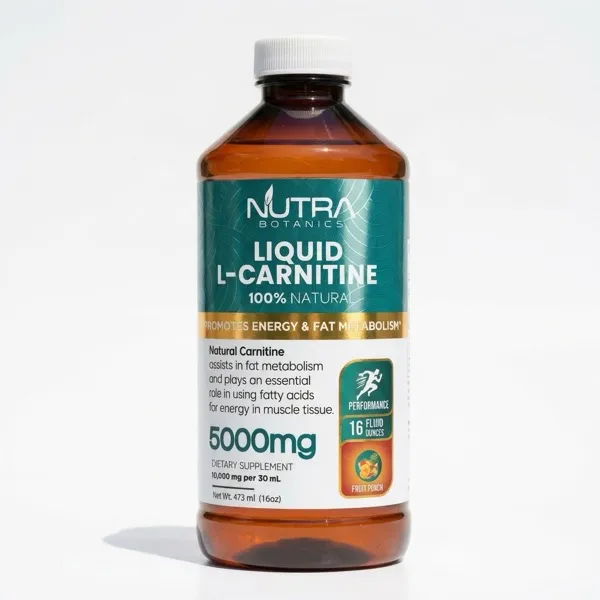
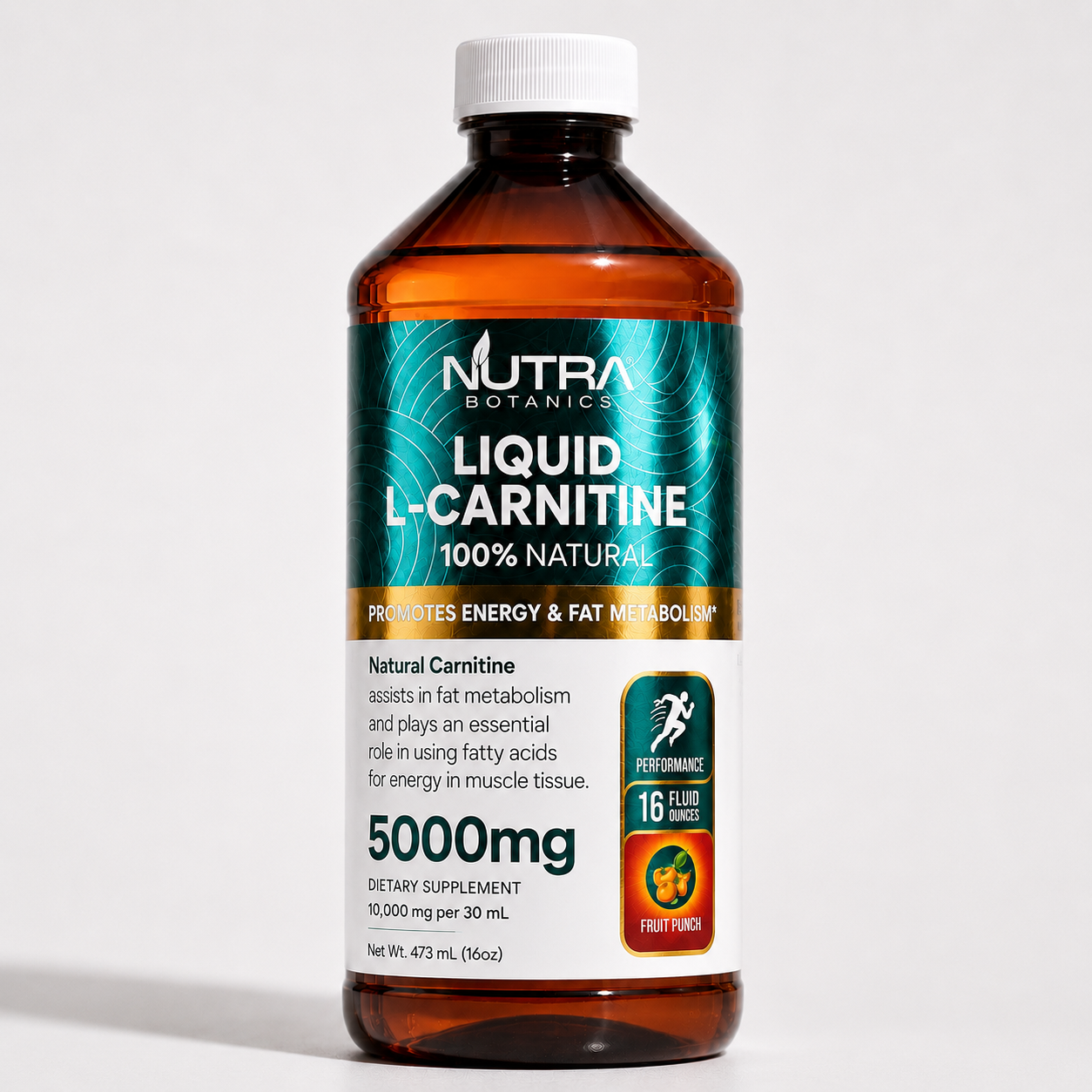
Liquid L-Carnitine 5000
5000mg per serving · 32 servings
- 5,000mg L-Carnitine per 1-tablespoon serving
- Supports fat transport into mitochondria for energy use
- Non-stimulant · pairs well with training days
- GMP & NSF certified · PhD-supervised testing
$22.95Free shipping over $75
Shop Liquid L-Carnitine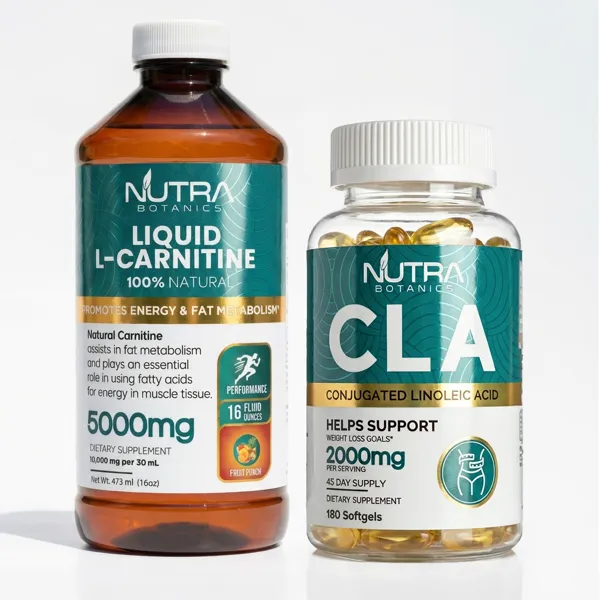
Explore Weight Management
Browse the Nutra Botanics weight management range
- CLA, L-carnitine, appetite support, and bundles
- Compare formats, dosing, and stack partners
- Find the right fit for your composition goals
- GMP & NSF certified · PhD-supervised testing
Shop the rangeSubscribe & save 20%
Browse Weight Management