Key Takeaways
- 2g/day is the efficacy floor — the 2020 dose-response meta-analysis of 37 RCTs (Talenezhad 2020) shows minimal effect below 1.8g and no additional benefit above ~4g
- Split 2g into two 1g doses (morning + pre-workout) — half-life is ~4–5 hours, so split dosing keeps plasma levels in the active range longer
- Pair with carbs — the Wall 2011 muscle-uptake study (Wall 2011) showed insulin is required to drive carnitine into skeletal muscle
- Allow 8–12 weeks — 1.33 kg average additional weight loss over placebo per the 9-trial meta-analysis (Pooyandjoo 2016)
- Use L-tartrate or free-form for fat loss; ALCAR is for cognition, not body composition
Related reading: Does L-Carnitine Work for Weight Loss?, L-Carnitine Benefits, L-Carnitine and Exercise, Metabolism Supplements Guide.
The 2g Efficacy Floor: What the Dose-Response Data Actually Shows
The most important number in L-carnitine for weight loss is 2 grams per day. That number doesn't come from marketing — it comes from a 2020 dose-response meta-analysis of 37 randomized controlled trials by Talenezhad and colleagues, which mapped fat-loss outcomes against the range of doses used in the literature (Talenezhad 2020).
The dose-response curve has a clear shape: below approximately 1.8g/day, fat-loss signal becomes statistically weak. Between 1.8g and 4g/day, there's a meaningful and consistent effect on body weight, BMI, and fat mass. Above 4g/day, additional dose does not produce additional fat loss — the curve flattens.
This is why we recommend 2g as the working dose: it sits comfortably above the efficacy floor, leaves headroom for variability in individual absorption, and avoids the diminishing-return zone where you're paying for grams that won't change the outcome. Doses of 1g or less, common in cheap "thermogenic" stacks, are essentially placebo at the metabolic level.*
The Pooyandjoo 2016 meta-analysis (Pooyandjoo 2016), pooling 9 RCTs across 911 participants, found supplementation in this range produced an average 1.33 kg of additional weight loss vs placebo, plus a 0.47 kg/m² BMI reduction. A larger meta-analysis by Askarpour et al covering 43 trials confirmed the same direction — significant reductions in weight, BMI, and fat mass — and noted the strongest effects in overweight and obese subjects (Askarpour 2020).
Split Dosing: Why Two 1g Doses Beat a Single 2g Bolus
L-carnitine has a plasma half-life of roughly 4 to 5 hours. That means a single 2g morning dose will have largely cleared from circulation by mid-afternoon, leaving most of your day at lower-than-active plasma concentrations.
Splitting the dose — 1g in the morning and 1g 30–60 minutes pre-workout (or with your largest meal if you're not training that day) — keeps plasma levels in the active range across a longer window. This isn't speculation: oral pharmacokinetic studies consistently show split dosing produces a higher area-under-the-curve at lower per-dose burden than a single bolus.
If you take a rest day, anchor the second dose to your largest carbohydrate-containing meal. The rationale is in the next section.
Timing: Pre-Workout + Carbs (the Insulin Uptake Rule)
This is the protocol detail most people get wrong. Plasma carnitine doesn't equal muscle carnitine — and muscle carnitine is what drives the fat-oxidation effect.
The Wall et al 2011 study published in The Journal of Physiology demonstrated this directly (Wall 2011). Healthy participants supplemented with 80g of carbohydrate alongside 1.36g of L-carnitine twice daily for 24 weeks showed a 21% increase in muscle total carnitine content. At the same dose without the insulin spike from carbohydrate, muscle carnitine doesn't measurably change — the carnitine simply doesn't get pulled into the tissue where it does its work.
Practical translation: take each L-carnitine dose with a meal or beverage containing at least 30–50g of carbohydrate. Pre-workout dosing is ideal because it pairs the carb-driven uptake window with the time of peak fat-oxidation demand. A piece of fruit, a glass of juice, or a carb-containing pre-workout drink is sufficient — you don't need a large meal.
Which Form: L-Tartrate vs Free-Form vs Acetyl (ALCAR)
Three forms dominate the market, and they are not interchangeable for fat loss:
- L-Carnitine L-Tartrate (LCLT): The form used in most exercise and recovery research. Bound to tartaric acid for absorption. Standard in sports-nutrition products. Effective for fat-loss protocols.
- Free-form L-Carnitine (often as liquid): The form used in the major weight-loss meta-analyses. Liquid free-form reaches peak plasma in roughly 30 minutes, vs 2 to 3 hours for solid capsules — useful when you want pre-workout uptake aligned with the training window.
- Acetyl-L-Carnitine (ALCAR): Crosses the blood-brain barrier; studied primarily for cognitive function, neuropathic pain, and mood — not body composition. Don't use ALCAR if your goal is weight loss; you're paying a premium for a brain-targeted molecule.
For the protocol in this article, use L-Tartrate or free-form L-Carnitine. Avoid blends that hide the actual carnitine dose behind a "proprietary blend" label — you need to know you're hitting the 2g threshold.
The 12-Week Weight-Loss Protocol
L-Carnitine 12-Week Fat-Loss Protocol
Daily dose: 2g L-Tartrate or free-form L-carnitine (avoid ALCAR for this protocol)
Timing: 1g morning with breakfast carbs · 1g pre-workout (or largest meal on rest days) with 30–50g carbohydrate
Caloric context: 300–500 kcal/day deficit · adequate protein (0.8–1g/lb bodyweight) · resistance training 3×/week minimum
Evaluation point: Week 8 minimum. Most positive trials ran 8–12 weeks before the body composition signal emerged in DEXA or BIA measurement.
Expected outcome: ~1.0 to 2.0 kg additional fat loss vs the same calorie/training protocol without supplementation, per pooled meta-analysis data. Stack effect with diet + training is what produces visible changes — supplement alone, in a calorie surplus, will not produce weight loss.
Pair this protocol with the broader fat-loss stack covered in our Metabolism Supplements Guide if you want to layer additional evidence-backed compounds (caffeine, green tea EGCG, or CLA) — L-carnitine works on a different pathway than thermogenics, so the mechanisms stack rather than overlap.
Safety, Side Effects & the TMAO Caveat
L-carnitine is well tolerated at the doses used in weight-loss research. The most common side effects in trials were mild GI complaints (nausea, loose stool) at doses approaching or exceeding 3g/day, and a fishy body odor at high doses caused by trimethylamine production from gut metabolism.
The more important safety conversation involves trimethylamine-N-oxide (TMAO). Gut bacteria metabolize a portion of dietary L-carnitine into TMA, which the liver oxidizes into TMAO. Several observational studies have associated higher circulating TMAO with cardiovascular event risk, and short-term human supplementation studies have shown that 2g/day of L-carnitine elevates plasma TMAO meaningfully.
What this means in practice: for healthy adults using L-carnitine for an 8–12 week fat-loss protocol, the cardiovascular signal from TMAO elevation is small and the overall risk-benefit appears favorable. For individuals with established cardiovascular disease, chronic kidney disease, or strong family history of early cardiac events, the conversation should happen with your physician before starting long-term high-dose supplementation. We're flagging this not because it disqualifies the protocol, but because skipping it would be incomplete information — and we'd rather you have the full picture.*
Also worth flagging: L-carnitine is not a "fat burner" in the stimulant sense. It does not raise heart rate, suppress appetite, or produce thermogenesis. If you're sensitive to caffeine and want a non-stimulant metabolic support, that's a feature; if you're expecting a "burning" sensation, you'll be disappointed.
Frequently Asked Questions
What is the optimal L-carnitine dosage for weight loss?
Should I split the L-carnitine dose throughout the day?
When should I take L-carnitine for the best fat-loss effect?
How long until I see weight-loss results from L-carnitine?
Which form of L-carnitine is best for weight loss?
Is L-carnitine safe at 2g per day long-term?
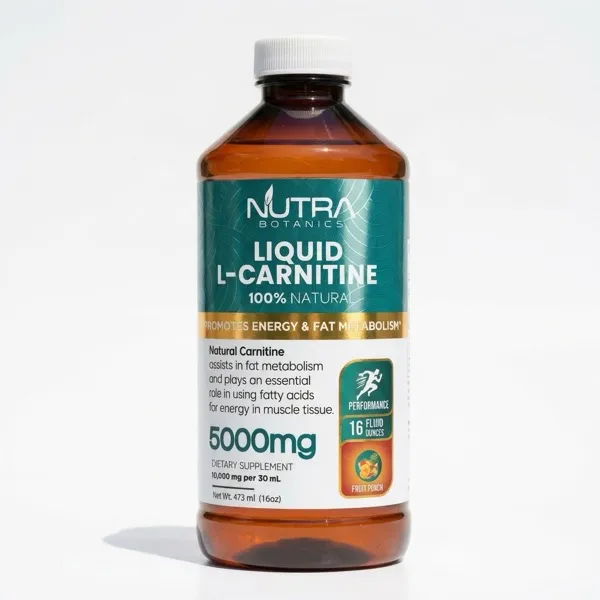
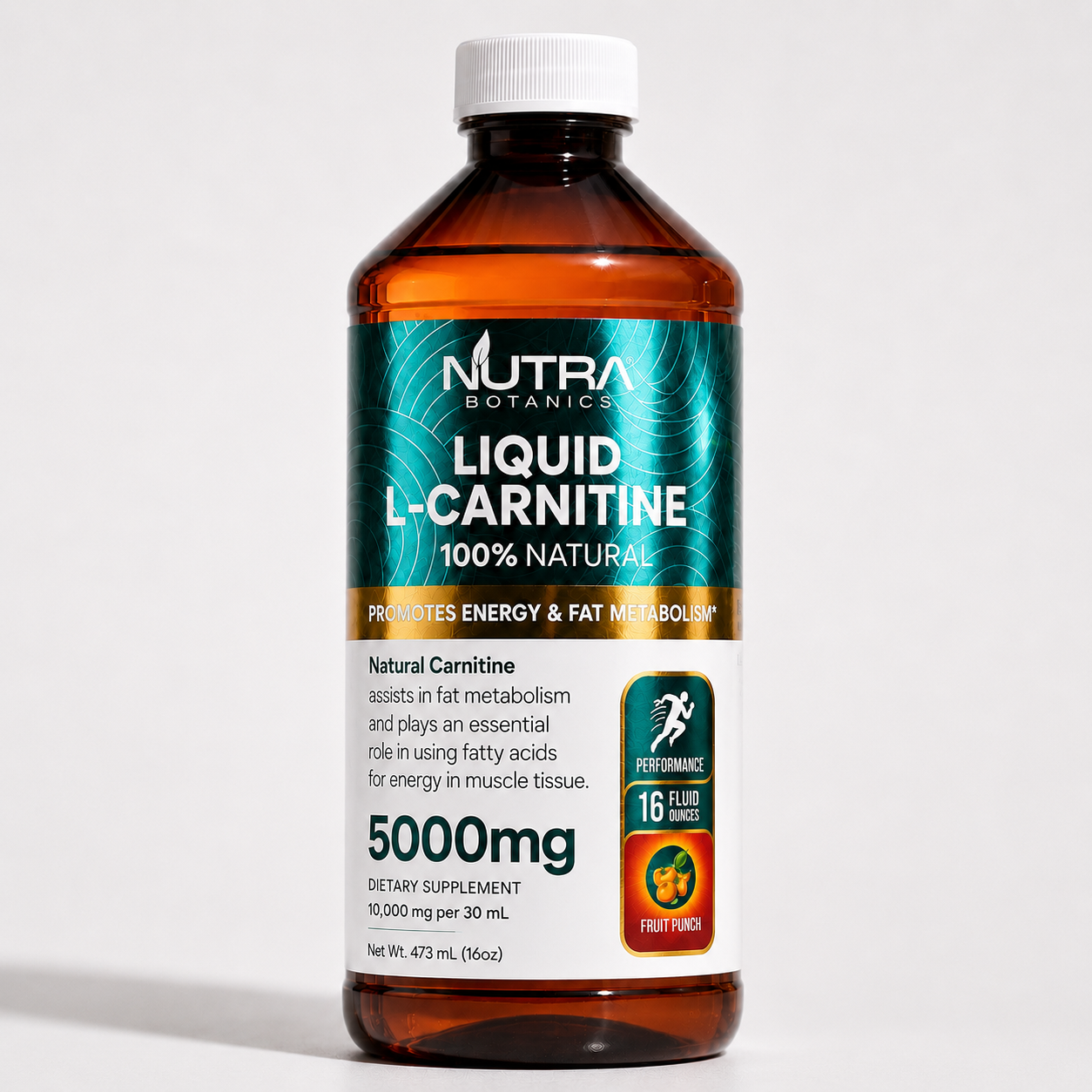
Liquid L-Carnitine 5000
5000mg per serving · 32 servings
- 5,000mg L-Carnitine per 1-tablespoon serving
- Supports fat transport into mitochondria for energy use
- Non-stimulant · pairs well with training days
- GMP & NSF certified · PhD-supervised testing
$22.95Free shipping over $75
Shop Liquid L-Carnitine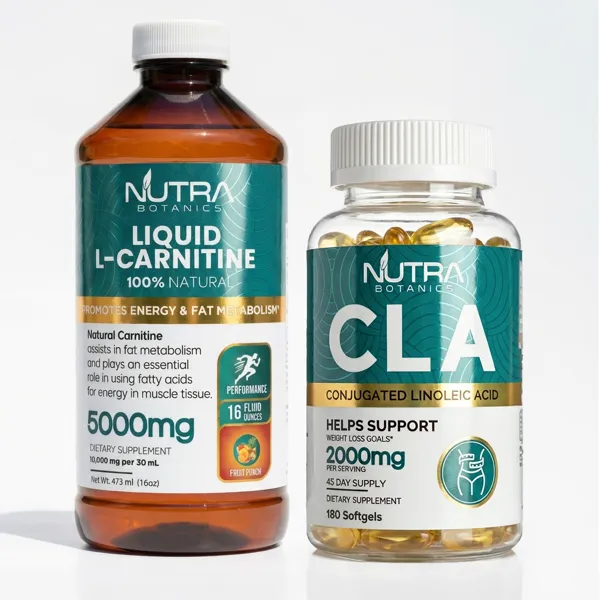
Explore Weight Management
Browse the Nutra Botanics weight management range
- CLA, L-carnitine, appetite support, and bundles
- Compare formats, dosing, and stack partners
- Find the right fit for your composition goals
- GMP & NSF certified · PhD-supervised testing
Shop the rangeSubscribe & save 20%
Browse Weight Management