Key Takeaways
- Creatine monohydrate has 500+ studies and is the most extensively researched form available
- HCL is more soluble, but no form has been shown to be more effective than monohydrate in direct head-to-head trials
- Monohydrate is significantly cheaper per gram — the cost-benefit favors it strongly
- HCL may cause less initial water retention, which matters only if that is a specific concern
- For nearly everyone, micronized monohydrate at 3–5g/day is the evidence-backed default
Related reading: Creatine for Women, Creatine for Beginners, How to Take Creatine, When to Take Creatine.
What Are These Two Forms of Creatine?
Creatine Monohydrate
Creatine monohydrate is creatine bonded to a water molecule. It's the form that has been studied in sports science since the early 1990s and remains the most-researched form of creatine in existence. The research base includes hundreds of clinical trials across diverse populations — athletes, older adults, women, clinical patients — making it the benchmark against which all other creatine forms are measured.
Creatine HCL (Hydrochloride)
Creatine HCL is creatine bonded to a hydrochloride (HCl) group. This modification makes the molecule significantly more water-soluble than monohydrate — reportedly up to 38 times more soluble in laboratory conditions. Manufacturers market this as meaning you need a smaller dose and experience less bloating.
The theory is logical. The evidence for superior outcomes in practice is thinner.
Full Comparison: Monohydrate vs HCL
| Factor | Creatine Monohydrate | Creatine HCL |
|---|---|---|
| Research volume | 500+ clinical studies spanning 30+ years | Limited — handful of studies |
| Efficacy evidence | Robust, replicated across populations | Preliminary — limited head-to-head data |
| Water solubility | Moderate (dissolves best in warm liquid) | Very high — dissolves easily in cold water |
| Standard dose | 3–5g/day | 1–2g/day (marketed, not confirmed equivalent) |
| Cost per serving | Very low — one of the cheapest supplements | Significantly higher per gram |
| Digestive tolerance | Good for most; some sensitivity at high doses | Reportedly better tolerance due to solubility |
| Muscle saturation | Well-established at 3-5g/day | Lower dose equivalence unconfirmed in trials |
| Long-term safety | Extensively documented | Less long-term data available |
The Solubility Argument: Does It Actually Matter?
Creatine HCL's primary selling point is superior solubility. In test tubes, it dissolves far more readily than monohydrate. The marketing logic: better dissolved = better absorbed = less needed = less bloating.
The problem is that this logic breaks down in the body. Once ingested, creatine HCL — like all creatine forms — dissociates into free creatine in the acidic environment of the stomach before being absorbed in the small intestine. Both forms ultimately deliver the same molecule to your muscle creatine transporter.
In vitro solubility doesn't translate directly into better in vivo absorption when the stomach is doing its own dissolution work regardless of the form you started with.
What About the "No Bloat" Claim?
Some users report less water retention and bloating with HCL compared to monohydrate. There's a plausible mechanism: higher solubility may mean less unabsorbed creatine reaching the large intestine (where fermentation can cause gas and loose stools).
However, most reported digestive issues with creatine monohydrate occur during loading phases (20g/day) or when taking large doses on an empty stomach — not at standard 3-5g maintenance doses. If you're using monohydrate correctly (3-5g with food), digestive discomfort is uncommon.
If you do experience persistent digestive sensitivity with monohydrate even at standard doses with food, HCL is a reasonable alternative to try.
The Cost Reality
Creatine monohydrate is one of the cheapest effective supplements you can buy. A quality 500g tub of micronized creatine monohydrate typically provides 100-166 daily servings at a cost of $0.15-0.25 per dose.
Creatine HCL typically runs 3-5x more expensive per gram, and even if you use a smaller dose (1-2g vs 3-5g), the cost per day is often still higher. Given that no clear evidence shows HCL produces better outcomes than monohydrate at equivalent saturation, the cost premium isn't justified for most users.
The Verdict
Choose Creatine Monohydrate if: You want the form with the deepest research base, lowest cost, and proven track record. This is the right choice for 90%+ of people.
Consider Creatine HCL if: You consistently experience digestive discomfort with monohydrate even at standard doses (3-5g/day with food), and you've tried micronized versions without success. HCL may be worth the premium in this specific scenario.
In both cases, the molecule doing the work in your muscles is creatine. The form determines how it gets there, not what it does once it arrives.
Frequently Asked Questions
Is creatine HCL better than monohydrate?
What is the dose difference between creatine monohydrate and HCL?
Which form of creatine has the most research?
Should I switch from monohydrate to HCL?
Does creatine HCL actually absorb better than creatine monohydrate?
Despite creatine HCL being more soluble in water, research does not show superior absorption compared to creatine monohydrate; the stomach dissolves both forms into free creatine before absorption, meaning in-vitro solubility does not translate into better in-vivo delivery to muscle.
Both forms ultimately deliver the same creatine molecule to the muscle creatine transporter. The solubility advantage of HCL exists in laboratory conditions but is largely neutralized by normal stomach-acid dissolution.
Is creatine HCL worth the higher cost?
For most users, creatine HCL is not worth the 3 to 5 times higher price per gram; standard 3 to 5g daily doses of monohydrate cost roughly 15 to 25 cents per serving and have 500-plus studies confirming equivalent muscle saturation.
The only scenario where HCL may justify the premium is persistent digestive discomfort with monohydrate at standard doses taken with food. In that case, trying HCL is reasonable; otherwise the cost premium is not supported by outcome data.
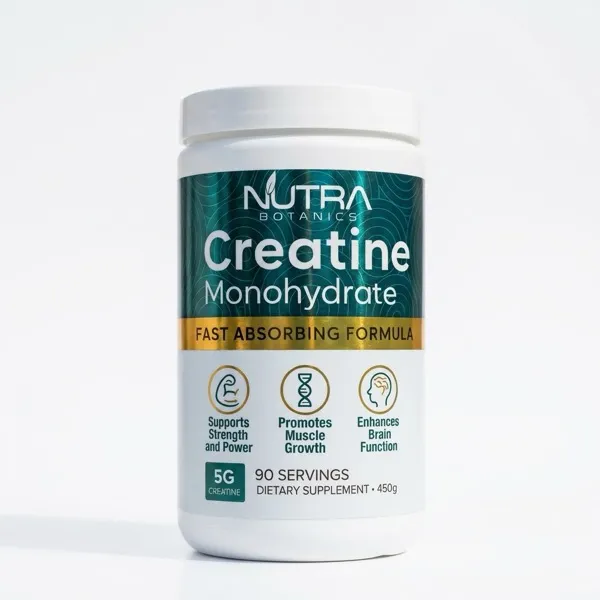
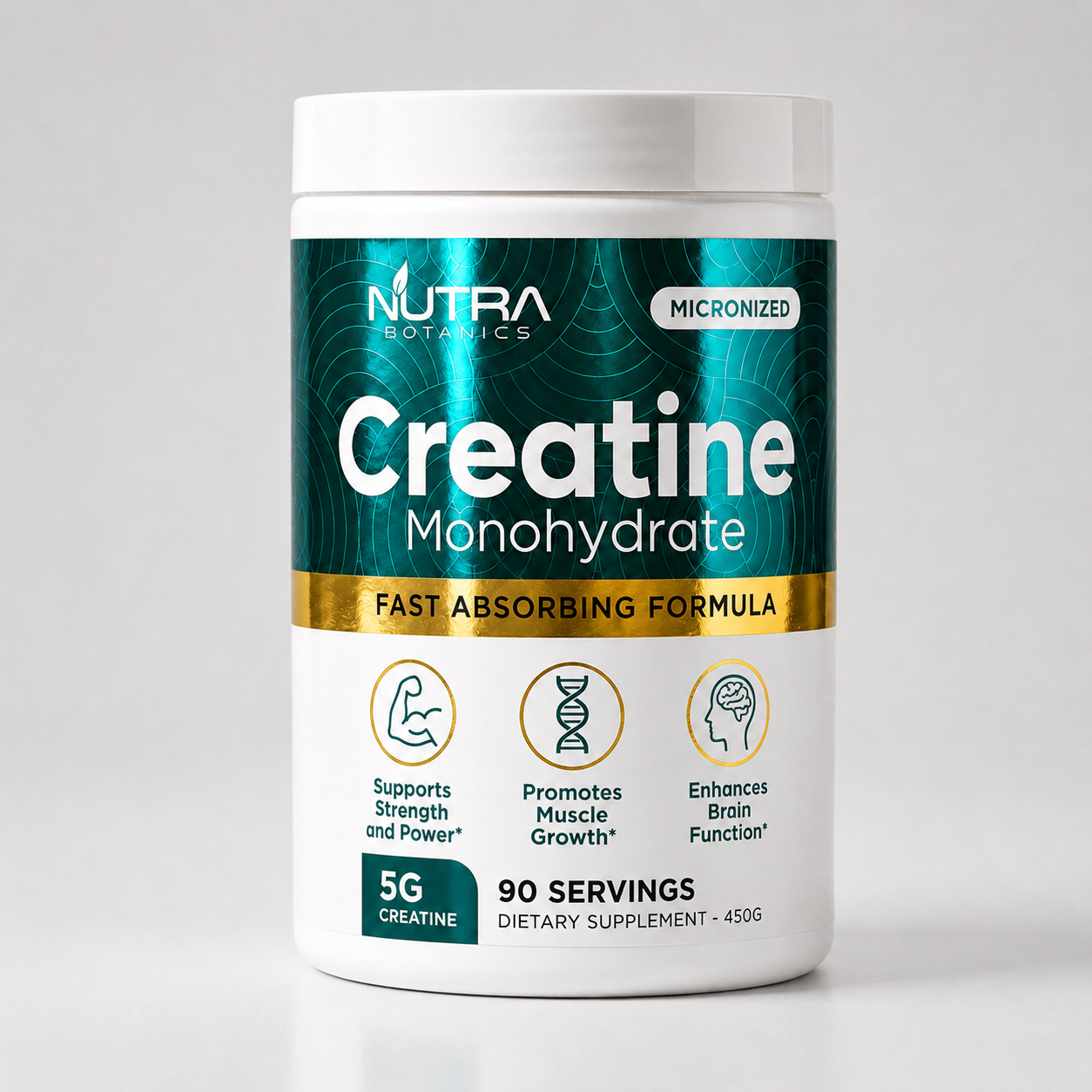
Micronized Creatine Monohydrate
5g pure creatine per serving · 60 servings
- Pure creatine monohydrate · no fillers or blends
- Micronized for easier mixing and absorption
- Unflavored · stacks cleanly with any routine
- GMP & NSF certified · PhD-supervised testing
See pricingFree shipping over $75
Shop Creatine Monohydrate
Explore Performance Support
Browse the Nutra Botanics performance range
- Creatine, BCAA, EAA, and pre-workout options
- Compare formats, dosing, and stack partners
- GMP & NSF certified · PhD-supervised testing
- Subscribe to save 20% on recurring shipments
Shop the rangeSubscribe & save 20%
Browse Performance