
Related reading: Collagen 101: Complete Guide, 12 Foods That Boost Collagen Production, How Much Collagen Per Day, Best Time to Take Collagen.
Setting Realistic Expectations
Before diving into the timeline, it is important to understand how collagen supplementation actually works. When you take hydrolyzed collagen peptides, they are absorbed through your digestive system and enter your bloodstream as small peptide chains and amino acids. These peptides then travel to various tissues throughout your body, where they serve two functions: they provide raw building materials for collagen production, and they signal your cells to ramp up their own collagen synthesis.
This process takes time. Your body needs to accumulate enough collagen peptides to make a measurable difference in tissue structure and function. Think of it like renovating a house: you do not see the finished result after the first day of work, but every day of effort builds toward the final outcome. The key is consistency. Missing days or taking subtherapeutic doses will significantly delay your results.
The Week-by-Week Collagen Timeline
Based on clinical research and thousands of user experiences, here is what you can realistically expect at each stage of your collagen supplementation journey.

Results Timeline by Benefit Area
To make the timeline even clearer, here is a visual breakdown of how long each specific benefit typically takes to manifest based on available clinical research.
Factors That Can Slow Your Results
While the timeline above represents what most people can expect under ideal conditions, several factors can significantly slow your results or even counteract the benefits of collagen supplementation. Being aware of these factors allows you to eliminate them and get the most out of your investment.
Smoking: Cigarette smoke generates free radicals that directly destroy collagen fibers and inhibit new collagen synthesis. Smokers may need significantly longer to see results, and the benefits may be diminished compared to non-smokers.
Excessive UV Exposure: Ultraviolet radiation from the sun is one of the most potent collagen destroyers. Unprotected sun exposure breaks down existing collagen and impairs your body's ability to build new collagen, even when you are supplementing.
High Sugar Intake: Sugar molecules attach to collagen fibers through a process called glycation, making them stiff, brittle, and unable to function properly. A high-sugar diet can undermine even the best collagen supplementation regimen.
Low Vitamin C: Vitamin C is an essential cofactor for collagen synthesis. Without adequate vitamin C intake, your body cannot effectively use the collagen peptides you are consuming. This is one of the most common and easily correctable barriers to results.
How to Maximize Your Collagen Results
The good news is that there are several evidence-based strategies you can use to accelerate and amplify your collagen results. Implementing these tips can mean the difference between seeing results in four weeks versus eight weeks.
Be Consistent: Take your collagen at the same time every day. Skipping days resets the accumulation process and delays results. Set a daily reminder or tie it to an existing habit like your morning coffee.
Pair with Vitamin C: Take 500 to 1,000 mg of vitamin C alongside your collagen or eat vitamin C-rich foods at the same time. This ensures your body has the cofactors needed to synthesize new collagen from the peptides you consume.
Choose the Right Time: While collagen can be taken at any time, many experts recommend taking it on an empty stomach for optimal absorption.
Choose the Right Time: While collagen can be taken at any time, many experts recommend taking it on an empty stomach for optimal absorption. First thing in the morning or between meals tends to work best for most people.
Stay Hydrated: Collagen needs water to function properly in your tissues. Aim for at least 8 glasses of water per day to support collagen hydration and distribution throughout your body.
Protect Your Existing Collagen: Use sunscreen daily, limit sugar intake, avoid smoking, and prioritize sleep. Protecting the collagen you already have is just as important as building new collagen.
What the Research Says
The clinical evidence for collagen supplementation timelines is compelling. Multiple well-designed studies have tracked participants over periods ranging from 4 to 24 weeks, measuring objective outcomes like skin elasticity, wrinkle depth, joint pain scores, and nail growth rates.
"Oral supplementation with specific collagen peptides had a statistically significant beneficial effect on skin hydration after 8 weeks of intake. Skin elasticity was significantly improved after 4 weeks in elderly women. These results are consistent across multiple randomized, double-blind, placebo-controlled trials."
Proksch et al., Skin Pharmacology and Physiology, 2014What makes this research particularly convincing is the consistency of the results across different study populations, dosages, and collagen sources. Whether participants were young athletes or postmenopausal women, the general timeline held true: early benefits within 2 to 4 weeks, significant skin improvements by 8 to 12 weeks, and joint or bone benefits by 12 to 24 weeks.
A comprehensive meta-analysis published in the International Journal of Dermatology reviewed 19 studies with a combined 1,125 participants and concluded that hydrolyzed collagen supplementation for 90 days significantly improved skin hydration, elasticity, and wrinkle reduction compared to placebo. The effect sizes were clinically meaningful, not just statistically significant.
Collagen supplementation is not an instant fix, but it is one of the most well-supported supplements for long-term skin, joint, and bone health. Most people see their first results within 4 weeks, with the most dramatic improvements appearing between 8 and 12 weeks. The key to success is consistency, adequate dosing, vitamin C pairing, and patience. Give your body the time it needs, and the results will come.
Choosing the Right Product for Faster Results
The form and quality of your collagen supplement can significantly impact how quickly you see results. Hydrolyzed collagen peptides are the gold standard because they have been enzymatically broken down into small peptide chains that are readily absorbed through the intestinal wall. The smaller the peptide size, the faster and more complete the absorption.
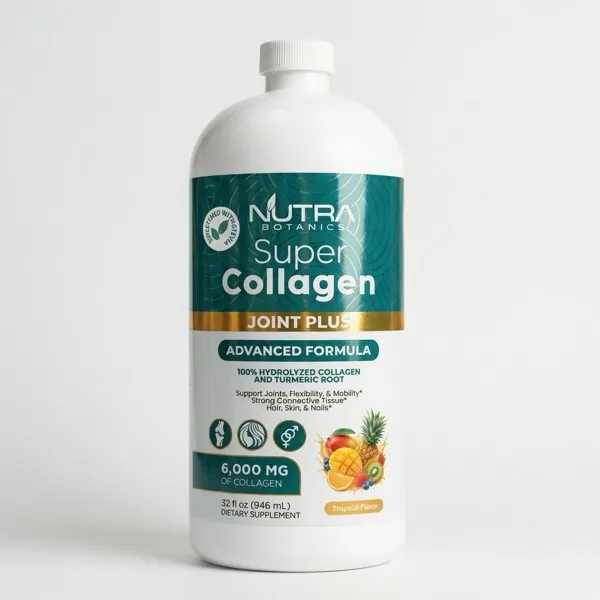
Liquid collagen formulas offer a distinct advantage over pills and powders. Because the collagen is already dissolved, your body does not need to break it down further during digestion. This means more of the collagen peptides reach your bloodstream intact and can be delivered to target tissues like skin, joints, and bones more efficiently.
Dosage matters as well. Clinical studies showing significant benefits typically use between 2,500 and 10,000 mg of collagen peptides per day. Lower doses may still offer some benefit, but you will likely need to wait longer to see results. For optimal outcomes, aim for at least 5,000 mg per day of high-quality hydrolyzed collagen.
*These statements have not been evaluated by the Food and Drug Administration. This product is not intended to diagnose, treat, cure, or prevent any disease. Individual results may vary.
Why Staying Committed Matters
One of the biggest mistakes people make with collagen supplementation is giving up too soon. Because collagen works gradually by stimulating your body's own repair and renewal processes, the benefits are cumulative. Stopping collagen after three or four weeks because you have not seen dramatic skin changes means you are quitting just before the most significant improvements would have begun.
Think of collagen supplementation as a long-term investment in your body's infrastructure. Every day you take it, you are depositing collagen peptides into your body's renewal bank. The interest compounds over time, and the longer you stay consistent, the more dramatic and lasting the results become.
Research shows that the benefits of collagen supplementation continue to improve even after 12 weeks. Participants in long-term studies who continued supplementation for 6 to 12 months showed continued improvements in skin elasticity, joint function, and nail strength beyond what was measured at the 12-week mark. This suggests that collagen is not just a short-term fix but a sustainable strategy for long-term health and appearance.
Set realistic expectations, commit to at least 12 weeks of daily supplementation before evaluating your results, and trust the process.
Set realistic expectations, commit to at least 12 weeks of daily supplementation before evaluating your results, and trust the process. Your future self will thank you for the patience and persistence.
Ready to Start Your Collagen Timeline?
Begin your journey to healthier skin, stronger joints, and lasting vitality with our premium liquid collagen formula.
Shop Collagen NowReady to Start Your Collagen Timeline?
Begin your journey to healthier skin, stronger joints, and lasting vitality with our premium liquid collagen formula.
Shop Collagen NowFrequently Asked Questions
How long does collagen take to improve skin?
Clinical trials consistently show visible skin improvements starting at 4–8 weeks, with significant results by 12 weeks. Skin hydration tends to improve first (within 4 weeks), followed by elasticity and fine line reduction (6–12 weeks). Continued use beyond 12 weeks produces compounding benefits as deeper dermal layers remodel.
Why is my collagen supplement not working?
The most common reasons are insufficient dosage (aim for 10–15 g of hydrolyzed peptides daily), inconsistent use (collagen needs to be taken every day), poor vitamin C intake (vitamin C is essential for collagen synthesis), or unrealistic expectations about the timeline. Also check that your product uses hydrolyzed peptides rather than unprocessed gelatin, which has lower bioavailability.
Does collagen work faster in liquid or powder form?
Hydrolyzed collagen peptides have similar bioavailability whether delivered as powder mixed into liquid or as a ready-to-drink formula. The key factor is molecular weight — smaller peptides (below 5,000 Daltons) are absorbed more efficiently regardless of delivery format. Consistency of daily use matters far more than the form you choose.
How long should I take collagen supplements?
Collagen supplementation works best as an ongoing practice rather than a short course. Benefits accumulate over months: joint improvements plateau around 24 weeks, while skin and hair benefits continue building beyond 12 weeks. Most researchers and dermatologists recommend a minimum commitment of 3 months to fairly evaluate results, with indefinite continued use for maintenance.
Can I speed up collagen results?
Yes, several strategies can optimize your results. Pair collagen with vitamin C (at least 100 mg) to boost synthesis. Take it consistently at the same time daily. Ensure adequate sleep, as collagen repair peaks during deep sleep cycles. Reduce sugar intake, since excess glucose accelerates collagen degradation through glycation. And protect skin from UV exposure, which breaks down existing collagen.
What factors slow down collagen results?
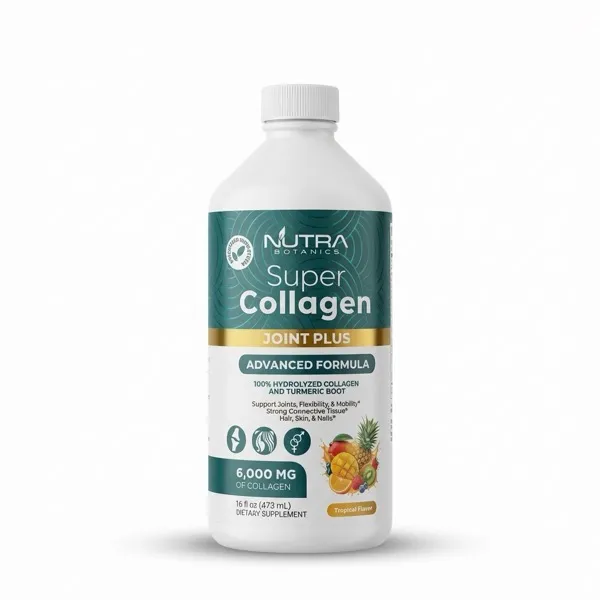
Super Collagen Liquid
Hydrolyzed Peptides · 30 servings
- 6,000mg hydrolyzed collagen peptides per serving
- Liquid format for maximum bioavailability
- Supports hair, nails, skin, and joints
- Third-party tested · GMP certified
$39.95Free shipping over $50
Shop Super Collagen
Explore All Collagen Products
Browse the Nutra Botanics collagen range
- Multiple formats: liquid peptides, powders, capsules
- Compare serving sizes, sources, and stack partners
- Find the right format for your routine
- Third-party tested · GMP certified across the range
Shop the rangeSubscribe & save 20%
Browse Collagen