You just bought creatine, or you've been taking it for a couple of weeks and you're not sure whether anything is happening yet. This is the most common question people ask after starting: is it actually doing anything?
The honest answer is that creatine works on a timeline that's easy to miss if you don't know what to look for. There's no sudden sensation. No pump on day one. The effects are cumulative and indirect — which is exactly why it's so consistently effective in long-term research. This guide walks you through a precise week-by-week timeline, explains why your approach affects the speed, and tells you exactly what to look for at each stage.*
Key Takeaways
- With a loading phase (20g/day for 5–7 days), muscles saturate within one week; performance changes emerge early.
- Without loading (3–5g/day), full saturation occurs in 3–4 weeks, with performance gains following.
- Initial water weight gain (1–2kg) typically appears in the first 1–2 weeks as muscles draw in water.
- Strength improvements are typically measurable by weeks 3–6 in the maintenance phase.
- Cognitive benefits develop more slowly, often becoming apparent after 4–6 weeks of consistent use.
Related reading: Creatine for Beginners, How to Take Creatine, When to Take Creatine, Creatine Loading Phase.
The Short Answer
Loading protocol (20g/day × 5–7 days): Muscle creatine stores reach near-saturation in 5–7 days. First performance effects may be noticeable within 1–2 weeks of training.
No-load protocol (5g/day): Muscle saturation takes approximately 28 days. Performance benefits typically become noticeable within 4–6 weeks of consistent training.
Strength and volume effects: Measurable differences in training capacity — extra reps, faster recovery between sets, less fatigue at the end of workouts — typically emerge 3–8 weeks in, depending on training frequency, diet, and whether you are a responder.*
Both protocols reach the same endpoint. Loading is faster, not more effective long-term.
Why the Timeline Depends on Your Approach
Creatine doesn't work the moment it enters your bloodstream. It needs to accumulate in skeletal muscle tissue before it meaningfully changes your energy capacity. The rate of that accumulation is directly controlled by two variables: your daily dose and your baseline creatine levels going in.
Most people start creatine supplementation with muscle stores at roughly 60–80% of maximum capacity — the natural range maintained by diet and endogenous production. Supplementation fills the remaining gap. The speed of that fill is determined by how much you take daily.
A loading protocol floods the system with 20g/day (in four separate 5g doses), pushing saturation up rapidly. Research by Hultman et al. (1996) demonstrated full saturation in 5–7 days using this approach. A no-load protocol achieves the same endpoint over approximately 28 days at 5g/day. The end state of your muscles is identical — it's only the speed that differs.
Once saturated, your muscles maintain creatine levels with a simple daily maintenance dose. There is no benefit to loading again once you're already saturated.
Week-by-Week: What to Expect
The following timeline assumes a no-load protocol (5g/day) and 3–4 resistance training sessions per week. Loading protocol users will reach each performance milestone approximately 3 weeks earlier. Individual experiences vary significantly.*
Loading vs. No-Load: Saturation Chart
The two protocols differ in speed, not in endpoint. The table below maps each week to approximate saturation percentage, and the bar chart that follows visualizes the same curves.
| Protocol | Week 1 | Week 2 | Week 4 | First Effects* |
|---|---|---|---|---|
| Loading (20g × 5d) | ~100% sat. | Full | Full + training | W1–2 |
| No-Load (5g/day) | ~68% | ~78% | ~100% | W4–6 |
| No supplementation | ~65% | ~65% | ~65% | — |
What You'll Notice First
The first two observable effects happen before any performance change, and many people misread them:
1. Scale Weight Increases (Days 3–10)
Creatine draws water into muscle cells through osmosis as creatine concentration rises. This is intracellular — meaning the water is inside the muscle fibers, not in the spaces between tissues (the puffy subcutaneous kind). Most people see 0.5–2kg increase on the scale within the first 1–2 weeks. Muscles may appear slightly fuller. This is expected, normal, and a sign that creatine is being absorbed and stored correctly.*
2. Muscles Feel Slightly Fuller During Training (Week 2–4)
As cellular water content increases, muscles often feel denser during workouts. Pumps may be slightly more pronounced. Some people notice this clearly; others don't notice any difference at this stage. Both are normal — individual variation in subjective experience is high.*
The most common reason people quit creatine early is seeing a weight increase and assuming it's fat.
If the scale goes up — don't stop
The most common reason people quit creatine early is seeing a weight increase and assuming it's fat. It is not. This is intramuscular water retention and is the mechanism by which creatine works. If your goal is lean muscle support, this early weight gain is a positive signal, not a problem.*
If your only goal is reducing scale weight, creatine is still worth considering — the strength support it provides can make training more effective long-term. Discuss with your healthcare provider if weight management is a medical concern.
When Performance Support Actually Begins
Performance effects require two conditions to be met: full saturation and sufficient training stimulus. Creatine doesn't create strength — it supports the energy system that powers high-intensity efforts, allowing you to do slightly more work per session. That extra work, accumulated over weeks, is where the results come from.
The chart above shows why weeks 5–8 matter so much. In the first 4 weeks, both groups are progressing — the creatine group just slightly faster due to marginally greater training volume. By weeks 6–8, the compounding effect becomes visually and measurably distinct. The creatine group hasn't changed their program — they've just been able to squeeze out 1–2 more reps per set, more consistently, which compounds meaningfully over dozens of sessions.*
Creatine doesn't create strength — it supports the energy system that powers high-intensity efforts, allowing you to do slightly more work per session.
What Speeds It Up (or Slows It Down)
Several variables determine how quickly you'll reach saturation and when performance benefits kick in:
Vegans and vegetarians have lower baseline creatine stores (no dietary creatine from meat) and typically saturate faster and respond more strongly. Meat-eaters start with higher baseline levels and may see a slightly smaller absolute effect, though benefits are still well-documented.*
Taking creatine with carbohydrates (and ideally protein) significantly increases muscle uptake via insulin-mediated transport. Research shows up to 60% greater muscle creatine retention when taken with a mixed meal vs. water alone. Post-workout with a carb-protein meal is optimal.*
Creatine draws water into muscle cells. If you're underhydrated, this process is less efficient and you may experience mild cramping (rare but reported). Drinking an extra 400–600ml of water daily while supplementing supports uptake and reduces the small cramp risk.*
Creatine has no effect without training. Muscle creatine uptake is higher after exercise, which is one reason post-workout timing is preferred. If you're supplementing but not training, you will not see performance benefits. The supplement amplifies the signal — training is the signal.*
People with a higher proportion of fast-twitch (Type II) muscle fibers tend to see stronger creatine response. Fast-twitch fibers rely more heavily on the ATP-PCr energy system and have higher creatine transporter density. This is partly genetic and partly influenced by training history.*
Chronic sleep deprivation and high cortisol impair protein synthesis and muscle recovery, blunting the training volume advantage creatine provides. Even if you're saturated, the performance dividend is smaller when recovery is compromised. Sleep quality matters as much as supplementation.*
Responders vs. Non-Responders
Approximately 25–30% of people are classified as creatine non-responders — individuals who do not show significant increases in muscle creatine concentration with supplementation. This is a normal genetic variation, not a supplement quality issue or user error.
Am I a Non-Responder?
If you've been on 5g/day for 6–8 full weeks with consistent training, adequate carbohydrate intake, and good hydration, and you haven't noticed any of the expected effects (fuller muscles, extra reps, reduced late-set fatigue) — you may be a non-responder.
Non-responders tend to have higher baseline muscle creatine levels (often from high meat consumption), meaning there's less room to fill. Their muscles simply don't show the same saturation increase. This affects roughly 1 in 4 people and is completely normal.*
If you suspect this applies to you, stopping creatine and reassessing over 4 weeks is a reasonable approach. Non-responders will not harm themselves by continuing — there just may be limited incremental benefit.*
Signs It's Working
If creatine is working for you, most of these signals will be present within 2–8 weeks of consistent daily use:
- Scale weight increased 0.5–2kg in week 1–2. This confirms creatine is being stored in muscle tissue. It's intramuscular water — a positive indicator.*
- Getting 1–2 extra reps on hard sets. Especially noticeable on the final 1–2 sets of compound lifts where you normally hit failure. This is the most direct sign.*
- Less performance drop-off in later sets. Your 4th working set feels more similar to your 2nd, rather than dropping off significantly in strength or reps.*
- Rest between sets feels more sufficient. 60–90 second rest periods feel adequate where you previously needed 2–3 minutes to fully recover before the next set.*
- Muscles look slightly fuller or denser. Particularly in the upper body. A visual effect of increased intramuscular fluid. Subjective but commonly reported.*
By week 8, creatine-supplemented trainees show significantly greater increases in lean body mass and strength compared to placebo groups training identically.
When to Reassess
If the signals above are absent after a full 6–8 week run, it's worth stepping back and checking the fundamentals before giving up:
- No scale weight change after 2–3 weeks. Could indicate poor absorption, insufficient dosing, or non-responder status. Check you're taking 5g daily and drinking adequate water.
- No performance difference after 8 weeks of consistent training. If sleep, protein intake, and training quality are all adequate and still no effect, non-responder status is likely. Not harmful — just not effective for that individual.*
- You skipped days frequently. Creatine requires daily dosing to maintain saturation. Missing 3–4 days per week reduces effectiveness significantly. Consistency is the most critical variable.
- Low carbohydrate intake. Very low-carb or ketogenic diets significantly reduce insulin-mediated creatine uptake. You may still benefit, but saturation speed and magnitude may be reduced.*
Key Takeaway
Summary
- Loading protocol: full saturation in 5–7 days; first performance effects possible in week 1–2 of training. Higher risk of GI upset if not split across doses.*
- No-load protocol: full saturation in ~28 days; first performance effects typically in weeks 4–6. Recommended for most beginners.*
- Daily consistency is the most important factor — missing multiple days per week significantly reduces effectiveness.
- The scale will go up 0.5–2kg in the first 1–2 weeks. This is intramuscular water retention, not fat — and it confirms creatine is working.*
- Performance support is indirect: creatine allows slightly more work per session, which compounds over weeks and months into measurable strength outcomes.*
- ~25–30% of people are non-responders. If you've been consistent for 8 weeks with good training and no effect, this may be your genetic profile. It's normal and not harmful.*
- Take creatine with carbohydrates and protein when possible for best uptake. Drink extra water daily.*
Frequently Asked Questions
Will I feel anything on day one?
No — creatine is not a stimulant and produces no acute sensation on day one. What you may notice within the first week is slightly better endurance on your last sets or a small uptick in body weight from intramuscular water retention. Any reported "day-one energy boost" is placebo. The real gains come from cumulative saturation over 1–4 weeks and show up as the ability to complete one more rep or push slightly harder in training.
Do I need to take creatine on rest days?
Yes — daily intake on rest days matters as much as on training days. The goal is to keep intramuscular creatine stores saturated, and that requires consistent dosing regardless of whether you train. Skipping rest days causes a slow decline in stores that shows up as reduced performance when you return to the gym. Take your 3–5g every day, timing is flexible, and missing a rest day is more impactful than missing a training day.
What happens if I stop taking creatine?
Muscle creatine stores gradually return to baseline over approximately 4–6 weeks after you stop. You'll lose the extra 0.5–2kg of intramuscular water within the first 2 weeks, and performance will settle back to pre-supplementation levels over the following month. There's no rebound effect, no withdrawal, and nothing harmful — creatine is a natural compound your body produces. You can restart at any time and resaturate on the same timeline as first-time use.
Should I feel creatine on the first day?
No — and if you do feel something acute, it's not the creatine. Creatine works by topping up phosphocreatine reserves inside muscle cells over 5–28 days depending on dosing. There is no immediate sensory effect, no stimulant buzz, no pump. Anyone selling creatine as a "pre-workout feel" is selling a placebo. Trust the timeline: the compound is doing its job quietly during the saturation window, even when nothing feels different.
Can I take creatine with caffeine?
Yes — the old concern about caffeine blunting creatine has been largely debunked by modern research. The original 1996 study that raised the question used very high caffeine doses and measured acute performance, not saturation. Current evidence supports stacking the two: caffeine for acute energy and focus, creatine for cumulative strength and output. Most pre-workout formulas combine them without issue. Stay hydrated when stacking both, since each has mild diuretic potential at high doses.
I've been taking creatine for a few weeks and feel nothing — is it working?
Very likely yes, even if you don't feel anything obvious. Check three things: did the scale move up 0.5–2kg in the first 2 weeks? Has your training volume gone up slightly? Are you taking it every single day? If the answer to any of these is yes, the creatine is working — it just doesn't announce itself. If after 8 weeks of consistent use and good training you see zero change in performance or body weight, you may be in the 25–30% of people who are non-responders, which is genetic and not correctable.*
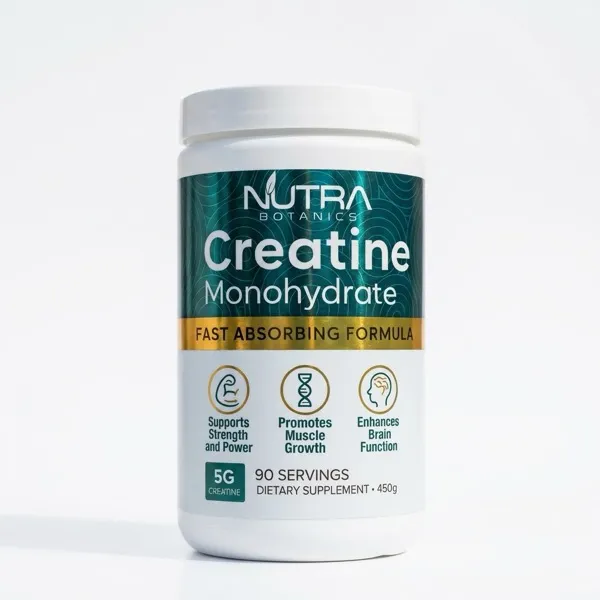
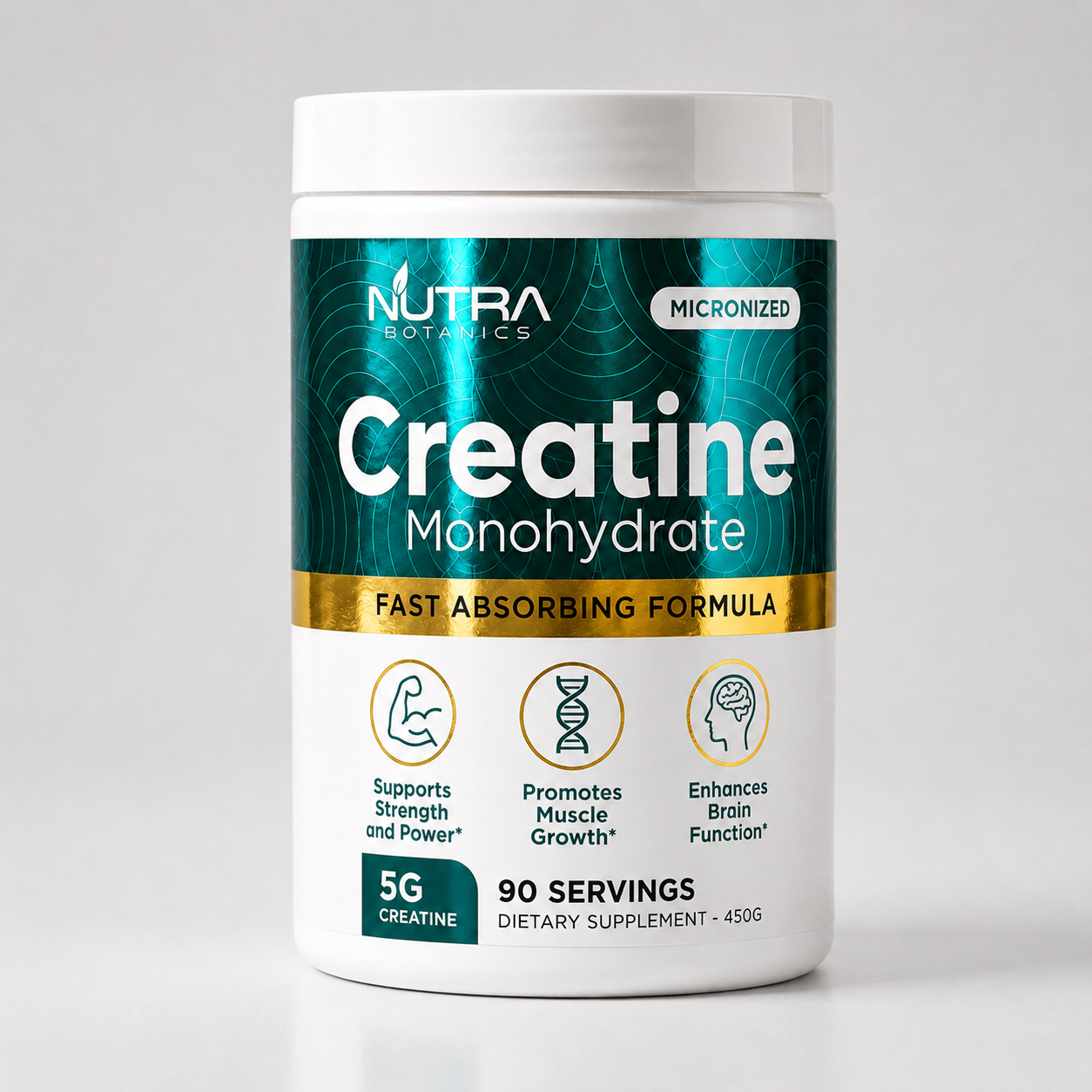
Creatine Monohydrate
Micronized · 60 servings
- 5g pure micronized monohydrate per serving
- Unflavored · mixes clean in any liquid
- GMP & NSF certified · PhD-supervised testing
- No fillers, stimulants, or artificial additives
$29.95Free shipping over $75
Shop Creatine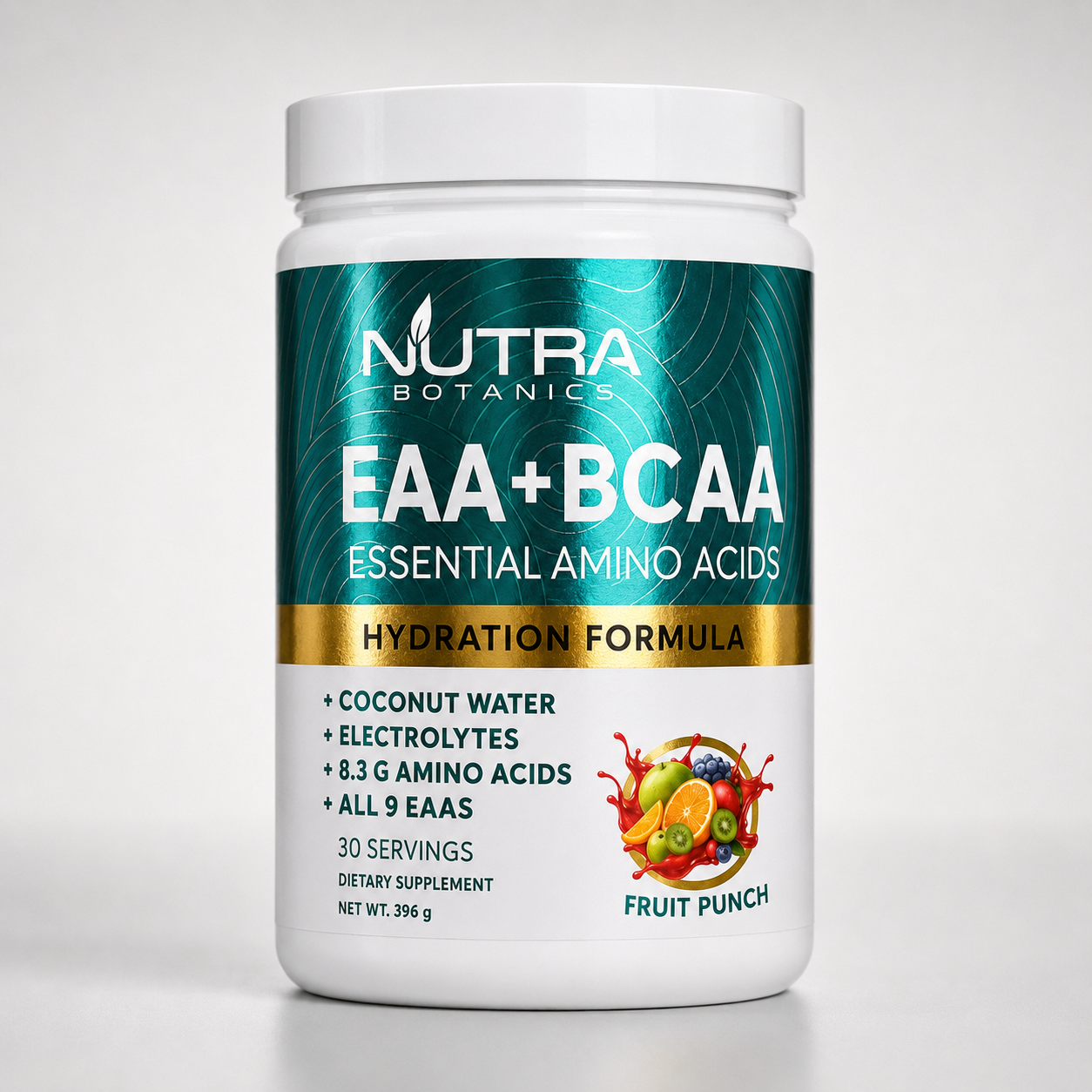
EAA Complex
Recovery · 30 servings
- All 9 essential amino acids for muscle repair
- Supports training volume during creatine loading
- Electrolytes to offset increased hydration needs
- Zero sugar · light citrus flavor
$34.95Subscribe & save 20%
Shop EAA Complex