Key Takeaway
- Standard effective dose is 3–5g of creatine monohydrate per day — loading is optional.
- Consistency beats timing — post-workout has a slight edge, but any consistent daily time works.
- Take creatine on rest days too — daily dosing maintains muscle saturation.
- Mix with water, juice, or a shake — warm water improves dissolution.
- Most people don't see results for 2–4 weeks without loading — that's normal.
Take 3–5g of creatine monohydrate daily, with or without food. Timing matters less than consistency — take it at the same time each day. Post-workout is slightly preferred in research. Loading (20g/day for 5–7 days) is optional and speeds up saturation but produces the same long-term results.*
Key Takeaways
- 3–5g per day is the standard research-supported maintenance dose
- Loading (20g/day for 5–7 days) saturates faster but reaches the same endpoint — it is optional
- Timing matters less than consistency — daily intake is what drives muscle saturation
- Mix with water, juice, or a protein shake; temperature does not affect potency
- Benefits emerge after 2–4 weeks of consistent daily use; missing a single day does not reset progress
Related reading: Creatine for Women, Creatine for Beginners, When to Take Creatine, Creatine Loading Phase.
The Quick Answer: Standard Creatine Protocol
Dose: 3–5g of creatine monohydrate per day
Timing: Any consistent daily time. Post-workout preferred if training that day; morning or evening on rest days.
With or without food: Either works. With food or a shake slightly reduces any digestive discomfort.
Time to full saturation: 3–4 weeks of consistent daily intake.
After saturation: Continue the same daily dose indefinitely to maintain elevated stores.
Loading phase (Days 1–7): 20g per day, split into 4–5 doses of 4–5g throughout the day.
Maintenance phase (Day 8+): 3–5g per day, same as standard protocol.
Time to full saturation: 5–7 days.
Note: Loading can cause digestive discomfort. Always split into small doses. See: Creatine Loading Phase: Do You Actually Need It?
Creatine Dosage by Goal
| Goal | Daily Dose | Notes |
|---|---|---|
| General fitness & body composition | 3–5g/day | Most people, most goals. Start at 3g and increase if needed. |
| Strength & power sports | 5g/day | Upper end of standard dose. Optional loading for faster results. |
| Women over 40 / older adults | 3–5g/day | Same dosing. Lower baseline stores mean proportionally higher impact.* |
| Cognitive support | 3–5g/day | Same as muscle dosing. Some studies used higher doses but standard dose appears effective.* |
| Vegetarians / vegans | 3–5g/day | Very low dietary baseline means strong response to supplementation at standard dose.* |
Timing: Does It Actually Matter?
The timing debate in creatine research is settled enough to summarize clearly: consistency beats perfect timing, but post-workout has a modest evidence advantage.
A 2013 study in the Journal of the International Society of Sports Nutrition compared pre-workout vs. post-workout creatine supplementation and found that post-workout led to slightly greater lean muscle mass gains and greater fat loss over a 4-week period. The effect was real but not dramatic.
The practical takeaway: if you're training that day, take your creatine after your session. On rest days, timing is irrelevant — just take it at whatever time you're most likely to remember.
What to Mix Creatine With
Creatine monohydrate is flavorless and dissolves in most liquids. Your options:
- Water: Simplest. Warm water improves dissolution significantly. Micronized creatine dissolves much better than regular powder.
- Juice: The carbohydrates in juice may enhance creatine uptake via insulin-mediated transport. Some research supports this, though the effect is modest and not required for saturation.
- Protein shake: Excellent option — convenient and the combination of creatine + protein is well-studied for muscle outcomes.
- Coffee or tea: Some older research suggested caffeine might blunt creatine's ergogenic effects, but more recent evidence doesn't support a significant interaction at typical doses. If you use caffeine daily, taking creatine with it is fine.
- Yogurt: Works well. Creatine mixes into yogurt easily.
Should You Take Creatine on Rest Days?
Yes. This is one of the most common beginner mistakes — only taking creatine on workout days. Creatine's benefits come from maintaining chronically elevated intramuscular phosphocreatine stores. That requires daily intake, not just pre- or post-workout loading.
If you skip rest days, stores gradually decline and you'll spend more time sub-saturated — partially undoing the work of the weeks you did take it consistently.
Rest-day dose is the same (3–5g) but timing doesn't matter — take it whenever is convenient.
How Long Before You See Results
Without loading, expect to wait 3–4 weeks before noticing changes. This frustrates many beginners who expect immediate effects. Creatine doesn't work like caffeine — it works by building up stores over time, not by producing an acute effect on the day you take it.
What you may notice as stores build up:
- Weeks 1–2: Possibly slightly fuller muscles (water stored with phosphocreatine). Maybe a 1–2 lb scale increase.
- Weeks 3–4: Workout performance improvements — extra reps at the same weight, shorter recovery between sets, slightly better pump.
- Months 1–3: Measurable lean mass and strength gains beyond what training alone produces.*
8 Common Creatine Mistakes
Frequently Asked Questions
How much creatine should I take per day?
The research-supported standard dose is 3–5g of creatine monohydrate per day for maintenance. This dose will saturate your muscle creatine stores in 3–4 weeks with consistent daily use. If you do a loading phase first (20g/day for 5–7 days), you can reach saturation faster and then drop to 3–5g/day for maintenance.
When is the best time to take creatine?
Research shows post-workout timing may have a slight edge for body composition outcomes, but the difference is small and consistency matters far more than precise timing. Take creatine at whichever time you can be most consistent — before or after training, with breakfast, or any other fixed daily time.
Should I take creatine on rest days?
Yes. Creatine works by maintaining elevated muscle creatine stores, which requires daily intake. Missing rest days causes a gradual decline in muscle creatine saturation. The dose on rest days can be the same (3–5g) and timing is flexible — just take it consistently daily.
What should I mix creatine with?
Creatine monohydrate mixes well with water, juice, protein shakes, or yogurt. Warm water helps it dissolve more completely. Mixing with carbohydrates (like juice) may enhance uptake slightly through an insulin-mediated mechanism, though this is not critical for most users.
Do I need to load creatine?
Loading is optional. A 5–7 day loading phase at 20g/day (split into 4 doses) saturates muscle stores faster, but the long-term result is the same as the standard 3–5g/day approach. Most people skip loading because the standard dose works well and avoids potential GI discomfort.
Should I cycle creatine?
No. There is no evidence that cycling creatine on and off provides any benefit. Cycling just causes stores to deplete and resaturate repeatedly. Consistent daily use is the simplest and most effective approach. More on creatine myths.
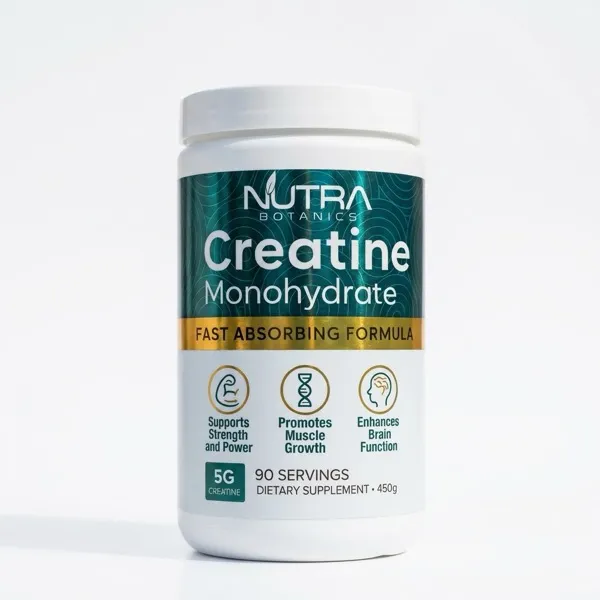
Creatine Monohydrate
Micronized · 60 servings
- 5g pure micronized monohydrate per serving
- Unflavored · mixes clean in any liquid
- Third-party tested for purity · GMP certified
- No fillers, stimulants, or artificial additives
$29.95Free shipping over $50
Shop Creatine
EAA Complex
Recovery · 30 servings
- All 9 essential amino acids for muscle repair
- Electrolytes for sustained hydration
- Zero sugar · light citrus flavor
- Pairs with creatine for optimal training support
$34.95Subscribe & save 20%
Shop EAA Complex