

Related reading: Does Collagen Actually Work? (Research Review), 12 Foods That Boost Collagen Production, How Much Collagen Per Day, Best Time to Take Collagen.
Understanding Joint Pain and Cartilage Loss
Joint pain is one of the most common health complaints worldwide, affecting an estimated 350 million people globally. Whether caused by aging, athletic activity, injury, or conditions like osteoarthritis, the underlying mechanism is remarkably similar: the cartilage that cushions your joints gradually breaks down faster than your body can repair it, leading to friction, inflammation, stiffness, and pain.
Cartilage is the smooth, rubbery tissue that covers the ends of bones where they meet at a joint. It acts as a shock absorber and provides a frictionless surface that allows bones to glide smoothly against each other during movement. Unlike most tissues, cartilage has no blood supply of its own, which means it relies entirely on the surrounding joint fluid for nutrients and has a very limited capacity for self-repair once damaged.
This limited regenerative capacity is why joint problems tend to be progressive. Once cartilage begins to thin and degrade, the process tends to accelerate unless you intervene with the right nutritional support. And at the core of cartilage's structure is one key protein: collagen.
The Role of Collagen in Joint Health
Collagen is the primary structural protein in cartilage, making up approximately 70% of its dry weight. Specifically, Type II collagen forms the fibrillar network that gives cartilage its tensile strength and resilience. This collagen network is embedded in a matrix of proteoglycans, large molecules that attract and hold water, giving cartilage its compressive resistance and cushioning properties.
When collagen fibers in cartilage begin to degrade, the entire structure weakens. The proteoglycan matrix loses its anchor points, water retention decreases, and the cartilage becomes thinner and less effective at absorbing shock. This is when you start feeling stiffness after sitting for long periods, hear clicking or popping sounds during movement, or experience pain during activities that previously caused no discomfort.
The body is constantly breaking down and rebuilding collagen in cartilage, but this turnover rate is extremely slow, with a half-life measured in years rather than weeks. After about age 30, the rate of breakdown begins to exceed the rate of synthesis, leading to a net loss of cartilage collagen over time. This is where collagen supplementation enters the picture as a strategy to tip the balance back toward repair and regeneration.
How Type II Collagen Works Differently Than Type I
Type II collagen works through a fundamentally different mechanism than Type I collagen (the type used for skin health). While Type I collagen primarily provides raw materials for collagen synthesis, Type II collagen operates through a process called oral tolerance or immune modulation.
When you ingest undenatured Type II collagen, small amounts are recognized by immune cells in the gut-associated lymphoid tissue (GALT). This interaction trains the immune system to stop attacking the collagen in your own cartilage, a process that contributes to the inflammatory component of joint degradation.
Hydrolyzed collagen for joints works differently: the small peptides are absorbed into the bloodstream and accumulate in cartilage tissue, where they stimulate chondrocyte cells (the cells responsible for cartilage maintenance) to increase production of new collagen and proteoglycans. Studies using radiolabeled collagen peptides have confirmed that orally ingested collagen does accumulate preferentially in joint cartilage.
This dual mechanism — immune modulation and support for chondrocyte activity and cartilage maintenance — is what makes collagen supplementation a compelling approach for joint wellness support.*

What the Clinical Research Shows
The evidence base for collagen supplementation and joint health has grown significantly over the past fifteen years. Multiple well-designed clinical trials have demonstrated that collagen can reduce joint pain, improve mobility, and support cartilage integrity in both athletes and people with osteoarthritis.
"The results of this 24-week clinical trial demonstrated that collagen hydrolysate supplementation significantly reduced activity-related joint pain in athletes with no evidence of joint disease. These findings suggest that collagen supplementation may help protect joint cartilage in populations subjected to high mechanical stress."
Clark et al., Current Medical Research and Opinion, 2008 — 24-Week Randomized Clinical Trial in 147 AthletesA pivotal 2009 study published in the International Journal of Medical Sciences studied 250 subjects with knee osteoarthritis over 24 weeks. Those taking hydrolyzed collagen showed significant improvements in the Western Ontario and McMaster Universities Osteoarthritis Index (WOMAC), a validated measure of joint pain, stiffness, and physical function. The improvements were most pronounced in subjects with the most severe joint degradation at baseline.
More recent research has been equally encouraging. A 2016 study in Applied Physiology, Nutrition, and Metabolism followed athletes with activity-related joint pain and found that collagen supplementation significantly reduced pain during movement, at rest, and when carrying objects. The benefits continued to increase throughout the 24-week study period, suggesting that longer use produces better results.
Collagen vs. Other Joint Supplements
If you have looked into joint supplements before, you have likely encountered glucosamine and chondroitin, two of the most widely used joint health ingredients. While these supplements have been popular for decades, the evidence supporting them has been mixed, and recent large-scale trials have questioned their effectiveness. Here is how collagen compares to these traditional alternatives.
| Feature | Collagen | Glucosamine | Chondroitin |
|---|---|---|---|
| Mechanism | May support chondrocyte activity and cartilage maintenance; supports healthy joint immune response* | Provides building blocks for glycosaminoglycans in cartilage | Inhibits cartilage-degrading enzymes; retains water in cartilage |
| Time to Onset | 4-12 weeks for initial benefits; 24 weeks for full effect | 8-12 weeks for initial benefits | 8-16 weeks for initial benefits |
| Evidence Level | Strong — multiple RCTs and meta-analyses support joint benefits | Mixed — some positive studies, but large trials (e.g., GAIT) showed limited benefit vs. placebo | Moderate — some evidence for slowing cartilage loss, but inconsistent pain relief results |
| Common Forms | Hydrolyzed collagen peptides, undenatured Type II collagen, liquid collagen | Glucosamine sulfate, glucosamine HCl (capsules, tablets) | Chondroitin sulfate (capsules, often combined with glucosamine) |
| Additional Benefits | Also supports skin, hair, nails, bone density, and gut health | Limited to joint support | Limited to joint support |
One of collagen's most significant advantages over glucosamine and chondroitin is its multi-system benefits. While traditional joint supplements are limited to joint support, collagen simultaneously supports skin health, bone density, gut integrity, and connective tissue strength. This makes it a more versatile and cost-effective choice for overall wellness.
Who Benefits Most from Collagen for Joints?
While collagen supplementation can benefit virtually anyone concerned about long-term joint health, certain groups stand to gain the most significant benefits:
- Athletes and active individuals: High-impact exercise, running, weight training, and sports place significant stress on joints. Collagen supplementation helps protect cartilage from wear and supports recovery between training sessions. Clinical trials have shown particular benefit for athletes with activity-related joint pain.
- Adults over 40: Natural collagen production declines steadily after age 30, and by your forties the cumulative loss of cartilage collagen can begin causing noticeable stiffness and discomfort. Starting collagen supplementation before joints become symptomatic is an effective preventive strategy.
- People with osteoarthritis: Multiple clinical trials have demonstrated that collagen supplementation reduces pain, stiffness, and functional limitation in people with osteoarthritis. It can be used alongside conventional treatments and is well-tolerated with minimal side effects.
- Post-injury recovery: After a joint injury, collagen supplementation can support the repair process by providing the raw materials needed for cartilage and connective tissue regeneration.
- People with physically demanding occupations: Jobs that involve repetitive movements, heavy lifting, prolonged standing, or kneeling place chronic stress on joints and accelerate cartilage wear.
Dosage, Timing, and What to Expect
Clinical trials for joint health have typically used doses of hydrolyzed collagen ranging from 8,000 mg to 12,000 mg per day, or 40 mg per day of undenatured Type II collagen. The key difference in these dosing strategies reflects the different mechanisms at work: hydrolyzed collagen provides raw materials that support cartilage maintenance, while undenatured Type II collagen works through immune modulation at much smaller doses.
Joint health support generally develops more gradually than skin-related benefits. Cartilage turnover is a slow process, and consistency is essential — taking collagen every day without interruption gives your body sustained support over time. Individual experiences vary.*
Many people make the mistake of stopping collagen supplementation once they start feeling better. However, because joint cartilage has limited regenerative capacity and is under constant mechanical stress, the benefits tend to diminish over time if supplementation is discontinued. For long-term joint health, think of collagen as an ongoing nutritional strategy rather than a short-term treatment.
Choosing the Right Joint Collagen Supplement
When selecting a collagen supplement specifically for joint health, there are several important factors to consider. First, look for a formula that includes either hydrolyzed collagen peptides at a meaningful, research-informed dose (5,000 mg or more per serving) or undenatured Type II collagen. Ideally, choose a product that combines collagen with complementary joint-supporting ingredients like hyaluronic acid, vitamin C, or anti-inflammatory botanicals.
The delivery format matters as well. Liquid collagen offers superior absorption compared to capsules and powders because the peptides are already dissolved and ready for your body to absorb. This faster absorption means more collagen reaches your joints in a shorter period of time.
Finally, choose a brand that is transparent about its sourcing, uses third-party testing to verify purity and potency, and manufactures in a GMP-certified facility. Joint supplements are something you will be taking daily for the long term, so quality and safety should be non-negotiable criteria.
- Collagen makes up 70% of cartilage and is essential for joint cushioning, flexibility, and resilience.
- Clinical trials demonstrate 25-40% reductions in joint pain, stiffness, and functional limitation with consistent collagen supplementation over 24 weeks.
- Type II collagen works through immune modulation to reduce cartilage-attacking inflammation, while hydrolyzed collagen provides raw materials that support cartilage maintenance.
- Collagen offers advantages over glucosamine and chondroitin, including stronger evidence, multi-system benefits, and better overall value.
- Athletes, adults over 40, people with osteoarthritis, and those with physically demanding lifestyles stand to benefit most from joint-focused collagen supplementation.
*These statements have not been evaluated by the Food and Drug Administration. This product is not intended to diagnose, treat, cure, or prevent any disease. Individual results may vary.
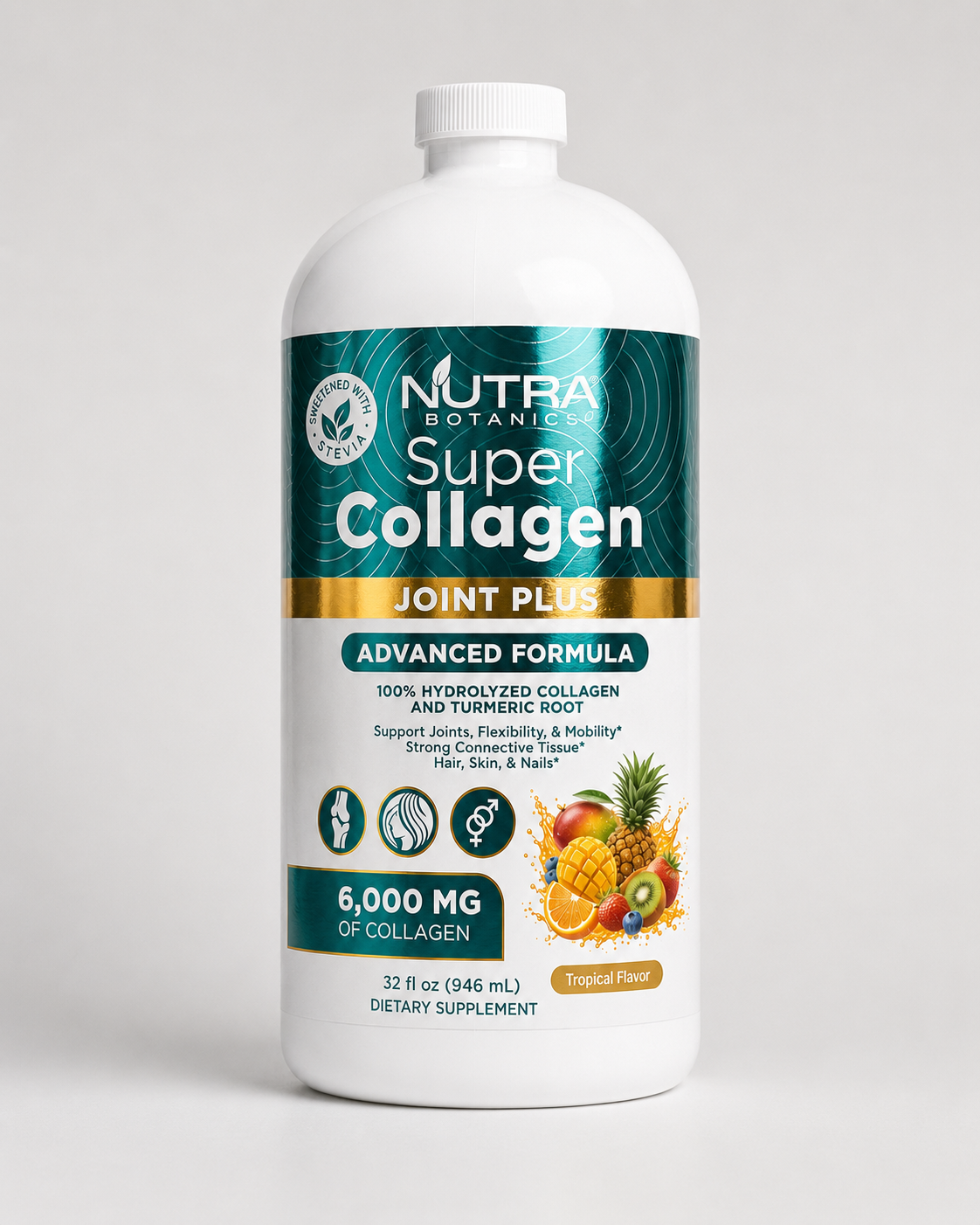
Which type of collagen is best for joint pain?
Type II collagen is the primary structural protein in cartilage and is specifically associated with joint health. Hydrolyzed Type I and III peptides also support the connective tissue surrounding joints. For comprehensive joint support, hydrolyzed collagen peptides at 10–15g per day covering multiple collagen types is the most practical approach.*
Should I take collagen with anything else for joint pain?
Vitamin C is essential — it is a required cofactor for collagen synthesis and should always be taken alongside collagen. Omega-3 fatty acids address joint inflammation, which complements collagen's structural role. Staying well-hydrated also supports joint lubrication and collagen distribution throughout the body.*
Can athletes use collagen to prevent joint injuries?
Research supports collagen supplementation as a preventive strategy for athletes, particularly for tendons, ligaments, and joint cartilage. A study found that collagen peptides taken before exercise may enhance collagen synthesis in tendons. Many sports medicine practitioners now recommend hydrolyzed collagen as part of injury prevention protocols.*
Is collagen better than glucosamine for joint pain?
They work through different mechanisms and are often most effective together. Glucosamine is a building block for cartilage glycosaminoglycans. Collagen provides structural peptides for the collagen matrix of cartilage and tendons. Research on hydrolyzed collagen shows results comparable to or better than glucosamine alone.*
How much collagen per day is needed for joint support?
Studies demonstrating joint benefits used doses of 10–15g of hydrolyzed collagen peptides per day. For runners and athletes with exercise-induced joint discomfort, some research suggests taking collagen with vitamin C before activity may specifically support tendon and ligament collagen synthesis around active joints.*
Move Freely. Live Fully.
Support your joints with premium, research-informed collagen formulas — made in a GMP & NSF certified facility with PhD-supervised testing, formulated for your active lifestyle.*
Shop Joint SupportMove Freely. Live Fully.
Support your joints with premium, research-informed collagen formulas — made in a GMP & NSF certified facility with PhD-supervised testing, formulated for your active lifestyle.*
Shop Joint SupportFrequently Asked Questions
How long does it take for collagen to help joint pain?
Which type of collagen is best for joint pain?
Should I take collagen with anything else for joint pain?
Can athletes use collagen to prevent joint injuries?
Is collagen better than glucosamine for joint pain?
How much collagen per day is needed for joint support?
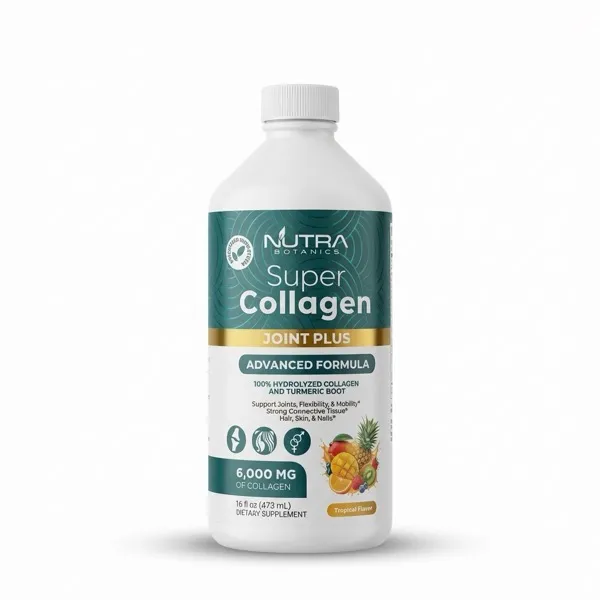
Super Collagen Liquid
Hydrolyzed Peptides · 30 servings
- 6,000mg hydrolyzed collagen peptides per serving
- Liquid format for maximum bioavailability
- Supports hair, nails, skin, and joints
- GMP & NSF certified · PhD-supervised testing
$39.95Free shipping over $75
Shop Super Collagen
Explore All Collagen Products
Browse the Nutra Botanics collagen range
- Multiple formats: liquid peptides, powders, capsules
- Compare serving sizes, sources, and stack partners
- Find the right format for your routine
- GMP & NSF certified · PhD-supervised testing
Shop the rangeSubscribe & save 20%
Browse Collagen