

Related reading: Does Collagen Actually Work? (Research Review), 12 Foods That Boost Collagen Production, How Much Collagen Per Day, Best Time to Take Collagen.
Why Knee Pain Is So Common
Your knees are engineering marvels, but they also endure extraordinary stress. Every step you take loads your knees with a force equal to roughly 1.5 times your body weight. Climbing stairs? That number jumps to four times your body weight. Running can generate forces up to eight times your body weight through the knee joint.
Over time, this constant loading wears down articular cartilage, the smooth, rubbery tissue that covers the ends of bones inside the joint. Unlike skin or bone, cartilage has no blood supply, which means it heals incredibly slowly. Once cartilage deteriorates, bone rubs against bone, causing the pain, swelling, and stiffness that characterize osteoarthritis. Age, excess body weight, previous injuries, and repetitive stress all accelerate this process.
How Collagen Supports Knee Cartilage
Articular cartilage is composed primarily of type II collagen, which forms a dense meshwork of fibers that gives cartilage its tensile strength and resilience. As we age, our body's natural collagen production declines by roughly one to two percent per year after age 25. This gradual loss weakens the cartilage matrix, making it more vulnerable to mechanical damage.
When you consume hydrolyzed collagen, your digestive system breaks it down into small peptides and amino acids, including glycine, proline, and hydroxyproline. Research shows that these collagen-derived peptides accumulate preferentially in cartilage tissue after oral ingestion. Once there, they serve two critical functions: they provide raw materials for new cartilage synthesis, and they stimulate chondrocytes, the specialized cells responsible for maintaining cartilage, to increase production of type II collagen and proteoglycans.
In simple terms, collagen supplementation does not just supply building blocks. It sends a biological signal that supports your body's natural cartilage maintenance processes.*
What Clinical Studies Show
The evidence supporting collagen for knee pain has grown substantially over the past decade. Multiple randomized, double-blind, placebo-controlled trials have demonstrated significant improvements in pain, function, and cartilage integrity among people taking collagen supplements.
A landmark 24-week study published in the International Journal of Medical Sciences found that participants taking 10 grams of collagen hydrolysate daily experienced statistically significant improvements in joint comfort during walking, standing, resting, carrying objects, and lifting. The improvements were particularly pronounced among athletes with activity-related joint pain.
"Oral collagen hydrolysate supplementation significantly improved knee joint symptoms, including pain, stiffness, and physical function, in subjects with osteoarthritis. These results suggest that collagen peptides are a safe and effective therapeutic option for the management of osteoarthritis."
International Journal of Medical Sciences, 2024 Meta-AnalysisAnother pivotal trial, a 48-week randomized controlled study of 250 participants with primary knee osteoarthritis, found that daily collagen peptide supplementation led to a 42 percent reduction in walking pain and measurable improvements in cartilage structure as assessed by MRI imaging. The researchers concluded that collagen peptides not only relieve symptoms but may slow the structural progression of osteoarthritis.
Understanding the Knee Joint
Your knee joint is a complex system where multiple collagen-rich structures work together. Articular cartilage, meniscus, ligaments, and tendons all depend on collagen for their structural integrity. When collagen levels decline, these interconnected structures weaken, creating a cascade of joint dysfunction. Understanding this anatomy helps explain why collagen supplementation can have such broad-reaching benefits for knee health.
Collagen vs Other Treatments
Many people with knee pain rely on NSAIDs or physical therapy alone. While both have their place, collagen supplementation offers unique advantages, particularly when it comes to addressing the underlying cartilage deterioration. Here is how these approaches compare.
| Factor | Collagen Supplements | NSAIDs | Physical Therapy |
|---|---|---|---|
| Pain Relief | Gradual, 4-12 weeks | Rapid, within hours | Gradual, 4-8 weeks |
| Cartilage Maintenance Support | May support chondrocyte activity* | Does not support cartilage maintenance | Indirect only |
| Side Effects | Minimal, well-tolerated | GI issues, kidney, cardiovascular risk | Minimal, if guided properly |
| Long-Term Safety | Excellent, studied up to 2 years | Significant concerns with chronic use | Excellent |
| Best Used For | Root-cause support + prevention | Acute flare-up management | Strength + mobility restoration |
The most effective approach to knee health often involves combining all three strategies. Collagen provides nutritional support for cartilage maintenance, physical therapy strengthens surrounding muscles to offload the joint, and NSAIDs can be used sparingly during acute flares as directed by a healthcare provider. This integrated approach addresses both symptoms and underlying causes.
Exercises That Pair with Collagen
Collagen supplementation works best when combined with targeted exercises that stimulate cartilage metabolism and strengthen the muscles supporting your knees. Take your collagen 30-60 minutes before these exercises for optimal results:
Straight Leg Raises: Strengthen the quadriceps without stressing the knee joint. Perform 3 sets of 12 reps per leg.
Wall Sits: Build isometric quad strength. Start with 20-second holds and progress to 60 seconds.
Step-Ups: Use a low step (6-8 inches) to build functional knee strength. 3 sets of 10 per leg.
Swimming or Water Walking: Provide resistance training with minimal joint impact. Aim for 20-30 minutes, 3 times per week.
Cycling: Low-impact cardiovascular exercise that promotes synovial fluid circulation and cartilage nutrition. Start with 15-20 minutes at moderate resistance.

Your 4-Step Knee Health Protocol
Protecting and rebuilding knee health requires a comprehensive approach. Follow this evidence-based protocol for the best results.
Choosing the Right Collagen for Knee Pain
Not all collagen supplements are equally effective for knee health. Look for a formula that combines type II collagen for cartilage support with complementary ingredients like vitamin C, which is essential for collagen synthesis, hyaluronic acid for joint lubrication, and MSM for inflammation reduction. The molecular weight of the collagen peptides matters too: smaller peptides, under 5,000 daltons, are absorbed more efficiently and reach joint tissues more effectively.
Hydrolyzed collagen, also called collagen peptides, has the strongest clinical evidence behind it. Products that are third-party tested for purity and potency give you added confidence that you are getting what the label promises.
*These statements have not been evaluated by the Food and Drug Administration. This product is not intended to diagnose, treat, cure, or prevent any disease. Individual results may vary.
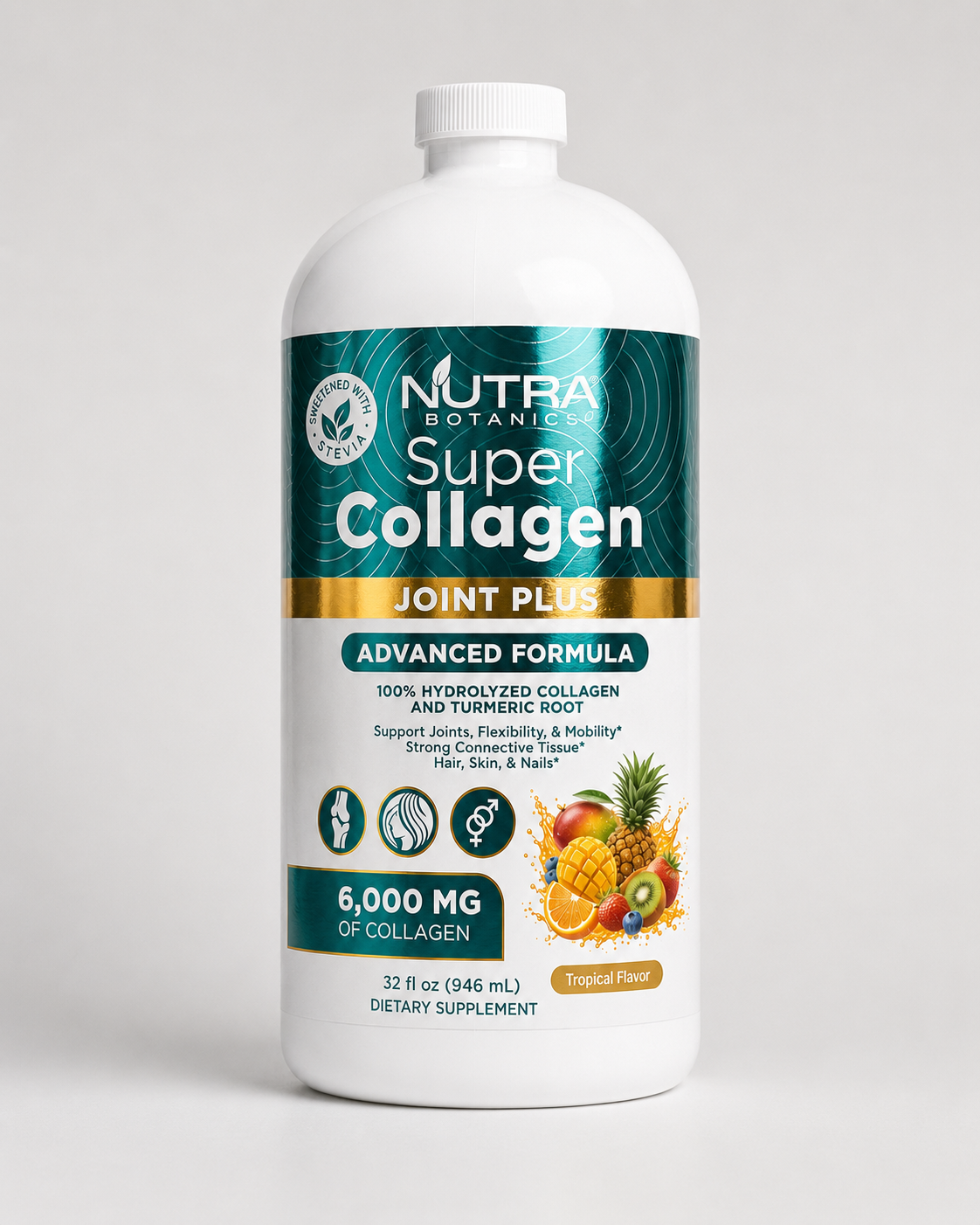
Research on collagen supplementation for knee joint health continues to grow. With 10 grams of hydrolyzed collagen daily, many individuals incorporate collagen into a consistent wellness routine that also includes low-impact exercise, healthy weight management, and a balanced diet. Collagen is a well-tolerated dietary supplement with a strong safety profile for long-term use.* Individual results vary.
Support Your Joints. Stay Moving.
Explore our research-informed joint support supplements — made in a GMP & NSF certified facility with PhD-supervised testing, formulated for those who take their wellness seriously.*
Shop Joint SupportSupport Your Joints. Stay Moving.
Explore our research-informed joint support supplements — made in a GMP & NSF certified facility with PhD-supervised testing, formulated for those who take their wellness seriously.*
Shop Joint SupportFrequently Asked Questions
What type of collagen is best for knee pain?
Type II collagen is the primary structural protein in cartilage and is most directly relevant to knee health. Undenatured type II collagen (UC-II) has shown results at doses as low as 40 mg per day. Hydrolyzed collagen peptides (types I and III) also support joint tissue at higher doses of 10–15 g per day by providing the amino acids needed for cartilage repair.
How long does it take for collagen to help knee pain?
Most clinical studies show measurable improvements in knee pain and stiffness starting around 8–12 weeks of consistent daily supplementation. Some individuals report noticeable comfort improvements within 4–6 weeks, but cartilage remodeling is a slow biological process that benefits from long-term use.
Can collagen rebuild knee cartilage?
Collagen supplementation provides the amino acid building blocks — particularly glycine, proline, and hydroxyproline — that your body uses to synthesize new cartilage matrix. While it does not reverse severe cartilage loss, studies show it can slow degradation, reduce inflammation markers, and support the natural repair processes in mild to moderate cartilage wear.
Is collagen better than glucosamine for knee pain?
Both have clinical evidence supporting their use. Glucosamine supports the production of glycosaminoglycans in cartilage, while collagen provides the structural protein framework. Some research suggests UC-II collagen outperforms the glucosamine-chondroitin combination for joint comfort scores. Many practitioners recommend combining both for comprehensive joint support.
Should I take collagen before or after exercise for knee health?
Research by Keith Baar and colleagues suggests taking collagen peptides with vitamin C roughly 30–60 minutes before exercise. This timing may increase collagen synthesis in tendons and ligaments during the recovery window that follows physical activity, making your workout a catalyst for joint repair.
Should I take collagen before or after knee surgery?
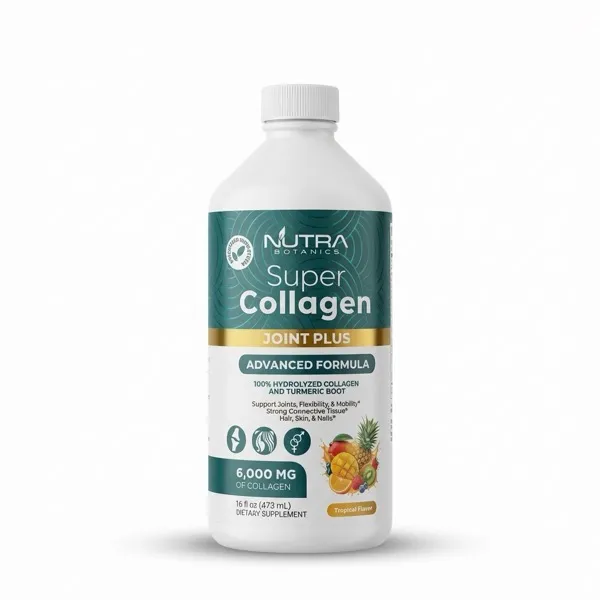
Super Collagen Liquid
Hydrolyzed Peptides · 30 servings
- 6,000mg hydrolyzed collagen peptides per serving
- Liquid format for maximum bioavailability
- Supports hair, nails, skin, and joints
- GMP & NSF certified · PhD-supervised testing
$39.95Free shipping over $75
Shop Super Collagen
Explore All Collagen Products
Browse the Nutra Botanics collagen range
- Multiple formats: liquid peptides, powders, capsules
- Compare serving sizes, sources, and stack partners
- Find the right format for your routine
- GMP & NSF certified · PhD-supervised testing
Shop the rangeSubscribe & save 20%
Browse Collagen