
Key Takeaway
No — the first direct test of the question now exists, and it found no effect. Lak et al. (2025) ran a 12-week randomized controlled trial in 45 resistance-trained men, dosing 5 g/day creatine monohydrate against placebo, and measured hair-follicle health directly via dermatological assessment alongside total testosterone, free testosterone, and DHT. The authors describe their results as "strong evidence against the claim that creatine contributes to hair loss."*
- Lak 2025 — first RCT to directly assess hair follicles after creatine supplementation; no adverse effect at 5 g/day over 12 weeks
- The 2009 rugby study that started the concern measured a DHT shift in 20 men — it never measured hair, and Lak 2025 supersedes it as direct evidence
- DHT elevation from creatine, if any, is modest and unlikely to cause hair loss in those without genetic predisposition
- The American Academy of Dermatology does not list creatine as a hair-loss risk factor
- If you have genetic hair loss (androgenic alopecia), consult your doctor — but current direct evidence does not require avoiding creatine
"Does creatine cause hair loss?" is one of the most searched questions about this supplement. It's asked by men who are thinking about starting creatine but are worried about going bald. It's repeated on forums as established fact. It's cited as a reason to avoid a supplement that has more supporting research than almost anything else in sports nutrition.
The entire claim traces back to a single study with 20 participants, published in 2009. That study did not measure hair loss. Not a single hair was counted. Here's what it actually found — and what the broader body of evidence says.*
The Short Answer
The first randomized trial to directly measure hair-follicle health after creatine supplementation found no adverse effect. Lak et al. (2025) randomized 45 resistance-trained men (ages 18–40) to 5 g/day creatine monohydrate or placebo for 12 weeks, and assessed follicles dermatologically alongside total testosterone, free testosterone, and DHT. The authors concluded their data provide "strong evidence against the claim that creatine contributes to hair loss" — at the standard 5 g/day dose, no loading required.
The original concern came from a 2009 study in 20 rugby players that measured a DHT shift in blood and never looked at hair. For the general population — and especially anyone without a genetic predisposition to male pattern baldness — the direct evidence now supports continuing creatine without a hair-related caveat. For those with a strong family history of androgenetic alopecia, the question still deserves nuance — explained below.*
The One Study Behind This Claim
What they did: 20 male rugby players were randomized to creatine (25g/day loading for 7 days, then 5g/day for 14 days) or placebo. Blood was drawn to measure testosterone and DHT (dihydrotestosterone) levels before, during, and after supplementation.
What they found: DHT levels increased ~56% during the loading week and remained ~40% above baseline during the maintenance phase. The DHT-to-testosterone ratio also increased significantly. Testosterone itself did not change significantly.
What they did NOT find or measure: No participants reported hair loss. No hair counts were performed. No follicle assessments were done. The study did not conclude that creatine causes hair loss — the authors noted this would require further investigation.
- Sample size of 20 is far too small to establish causation
- All participants were college-aged males — results may not apply broadly
- DHT levels, while elevated from baseline, remained within the normal physiological reference range
- No study has replicated the DHT increase finding — subsequent research has produced mixed results
- Hair loss was never measured, observed, or reported at any point in the study
- The study itself called for further research before drawing conclusions
The 2025 RCT That Finally Answered the Question
For sixteen years, the entire creatine–hair loss debate was anchored to a single 20-person study that never measured hair. That changed in 2025. Lak and colleagues published the first randomized controlled trial designed specifically to test whether creatine supplementation affects hair follicles — directly, not by inference from a hormone ratio.*
What they did: 45 resistance-trained men were randomized to 5 g/day creatine monohydrate (the standard maintenance dose, no loading phase) or placebo for 12 weeks. Hair follicle health was evaluated by dermatological assessment — the first time this has been done in a creatine trial. The team also tracked total testosterone, free testosterone, and DHT throughout.
What they found: No adverse effect on hair follicles in the creatine group compared to placebo. Androgen measurements did not show a pattern consistent with the 2009 DHT-spike narrative. The authors concluded their results provide "strong evidence against the claim that creatine contributes to hair loss."
Why this matters: Every prior discussion of creatine and hair loss had to reason from a surrogate (a hormone ratio in 20 rugby players) to an outcome (hair). Lak 2025 measured the outcome itself, at the dose almost everyone actually uses, for a duration long enough for follicle changes to register clinically.*
How Hair Loss Actually Works
To understand whether the DHT finding in that study is clinically meaningful, you need to understand how androgenetic alopecia (male pattern baldness) actually happens. It is not simply a matter of how much DHT is circulating in your blood.
DHT Levels in Context: Where Does the Study's Finding Actually Land?
Normal male DHT reference range: 300–850 pg/mL (varies by lab). Study participants' pre-supplementation DHT was estimated ~450 pg/mL. Post-loading increase of ~56% brought estimated levels to ~700 pg/mL — still within the normal physiological range. Values are approximate based on reported percentage changes.
The chart illustrates a key point that gets lost in the media retelling of this study: even after the ~56% DHT increase during the loading phase, the participants' DHT levels were still within the accepted normal male physiological range. They did not exceed pathologically elevated levels. For comparison, men on anabolic steroids can experience DHT levels several times the upper normal range — a very different situation from a creatine-induced shift that stays within normal bounds.*
What 500+ Studies on Creatine Actually Show
The International Society of Sports Nutrition (ISSN) published a comprehensive position stand on creatine supplementation that analyzed decades of research. The safety profile documented across hundreds of peer-reviewed trials is remarkably consistent:
The safety profile documented across hundreds of peer-reviewed trials is remarkably consistent:
- No clinically significant adverse effects on kidney or liver function in healthy individuals
- No documented cases of hair loss attributable to creatine supplementation
- No adverse cardiovascular effects
- No documented hormonal disruption causing negative health outcomes
- Long-term use (years of daily supplementation) shows no accumulating toxicity
The ISSN, the American College of Sports Medicine, and other major sports science bodies have reviewed the full evidence base and arrived at the same conclusion: creatine monohydrate is safe for healthy individuals. Hair loss is not listed as a documented side effect in any major clinical review.*
Putting the Evidence in Perspective
Evidence score based on number of independent studies, replication, sample sizes, and directness of measurement. The hair loss claim is based on 1 unreplicated study that did not directly measure hair loss.
Who, If Anyone, Should Be Cautious?
| Profile | Hair Loss Risk | Recommendation |
|---|---|---|
| No family history of male pattern baldness | Very Low | The DHT finding from the 2009 study is unlikely to be meaningful for you. No change in practice warranted.* |
| Family history of MPB (father, maternal grandfather) | Low–Moderate | You have a genetic predisposition. Discuss with a dermatologist if hair health is a concern. Monitor for any changes over the first few months of use.* |
| Already experiencing early androgenetic alopecia | Moderate | If your hair loss is already active, any DHT increase (even within normal range) warrants discussion with a healthcare provider before starting.* |
| On finasteride or dutasteride (DHT blockers) | Low | DHT-blocking medications largely neutralize any potential concern from DHT fluctuations. Discuss with your prescribing physician.* |
| Women | Very Low | Women naturally have much lower DHT levels. Androgenetic alopecia in women operates through different mechanisms. The 2009 study was in males only.* |
The hair loss claim is not fabricated — it originates from a real study that found a real hormonal change. But the leap from "DHT ratio increased in 20 rugby players" to "creatine causes hair loss" is not supported by the evidence.
If you have a strong family history of male pattern baldness and it's something you're actively concerned about, it's reasonable to discuss any supplementation — including creatine — with your dermatologist. That's a sensible precaution for anyone managing androgenetic alopecia, not a creatine-specific warning.*
Frequently Asked Questions
Did the 2009 study actually show participants losing hair?
Has any other study replicated the DHT increase finding?
I've been taking creatine for months and my hair seems thinner. Is creatine the cause?
Does creatine affect hormones in any other way?
Should women worry about this?
If I have a family history of male pattern baldness, should I avoid creatine?
Current evidence does not require avoiding creatine even with a family history of male pattern baldness; however, if you are concerned or already managing active androgenetic alopecia, discussing any supplementation with a dermatologist is a sensible precaution.
The 2009 study that prompted this concern measured DHT levels rather than actual hair outcomes, and no study has documented creatine-attributable hair loss. Hair loss decisions in those with genetic predisposition involve many factors, not creatine specifically.
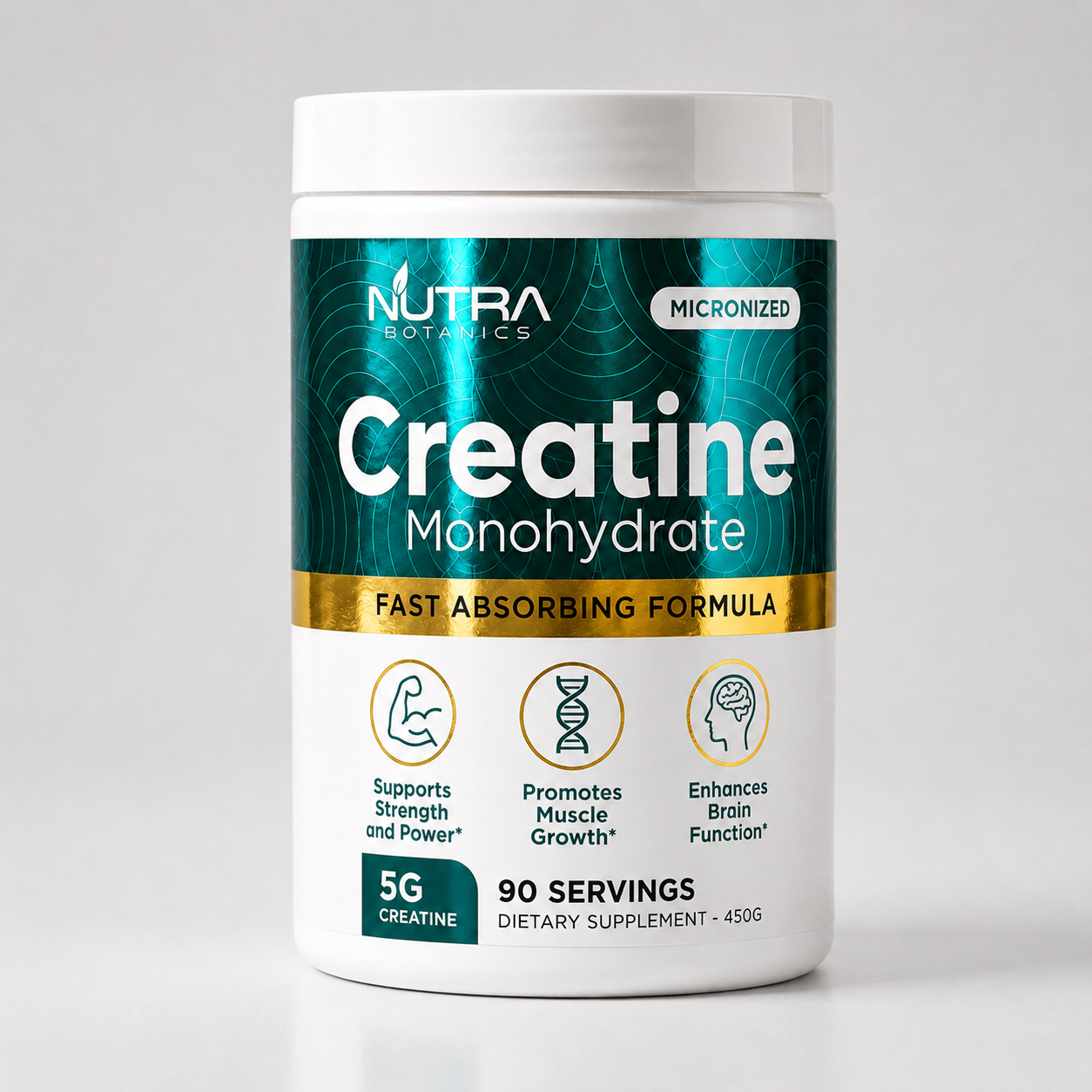
Micronized Creatine Monohydrate
5g pure creatine per serving · 60 servings
- Pure creatine monohydrate · no fillers or blends
- Micronized for easier mixing and absorption
- Unflavored · stacks cleanly with any routine
- GMP & NSF certified · PhD-supervised testing
See pricingFree shipping over $75
Shop Creatine Monohydrate
Explore Performance Support
Browse the Nutra Botanics performance range
- Creatine, BCAA, EAA, and pre-workout options
- Compare formats, dosing, and stack partners
- GMP & NSF certified · PhD-supervised testing
- Subscribe to save 20% on recurring shipments
Shop the rangeSubscribe & save 20%
Browse PerformanceKey Takeaway
Related reading: Creatine for Women, Creatine for Beginners, How to Take Creatine, When to Take Creatine.
- The original concern came from a single 2009 study with 20 rugby players that measured a DHT shift in blood — not hair. Hair was never counted, observed, or reported.*
- Lak et al. (2025) ran the first RCT designed to answer the question directly: 45 resistance-trained men, 5 g/day creatine vs. placebo, 12 weeks, with dermatological assessment of hair follicles plus total testosterone, free testosterone, and DHT. No adverse effect on hair. The authors call their data "strong evidence against the claim that creatine contributes to hair loss."*
- The DHT change in the 2009 study, even taken at face value, kept participants within the normal male physiological range.*
- No study in over 500 peer-reviewed creatine trials has documented hair loss as a side effect or outcome.*
- Hair loss from androgenetic alopecia requires a genetic predisposition (sensitized AR gene). Without it, even elevated DHT does not cause pattern baldness.*
- For people with a strong family history of male pattern baldness who are already managing active hair loss, discussing any supplementation with a dermatologist is a sensible precaution — not specifically a creatine issue.
- For the vast majority of people, the direct evidence now available does not represent a meaningful reason to avoid creatine supplementation.*
Disclaimer: This article is for informational purposes only and does not constitute medical advice. *These statements have not been evaluated by the Food and Drug Administration. This product is not intended to diagnose, treat, cure, or prevent any disease. Consult your healthcare provider before beginning any new supplement regimen, particularly if you have a medical condition or take prescription medications.
Creatine Monohydrate
Micronized · 60 servings
- 5g pure micronized monohydrate per serving
- Unflavored · mixes clean in any liquid
- GMP & NSF certified · PhD-supervised testing
- No fillers, stimulants, or artificial additives
$29.95Free shipping over $75
Shop Creatine