

Key Takeaways
- Common signals: unexpected weight gain, persistent fatigue, cold hands and feet, brain fog, and hair thinning
- Thyroid, iron, and B-vitamin labs are the first place a healthcare provider typically checks
- Metabolism declines 2–5% per decade — most of which is driven by loss of lean muscle
- Strength training preserves metabolically active tissue better than any single nutritional intervention
- Persistent symptoms warrant evaluation — unexplained metabolic changes can reflect underlying conditions
Related reading: How to Boost Your Metabolism, Metabolism After 40, Metabolism Supplements: Studied vs Hype, Green Tea Extract and Metabolism.
What a 'Slow Metabolism' Actually Means
Metabolic rate refers to the total calories your body burns to maintain basic physiological functions (resting metabolic rate or RMR) plus all activity. True metabolic rate differences between people of similar size, age, and muscle mass are relatively small — typically 200–300 calories per day. The reason two people of similar weight can eat very differently and maintain the same weight is often explained by NEAT (non-exercise activity thermogenesis) differences, not fundamental metabolic variation.
That said, genuine metabolic suppression is real. It can result from: years of yo-yo dieting (each restrictive diet cycle reduces muscle mass and suppresses adaptive thermogenesis), thyroid hypofunction (low T3 reduces cellular oxygen consumption and metabolic rate), hormonal imbalances (low estrogen or testosterone, high cortisol), and profound muscle mass loss (from aging without resistance training or from extended very-low-calorie dieting).
Sign 1: Persistent Weight Gain Despite Consistent Eating
If your weight is consistently increasing without any meaningful increase in food intake or reduction in activity, metabolic suppression is a reasonable hypothesis — but it needs to be contextualized. Physiological metabolic suppression sufficient to cause weight gain at truly consistent intake is usually associated with other symptoms (see below). More commonly, 'consistent eating' involves gradual portion creep, liquid calories, or changing food composition that isn't being tracked accurately.
That said, genuine cases exist — particularly in women entering perimenopause or postmenopause, where estrogen decline reduces resting metabolic rate and redistributes fat storage patterns. In this context, the same diet and activity level that maintained weight in the 30s produces gradual weight gain in the 40s and 50s — not through overeating, but through genuine hormonal-metabolic change.
Sign 2: Constant Fatigue and Low Energy
Chronic fatigue — particularly fatigue that doesn't improve with adequate sleep — is a cardinal sign of metabolic dysfunction. The most common metabolic cause is thyroid insufficiency (low T3 reduces cellular ATP production), but low iron, poor mitochondrial function, adrenal insufficiency, and excessive caloric restriction all produce the same presentation.
Fatigue associated with metabolic suppression is typically heaviest in the morning (rather than end-of-day fatigue), accompanied by difficulty concentrating, and doesn't respond to caffeine the way it used to. If you're sleeping adequately but persistently exhausted, a full metabolic panel (thyroid, iron, B12, cortisol, glucose) is worthwhile.
Sign 3: Cold Sensitivity
Thyroid hormone controls the rate at which cells produce heat — a process called thermogenesis. When thyroid function is suboptimal, cells produce less heat, and cold sensitivity becomes noticeable. People with low metabolic rate often feel cold in environments where others are comfortable, have consistently low body temperature readings, and frequently have cold hands and feet.
Thyroid hormone controls the rate at which cells produce heat — a process called thermogenesis.
This is one of the most specific signs of thyroid-related metabolic suppression. It's worth noting that women naturally have higher rates of thyroid dysfunction than men (approximately 7:1 ratio) — and subclinical hypothyroidism (low T3 with normal TSH) is estimated to affect 15–20% of women over 40.
Sign 4: Hair Thinning and Dry Skin
Thyroid hormones regulate cell turnover throughout the body — including in the skin and hair follicles. When metabolic rate is suppressed due to thyroid dysfunction, cell renewal slows. Hair follicles enter the telogen (shedding) phase more readily and grow more slowly during anagen (growth). Skin cells turn over more slowly, resulting in dry, rough texture.
Loss of the outer third of the eyebrows — a somewhat specific finding — is associated with hypothyroidism and metabolic suppression. If hair thinning accompanies several other metabolic symptoms, thyroid evaluation is warranted rather than attributing the hair loss solely to stress or nutrition.
How to Reverse Metabolic Suppression
If metabolic suppression is from chronic dieting, the fix is counterintuitive: eating more — specifically more protein and total calories — while adding resistance training. A metabolic 'diet break' (increasing calories to estimated maintenance for 2–4 weeks) has research support for partially restoring suppressed metabolic rate before returning to a caloric deficit.
Resistance training is the most reliable long-term fix for low metabolic rate — it rebuilds lean muscle mass and restores anabolic hormone signaling. Adequate protein (1.6–2.2g/kg bodyweight) is essential throughout. If thyroid dysfunction is the driver, medical evaluation and treatment is appropriate — lifestyle and supplement interventions alone are insufficient for clinical hypothyroidism.
NutraBotanics Metabolism Bundle
Dual-pathway metabolism support — L-Carnitine 5000mg for fatty acid transport and CLA 2000mg for body composition, bundled to help support metabolic vitality.
Shop Metabolism Bundle →Frequently Asked Questions
How do I know if I have a slow metabolism?
Can I test my metabolism?
Does dieting slow your metabolism?
Can metabolism be permanently damaged by dieting?
What are the best supplements for slow metabolism?
Does thyroid affect metabolism?

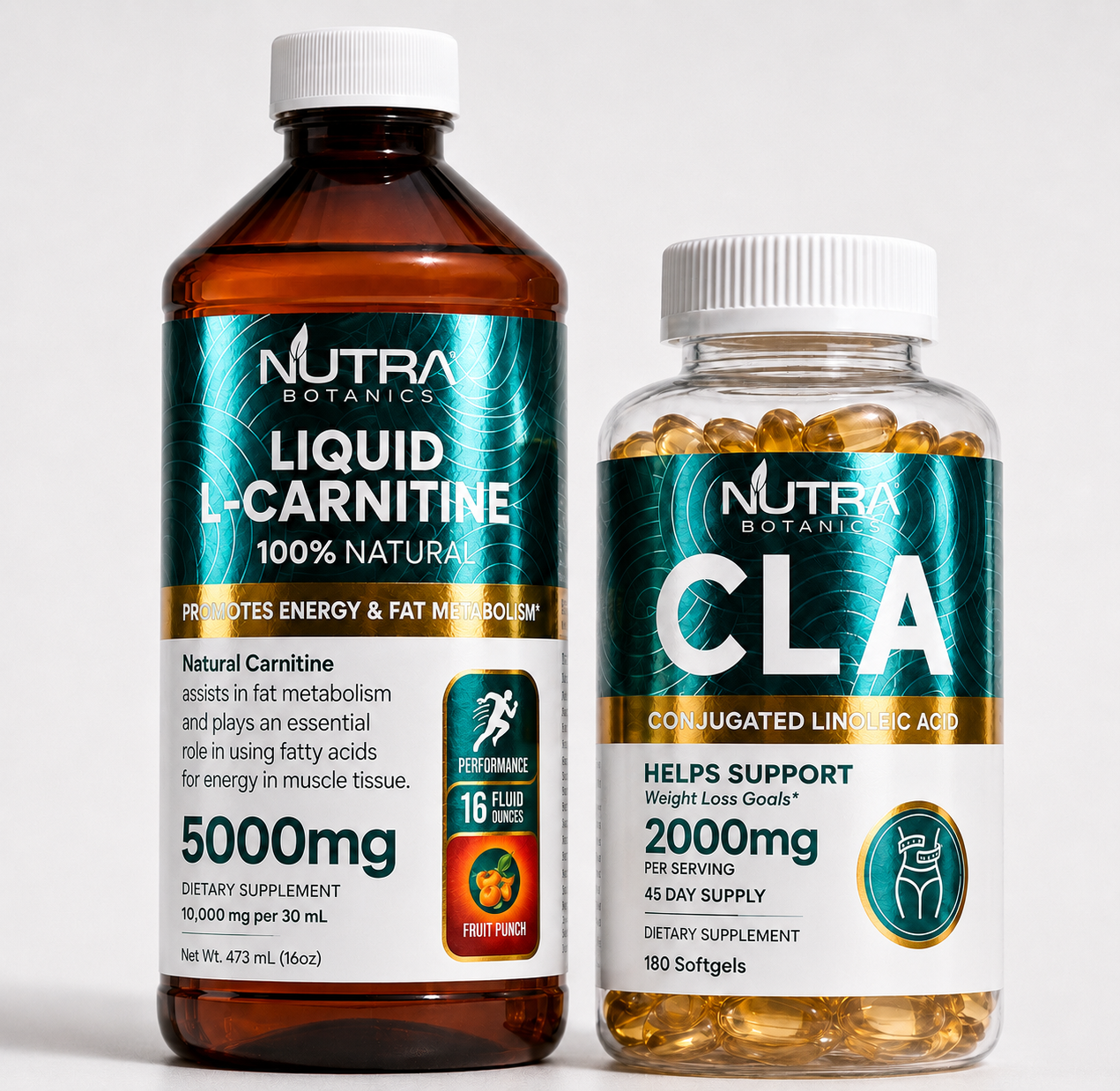
Metabolism Booster Bundle
L-Carnitine 5000mg + CLA 2000mg · Dual-pathway support
- L-Carnitine supports fat transport into mitochondria
- CLA provides a complementary body-composition pathway
- Non-stimulant · bundle saves $11.99 vs individual
- GMP & NSF certified · PhD-supervised testing
See bundle pricingFree shipping over $75
Shop Metabolism Bundle
Explore Metabolism Support
Browse the Nutra Botanics metabolism range
- L-Carnitine, CLA, and bundle options
- Compare formats, dosing, and stack partners
- Non-stimulant pathway options
- GMP & NSF certified · PhD-supervised testing
Shop the rangeSubscribe & save 20%
Browse Metabolism