

Key Takeaways
- After 40, the highest-priority supplements are vitamin D, magnesium, omega-3s, protein, and collagen
- Perimenopause-related symptoms respond to adaptogens like ashwagandha and maca for many women
- Calcium and vitamin D together support bone density; strength training amplifies the effect
- Creatine (3–5g/day) supports lean mass, bone density, and cognition — particularly impactful after 40
- Start with labs to identify actual deficiencies rather than stacking products generically
Related reading: Hormonal Balance for Women, Perimenopause Support, Perimenopause, PMS & Menopause Guide, Maca Root for Women.
What Changes After 40: The Biology
Understanding why specific supplements matter requires understanding what's actually changing in the body during the decade after 40. These changes are not sudden — they're gradual processes that have been underway since the late 20s but accelerate meaningfully around 40-45, particularly with the onset of perimenopause.
Each of these changes has implications for supplement choices. The goal isn't to take everything — it's to identify which supplements most directly address the specific biology of your decade.
1. Collagen Peptides
Collagen is the most abundant protein in the human body — the structural scaffold for skin, joints, bones, tendons, and the gut lining. After 25, the body makes progressively less of it. After menopause, the decline accelerates sharply: women can lose up to 30% of their skin collagen in the first 5 years post-menopause.
Collagen peptide supplements provide hydrolyzed collagen — broken into small peptides that are absorbed efficiently and stimulate fibroblast activity (the cells responsible for producing new collagen). Research consistently shows benefits for skin elasticity, wrinkle depth, and joint comfort at doses of 5-15g per day.*
What to look for: Hydrolyzed collagen peptides (Types I and III for skin/hair/nails; Type II for joints). Bovine collagen is the most cost-effective; marine collagen has slightly better bioavailability for skin applications. Check for third-party testing — collagen varies significantly in quality.
Key research: A 2014 study in Skin Pharmacology and Physiology found that women who took 2.5-5g of collagen peptides daily for 8 weeks showed significant improvement in skin elasticity compared to placebo. Multiple studies on joint comfort show benefit with Type II collagen at 10mg/day or collagen peptides at 10g/day.*
For more detail, see: Collagen for Women Over 40: What Changes After 40
2. Creatine Monohydrate
Creatine is the most underutilized supplement for women over 40. It's primarily associated with gym culture and male athletes — which is exactly why so many women who would benefit from it most have never tried it.
Here's why it's particularly relevant after 40: creatine addresses three of the major biological shifts happening simultaneously — muscle loss (sarcopenia), potential bone density decline, and cognitive function. Women also have naturally lower baseline creatine stores than men, making the proportional benefit of supplementation larger.
Muscle retention: Creatine enhances ATP regeneration in muscle cells, improving training capacity and supporting muscle protein synthesis. Studies in post-menopausal women show greater lean mass retention with creatine plus resistance training versus training alone.*
Bone density: Emerging research suggests creatine may support bone mineral density, particularly when combined with resistance training — addressing one of the most significant age-related risks for women.*
Cognitive function: Brain tissue uses creatine for energy. Research shows creatine improves memory and processing speed in older adults — areas where women often notice decline during perimenopause.*
For the full deep dive, see: Creatine for Women Over 40: Why It Matters More
3. Protein Adequacy
After 40, muscle protein synthesis becomes less efficient — older muscle requires more protein stimulation to achieve the same anabolic response as younger muscle. This phenomenon is called "anabolic resistance" and it means that the protein intake recommendation for women over 40 is higher than the general RDA.
The standard RDA for protein is 0.8g per kilogram of bodyweight. For active women over 40, most sports nutrition researchers recommend 1.2-1.6g/kg — nearly double the RDA. At a bodyweight of 150 lbs (68 kg), that's 82-109g of protein daily.
Why this matters for body composition: Adequate protein is the single most important dietary factor for preserving lean muscle mass. Creatine works alongside protein, not instead of it. Without protein adequacy, creatine's benefits are blunted.
Supplement note: Most women don't need a protein supplement if they're eating enough whole food protein. But if getting 80-110g/day from food is challenging, a high-quality protein powder (whey, casein, pea) can help bridge the gap. Timing a 20-30g dose post-workout maximizes muscle protein synthesis.*
4. Vitamin D3
Vitamin D deficiency is one of the most widespread nutrient shortfalls in women over 40 — affecting an estimated 40% of the adult US population and significantly more in northern latitudes, dark-skinned individuals, and people who spend little time outdoors.
After 40, vitamin D becomes even more critical because it plays a direct role in calcium absorption for bone health (addressing the bone density decline noted above), muscle function (low vitamin D is associated with muscle weakness), immune regulation, and mood. Some research also suggests an association between low vitamin D and symptoms of depression and fatigue — common complaints in perimenopause.*
Supplement form: D3 (cholecalciferol) is significantly more effective at raising blood 25-hydroxyvitamin D levels than D2 (ergocalciferol). Take with fat for best absorption — vitamin D is fat-soluble.
Dosing note: Optimal dosing is ideally guided by a blood test (25-OH vitamin D) since starting levels vary widely. In the absence of testing, 1,000-2,000 IU/day of D3 is a conservative maintenance dose for most adults. Higher doses (up to 4,000 IU/day) are safe and appropriate for those who are deficient — but confirm with your doctor.
5. Magnesium
Magnesium is involved in over 300 enzymatic reactions in the body — including those involved in protein synthesis, muscle and nerve function, blood sugar regulation, and bone development. It's also among the most common nutrient deficiencies in adults, with dietary surveys consistently finding the majority of women falling short of the RDA.
For women over 40 specifically, magnesium is relevant for several interconnected reasons:
- Sleep quality: Magnesium has calming effects on the nervous system — taking it before bed is associated with improved sleep quality and reduced night waking, which is particularly valuable during hormonal fluctuations of perimenopause.*
- Bone health: Approximately 60% of the body's magnesium is stored in bone. Adequate magnesium is essential for proper calcium metabolism and bone density maintenance.*
- Muscle function: Magnesium regulates muscle contraction and relaxation. Low magnesium is associated with muscle cramps and spasms.
- Mood regulation: Magnesium plays a role in neurotransmitter synthesis. Research links magnesium deficiency to increased anxiety and depression risk.*
Best forms: Magnesium glycinate and magnesium threonate are the most bioavailable forms and best tolerated. Magnesium oxide is cheap and common but has poor absorption. Avoid if you have kidney issues — check with your doctor.
6. Omega-3 Fatty Acids
Omega-3 fatty acids (EPA and DHA) are essential fats that the body cannot produce in meaningful amounts — they must come from food or supplements. After 40, when cardiovascular risk begins to rise and chronic low-grade inflammation can accelerate, omega-3s become more relevant.
For women over 40 specifically: Estrogen has cardioprotective effects that partially compensate for various cardiovascular risks. As estrogen declines, inflammation markers and cardiovascular risk factors can creep up. Omega-3s support healthy triglyceride levels, healthy inflammatory balance, and cardiovascular function.*
Cognitive connection: DHA is the primary structural fat in brain cell membranes and is critical for brain health throughout life. Dietary omega-3 adequacy is associated with lower rates of cognitive decline.*
Best sources: Cold-water fatty fish (salmon, sardines, mackerel) 2-3x per week provides meaningful EPA/DHA.
Best sources: Cold-water fatty fish (salmon, sardines, mackerel) 2-3x per week provides meaningful EPA/DHA. For supplementation, fish oil or algae-based omega-3 (vegan) at 1-2g combined EPA+DHA per day is a standard dose. Quality matters — look for products with third-party testing for oxidation and heavy metals.
What to Skip (and Why)
With supplement marketing at an all-time high, it's worth noting what the evidence doesn't support for most women over 40:
- Proprietary "women over 40" blends: These often contain small doses of many ingredients — not enough of any single ingredient to produce the effects shown in research. You're paying for marketing, not efficacy.
- Most fat burners and metabolism boosters: The evidence base for most ingredients in these products is weak, and many rely on high-dose caffeine which disrupts sleep — a major concern for women in perimenopause.
- Biotin mega-doses for hair: Hair loss in women over 40 is usually hormonal, not biotin deficiency. Most people already get adequate biotin from food. Mega-doses rarely help unless you're actually deficient.
- "Hormone balance" supplements: This is a meaningless category. No supplement has demonstrated the ability to "balance" hormones in a clinical sense. Some adaptogens have preliminary evidence for stress response but none for directly modulating estrogen or progesterone.
- Collagen creams and topicals: Collagen molecules are too large to penetrate the skin barrier. Topical collagen does not meaningfully increase dermal collagen — oral collagen peptides do.
Research Snapshot
Top-Evidence Supplements for Women 40+
Average changes vs. placebo in women aged 40+ across controlled trials.
*In populations with baseline deficiency. Individual results vary. Not medical advice.
Building Your Stack: A Simple Framework
The goal is to address the most significant biological changes with the most evidence-supported supplements — without overwhelming complexity or cost.
| Priority | Supplement | Daily Dose | Primary Benefit | Timing |
|---|---|---|---|---|
| Foundation | Collagen Peptides | 10g | Skin, joints, connective tissue | Morning, with vitamin C |
| Foundation | Creatine Monohydrate | 3–5g | Muscle, bone, brain energy | Post-workout or daily |
| Foundation | Vitamin D3 | 1,000–2,000 IU | Bone health, immune, mood | With food (fat-soluble) |
| Foundation | Magnesium Glycinate | 200–400mg | Sleep, bone, mood, muscle | Evening/before bed |
| If needed | Protein Supplement | 20–30g | Muscle protein synthesis | Post-workout |
| If needed | Omega-3 (Fish/Algae Oil) | 1–2g EPA+DHA | Cardiovascular, brain, joints | With meals |
A note on "if needed": Omega-3s and protein supplements belong in the stack if dietary intake is insufficient. If you eat fatty fish 2-3x/week and get 80-110g/day of dietary protein, the supplement forms add less incremental benefit.
Collagen peptides and pure creatine monohydrate — the two most impactful supplements for women over 40, formulated without fillers or proprietary blends.*
Frequently Asked Questions
What supplements should women over 40 take?
Does collagen really help women over 40?
Is creatine safe for women over 40?
What supplements help with menopause symptoms?
How much protein do women over 40 actually need?
When should women over 40 consider adding magnesium?
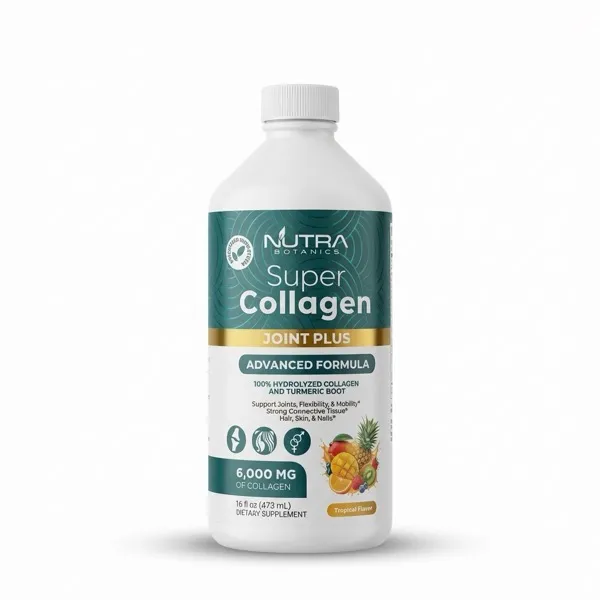
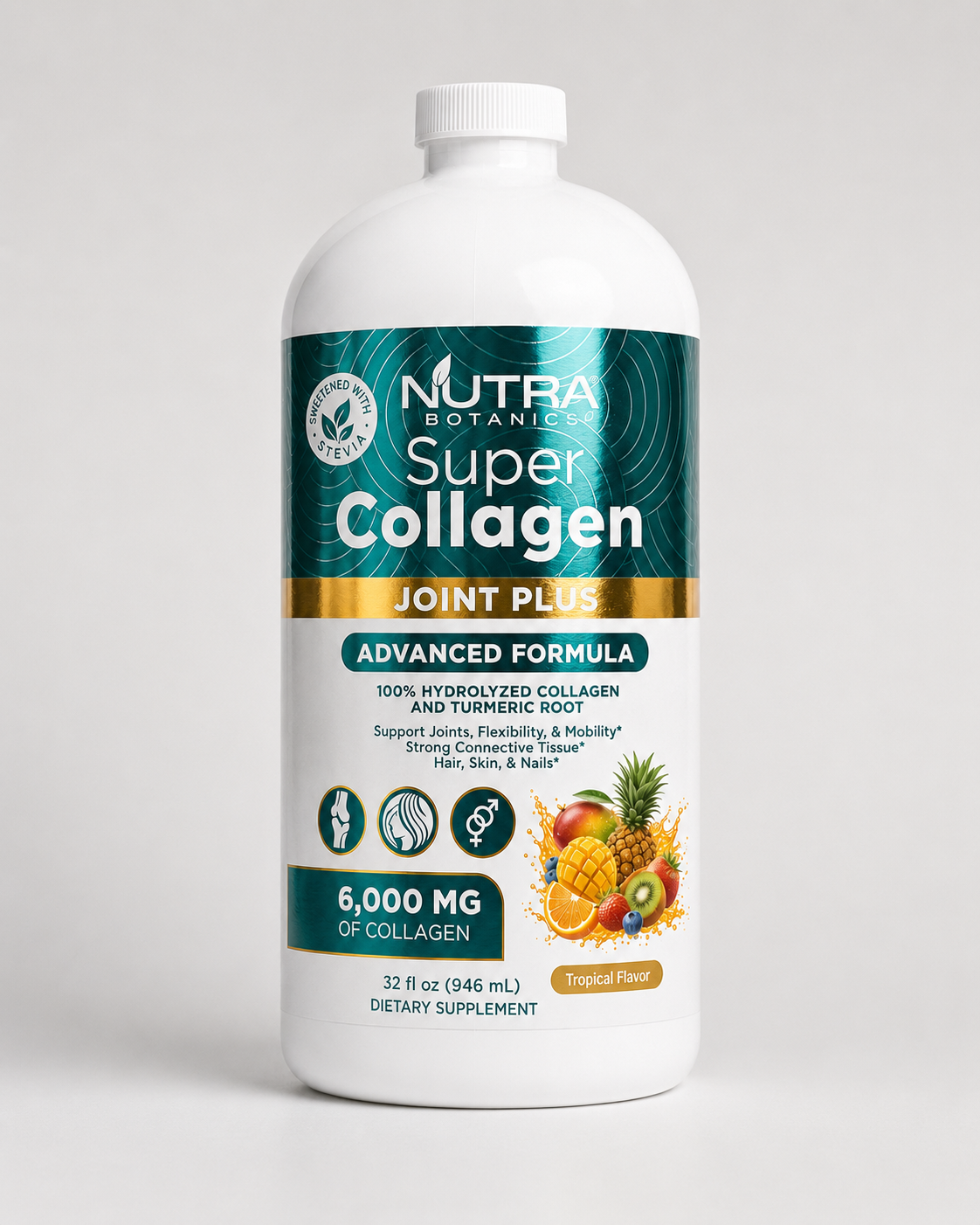
Super Collagen Joint Plus
Daily wellness · 16 fl oz
- A women-first daily formula many readers pair with the hormonal-wellness habits discussed here — collagen, joint, and skin support in one liquid.
$28.95Free shipping over $75
Shop Super Collagen Joint Plus
Explore the Full Catalog
Browse every Nutra Botanics formula
- Compare products, ingredients, and dosing across the full line
Shop the rangeSubscribe & save 20%
Shop All Products